 EN
EN
What filter matching rule for dust proof cabinet cooling fan operating in cement factories
2026/09/30
Cement cabinets choke on dust. Learn the filter rule for an industrial cabinet cooling fan: G4/F7 media, IP rating, and pre-filter care.

2026/09/14
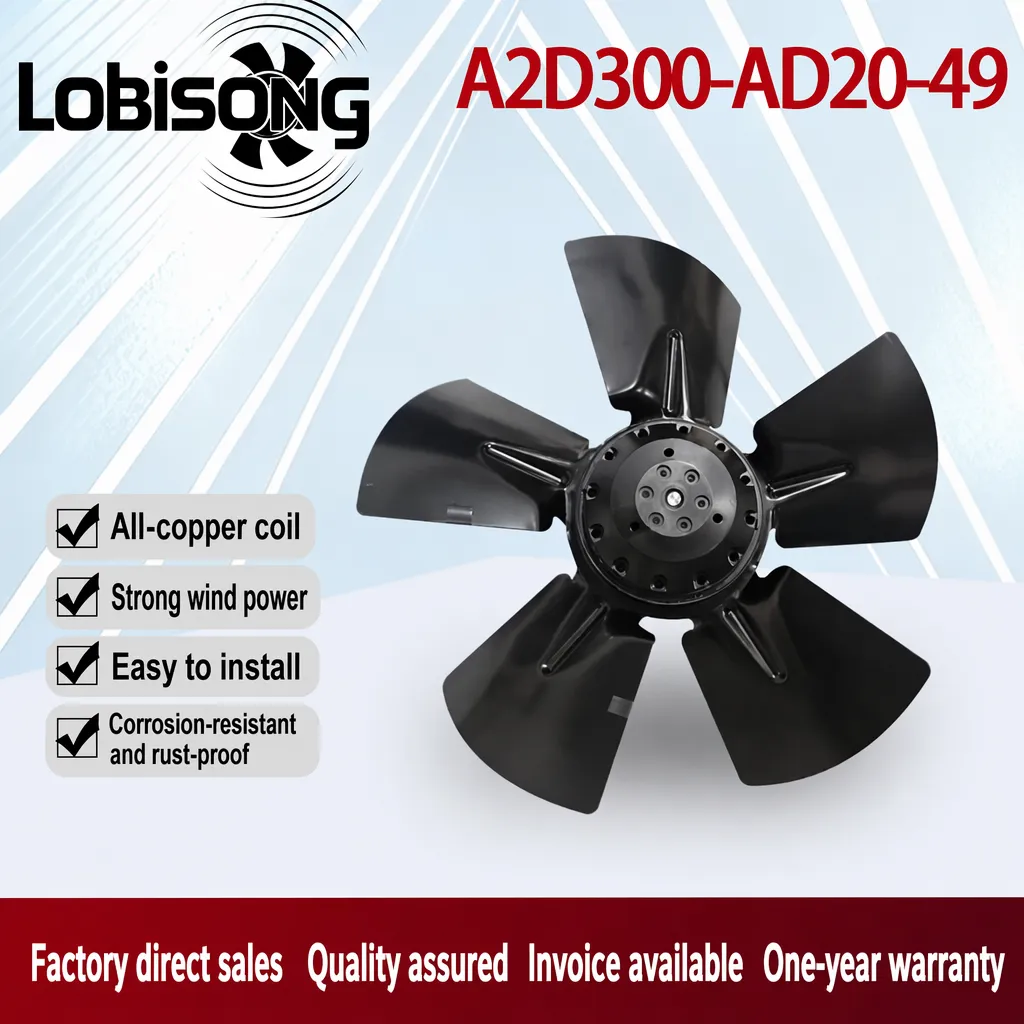
Compact equipment cabinets pack variable-frequency drives, servo controllers, and power modules into a small footprint, and that density turns every watt of electrical loss into trapped heat. A steady axial air mover pushes a directed stream of cool air through the enclosure so warmth leaves faster than it builds. Without forced movement, internal temperature climbs until devices throttle, derate, or trip offline, and a cabinet that runs warm every afternoon slowly loses its margin for the next load spike.
A sealed metal box with thin walls offers almost no path for warm air to escape on its own. An axial air mover creates the pressure difference that natural convection cannot, dragging cool intake air past the hottest components and forcing warm air out through the exhaust vent. In a cabinet only a few rack units tall, still air stratifies into layers, leaving the upper boards hotter than the lower ones. Hot spots also cluster around the parts that shed the most heat, such as IGBT bridges in a frequency converter and the windings of a servo spindle drive. The first step in any thermal plan is admitting that passive cooling will not keep up once the load exceeds a light duty.
Every device carries a rated operating range, and standards such as IEC 61439 expect switchgear to stay within defined temperature limits. Specifying an axial air mover against the real load keeps the enclosure inside that envelope instead of hoping convection will manage. When surrounding air passes the limit, semiconductors lose efficiency and protection circuits force a shutdown. Repeated trips damage production schedules more than the parts themselves. The risk is not a single hot afternoon but sustained overload that quietly shortens component life. Planning the cooling budget before commissioning protects the cabinet and the process it supports.axial air mover, compact cabinet cooling, hotspot dissipation, airflow routing, thermal management
A properly placed axial air mover draws intake from a cooler side of the cabinet and drives it straight over the boards that generate the most loss. The goal is to sweep each hot surface before the air warms too much, which means lining the flow path with the component map rather than the panel outline. Short, direct paths lose less pressure than long bends, so the same unit moves more real air. Matching the stream to the actual layout is what separates a quiet, cool cabinet from a loud, marginal one that still trips on warm days.
Warm air that exits one vent and re-enters another does no useful work; it simply reheats the load. Good exhaust routing separates the out path from the in path and uses the cabinet's own height so buoyancy helps the fan. Baffles or a simple duct can stop the short loop that forms behind a crowded mid-plane. When the return is blocked, the axial air mover holds a steady exchange rate instead of fighting its own outflow, and the top hot zone finally cools to a safe level.
Steady cooling means replacing the cabinet's internal air enough times per minute to carry away the full loss at the target temperature rise. Start from the total wattage of the installed load, then pick an airflow rate that keeps the worst zone under its limit. The axial air mover must deliver that volume against the real restriction, not just in free air. Filters, mesh, and tight baffles resist flow, so a unit rated for open space may stall in a populated panel. Specifying against the enclosure pressure curve avoids buying a fan that looks strong yet moves little air in place.axial air mover, compact cabinet cooling, hotspot dissipation, airflow routing, thermal management
Mounting height and angle change which corners receive flow. Put intake low and exhaust high so warm air is pulled upward through the load, and keep the stream aimed at the hottest boards rather than spilling around them. In a narrow cabinet, a compact axial air mover on each wall can beat one large fan because the path stays short. Reviewing the layout with the real panel, not a drawing, exposes dead pockets that numbers alone hide, and a small change in placement often clears the last stubborn hot spot.
Procurement should weigh static pressure, airflow rate in cfm, noise, bearing type, and ingress protection together, not chase a single headline number. Industrial sites with dust or humidity call for a higher ip rating and sealed ball bearings, while a clean control room can use a lighter build. CE and UKCA marks confirm the unit met relevant directives, and OEM support helps match rotor, blade pitch, and motor winding to the duty. A short pre-selection call with the supplier often prevents the costly mistake of over- or under-specifying the cooling.
A dependable axial air mover still needs basic care to hold its rating. Inspect the intake filter for dust every few months, confirm the blades stay clean, and listen for a rise in vibration that signals a worn bearing. Lubrication intervals follow the bearing type, and a simple log of temperature readings shows drift before a trip occurs. With steady inspection, the same unit protects dense electronics for years, and the cabinet stays inside its thermal envelope through every production cycle without surprise shutdowns.
What causes hot spots inside a compact cabinet?
Answer: Hot spots form where components release heat faster than surrounding air can carry it away. Power modules, servo drives, and frequency converters sit close together, so warm air pools near the top. Without directed ventilation, that pocket keeps rising in temperature until nearby devices throttle. Mapping the layout before adding cooling shows exactly which zones need airflow first, and that early step prevents the uneven heating that later forces protective shutdowns during normal production.
Why does natural convection fail in sealed enclosures?
Answer: Sealed cabinets block the open paths that warm air normally uses to rise and leave. Still internal air simply circulates in place, reheating the same components. A forced stream must replace that trapped volume many times per minute. Directed movement also reaches the corners that passive flow never touches, which is where the first thermal trips usually occur. Sustained load therefore needs mechanical airflow rather than reliance on buoyancy through a closed, insulated box wall.
How should airflow be routed to clear a hotspot?
Answer: Position intake low and exhaust high so warm air is pulled upward through the load. Aim the stream straight across the hottest boards rather than letting it spill around them. Separating intake and exhaust paths stops recirculation, while a measured static pressure match keeps the flow steady against the cabinet restriction. Test with the real panel installed, not on a bench, because baffles and filters change the result enough to move a safe design into a marginal one.
Can a standard fan handle a dense servo cabinet?
Answer: A standard fan may move air, but it often lacks the static pressure dense cabinets demand once filters and baffles add resistance. The right axial air mover is selected against the enclosure's pressure curve, not just its free airflow number. Matching rotor, blade pitch, and bearing type to the duty keeps noise and vibration low while holding the target temperature under full load. Buyers who size only by headline volume usually meet a hot zone the fan cannot actually reach.
Where should temperature sensors be placed for early warning?
Answer: Place sensors at the known hot zones: near the top exhaust, beside the largest power module, and at any spot with poor natural circulation. Reading those points catches a rising trend before devices derate. Pair the data with a simple alarm and a maintenance log so patterns show up early. Checking the readings during routine inspection prevents most surprise shutdowns, because the warning appears weeks before the cabinet crosses its rated temperature limit.

2026/09/30
Cement cabinets choke on dust. Learn the filter rule for an industrial cabinet cooling fan: G4/F7 media, IP rating, and pre-filter care.

2026/10/07
Right wall-mount height for an industrial axial exhaust fan: room volume, free clearance, brackets, and recirculation control.

2026/10/08
An ec motor fan links to BMS via Modbus, 0-10V and PWM for demand-based cooling, energy scheduling and automatic sensor-driven speed control.

2026/10/06
A radial exhaust fan removes grease, fumes, and odors from food-processing workshops with capture velocity and hygienic washdown design.

2026/10/05
Learn antistatic treatment for industrial cabinet cooling fan in electronics workshops—ESD-safe housing, ionizable plastics, and cleanroom compatibility.

2026/10/04
Discover how a brushless dc servo delivers precise wind speed control for laboratory cooling fans with closed-loop PID feedback and laminar airflow.
