 EN
EN
What filter matching rule for dust proof cabinet cooling fan operating in cement factories
2026/09/30
Cement cabinets choke on dust. Learn the filter rule for an industrial cabinet cooling fan: G4/F7 media, IP rating, and pre-filter care.

2026/09/05
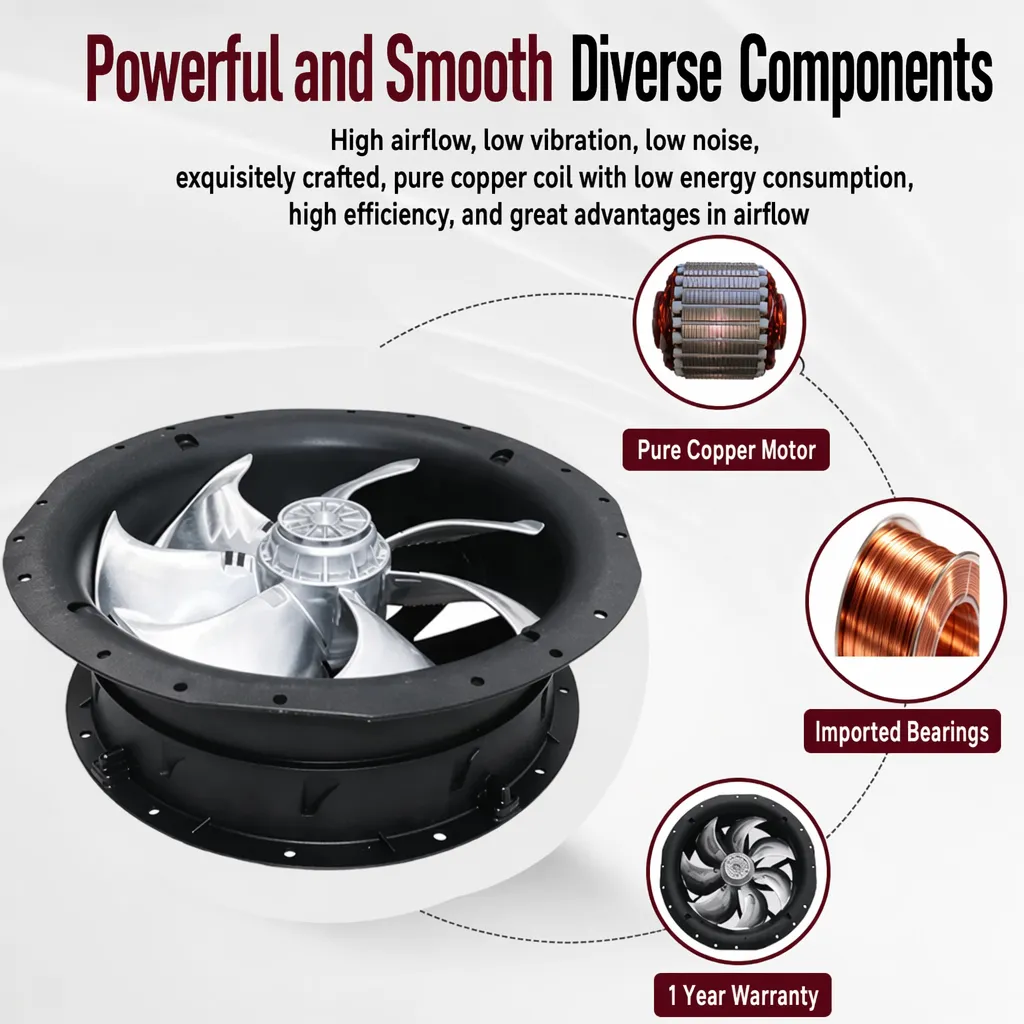
A charging station control cabinet houses rectifiers, DC/DC converters, contactors and control boards that release steady heat as they run. A compact axial flow fan placed on a side wall pulls air across those parts without eating the depth that power modules already occupy. For buyers specifying cooling for EV infrastructure, the first question is rarely "how much air," but "where does the cooler physically fit." Thin enclosures leave almost no clearance behind the back panel, so the cooling element must be shallow and efficient at the same time. Most cabinets are specified around the power stage first and cooling second, which is why depth becomes the binding constraint.
A European charger OEM built a 60 kW DC unit in a floor-standing control cabinet only 400 mm deep. Inside, the IGBT bridge, the DC-link capacitors and the auxiliary power supply filled most of the volume. The mechanical team needed a cooling method that would not force a deeper enclosure, because the cabinet had to fit a standard parking-bay footprint. A compact axial flow fan with a 25 mm thin profile and side/panel mount answered that constraint without redesigning the sheet-metal layout. The same footprint constraint repeats across bus-stop, garage and motorway charging sites.
Without forced ventilation, hot air stratified in the upper zone of the cabinet and the ambient temperature around the capacitors crept upward. The design target called for keeping the internal air below the derating threshold of the power semiconductors, yet a conventional 80 mm-deep fan could not be installed without cutting into the wiring channel. Airflow stalled, heat dissipation weakened, and the prototype failed a high-load soak test on a warm afternoon. The same compact axial flow fan that later solved the issue was not in the original bill of materials. Natural convection alone proved insufficient for the heat load.
The team replaced the planned fan with a low-depth brushless motor model that bolted to a pre-punched panel opening. Pure-copper windings and a precision ball bearing kept the unit quiet and stable across the −40 to +90 °C operating temperature band. After the swap, cabinet internal temperature dropped by a meaningful margin under the same load, and the enclosure depth stayed at the original 400 mm. The compact axial flow fan also carried an IP54 option, so the same cooler served both indoor and semi-outdoor charging sites.
When a control cabinet relies on passive cooling in a shallow box, the IGBT and DC-link stages run hotter than their rated curves allow. A compact axial flow fan sized to the heat load prevents that drift by moving air continuously across the hottest rows. Sustained heat accelerates insulation aging and shortens service life, while thermal trip events interrupt charging sessions. A missed heat dissipation step at design time turns into field failures that cost far more than the saved millimetres of depth.
Standard axial and centrifugal fans need axial clearance that tight EV enclosures cannot give. Once the back panel and the power stack are set, there is simply no volume left for a deep impeller, and a compact axial flow fan becomes the only option that preserves the footprint. Specifying the wrong form factor early forces a larger cabinet, a wider footprint, or a costly sheet-metal redesign late in the program, pushing the launch date and the budget at once.
Retrofitting cooling into an already-sealed control cabinet is slow and risky. IP54 ingress protection, gaskets and cable glands leave few clean cut points, and cutting a new opening in the field can break the enclosure's ingress protection rating. Planning the fan opening and mounting flange during the first design pass avoids rework and keeps the IP54 seal intact.
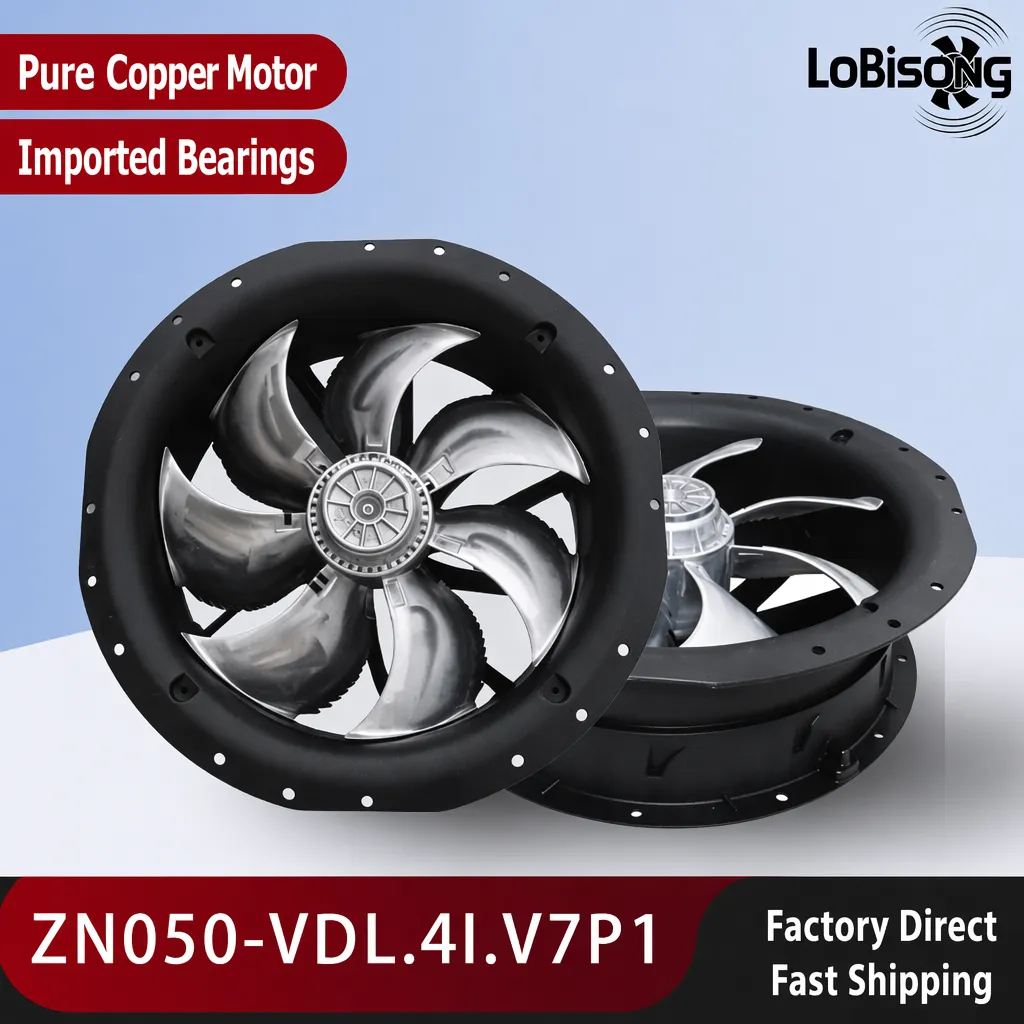
A compact axial flow fan wins in shallow boxes because its low depth lets it sit flush against a side or panel wall while still delivering high CFM. The brushless outer rotor motor places the rotating mass outward, so the stack stays thin yet the impeller diameter stays useful for airflow. Precision ball bearings and an aluminum alloy frame hold vibration low, which matters when the fan shares the cabinet with sensitive measurement circuits. CE and IEC compliance, plus an IP54 option, let the same model serve indoor and semi-outdoor charging sites without requalification.
Size the fan from the heat load, not from habit: estimate watts dissipated by the IGBT, rectifier and converter losses, then pick CFM so the cabinet air stays under the component derating curve at the worst-case ambient temperature. Mount the unit on a panel opening with the impeller drawing air across the hottest rows; a filter behind the grille traps dust and moisture. Clean the filter on a fixed maintenance interval, check bearing noise, and keep a spare with the same CAD drawing. For EV charging equipment, align the cooling package with IEC 61851 charging requirements and the ingress protection degrees of IEC 60529 so the enclosure and the fan are certified as one system. A compact axial flow fan specified this way keeps the charging station reliable through summer peaks.
A shallow control cabinet no longer has to mean weak cooling. A compact axial flow fan with a thin profile, panel mount and brushless outer rotor motor delivers the airflow EV charging power modules need while preserving the installation space that cramped enclosures demand. Specifying the right depth, CFM and IP rating early keeps heat dissipation, footprint and serviceability aligned for the life of the charging station.
What defines a compact cabinet cooling fan? A compact axial flow fan for cabinet use pairs a thin-profile frame with a high-CFM impeller and a brushless outer rotor motor. The shallow depth lets it mount on a side or panel wall without eating enclosure volume, while pure-copper windings and a ball bearing support stable airflow from −40 to +90 °C. An IP54 option and CE/IEC compliance extend the same model across indoor and semi-outdoor EV charging sites without a separate qualification run.
Why does installation space matter in EV charging cabinets? Shallow enclosures must fit a fixed parking-bay footprint, yet the IGBT bridge, DC-link capacitors and control boards already fill most of the volume. Adding a deep cooler forces a larger cabinet or a costly redesign. Preserving installation space lets the charger meet site constraints while leaving room for wiring, service access and future module upgrades without moving the civil works or delaying the permit.
How should the fan CFM be sized to the heat load? Estimate the total watts dissipated by the rectifier, IGBT and losses, then select airflow so internal air stays below the semiconductor derating curve at the worst-case ambient temperature. Oversizing wastes power and noise budget; undersizing risks thermal trip. A practical check pairs the calculated CFM with the cabinet's free area and filter resistance to confirm real delivered airflow rather than a catalogue number.
Can a compact fan meet outdoor ingress protection needs? Yes. A panel-mount axial model with an IP54 option resists dust and water spray when paired with a gasketed flange and sealed cable path. The fan and the enclosure must be validated together against IEC 60529 so the ingress protection rating holds after installation. For harsher sites, specify the waterproof variant and a corrosion-resistant frame to extend service life in coastal or roadside conditions.
Where does maintenance focus on a cabinet cooling fan? Maintenance centers on the filter, bearings and mounting. Clean or replace the intake filter on a fixed interval to keep airflow and heat dissipation steady, listen for bearing noise that signals wear, and confirm the panel screws and gasket remain sealed. Keep a matched spare with the same CAD drawing on site so a swap during a service visit restores cooling without recutting the enclosure or breaking the IP seal.

2026/09/30
Cement cabinets choke on dust. Learn the filter rule for an industrial cabinet cooling fan: G4/F7 media, IP rating, and pre-filter care.

2026/10/07
Right wall-mount height for an industrial axial exhaust fan: room volume, free clearance, brackets, and recirculation control.

2026/10/08
An ec motor fan links to BMS via Modbus, 0-10V and PWM for demand-based cooling, energy scheduling and automatic sensor-driven speed control.

2026/10/06
A radial exhaust fan removes grease, fumes, and odors from food-processing workshops with capture velocity and hygienic washdown design.

2026/10/05
Learn antistatic treatment for industrial cabinet cooling fan in electronics workshops—ESD-safe housing, ionizable plastics, and cleanroom compatibility.

2026/10/04
Discover how a brushless dc servo delivers precise wind speed control for laboratory cooling fans with closed-loop PID feedback and laminar airflow.
