 EN
EN
What filter matching rule for dust proof cabinet cooling fan operating in cement factories
2026/09/30
Cement cabinets choke on dust. Learn the filter rule for an industrial cabinet cooling fan: G4/F7 media, IP rating, and pre-filter care.

2026/09/10
After washed vegetables, sliced fruit, or cooked pasta leave a rinse tank, surface water must be removed before packing or freezing. A high pressure centrifugal blower supplies the dense, filtered air stream that lifts and shears free moisture from the product. On a modern line this function sits between washing and packaging, where even a thin film of water spoils texture and accelerates microbial growth. The blower must deliver steady pressure, because the air path includes HEPA or washable filters, duct bends, and a manifold of nozzles. Understanding how pressure, velocity, and hygienic construction combine explains why this class of machine fits food drying better than a simple axial fan.high pressure centrifugal blower, food drying air, hygienic blower design, 3-A sanitary fan, stainless steel blower
Centrifugal machines generate pressure by spinning an impeller that flings air outward into a scroll housing, converting velocity into static pressure. A high pressure centrifugal blower sustains 1,500 to 4,000 Pa at the nozzle manifold even after the air passes through a fine filter and several 90-degree duct elbows. Axial fans produce high volume but low static pressure, so their airflow collapses once resistance rises. On a drying tunnel the resistance is real: pleated filters load with flour dust and starch, nozzles are intentionally narrow to raise exit velocity, and long runs of stainless duct add friction. The blower's ability to hold pressure against this backpressure keeps exit velocity constant, which is the actual mechanism that strips water from the product surface.high pressure centrifugal blower, food drying air, hygienic blower design, 3-A sanitary fan, stainless steel blower
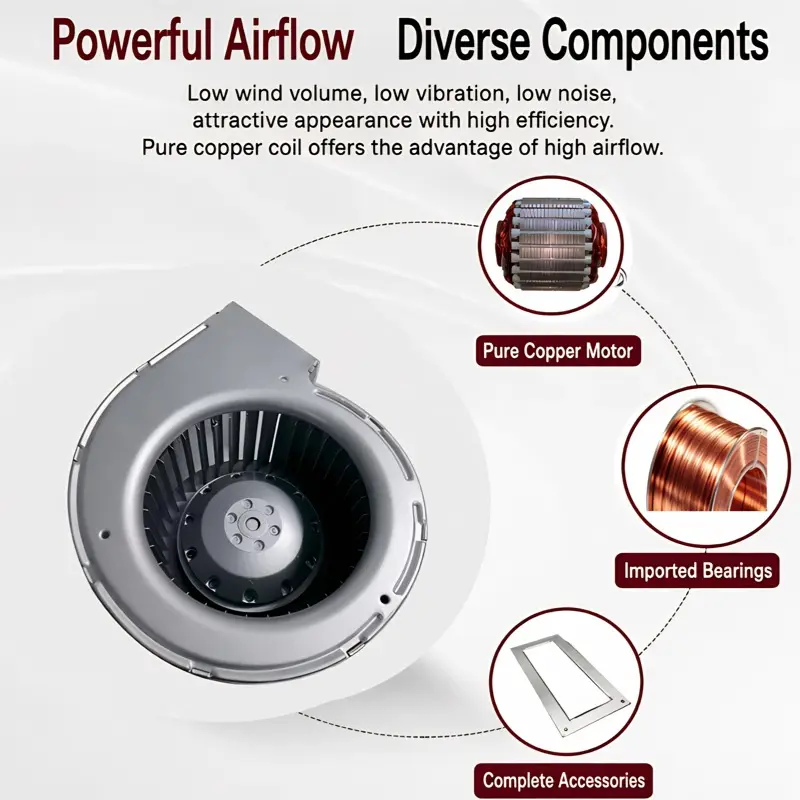
Food zones demand smooth, non-porous, drainable surfaces. A 304 or 316 food-grade stainless steel housing resists corrosion from washdown chemicals and prevents bacterial harborage. Internal welds are polished to a sanitary finish, and corners carry a minimum radius to aid drainage. The 3-A sanitary standard guides surface roughness and cleanability, while external ribs and bolt heads are minimized to remove hiding places for soil. A sealed drive with precision ball bearings and a pure copper motor winding keeps lubrication and heat away from the airstream, supporting both hygiene and a long duty cycle in a humid, washdown environment.high pressure centrifugal blower, food drying air, hygienic blower design, 3-A sanitary fan, stainless steel blower
Moisture clings to food by surface tension, and the force required to break that bond scales with air velocity rather than with total volume. At low velocity, air simply skims the product and leaves a wet film; at the correct velocity the boundary layer detaches and droplets are blown off as fine mist. A high pressure centrifugal blower sized for the nozzle field keeps exit speed steady as filters load. Selecting the right impeller diameter and motor speed balances energy against the velocity needed to defeat droplet adhesion on the product.
Uneven drying creates rejects: one side of the belt leaves the tunnel wet while the other is over-blown. The blower feeding the plenum must hold pressure as filters clog, because any sag reaches the nozzles as uneven velocity. Uniformity comes from a plenum designed so static pressure is equal at every nozzle, plus a blower curve that stays flat across the operating range. A high-CFM design alone will not help if the plenum is poorly balanced. Engineers use flow visualization and pressure taps to confirm that every nozzle sees the same static pressure, then trim damper settings. The result is consistent moisture removal across the full belt width, protecting product quality and reducing the rework that wet packs would otherwise demand.
Specifying the unit starts with the air demand of the nozzles and the resistance of filters and ducting. Calculate required static pressure at the worst-case filter load, then choose impeller size and motor speed that land on the blower's peak efficiency point. When evaluating a high pressure centrifugal blower for a new line, confirm it holds pressure as filters clog rather than only at clean conditions. An oversized unit wastes energy and may over-dry; an undersized one cannot sustain velocity. Pure copper motor windings and efficient blade profiles reduce heat and power draw across the duty cycle, and an IP-rated terminal box survives daily sanitizing.
A hygienic blower still fails without a routine. Filters are changed on a pressure-drop schedule, not by eye, because a loaded filter silently starves the nozzles of pressure. External surfaces are cleaned with the line during each washdown, and the inlet is kept clear of debris that could enter the airstream. Bearings are checked for warmth and noise during planned downtime, and the impeller is inspected for buildup that would unbalance rotation. Documenting each step gives auditors a traceable sanitation record and keeps the drying function reliable shift after shift.
Food plants operate under USDA and FDA oversight, and equipment design supports those expectations through sanitary construction rather than through a single certificate. A high pressure centrifugal blower built to 3-A geometry meets the finish and drainability rules widely referenced in dairy and prepared-food lines. CE and UKCA documentation covers the motor and electrical parts for European and UK markets where Lobisong supplies. Citing these frameworks during specification helps procurement confirm that the air system will pass inspection and integrate with existing hygienic design programs on the production floor.
Before a line runs, verify the blower against a practical checklist: confirm static pressure at the manifold under loaded-filter conditions, measure exit velocity at representative nozzles, and check airflow uniformity across the belt. Inspect the housing for drainage and polish, confirm motor and bearings stay within limits, and review the IP rating of every penetration. Keep a commissioning log that records baseline readings so future drift is easy to spot. A properly commissioned high pressure centrifugal blower then protects both food safety and the return on the drying investment.
What static pressure does a food drying blower need?
Answer: Required static pressure depends on filter load, duct length, and nozzle size. A typical washed-produce tunnel needs 1,500 to 4,000 Pa at the manifold after the air passes a fine filter and several bends. Measuring pressure-drop across the installed filter at commissioning sets the real target, because a clogged filter raises resistance far above the clean-sheet value. Specifying to worst-case load prevents velocity sag during production.
How does airflow velocity remove surface water?
Answer: Air detaches moisture by overcoming surface tension at the product boundary layer. Below a threshold velocity the air merely skims wet film; above it, droplets shear off as mist. Nozzle exit speed of 25 to 45 meters per second suits leafy and fragile items, while sturdier produce tolerates higher speed. The blower must hold that speed as filters load, because any pressure drop immediately lowers exit velocity and leaves uneven drying across the belt.
Why choose stainless construction for the blower?
Answer: A high pressure centrifugal blower in a food plant faces daily washdown with corrosive sanitizers, so a 304 or 316 stainless housing resists pitting and denies bacteria a place to harbor. Polished internal welds, rounded corners, and minimized external ribs meet 3-A sanitary expectations for cleanability. Sealed bearings and a copper-wound motor keep lubrication out of the airstream, protecting both hygiene and reliable operation through repeated sanitation cycles.
How often should filters be changed?
Answer: Change filters on a pressure-drop schedule rather than by visual inspection, because a loaded filter quietly starves nozzles of pressure while looking only slightly dirty. Record the clean baseline resistance at commissioning, then set the replacement point at a defined rise, often around a forty percent increase. Adhering to this interval sustains exit velocity and avoids the uneven drying and microbial risk that a starved, low-pressure air system would otherwise create.
Which standards apply to hygienic blower design?
Answer: Food lines operate under USDA and FDA oversight, and sanitary construction supports compliance through finish and geometry rather than a single certificate. The 3-A sanitary standard sets surface-roughness and drainability rules widely used in dairy and prepared foods. CE and UKCA cover the motor and electrical assembly for European and UK supply. Referencing these during specification helps confirm the unit will pass audit and integrate with existing hygienic programs.

2026/09/30
Cement cabinets choke on dust. Learn the filter rule for an industrial cabinet cooling fan: G4/F7 media, IP rating, and pre-filter care.

2026/10/07
Right wall-mount height for an industrial axial exhaust fan: room volume, free clearance, brackets, and recirculation control.

2026/10/08
An ec motor fan links to BMS via Modbus, 0-10V and PWM for demand-based cooling, energy scheduling and automatic sensor-driven speed control.

2026/10/06
A radial exhaust fan removes grease, fumes, and odors from food-processing workshops with capture velocity and hygienic washdown design.

2026/10/05
Learn antistatic treatment for industrial cabinet cooling fan in electronics workshops—ESD-safe housing, ionizable plastics, and cleanroom compatibility.

2026/10/04
Discover how a brushless dc servo delivers precise wind speed control for laboratory cooling fans with closed-loop PID feedback and laminar airflow.
