 EN
EN
What filter matching rule for dust proof cabinet cooling fan operating in cement factories
2026/09/30
Cement cabinets choke on dust. Learn the filter rule for an industrial cabinet cooling fan: G4/F7 media, IP rating, and pre-filter care.

2026/09/08

A high pressure centrifugal fan moves large air volumes against resistance, and in dusty plants the filter screen clogs within days. When the screen blocks, static pressure climbs and airflow drops, so industrial ventilation suffers and operators face unplanned stops. An automatic cleaning approach keeps the filter screen clear and lets the line run without manual intervention.
The crew at a cement packing line first noticed trouble through rising amperage on the drive motor. A high pressure centrifugal fan was pushing dusty air through a fabric filter screen that had turned grey and matted in under two weeks. Airflow fell by a clear margin. Static pressure upstream of the screen kept climbing, yet nobody had booked a wash. The site ran three shifts, so halting for manual cleaning meant lost output and overtime. That ammeter reading pointed straight at a clogged filter screen rather than a failing fan.
Dust on the filter screen restricts the path air can take. As the openings narrow, the fan works harder to hold volume, so static pressure rises on the dirty side. The control panel logged repeated high-pressure alarms, and the supervisor halted the cell to protect the motor from heat. Manual cleaning took four hours and exposed staff to fine cement dust. The episode proved periodic hand washing could not match the loading rate, so a method tied to the fan itself became the obvious next step.
The team fitted a reverse pulse assembly and an air knife across the filter screen frame. A timer and a differential-pressure switch triggered short compressed-air bursts that lifted dust from the mesh. The high pressure centrifugal fan kept running during the cycle, so ventilation never stopped. Within days the ammeter settled and the upstream overheating cleared. The change needed no building works and paid back through recovered production time on a line losing shifts to cleaning.
Reverse pulse cleaning sends a quick air blast backward through the filter screen, dislodging the dust cake on the surface. An air knife then sweeps loosened particles away from the frame into a collection hopper. Bursts repeat on a schedule set by the pressure drop. Because the pulse is brief, the fan sustains airflow while the screen stays permeable. This suits continuous industrial ventilation where stopping the process carries a high cost.
A high pressure centrifugal fan relies on the impeller inside the volute to accelerate air by centrifugal force, and the backward curved blade shape holds efficiency at higher static pressure. The volute collects the spun air and directs it at a steady velocity toward the filter screen. When the screen is clean, the impeller meets less resistance and draws less current. These choices decide how much pressure the fan can spare for the cleaning pulse without starving the process.
A pneumatic cyclone placed before the screen removes the heavier dust fraction by spinning the air stream. Coarse particles fling outward and drop into a bin, so the filter screen meets only the fine load. A high pressure centrifugal fan therefore ingests less grit, and pre-separation lightens the cleaning duty. Cyclone performance depends on inlet velocity and cone geometry rather than moving parts, which keeps maintenance simple. Pairing a cyclone with a self cleaning screen gives two-stage defense. Test-run the cleaning automation before commissioning so pulse timing matches the real dust load.
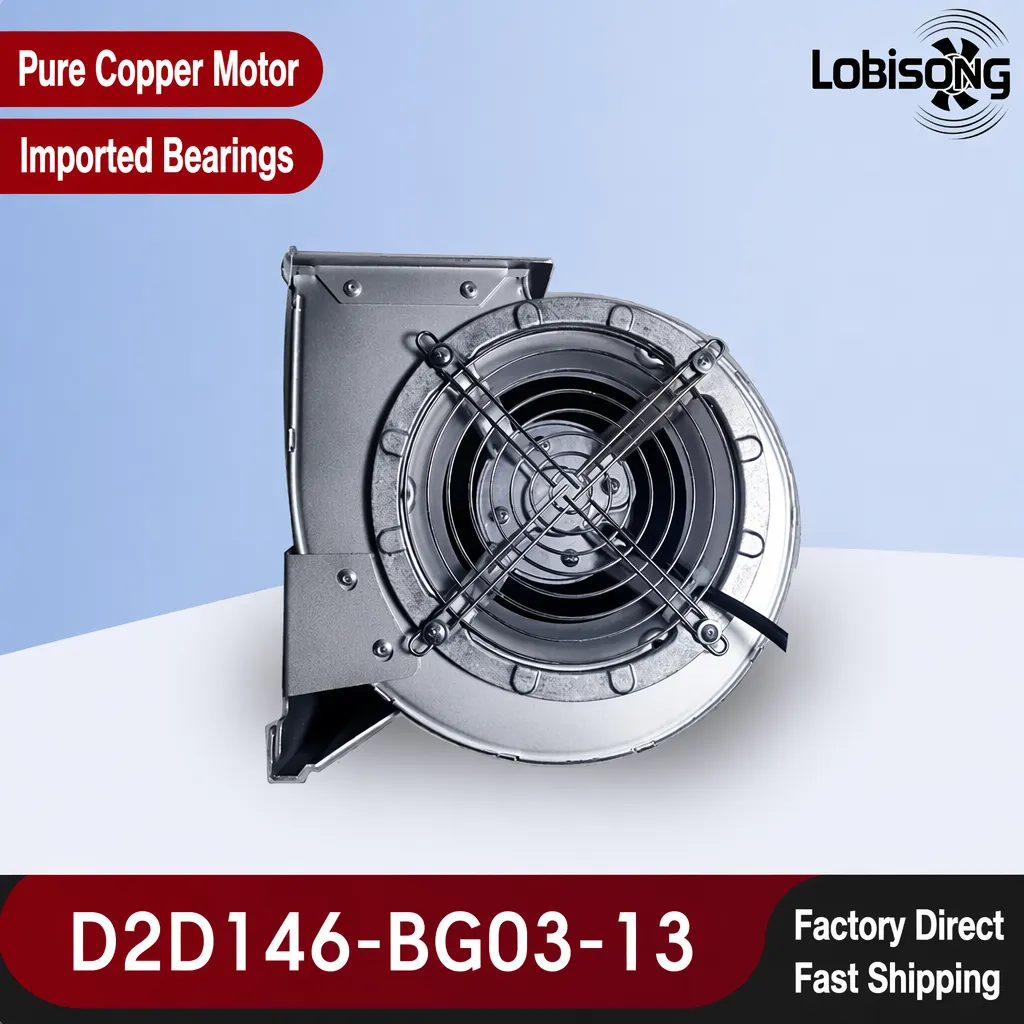
Leaving dust on the filter screen forces the motor to draw more current to hold airflow. Sustained overload heats the windings and shortens bearing life. In a dusty cell this can develop within a single shift rather than over months. The risk stays silent because the fan still runs, only with rising cost and falling output. Regular automatic cleaning removes the overload before it becomes a failure.
Buyers should confirm the unit against the documented spec and request evidence of ISO 9001 control at the supplier. Check the ingress protection rating for the plant environment; IEC 60529 defines the IP code that shows how well the motor resists dust and water. A unit rated for the wrong class will fail early in a cement or flour atmosphere. Verify the impeller material and the screen mesh size match the particle load before acceptance.
Mount the fan on a rigid base and keep the air knife line free of moisture. Wiring must follow NFPA 70 provisions for industrial circuits, and service work should respect OSHA 29 CFR 1910 lockout rules. Inspect the pulse valves monthly and replace worn seals before they leak. Keep a spare filter screen on hand so a swap takes minutes. Record the differential pressure trend; a rising baseline signals a screen or cyclone issue worth a closer look.
A high pressure centrifugal fan paired with reverse pulse and air knife cleaning keeps the filter screen clear without halting industrial ventilation. The method cuts manual labor, protects the motor from dust overload, and stabilizes static pressure across the line. Selecting the right impeller, volute, and IP rating, then following a simple upkeep routine, turns a recurring stoppage into a managed, low-risk task that supports steady production.
Question: What does a self cleaning fan do to the filter screen? Answer: A self cleaning fan uses reverse pulse and air knife bursts to lift dust from the filter screen while the unit runs. The loosened particles fall into a hopper, so airflow stays steady. This keeps industrial ventilation moving without a manual wash. The method suits dusty lines where stopping the process costs output and labor during every cleaning window.
Question: Why does static pressure rise when the screen clogs? Answer: Dust narrows the openings in the filter screen, so the air path becomes restrictive. The fan must push harder to keep volume, which lifts static pressure on the dirty side. High pressure alarms follow, and the motor draws more current. Automatic cleaning restores the open area and brings the pressure back to a normal working range before damage occurs.
Question: How often should the cleaning pulse run? Answer: The interval depends on dust loading and the pressure drop setpoint. A differential-pressure switch triggers a pulse when the screen reaches a set resistance, so heavy days clean more often. Many lines use a timed backup of several minutes as a safety net. Checking the trend log shows whether the schedule matches the real load on site.
Question: Can the fan keep cleaning during operation? Answer: Yes. Reverse pulse and air knife cleaning act in fractions of a second, so the high pressure centrifugal fan keeps supplying air during the burst. Ventilation does not stop, and production continues. The short, repeated pulses hold the screen permeable without a separate shutdown window. This is the main gain over manual washing that interrupts the process.
Question: Where should a cyclone be placed in the system? Answer: A pneumatic cyclone belongs upstream of the filter screen, before the air reaches the fan inlet or the screen. It spins out heavy dust into a bin, leaving only fine particles for the screen. This lowers the cleaning load and protects the impeller from abrasive grit. Correct placement keeps the whole ventilation train efficient and easy to maintain over time.

2026/09/30
Cement cabinets choke on dust. Learn the filter rule for an industrial cabinet cooling fan: G4/F7 media, IP rating, and pre-filter care.

2026/10/07
Right wall-mount height for an industrial axial exhaust fan: room volume, free clearance, brackets, and recirculation control.

2026/10/08
An ec motor fan links to BMS via Modbus, 0-10V and PWM for demand-based cooling, energy scheduling and automatic sensor-driven speed control.

2026/10/06
A radial exhaust fan removes grease, fumes, and odors from food-processing workshops with capture velocity and hygienic washdown design.

2026/10/05
Learn antistatic treatment for industrial cabinet cooling fan in electronics workshops—ESD-safe housing, ionizable plastics, and cleanroom compatibility.

2026/10/04
Discover how a brushless dc servo delivers precise wind speed control for laboratory cooling fans with closed-loop PID feedback and laminar airflow.
