
 EN
EN
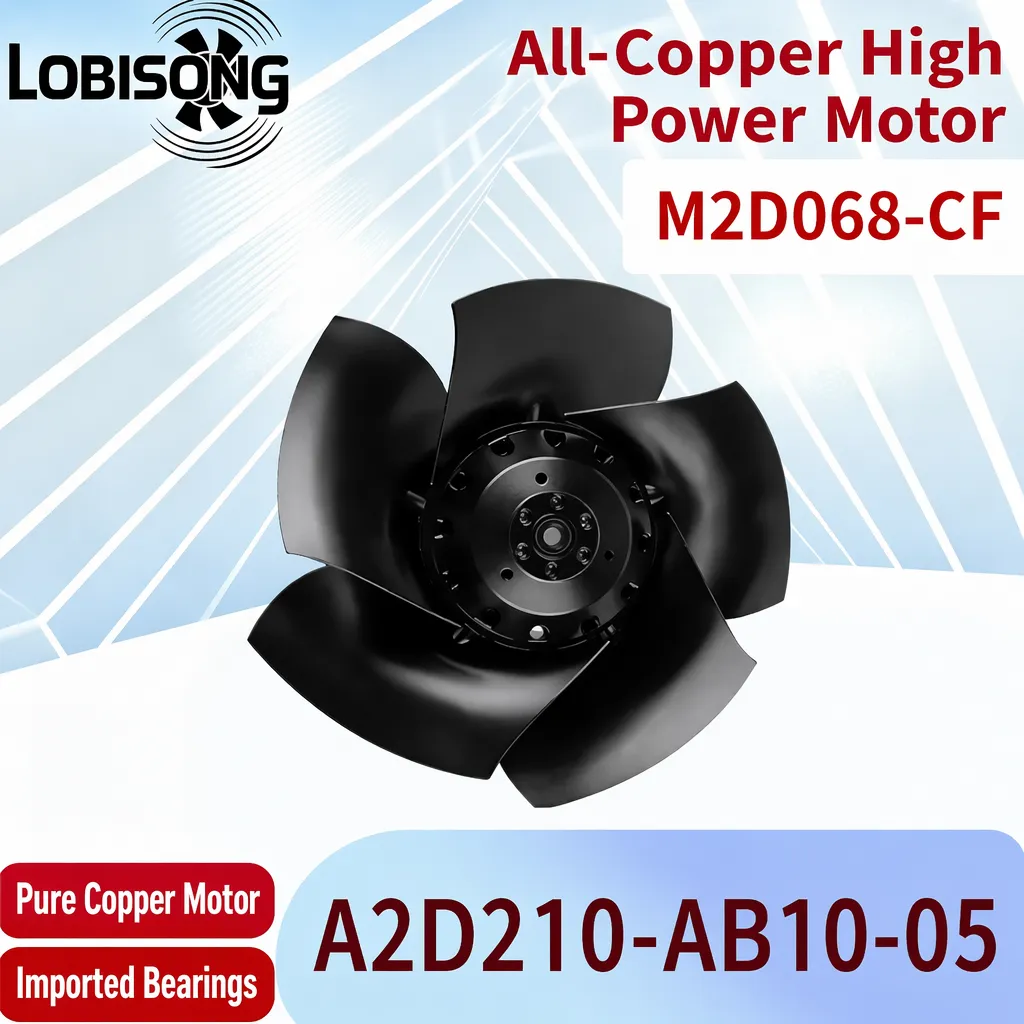
How Large Industrial Cooling Fans Reduce Surface Temperature of Large Mechanical Processing Equipment
As someone who has spent years evaluating thermal management solutions for industrial facilities, I can tell you that surface temperature is one of the most overlooked variables in mechanical processing equipment reliability. When a CNC machine, hydraulic press, or heavy-duty lathe runs continuously under full load, the heat generated at the surface of motors, housings, and drive units does not dissipate on its own — at least not fast enough to prevent performance degradation. Large industrial cooling fans are one of the most direct and cost-effective tools for managing this problem. But how exactly do they work, and what determines whether a fan actually reduces surface temperature in a meaningful way?
How Heat Accumulates on Mechanical Processing Equipment
Mechanical processing equipment generates heat through multiple pathways: friction between cutting tools and workpieces, electrical losses in drive motors, hydraulic fluid circulation under pressure, and the resistance inherent in high-torque rotating components. Under continuous operation, this heat transfers to equipment surfaces — housings, motor casings, gearboxes, and enclosure panels — and accumulates faster than natural convection can carry it away.
What I have consistently observed in manufacturing environments is that heat distribution across equipment surfaces is rarely uniform. Certain zones — particularly around motor vents, hydraulic valve banks, and spindle housings — concentrate heat far more than surrounding areas. If you were to map the surface temperature of a large milling machine during a full-shift run, you would typically find temperature differentials of 20–40°C across different panels, with hotspots occurring precisely where airflow is most restricted.
This uneven heat distribution matters because localized overheating, not average temperature, is what drives premature bearing failure, seal degradation, and loss of dimensional tolerancing in precision machining operations.
The Forced Convection Mechanism Behind Large Industrial Cooling Fans
The fundamental principle behind using a large industrial cooling fan for surface temperature reduction is forced convection. In simple terms, the fan moves a high volume of ambient air across the heated equipment surface. This continuous air movement disrupts the thin boundary layer of warm, stagnant air that forms naturally around any hot surface, replacing it with cooler air from the surrounding environment. Heat transfers from the hot surface into the moving airstream and is carried away from the equipment.
The rate at which a large industrial cooling fan can reduce surface temperature depends primarily on three factors: the volume of airflow delivered (measured in CFM or m³/h), the velocity of air at the point of impact with the equipment surface, and the temperature differential between the ambient air and the equipment surface itself. Under normal industrial conditions, a well-positioned large industrial cooling fan can reduce equipment surface temperatures by 10–25°C compared to natural convection alone — a range that is significant enough to meaningfully extend motor bearing life and maintain machining precision.
Forced convection cooling, to be clear, does not lower the ambient temperature of the facility. What it does is accelerate heat transfer away from the equipment surface into the ambient air. If you need to reduce both equipment surface temperature and ambient air temperature simultaneously, a closed-loop heat exchange system would be a different class of solution. For most open-installation mechanical processing equipment, however, a large industrial cooling fan directed at critical heat zones is the appropriate first step.
Key Parameters That Determine Cooling Effectiveness
When evaluating a large industrial cooling fan for this application, the parameters that matter most are airflow volume, static pressure rating, fan diameter, and operating speed range. These are not interchangeable — each addresses a different aspect of the cooling challenge.
- Airflow volume (CFM or m³/h): The total volume of air the fan moves per unit time. For large mechanical processing equipment with substantial surface areas, fans with airflow capacity in the range of 5,000–30,000 m³/h are typically required to achieve meaningful temperature reductions across the full equipment footprint.
- Static pressure: Relevant when air must be directed through restricted pathways: around equipment legs, through protective shrouding, or into partially enclosed machine bays. Industrial cooling fans with higher static pressure ratings maintain airflow delivery even when the outlet path is obstructed, which is often the case in real production environments.
- Fan diameter and blade geometry: Larger-diameter fans can move the same or greater air volumes at lower rotational speeds, which typically reduces noise, lowers mechanical wear on bearings, and improves energy efficiency over continuous operation cycles.
- Variable speed control: Industrial processes rarely run at constant load. An industrial cooling fan with variable speed control — particularly EC motor variants — allows airflow to be adjusted in proportion to actual heat generation rather than running at maximum output continuously. This matters for both energy consumption and noise management in precision machining environments.
One thing I would recommend checking before selecting a fan: do not evaluate airflow solely based on rated maximum CFM from a datasheet measured under ideal laboratory conditions. In actual installations, inlet restrictions, obstructions, and duct distances reduce effective airflow delivery significantly. A fan rated at 15,000 m³/h in open-air testing may deliver considerably less at the equipment surface if placement is not carefully planned.
Installation Positioning and Common Mistakes
The positioning of large industrial cooling fans relative to mechanical processing equipment has a direct impact on cooling effectiveness. The most common mistake I encounter is placing fans too far from the equipment, expecting the airflow cone to cover the entire machine. In practice, air velocity decreases rapidly with distance — doubling the distance from the fan outlet to the target surface can reduce air velocity at the surface by 50% or more, substantially reducing heat transfer efficiency.
For large mechanical processing equipment, the preferred approach is to identify the primary heat zones first — typically motor housings, drive units, and heavily loaded cutting zones; position fans to deliver directed airflow to these specific areas. In some configurations, multiple smaller large industrial cooling fans positioned at key hotspots outperform a single large-diameter unit aimed at the general equipment profile.
Also consider the direction of airflow relative to equipment orientation. Fans mounted to draw air across the equipment from one side and exhaust it from the other create a continuous cross-flow that prevents recirculation of heated air back to the inlet side — a problem that often develops when fans are placed in corners or enclosed bays without adequate exhaust clearance.
Long-Term Benefits for Mechanical Processing Equipment
Maintaining controlled surface temperatures through consistent use of large industrial cooling fans delivers compounding benefits over time. Motor winding insulation life roughly doubles for every 10°C reduction in operating temperature — a principle well-established in industrial electrical engineering. Hydraulic seals, spindle bearings, and precision guideway components similarly exhibit extended service life when operated within their rated thermal range.
From a production quality perspective, thermal expansion of mechanical components during long machining runs is a known source of dimensional drift. Large mechanical processing equipment that maintains lower, more stable surface temperatures through active cooling shows reduced dimensional variation over multi-hour production cycles, which translates directly to tighter tolerances and lower scrap rates.
For facilities operating in compliance with energy efficiency directives — particularly those supplying European markets — EC motor-equipped industrial cooling fans also offer measurable reductions in total facility energy consumption compared to continuously running AC fan alternatives, given the ability to modulate airflow with process load.
Choosing the Right Large Industrial Cooling Fan for Your Equipment
The right large industrial cooling fan for mechanical processing equipment is not necessarily the most powerful available. It is the one that delivers the right airflow volume and velocity to the right surface zones, under the actual operating conditions of your specific production environment — accounting for ambient temperature, equipment layout, installation clearances, and duty cycle requirements.
Working with manufacturers who can provide application-specific guidance, rather than generic catalog specifications, is particularly valuable for non-standard equipment configurations. The gap between a fan's rated performance and its actual cooling contribution in a specific installation is often where the practical engineering value is found — not in the peak specification on a datasheet.






