 EN
EN
What filter matching rule for dust proof cabinet cooling fan operating in cement factories
2026/09/30
Cement cabinets choke on dust. Learn the filter rule for an industrial cabinet cooling fan: G4/F7 media, IP rating, and pre-filter care.

2026/09/17
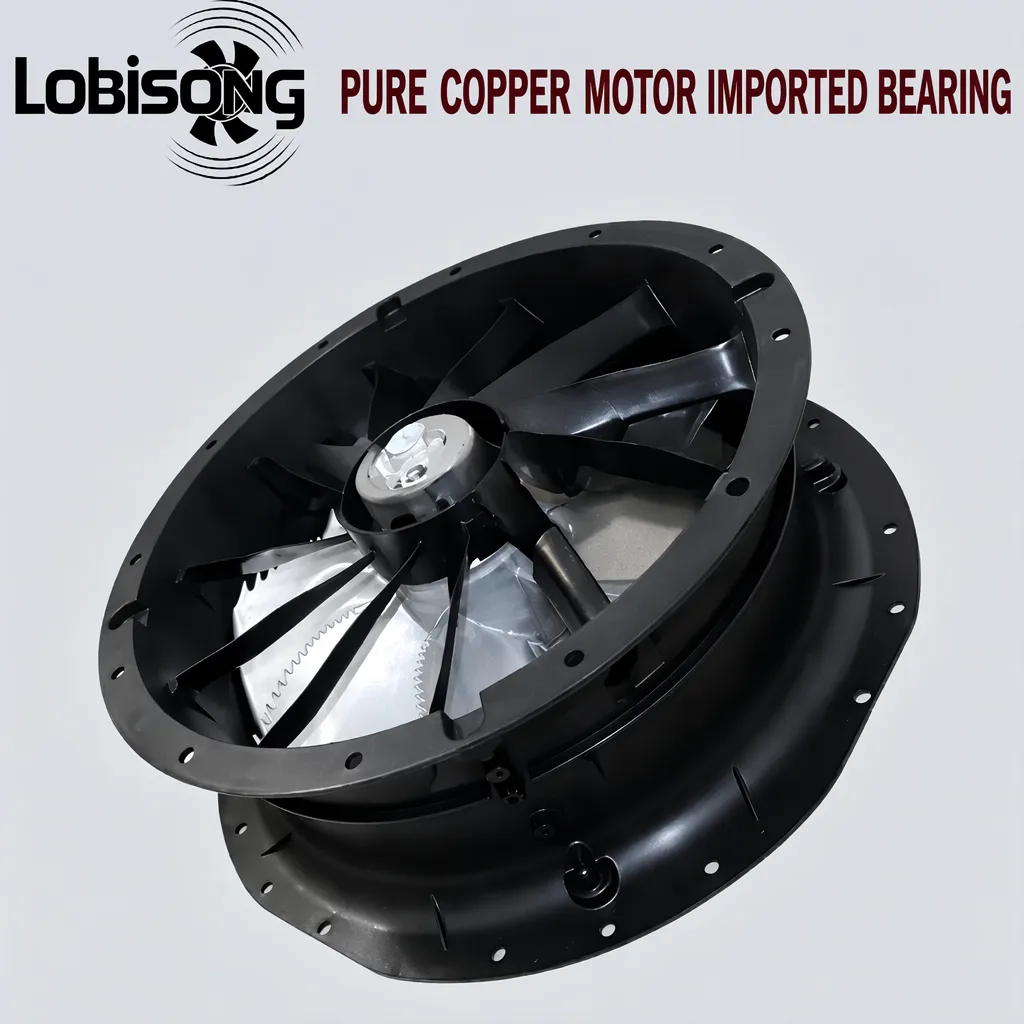
Network hardware generates intense, uneven heat. A single dense switch or a stack of servers can push local temperatures past safe limits while the rest of the room stays cool. Rack mount cooling fans solve this by directing steady, targeted airflow exactly where hot spots form, so a network cabinet runs within its rated thermal envelope instead of drifting toward an unexpected shutdown.
Servers, switches, and storage nodes release heat through their exhaust vents, but cabinet geometry traps it. Rack mount cooling fans work against this trap by moving warm air out before it settles, yet the layout still decides where heat pools: components mounted at the top of a server rack sit above rising warm air, while tightly packed units block natural convection. Poor ventilation lets warm exhaust recirculate past intakes, raising the ambient temperature around the hottest devices. Even a small obstruction in the airflow path can create a persistent hot spot that spreads to neighboring equipment.rack mount cooling fans, network cabinet cooling, server rack airflow, data center thermal management
Modern processors defend themselves when internal temperatures climb. First they reduce clock speed to shed watts, which is CPU throttling that silently cuts performance. If heat keeps rising, the board triggers a thermal trip and powers down the device to prevent damage. In a network cabinet, one throttled switch can bottleneck traffic for an entire line, and an unplanned shutdown can interrupt the operations that depend on that hardware.
The most effective layouts use a front-to-back airflow design. Cool air enters the cold aisle, passes through the equipment, and exits the rear where fans pull it into a hot aisle and out of the cabinet. This directional flow prevents warm exhaust from looping back into device intakes. By controlling the airflow path, these fans maintain a consistent temperature gradient so no single unit cooks in trapped heat.rack mount cooling fans, network cabinet cooling, server rack airflow, data center thermal management
Rack mount cooling fans often ship as redundant pairs so a single failure does not stop airflow. In a critical network cabinet, a redundant pair keeps static pressure and volume steady even if one module stalls. Maintenance can then happen without powering down the rack. This resilience matters in control rooms and data centers where uninterrupted operation protects both equipment and the processes it supports.rack mount cooling fans, network cabinet cooling, server rack airflow, data center thermal management
Rack mount cooling fans fitted with PWM control let a controller adjust fan speed continuously against real temperature readings. Under light load the fans slow down, cutting noise and power draw; under peak traffic they spin up to move more air. This adaptive cooling solution avoids the waste of running every fan at full speed all the time, while still protecting the hardware during demand spikes.
A manufacturing plant ran its process-network switches inside a sealed control-room network cabinet beside a VFD enclosure. The cabinet held a core switch, two access switches, and a small server, all drawing steady current through a busy shift. Space was tight, and the original passive vents could not move enough air for the load the equipment carried.
During summer afternoons the top switch began CPU throttling, dropping throughput on the plant floor. On two occasions the core device hit a thermal trip and shut down, halting line diagnostics for several minutes. Local inspection showed a clear hot spot at the upper rack section, with warm exhaust recirculating into the intakes of the units below. The room stayed within nominal temperature, yet the cabinet overheated locally.
Technicians added a layered rack-mount fan layout: a front-to-back axial fan panel at the rear, a redundant pair for backup, and a PWM controller tied to a cabinet sensor. The new airflow path pulled trapped heat into the hot aisle and out through the top. Within a week, peak cabinet temperature dropped by a meaningful margin, CPU throttling stopped, and no further thermal trip occurred. Rack mount cooling fans turned a failing cabinet into a stable one through the next hot season.
Choosing the right cooling means matching real airflow and static pressure to the rack's load, then keeping the system clean. Inspect fan filters and bearings each quarter, watch for rising baseline temperatures, and confirm redundant units still spin. Align the layout with ventilation standards such as those referenced by ASHRAE and IEC guidance for equipment rooms, and verify CE or UKCA marks on imported units. These units protect uptime far better when treated as a maintained system than as a one-time install.
Local overheating is rarely a room problem; it is an airflow problem inside the cabinet. Well-planned rack mount cooling fans with front-to-back flow, redundancy, and PWM control turn trapped heat into a managed exhaust, ending CPU throttling and surprise shutdowns. For any network cabinet carrying critical switches or servers, treating airflow management as a design step rather than an afterthought keeps hardware safe, efficient, and online.
What causes a hot spot inside a network cabinet?
Answer: A hot spot forms when warm exhaust from servers or switches recirculates into nearby intakes instead of leaving the cabinet. Tight component spacing, blocked vents, and rising warm air at the top of a server rack trap heat. Without directed airflow management, that local pocket keeps warming until devices throttle or shut down. Positioning fans to create a clean airflow path prevents the recirculation that starts most cabinet hot spots.
How does front-to-back airflow improve thermal management?
Answer: Front-to-back airflow pulls cool air through the equipment and pushes warm exhaust to the rear hot aisle, keeping device intakes supplied with cool air. This steady airflow path stops warm air from looping back and creates an even temperature gradient across the rack. The result is predictable heat dissipation rather than isolated hot spots. Many data center layouts rely on this directional principle to keep switches and servers within safe operating limits.
Can redundant cooling prevent a shutdown during a fan failure?
Answer: Redundant cooling uses two or more fan units so one failure does not stop airflow. A redundant pair maintains static pressure and volume while the faulty module is swapped, letting the network cabinet keep running. This matters in control rooms where an unplanned shutdown disrupts operations. Regular inspection confirms the backup unit still spins, so redundancy delivers protection only when it is actively maintained and monitored.
Why is PWM control useful for rack fan speed?
Answer: PWM control adjusts fan speed to match real temperature readings, so fans run faster under heavy load and slower when the rack is cool. This adaptive approach reduces noise and power use while still protecting hardware during demand spikes. A fixed-speed fan either wastes energy or falls short at peak; PWM keeps the cooling solution proportional to heat. Pairing it with a cabinet sensor gives stable, efficient thermal management without constant manual changes.
Which maintenance steps protect a rack cooling setup?
Answer: Rack mount cooling fans perform reliably when filters are cleaned and bearings checked each quarter. Watch baseline temperatures for slow rises that signal dust or wear, and confirm redundant units still spin during routine checks. Keep vents and the airflow path clear of cables, and verify imported units carry CE or UKCA marks. Scheduled maintenance catches small issues before they grow into a hot spot that throttles equipment or triggers a shutdown.

2026/09/30
Cement cabinets choke on dust. Learn the filter rule for an industrial cabinet cooling fan: G4/F7 media, IP rating, and pre-filter care.

2026/10/07
Right wall-mount height for an industrial axial exhaust fan: room volume, free clearance, brackets, and recirculation control.

2026/10/08
An ec motor fan links to BMS via Modbus, 0-10V and PWM for demand-based cooling, energy scheduling and automatic sensor-driven speed control.

2026/10/06
A radial exhaust fan removes grease, fumes, and odors from food-processing workshops with capture velocity and hygienic washdown design.

2026/10/05
Learn antistatic treatment for industrial cabinet cooling fan in electronics workshops—ESD-safe housing, ionizable plastics, and cleanroom compatibility.

2026/10/04
Discover how a brushless dc servo delivers precise wind speed control for laboratory cooling fans with closed-loop PID feedback and laminar airflow.
