 EN
EN
What filter matching rule for dust proof cabinet cooling fan operating in cement factories
2026/09/30
Cement cabinets choke on dust. Learn the filter rule for an industrial cabinet cooling fan: G4/F7 media, IP rating, and pre-filter care.

2026/08/25
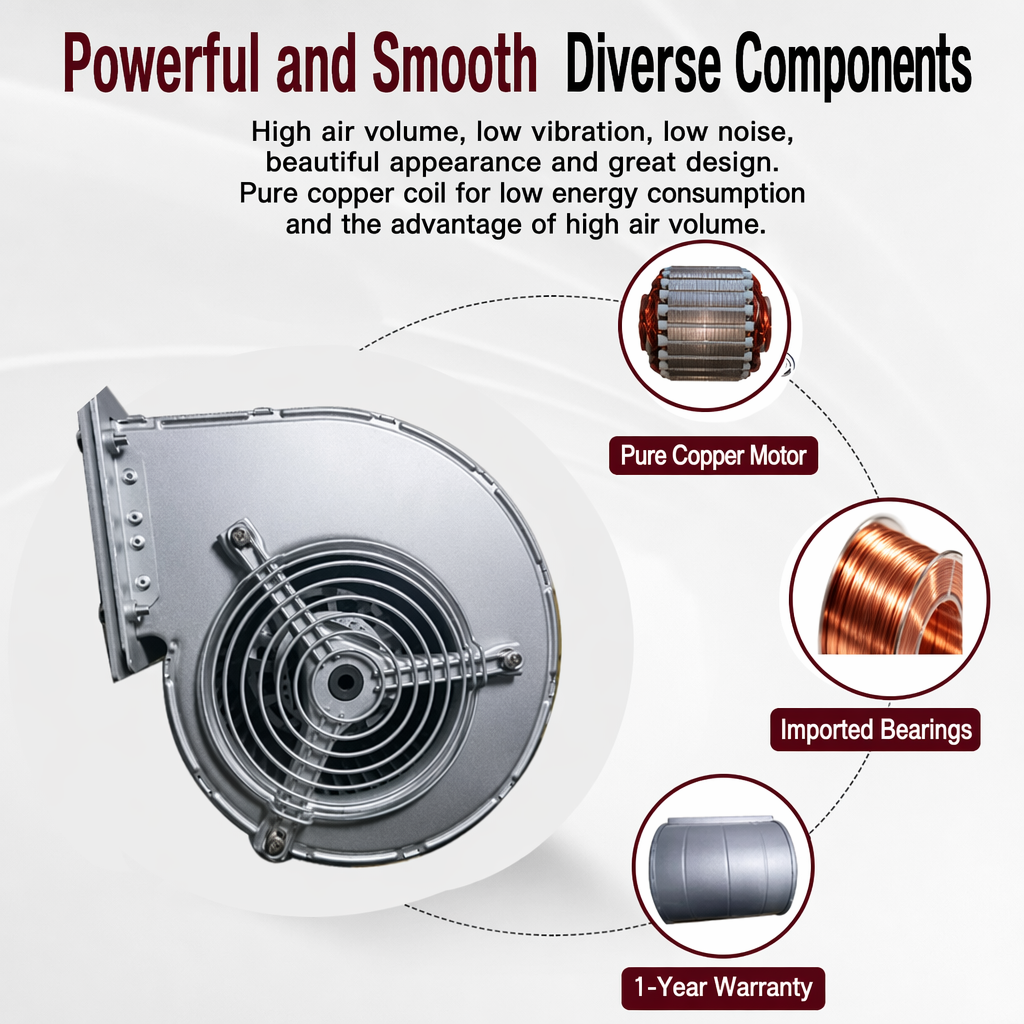
During hot summer periods, commercial livestock housing faces severe thermal challenges. When ambient temperatures rise above 35°C combined with high relative humidity, trapped heat inside enclosed housing can quickly reach dangerous levels. Deploying a high-capacity radial air blower supplies the high-volume, high-pressure airflow required to pull out heat and moisture, maintaining a safe environment for poultry, swine, and dairy stock.
Heat stress harms more than animal welfare—it damages farm profitability. Broiler flocks exposed to heat spikes experience reduced feed conversion efficiency, slower growth, and elevated mortality. Dairy herds suffer significant drops in daily milk yields under prolonged heat exposure. Investing in heavy-duty livestock barn ventilation hardware protects animal health and secures farm productivity throughout peak summer heatwaves.
The core advantage of using a radial air blower over a standard axial prop fan comes down to static pressure performance. In modern agricultural housing, air encounters substantial physical resistance from evaporative cooling pads, dust screens, intake louvers, and long distribution ducts.
While low-pressure axial fans stall and drop significant CFM capacity when working against backpressure, a radial air blower maintains consistent volumetric output. Its centrifugal impeller accelerates air outward from the hub, generating the pressure needed to drive air through dense filter banks and distribution channels. This capability makes centrifugal designs ideal for complex livestock breeding ventilation layouts that require uniform air movement across every pen and cage tier.
To withstand harsh barn environments, commercial agricultural ventilation fan units feature corrosion-resistant housings and specialized coatings that resist ammonia fumes, moisture, and fine organic dust. Backward-curved impeller blades deliver optimal energy efficiency while keeping noise levels low—an essential design factor, as loud operational noise stresses animals and disrupts normal feeding patterns.
Different animals require distinct ventilation exchange rates based on housing density, body mass, and biological heat generation.
Poultry Operations: High stocking densities mean poultry houses require aggressive air turnover—typically 4 to 6 full air changes per minute during summer peaks—to prevent severe heat prostration.
Swine Facilities: Pig housing generally requires 2 to 3 air changes per minute during warm weather to control humidity and pull away heavy gas buildup near slatted floors.
Dairy Barns: Free-stall dairy barns rely on continuous air speeds over cows to encourage cooling, requiring 1 to 2 complete air turns per minute during high ambient heat periods.
Properly sizing a radial air blower array for livestock barn ventilation requires calculating total air volume demands while factoring in static pressure losses from ductwork, cooling pads, and dust guards. Experienced facility designers add a 20 percent safety capacity buffer so that airflow remains sufficient even when intake filters become dirty between maintenance cycles.
A well-designed agricultural ventilation fan layout creates clean, continuous diagonal airflow paths that remove dead spots where stagnant heat and gases accumulate.
Key design strategies include:
Balanced Intake and Exhaust Sizing: Matching intake louver area with total fan exhaust capacity prevents excessive negative pressure inside the structure.
Integrated Evaporative Cooling: Coupling a high-pressure radial air blower with wet pad systems lowers incoming air temperatures before it reaches animals.
Intelligent Speed Controls: Utilizing Variable Frequency Drives (VFDs) adjusts fan speed based on real-time temperature and humidity sensors, cutting energy consumption during cooler morning hours.
Corrosion Protection Protocols: Sourcing hardware built by a certified livestock circulation fan factory ensures motor housings and electrical junction boxes carry IP54 ingress protection against dust and water sprays.
Field evaluations in large-scale commercial poultry operations demonstrate the clear financial returns of upgrading ventilation systems. A broiler operation replaced aging low-pressure wall fans with high-static radial air blower units delivering 12,000 cubic meters of air per hour each.
During severe summer conditions where outdoor temperatures peaked at 42°C, internal barn temperatures remained within 3°C of ambient. The previous ventilation setup had allowed interior heat to surge 8°C above ambient under identical weather conditions.
This thermal control reduced bird mortality rates from 3.2 percent down to 1.1 percent and improved overall feed conversion ratios by 8 percent over a full grow-out cycle. The farm recovered its total equipment upgrade investment within a single flock cycle purely through lowered mortality and improved feed efficiency.
Although heavy-duty centrifugal equipment carries a higher initial purchase price than simple axial props, long-term operational costs favor the radial air blower in demanding livestock breeding ventilation systems. Centrifugal impellers offer higher static efficiency, delivering higher usable airflow per watt when pushing against system resistance.
Over a typical summer operating schedule of 2,000 continuous hours, the energy savings delivered by a high-efficiency agricultural ventilation fan offset the initial purchase premium. When paired with automated VFD controllers, system energy consumption drops substantially during off-peak hours, providing a sustainable, cost-effective cooling strategy for commercial farms.
Maintaining agricultural ventilation equipment ensures reliable performance during critical hot periods:
Monthly Impeller Inspections: Clean dust, feathers, and organic material off radial air blower blades to prevent dynamic imbalance and bearing wear.
Quarterly Motor Audits: Inspect motor bearings, check electrical terminal connections, and confirm thermal overload sensors operate correctly.
Seasonal Seal and Belt Checks: Verify belt tension on belt-driven units and check rubber seals for damage caused by ammonia exposure.
Pre-Summer Load Testing: Run full-system stress tests before summer begins to ensure automated controllers respond accurately to temperature spikes.
Securing dependable, long-lasting environmental control systems requires sourcing equipment from established manufacturers that specialize in agricultural airflow engineering.
Lobisong (lobisong.com) is an established livestock circulation fan factory and industrial air-handling specialist with extensive manufacturing expertise. Operating five automated production lines equipped with motor winding, precision welding, assembling, and dynamic blade balancing stations, Lobisong delivers high-grade ventilation hardware engineered for tough operating environments.
Exporting custom solutions to customers across Europe, Asia, India, and the Americas, Lobisong provides comprehensive OEM and ODM support. Offering custom voltage configurations from 115V to 400V, robust IP54 protection ratings, and international CE and UKCA certifications, Lobisong supports agricultural operations worldwide with reliable livestock barn ventilation equipment, stable supply chain fulfillment, and proven product durability.

2026/09/30
Cement cabinets choke on dust. Learn the filter rule for an industrial cabinet cooling fan: G4/F7 media, IP rating, and pre-filter care.

2026/10/07
Right wall-mount height for an industrial axial exhaust fan: room volume, free clearance, brackets, and recirculation control.

2026/10/08
An ec motor fan links to BMS via Modbus, 0-10V and PWM for demand-based cooling, energy scheduling and automatic sensor-driven speed control.

2026/10/06
A radial exhaust fan removes grease, fumes, and odors from food-processing workshops with capture velocity and hygienic washdown design.

2026/10/05
Learn antistatic treatment for industrial cabinet cooling fan in electronics workshops—ESD-safe housing, ionizable plastics, and cleanroom compatibility.

2026/10/04
Discover how a brushless dc servo delivers precise wind speed control for laboratory cooling fans with closed-loop PID feedback and laminar airflow.
