 EN
EN
What filter matching rule for dust proof cabinet cooling fan operating in cement factories
2026/09/30
Cement cabinets choke on dust. Learn the filter rule for an industrial cabinet cooling fan: G4/F7 media, IP rating, and pre-filter care.

2026/09/12
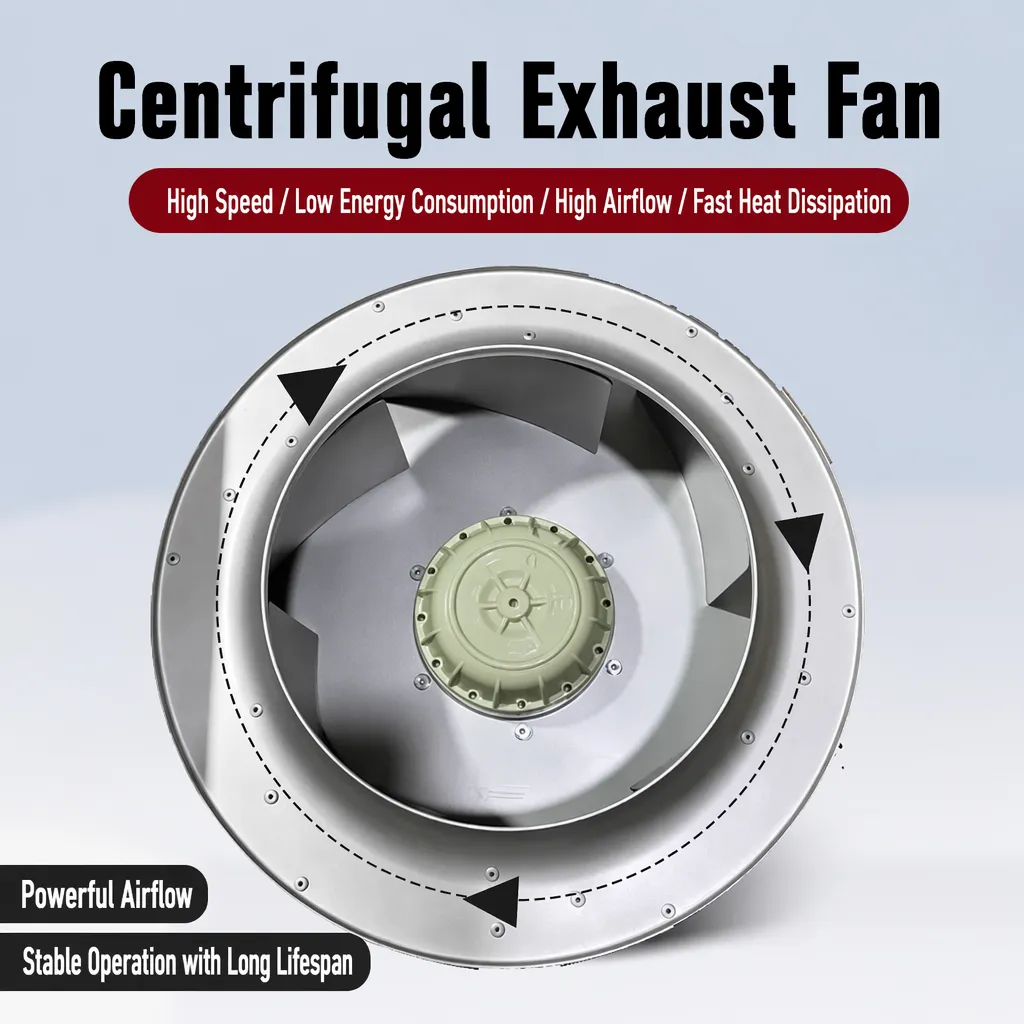
Lithium-battery production depends on tight thermal control, and a radial centrifugal blower is the component that keeps cooling wind evenly spread across a workshop floor. In cell formation, grading and pack assembly, even a few degrees of uneven cell temperature can shift capacity readings and create hidden stress inside a battery module.
A radial centrifugal blower earns its place wherever cell temperature must stay within a narrow band. Lithium cells are sensitive to local heating; when one zone runs warmer, internal resistance drops, current concentrates, and the zone heats further. This feedback is the early path toward thermal runaway, where a single compromised cell can cascade into neighbors. Uniform airflow interrupts that path by removing heat at the same rate everywhere on the production line.
Grading stations are unforgiving: a 28 °C cell may pass while its 33 °C neighbor reads as a different capacity class even when identical. Tight cell temperature control protects yield and safety by holding the rack within a small spread so every battery module shares one thermal envelope.
Spot cooling looks cheap but fails in practice. A directed jet cools one spot while starving the next, exaggerating the temperature spread operators try to remove. On a long production line, single-point fans create competing micro-climates whose boundary drifts as load changes through a shift.
A distributed, balanced air system sets a consistent baseline airflow so the entire workshop shares one thermal condition. Thousands of cells sit in dense arrays where a single hot pocket would spread, so even airflow is the cheaper long-term answer.
The core advantage of a radial centrifugal blower is its ability to generate high static pressure at modest flow, letting long duct runs deliver air to distant outlets without losing balance. Ducts are sized and damped so each branch sees similar resistance; the blower then pushes uniform airflow to every vent.
Correct duct balancing is an engineering task: technicians measure static pressure at each branch and adjust dampers until the spread across the battery module rows is acceptable. A radial centrifugal blower with a stable outer-rotor motor holds that pressure as filters load, so cooling wind stays uniform hour after hour.
Air movement quality matters as much as volume. Laminar flow carries cooling wind in parallel streams that wash evenly across surfaces, while turbulent flow mixes aggressively. For assembly, controlled laminar flow near open cells reduces dust settling and keeps cell temperature predictable.
Turbulent flow is not always wrong; it helps where vigorous mixing erases large gradients. The skill is choosing the regime per zone—laminar flow over delicate assembly, gentler turbulent mixing in bulk aisles—so a radial centrifugal blower protects both heat dissipation and cleanroom discipline.
Air velocity must be tuned, not maximized. Too high a velocity chills surfaces unevenly; too low lets heat accumulate near dense battery module stacks. Process cooling works well when velocity is matched to each station's heat load with sensor feedback so the blower array holds the set point.
A radial centrifugal blower with variable control makes this per-zone tuning practical. When one zone ramps up, the system shifts air without starving another, preserving uniform airflow across the production line and keeping cell temperature inside the process window.
Process cooling and cleanroom integrity pull in opposite directions. High air changes help heat dissipation but can breach ISO 14644 particle limits or raise turbulence near sensitive steps. Zoning is the answer: dedicated laminar flow benches for assembly, separated from the broader cooling wind managing room-level cell temperature.
Dust control sits at the intersection of these needs. Filters sized for the particle class protect the battery module surfaces while the blower maintains pressure balance, so contaminated make-up air never backflows into clean zones. Buyers should request the filter class, pressure curve and commissioning report before acceptance.
A lithium-battery pack assembly workshop faced recurring grading rejects from uneven cell temperature. Cells from formation were graded on capacity, but the grading bench sat in a warm corner where afternoon cell temperature rose about 5 °C above the line average, enough to reject or misclassify good cells.
Initial fixes—adding a local fan and re-routing one duct—only moved the problem. A new hot band appeared near the conveyor bend, and operators could not keep pace with manual re-balancing. The pattern was classic: spot cooling treated symptoms while the underlying uniform airflow was never established.
The workshop replaced the patchwork with a radial centrifugal blower array feeding balanced ducts across the grading and assembly zones. Dampers were set so each branch held similar static pressure, and air velocity was tuned to the measured heat dissipation of each station. Within two weeks the cell temperature spread narrowed from roughly 5 °C to about 1.2 °C, measured along the row.
Grading rejects linked to temperature drift dropped noticeably, and the hot-spot risk eased as uniform airflow removed heat at a consistent rate. The takeaway is practical: invest in balanced distribution and commissioning, not in the biggest single fan.
Uniform cooling wind is not a luxury in lithium-battery manufacturing; it is the baseline that protects yield and safety. A radial centrifugal blower, installed with balanced ducts and tuned air velocity, turns uneven heat into a controlled, predictable condition across every battery module and station. By holding cell temperature within a tight band and respecting ISO 14644 and NFPA 855 guidance, the approach reduces thermal runaway risk while keeping the line efficient. Buyers should prioritize documented commissioning, filter class and pressure stability over raw airflow claims.
What makes uniform cooling wind important for lithium-battery workshops?
Answer: Uneven cell temperature shifts capacity readings and hides stress inside a battery module, raising thermal runaway risk. Uniform airflow removes heat at the same rate across the production line, so no zone drifts ahead. Stable cooling wind also protects grading yield and keeps process cooling predictable. Workshops should treat even distribution as a baseline safety requirement rather than an optional upgrade.
Why does spot cooling fail on a long production line?
Answer: A single jet cools one location while starving the next, exaggerating temperature spread instead of removing it. Competing micro-climates form along the line, with the boundary drifting as load changes through a shift. That instability makes cell temperature readings unreliable and forces conservative process limits. Distributed, balanced airflow sets one consistent baseline so the whole workshop shares the same thermal condition, avoiding local re-tuning.
How does a blower control laminar flow versus turbulent flow?
Answer: Outlet type and damper setting decide the regime. Laminar flow washes surfaces in parallel streams, lowering dust settling on contacts and keeping cell temperature predictable. Turbulent flow mixes aggressively, useful for erasing large gradients in bulk aisles but risky near open cells. A radial centrifugal blower paired with matched outlets lets engineers tune each zone, protecting heat dissipation and cleanroom discipline on the same line.
Can air velocity be tuned without wasting energy?
Answer: Yes, by matching velocity to the heat load of each station and using sensors for feedback. Too high a velocity chills unevenly and lifts debris; too low lets heat build near dense battery module stacks. Zoned control shifts air where demand rises without starving other areas, preserving uniform airflow. This keeps cell temperature in the process window while avoiding needless fan speed and energy use.
Which standards apply to battery workshop cooling systems?
Answer: NFPA 855 addresses safe battery storage and associated fire risk, relevant when cooling wind touches energy-storage areas. ISO 14644 defines cleanroom particle classes that process cooling must respect to avoid contamination. CE marking confirms the equipment meets applicable EU directives for the intended use. Buyers should ask suppliers for the relevant certificates, filter class and a commissioning report documenting balanced, uniform airflow before acceptance.

2026/09/30
Cement cabinets choke on dust. Learn the filter rule for an industrial cabinet cooling fan: G4/F7 media, IP rating, and pre-filter care.

2026/10/07
Right wall-mount height for an industrial axial exhaust fan: room volume, free clearance, brackets, and recirculation control.

2026/10/08
An ec motor fan links to BMS via Modbus, 0-10V and PWM for demand-based cooling, energy scheduling and automatic sensor-driven speed control.

2026/10/06
A radial exhaust fan removes grease, fumes, and odors from food-processing workshops with capture velocity and hygienic washdown design.

2026/10/05
Learn antistatic treatment for industrial cabinet cooling fan in electronics workshops—ESD-safe housing, ionizable plastics, and cleanroom compatibility.

2026/10/04
Discover how a brushless dc servo delivers precise wind speed control for laboratory cooling fans with closed-loop PID feedback and laminar airflow.
