
 EN
EN
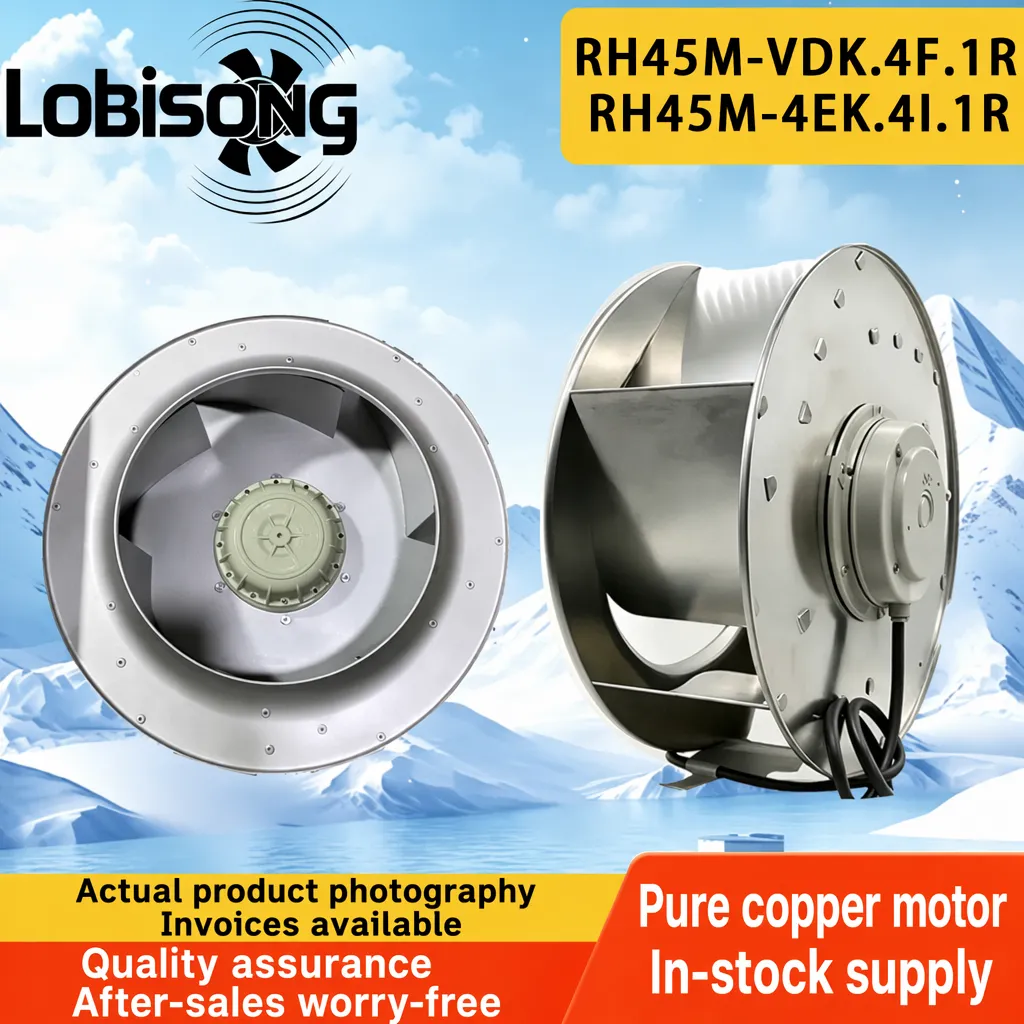
How to Select Energy Saving Cabinet Cooling Fan Powered by Brushless DC Motor for Electrical Control Cabinets
Having spent years advising on thermal management solutions for industrial installations, I can tell you that one of the most overlooked decisions in electrical panel design is the selection of the right cabinet cooling fan. A poor choice leads to overheating failures, unplanned downtime, and replacement cycles that eat into maintenance budgets. Choose wisely, particularly when opting for a brushless DC motor-driven unit, and you get quiet, energy-efficient airflow that outlasts the equipment it protects.
This guide walks through the key selection criteria for an energy-saving cabinet cooling fan designed for electrical control cabinets, with a particular focus on why brushless DC motor technology has become the go-to choice for efficiency-conscious buyers.
Why Brushless DC Motor Technology Matters for Cabinet Cooling
Before evaluating any specific product, it helps to understand why the motor type matters so much. Conventional AC fans have powered cabinet cooling for decades, but they operate at fixed speeds and waste energy as heat losses in the motor windings. A brushless DC motor, by contrast, uses electronic commutation — no mechanical brushes wear down, and the motor itself runs cooler and quieter.
From an energy standpoint, brushless DC and EC (Electronically Commutated) fans are typically 85–90% efficient at the motor level, compared to 60–70% for standard AC motors. This translates to up to 30% lower energy consumption under comparable operating conditions. More importantly for electrical control cabinet applications, variable-speed operation can reduce electricity use by up to 50% when full airflow is not required — something an AC fan simply cannot do without external speed controllers.
There is also the lifespan argument. A quality brushless DC motor cabinet cooling fan can achieve service lives of 60,000 hours or more — roughly seven years of continuous operation. That is a meaningful number when you factor in the labour cost and downtime risk of fan replacement inside a live electrical enclosure.
Key Selection Criteria for Electrical Control Cabinet Fans
1. Airflow and Static Pressure Requirements
One mistake I see repeatedly is selecting a cabinet cooling fan based on free-air airflow (CFM or m³/h) without accounting for installation resistance. Electrical control cabinets typically have cable entries, filter grilles, and mounting flanges that create back-pressure. If your chosen fan's performance curve drops off steeply under modest static pressure, the actual airflow delivered inside the cabinet may be 30–40% below the rated figure.
When specifying an EC variable-speed rack cabinet cooling fan or any brushless unit, be sure to check the fan's pressure–airflow curve and identify the operating point that matches your cabinet's estimated resistance. Suppliers who provide only free-delivery airflow specs are giving you an incomplete picture.
2. Thermal Management Range and Thermostat Integration
Electrical control cabinets in industrial environments routinely see ambient temperatures of 35–55°C. The internal heat load from drives, PLCs, and power supplies can push enclosure temperatures considerably higher. Your cabinet cooling fan selection should account for the maximum expected continuous operating temperature and whether the fan supports thermostat or PWM control input.
An EC brushless electrical cabinet exhaust fan with built-in thermostat input allows the fan to ramp speed proportionally to enclosure temperature — delivering quiet operation at low loads and full cooling capacity during peak demand. This adaptive response is particularly valuable in outdoor electrical cabinets or machinery rooms with seasonal temperature swings.
3. IP Protection Rating
The IP (Ingress Protection) rating is non-negotiable for cabinet cooling fans in industrial settings. For standard indoor control panels in clean factory environments, IP54 (dust-protected, splash-resistant) is typically the minimum acceptable standard. Outdoor electrical enclosures, pump control panels, or any cabinet exposed to water spray, condensation, or contamination require IP55 or higher.
An important caution: brushless DC motor fans with integrated driver electronics can be more sensitive to moisture ingress than simple AC units. Verify that the IP rating covers the fan body and the drive electronics together, not just the motor housing in isolation.
4. Voltage Compatibility and Driver Integration
Brushless DC motor cabinet cooling fans require driver electronics to operate, which introduces a compatibility dimension that pure AC fans do not have. The critical questions are: what input voltage does the driver accept (single-phase 110V, 220V, or wide-range 100–240V)? Does the driver accept PWM speed control signals? If so, what is the compatible PWM frequency range?
Buyers sourcing fans for international projects or multi-market product lines benefit significantly from wide-input-voltage brushless DC units, which eliminate the need to stock voltage-specific variants. Equally, confirming PWM frequency compatibility upfront prevents the frustrating situation of discovering that a new fan's driver rejects the control signal from an existing PLC output card.
5. Noise Level
Electrical control cabinets in office-adjacent production areas, server rooms, or building automation installations carry real noise constraints. Standard AC fans often produce 40–55 dB(A) at rated speed, which becomes noticeable in quieter environments. A properly selected brushless DC motor cabinet cooling fan running at 60–70% speed under light thermal load can achieve acoustic levels well below 35 dB(A).
Be aware, though, that noise specifications on datasheets are typically measured in free air at 1 metre distance. Actual installed noise levels depend on resonance coupling with the cabinet enclosure, the proximity of mounting surfaces, and whether vibration-damping mounts are used. Asking suppliers for noise data under back-pressure conditions gives a more realistic benchmark.
Energy Efficiency and Compliance Considerations
For buyers supplying European markets, EC fan technology addresses a practical compliance requirement. EC fans powered by brushless DC motors inherently satisfy the energy efficiency requirements under the EU ErP (Energy-related Products) Directive, which sets minimum efficiency standards for fans above certain power thresholds. AC fans at equivalent airflow capacities often require additional measures to meet the same benchmarks.
Beyond regulatory compliance, there is a compelling operational cost argument. For a cabinet cooling fan running 8,000 hours per year at an average of 40W, switching from a comparable AC unit consuming 65W saves approximately 200 kWh annually. At industrial electricity tariffs, that payback calculation becomes attractive within 12–18 months in most markets, even when the upfront price premium of the brushless DC unit is factored in.
A Practical Selection Checklist
- Define the required airflow at your cabinet's estimated static pressure, not in free air.
- Specify the maximum operating ambient temperature and required IP rating for the installation environment.
- Confirm input voltage range and control interface compatibility (PWM, analog 0–10V, thermostat relay).
- Check bearing lifespan (hours MTBF) and whether the brushless DC motor driver is field-replaceable.
- Request noise data at partial speed, not only at full speed.
- For European markets, verify ErP compliance documentation and CE declaration of conformity.
Finding the Right Supplier
Selecting an energy-saving cabinet cooling fan is only part of the equation — the supplier's ability to provide consistent product quality, full technical documentation, and responsive support matters just as much as the specification of the fan itself. Buyers consolidating procurement from a single source for both AC and EC/BLDC motor fan variants benefit from reduced qualification effort and simpler logistics, particularly for trading company operations supplying multiple end-user markets.
Lebisen specialises in cabinet cooling fans, EC axial fans, and related heat exchange products, offering both standard and customised configurations for industrial control panel and enclosure applications. Their product line covers AC and EC/BLDC variants across a range of frame sizes and voltages, supporting buyers who need to source multiple specifications without managing parallel supply chains.
Conclusion
Selecting the right cabinet cooling fan for an electrical control cabinet requires looking beyond rated airflow figures. The move toward brushless DC motor technology is not just an energy-saving trend — it is a shift toward fans that better match the variable thermal demands of modern electrical enclosures, deliver longer service life with lower maintenance exposure, and support compliance requirements in regulated markets.
Work through the criteria above before shortlisting any specific product: static pressure performance, temperature range, IP rating, voltage and control compatibility, noise levels, and ErP documentation. Done carefully, this selection process results in a cabinet cooling fan that protects your electrical equipment reliably for years, without driving up energy costs or maintenance frequency.






