 EN
EN
What filter matching rule for dust proof cabinet cooling fan operating in cement factories
2026/09/30
Cement cabinets choke on dust. Learn the filter rule for an industrial cabinet cooling fan: G4/F7 media, IP rating, and pre-filter care.

2026/09/03
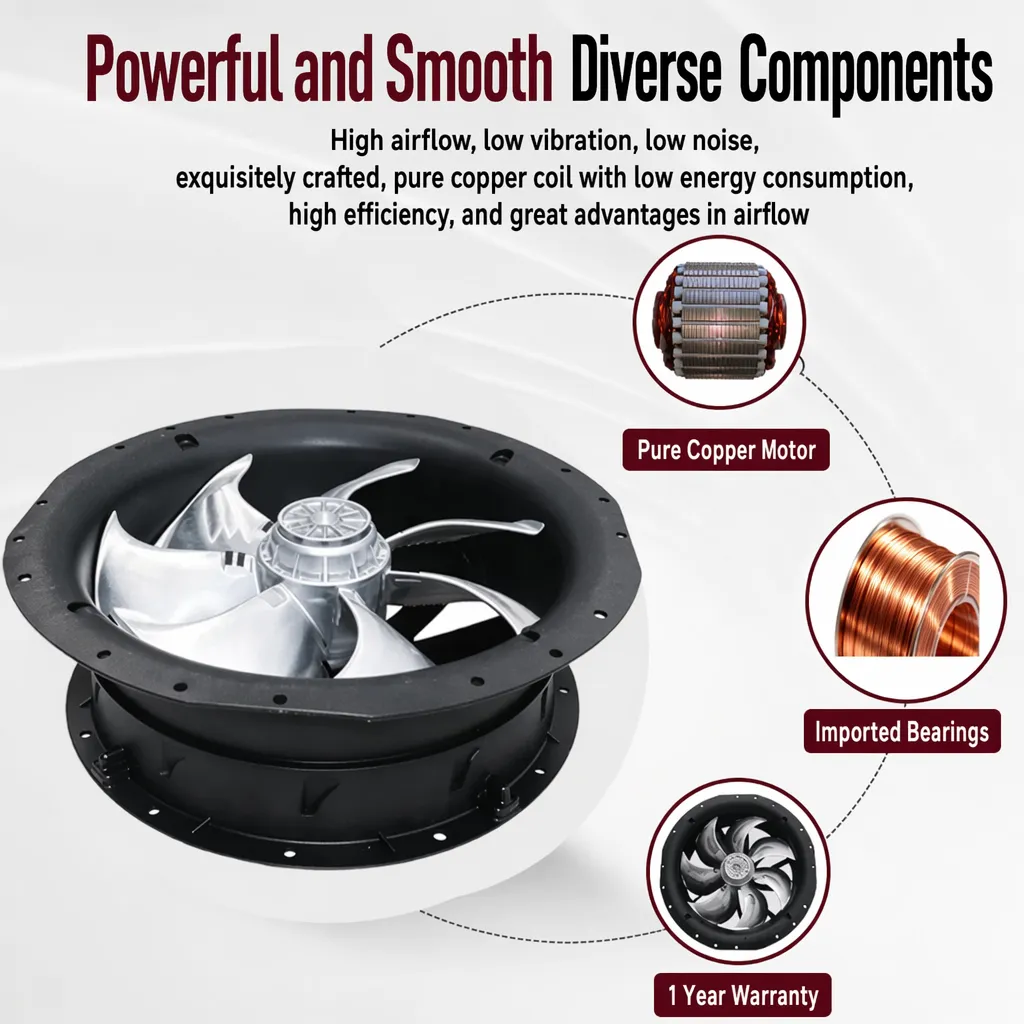
Where heat actually builds up in cable tunnels
Heat accumulation inside a cable tunnel follows a simple but unforgiving rule: every amp of current passing through a conductor releases waste energy as heat. A tube axial flow fan addresses this by moving air along the full length of the run rather than relying on weak ceiling convection. Copper losses scale with the square of load current, so a corridor feeding a busy substation can gain several kilowatts of thermal energy during the afternoon peak. Without forced airflow, that heat lingers near the cabinets, raising the temperature of insulation and terminal blocks until protective relays trip.
Passive vents and natural convection look economical on paper, yet they rarely keep pace when load spikes. Buoyant warm air rises, but in a long horizontal corridor it has nowhere to go, so a hot layer forms along the top while cabinets at mid-height keep cooking. Static pressure inside a sealed tunnel works against natural draft, and a single blocked grille can stall the entire exchange. Forced inline equipment such as a tube axial flow fan overcomes this by generating the pressure needed to push air through bends, dampers, and filter sections without depending on temperature differentials.
A municipal utility in a coastal city operated a 480-meter cable tunnel feeding a water-treatment substation. Crews reported frequent thermal trips every summer, and infrared scans showed cabinet surfaces exceeding 70°C during peak demand. The corridor had two small wall grilles but no continuous air movement, and humidity from nearby drainage accelerated corrosion on terminal hardware. Maintenance staff could only respond after a trip occurred, which meant unplanned outages for a facility the city depended on around the clock.
Engineers installed a series of inline tube axial flow fan units at 60-meter intervals, each sized from measured CFM requirements rather than catalogue guesswork. Duct adapters connected units to existing vent shafts, and IP54-rated housings resisted the damp environment. After commissioning, cabinet surface temperatures dropped below 45°C even at full load, and the seasonal trip pattern stopped. The retrofit paid for itself through avoided outage time rather than a dramatic single saving.
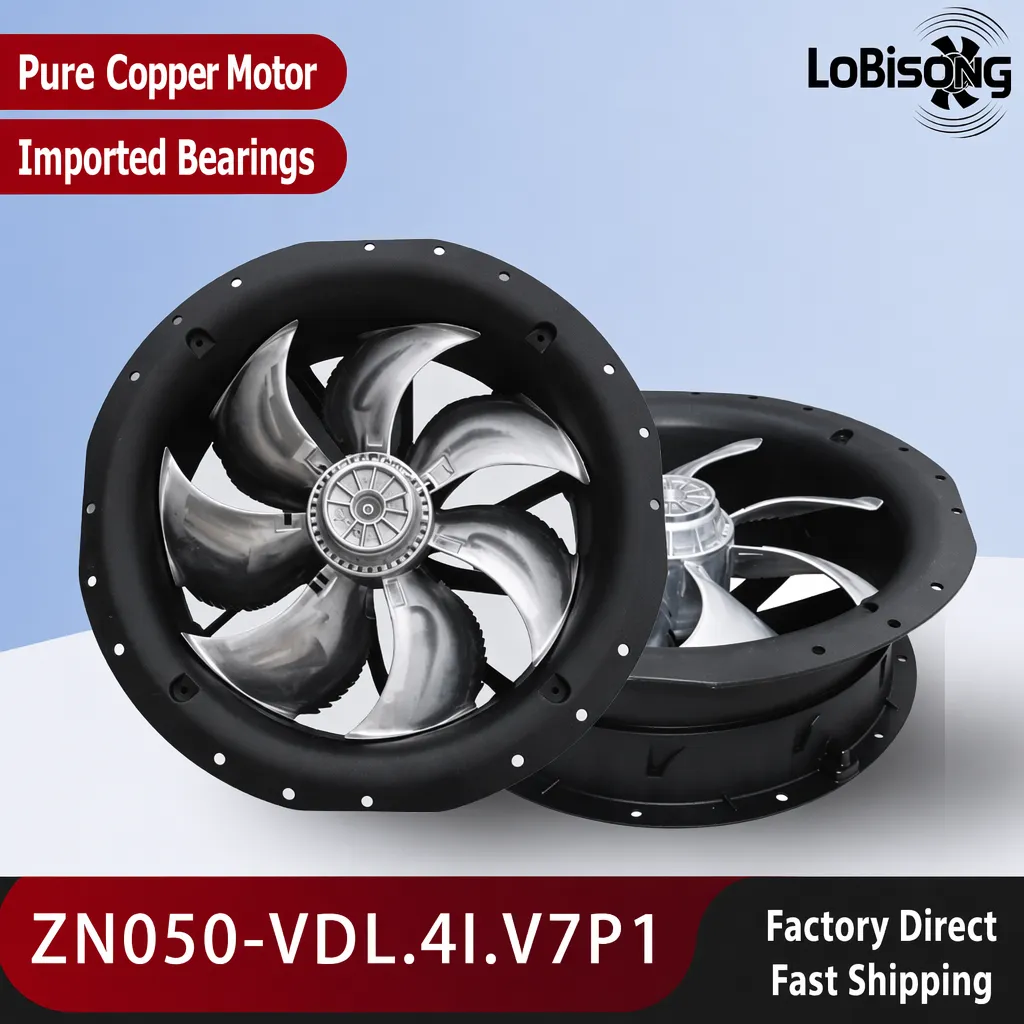
An axial fan moves air parallel to the shaft, which suits long straight corridors where pressure loss comes mainly from friction and bends. The tube configuration places the impeller inside a cylindrical duct, so nearly all generated flow travels in one direction instead of spilling sideways. Selecting the right tube axial flow fan means matching free-air CFM to the tunnel's resistance curve, not just picking a high number on a label. Undersized units spin faster, raise noise, and still fail to move enough air; oversized units waste energy and create turbulent backflow at the exits. Placing units inline, rather than at a single wall opening, distributes pressure along the route and prevents dead zones where heat would otherwise collect behind cabinets.
Blade pitch and hub ratio determine how much air a given rpm delivers, while the motor winding material governs heat tolerance during continuous duty. Pure copper windings hold efficiency longer than substituted alloys, and sealed precision bearings keep the impeller stable under vibration from adjacent machinery. A stalled or mismatched blade angle causes recirculation that defeats the purpose, so blade balancing during production matters more than it appears. For damp tunnels, a tube axial flow fan needs a corrosion-resistant frame and protected terminal box to prevent the early failures that turn a cooling project into a repeat service call. Motor protection against overload, paired with a thermal cutoff, keeps a single fault from cascading across the ventilation line.
Confined-space ventilation guidance from OSHA and NFPA 70E framing for electrical work inform how teams size and access tunnel airflow. ISO 14694 covers industrial fan vibration and mechanical integrity, while AMCA 210 defines the standardized test for published fan performance. Specifying against these references keeps procurement comparisons honest, because two units with identical labels can perform very differently once installed behind real duct resistance. Local codes may also require fire-rated dampers, so the fan layout should accommodate them without choking airflow. Reviewing these documents early prevents the costly surprise of a unit that passes a bench test yet fails inside an actual corridor.
Buyers should confirm the duty point on the manufacturer's performance curve, the ingress protection rating for the site, and the bearing type for the running hours expected. Request the vibration test report and verify the frame material against the tunnel atmosphere. On the maintenance side, a quarterly inspection of blades, filters, and mounting hardware catches imbalance before it spreads. Cleaning the impeller and checking amp draw against the nameplate prevents slow efficiency loss, and logging temperatures at fixed points builds the trend data that predicts trouble weeks ahead of a trip. Heat inside cable tunnels is a slow, predictable threat that compounds with every summer peak.
Heat inside cable tunnels is a slow, predictable threat that compounds with every summer peak. A properly selected tube axial flow fan turns an unreliable corridor into a controlled environment, protecting switchgear and keeping the lights on for the communities that depend on it.
What size inline fan does a cable tunnel need?
A tube axial flow fan must be sized from the corridor's heat load and resistance curve, not from a catalogue number. Start by totaling conductor losses at peak current, then convert that thermal energy into the required CFM. Account for duct length, bends, filters, and damper pressure drops. A unit that looks adequate in free air often falls short once installed behind real tunnel resistance, so always read the published performance curve at the actual duty point.
Why does heat accumulate even when grilles stay open?
Open grilles allow some exchange, but long horizontal corridors lack the vertical height that natural convection needs to work. Warm air rises and pools at the ceiling, leaving cabinets at mid-height in a stagnant hot layer. Static pressure inside a sealed tunnel further resists passive flow. Without forced movement, heat keeps building during peak load until relays trip, which explains why open vents alone rarely solve tunnel overheating.
How often should tunnel fan filters be cleaned?
Filter cleaning depends on dust and humidity, but a quarterly schedule suits most utility corridors, with monthly checks in dirty or coastal sites. Clogged filters raise static pressure, force the motor to work harder, and cut airflow exactly when cooling matters most. Inspect blades and housings during the same visit, and log amp draw against the nameplate to catch gradual efficiency loss before it becomes a trip.
Which ingress protection rating suits a damp tunnel?
IP54 resists dust and water splash, which covers most cable tunnels with drainage or groundwater exposure. Sites with direct spray or washdown may need a higher rating, while dry indoor corridors can use IP44. Match the rating to the actual atmosphere rather than over-specifying, but never drop below what the environment demands, because moisture intrusion is a leading cause of early motor failure.
Can a single large fan replace several small inline units?
A single large unit rarely matches the even airflow that spaced inline fans provide along a long corridor. One powerful fan creates strong flow near its location and weak flow at the far end, leaving dead zones behind cabinets. Distributed units keep pressure consistent, shorten duct runs, and reduce the impact of any single failure. For tunnels beyond roughly 100 meters, multiple smaller fans usually protect uptime better.
When should cabinet temperature alarms be set?
Set alarms from the insulation and relay ratings, not from a round number. Establish a baseline during normal load, then place a warning well before the critical temperature that triggers protective trips. A two-step alarm, warning then critical, gives crews time to investigate while the monitoring data show whether the trend is worsening or stabilizing.

2026/09/30
Cement cabinets choke on dust. Learn the filter rule for an industrial cabinet cooling fan: G4/F7 media, IP rating, and pre-filter care.

2026/10/07
Right wall-mount height for an industrial axial exhaust fan: room volume, free clearance, brackets, and recirculation control.

2026/10/08
An ec motor fan links to BMS via Modbus, 0-10V and PWM for demand-based cooling, energy scheduling and automatic sensor-driven speed control.

2026/10/06
A radial exhaust fan removes grease, fumes, and odors from food-processing workshops with capture velocity and hygienic washdown design.

2026/10/05
Learn antistatic treatment for industrial cabinet cooling fan in electronics workshops—ESD-safe housing, ionizable plastics, and cleanroom compatibility.

2026/10/04
Discover how a brushless dc servo delivers precise wind speed control for laboratory cooling fans with closed-loop PID feedback and laminar airflow.
