 EN
EN
What filter matching rule for dust proof cabinet cooling fan operating in cement factories
2026/09/30
Cement cabinets choke on dust. Learn the filter rule for an industrial cabinet cooling fan: G4/F7 media, IP rating, and pre-filter care.

2026/09/11
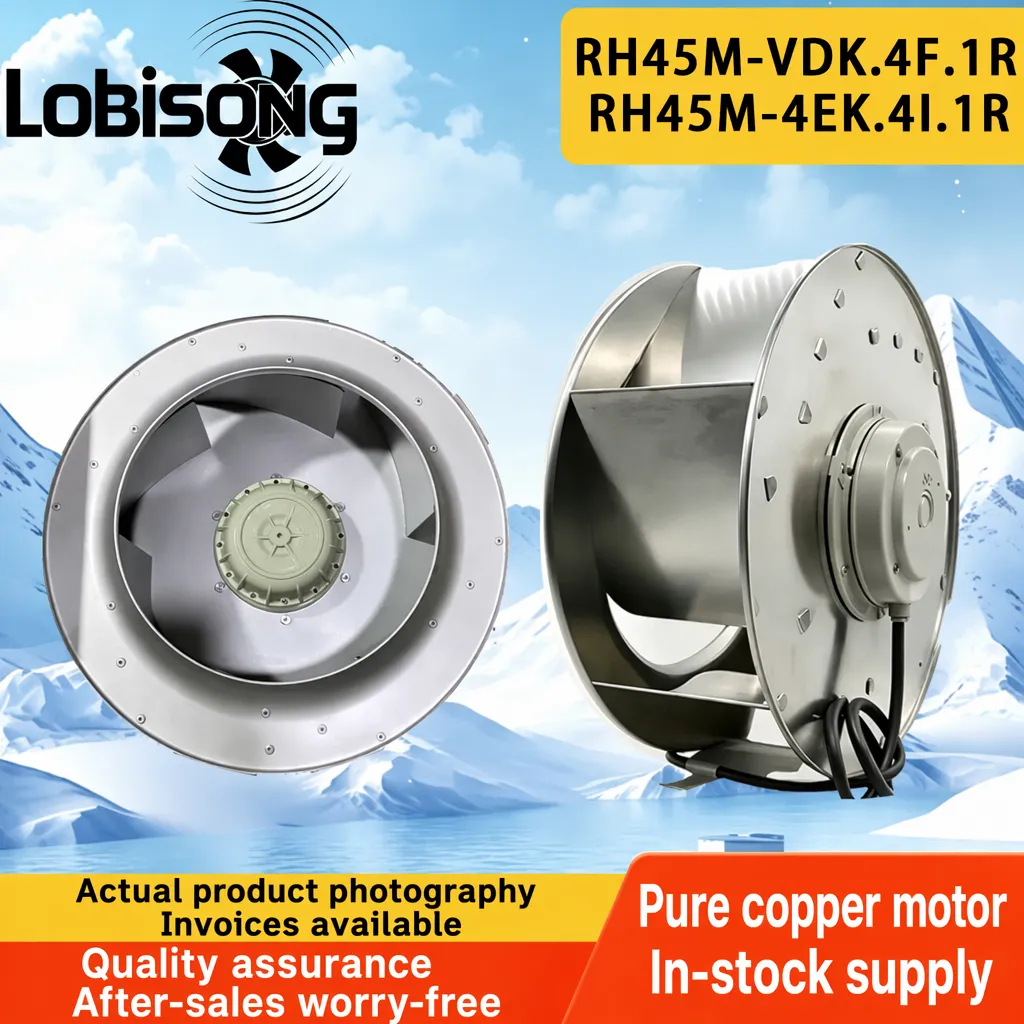
Selecting thermal-management hardware for industrial enclosures demands proof, not promises. A cabinet cooling fan factory that ships to Europe, Russia, India and the Americas must verify every finished unit before it leaves the dock. Finished-product inspection turns design intent into measured reality, and the instruments used at this stage decide whether a fan performs in the field or fails inside a VFD cabinet. For procurement engineers, understanding the test bench is the difference between trusting a datasheet and verifying it. The result is fewer surprises after the enclosure is sealed and powered.
A cabinet cooling fan factory carries the last line of defense against shipped defects. Consider a recent run on an automated production line building 230V outer-rotor fans for VFD cabinets. Routine finished-product inspection with an airflow meter flagged a small but consistent drop in delivered volume across one batch — a drift invisible to visual checks or basic power-on tests. The batch was quarantined before packing. A follow-up performance test with a manometer traced the loss to a ball-bearing tolerance shift introduced by a worn fixture. Corrective tooling restored the spec, and the units were released only after re-test. That single airflow check prevented field overheating in customer enclosures and protected buyer confidence without a recall.
Procurement engineers rarely see the bench, yet the data travels with the shipment. When a cabinet cooling fan factory archives each performance test report — volume, static pressure, noise level and current draw — a buyer can compare delivered goods against the quoted datasheet. Quality control is therefore less about a single pass and more about repeatable, archived evidence that the same result appears on the next order. Auditing a sample of archived reports is a practical way for buyers to confirm the quality control claim before committing to a large order.
The anemometer remains the workhorse of airflow verification. A cabinet cooling fan factory typically places a hot-wire or vane anemometer at the outlet to measure velocity, which the airflow meter converts into cubic-metre-per-hour volume against the declared curve. Acceptance criteria set the minimum allowable flow at rated voltage; anything below the band is a reject. This step confirms the fan actually moves heat away from the cabinet, not merely that it spins. Engineers specifying the unit should confirm the test voltage matches the field supply, since 115V and 230V variants behave differently under load.
Static pressure tells a different story — the resistance the fan overcomes inside a dense enclosure. A manometer referenced to AMCA airflow test methods measures the pressure delta at the inlet and outlet. When static pressure falls short, the fan may stall under real duct load even if free-air volume looks fine. A cabinet cooling fan factory that pairs the manometer with the anemometer gives buyers the full performance map needed for enclosure sizing. Documenting both curves in the test report also gives procurement a baseline for incoming inspection at the receiving warehouse.
Industrial sites impose strict noise limits, and a sound-level meter captures the noise level in decibel at one metre. A spike in decibel reading often points to rotor imbalance or bearing wear long before failure. A cabinet cooling fan factory that sets a decibel ceiling in the acceptance criteria protects both the equipment and the people working near the cabinet. Documenting the value also supports workplace compliance checks at the installation site.
Beyond sound, vibration analysis and balancing checks confirm the impeller runs true. A balancing stand spots mass offset that raises stress on the shaft and imported precision ball bearings. The life / endurance test then runs a sample at rated condition for an extended period to surface early wear. Combining vibration, balancing and endurance checks defends the repeat-purchase rate a serious supplier depends on, since early wear is caught before shipment. Recording vibration trends across batches also helps detect gradual fixture wear before it reaches the product.
No instrument earns trust unless it is traceable. Regular calibration of the anemometer, manometer and sound-level meter against certified references keeps readings honest. Under an ISO 9001 quality management system, each calibration feeds a controlled record, and AMCA airflow test methods give a common language for reporting. This discipline lets buyers ask for the calibration date on the test report with confidence, and keeps the production line honest across long runs.
Documentation closes the loop. CE and UKCA documentation, technical parameter sheets and CAD drawings supplied with the production line lot let engineering teams verify compliance before installation. A supplier that maintains this paperwork shortens the buyer's own approval cycle and reduces project risk. Storing the parameter sheet alongside the enclosure drawing also helps maintenance teams reorder the correct variant later.
Airflow, pressure, sound and endurance testing are not optional luxuries — they are the proof a buyer purchases. A disciplined cabinet cooling fan factory treats finished-product inspection as a contract with every customer, using calibrated instruments and recognized standards to catch deviation early. Specifying verified test data in the purchase order turns quality control from a slogan into a measurable safeguard for the enclosure and the process it protects.
What equipment verifies fan airflow during finished inspection?
Answer: Finished inspection relies on an anemometer and airflow meter for volume, a manometer for static pressure, and a sound-level meter for noise. A balancing stand and endurance rig cover vibration and life. Measured values are checked against acceptance criteria from the datasheet. Buyers should request the test report so delivered performance matches the quoted curve before the fans enter service.
Why does static pressure testing matter for enclosure cooling?
Answer: Static pressure shows the resistance a fan overcomes inside a dense cabinet. Free-air volume can look healthy while the fan stalls under real duct load. A manometer referenced to AMCA methods reveals this gap early. Capturing the pressure delta protects the enclosure from thermal buildup and confirms the selection suits the actual installation rather than a clean-lab condition.
How is fan noise measured on the production line?
Answer: A sound-level meter records the noise level in decibel at a fixed one-metre distance under rated voltage. The reading is compared against the decibel ceiling in the acceptance criteria. An unexpected rise often signals rotor imbalance or bearing wear. Documenting the value lets procurement verify comfort and compliance limits are met before the units ship.
Can calibration dates be requested with the shipment?
Answer: Yes. Each anemometer, manometer and sound-level meter should carry a recent calibration record under an ISO 9001 system. Requesting the calibration date on the test report confirms the readings are traceable and honest. Suppliers maintaining this discipline make buyer verification straightforward and reduce the risk of out-of-spec units reaching the field.
Where should buyers check acceptance criteria before ordering?
Answer: Acceptance criteria belong on the technical parameter sheet and the finished-product inspection report. Buyers should confirm volume, static pressure, decibel limit and current draw against the quoted values, and review CE / UKCA documentation for compliance. A cabinet cooling fan factory that shares this evidence up front shortens approval and lowers project risk.

2026/09/30
Cement cabinets choke on dust. Learn the filter rule for an industrial cabinet cooling fan: G4/F7 media, IP rating, and pre-filter care.

2026/10/07
Right wall-mount height for an industrial axial exhaust fan: room volume, free clearance, brackets, and recirculation control.

2026/10/08
An ec motor fan links to BMS via Modbus, 0-10V and PWM for demand-based cooling, energy scheduling and automatic sensor-driven speed control.

2026/10/06
A radial exhaust fan removes grease, fumes, and odors from food-processing workshops with capture velocity and hygienic washdown design.

2026/10/05
Learn antistatic treatment for industrial cabinet cooling fan in electronics workshops—ESD-safe housing, ionizable plastics, and cleanroom compatibility.

2026/10/04
Discover how a brushless dc servo delivers precise wind speed control for laboratory cooling fans with closed-loop PID feedback and laminar airflow.
