 EN
EN
What filter matching rule for dust proof cabinet cooling fan operating in cement factories
2026/09/30
Cement cabinets choke on dust. Learn the filter rule for an industrial cabinet cooling fan: G4/F7 media, IP rating, and pre-filter care.

2026/09/24
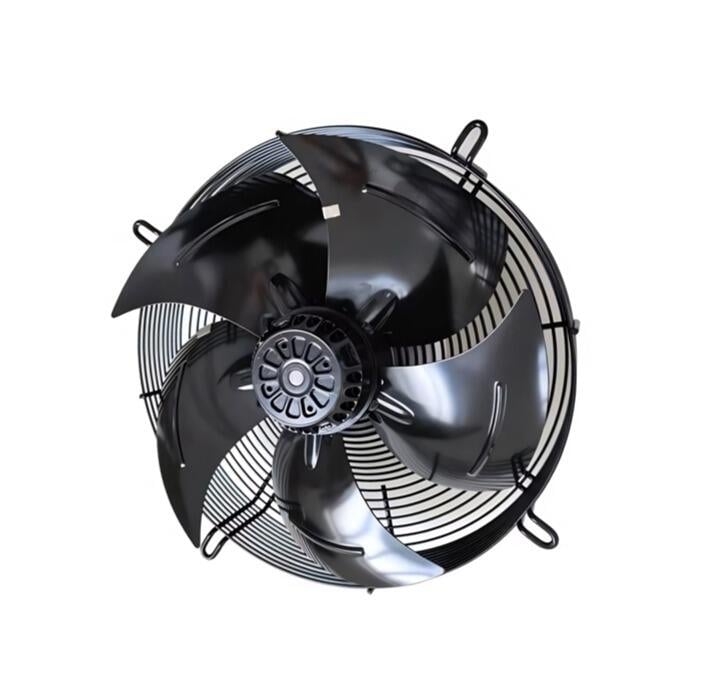
Textile mills generate a constant cloud of airborne fibers that settle on every surface, and control cabinets are no exception. An industrial cabinet cooling fan placed in a spinning or weaving area draws that contaminated air through its intake, so the device meant to protect electronics becomes the channel that delivers dust inside.
Cotton, polyester and blended yarns shed microscopic strands during spinning and cutting. These fibrous particulate particles stay suspended for hours, so ventilation openings act like a magnet. A standard industrial cabinet cooling fan draws intake air from the room, and each cubic meter through the grille carries textile dust and lint toward internal components.
The problem worsens because lint is not spherical like ordinary dust. Its elongated shape hooks onto edges and coils around wires, and once a few strands catch on the fan guard they form a net that traps the next particles — a chain no open grille can stop.
Clogging starts at the air inlet, where a thin mat of lint forms across the filter media. As the mat thickens, static pressure rises and airflow drops, so drive and contactor heat cannot escape. An industrial cabinet cooling fan against a clogged path moves less air until thermal switches trip and production stops.
Restricted airflow also raises motor winding temperature, shortening bearing life, while trapped fibers hold moisture in a humid shed and encourage terminal corrosion. The lint-capture, clogging, heat-rise, trip sequence shows why textile cabinets need a purpose-built anti-dust path rather than a generic fix.
The first defense is filter media paired with a washable filter as a pre-filter. A coarse pre-filter captures most fibrous particulate so the finer media stays effective longer. A properly specified industrial cabinet cooling fan kit sequences these stages to keep rated airflow as lint loads build through a shift.
Selecting media for textile lint means a depth-loading synthetic, not a paper panel that blinds fast under sticky cotton dust. A washable filter element rinses and reuses, lowering cost in continuous mills. The pre-filter sits upstream for tool-free removal, keeping pressure drop manageable.
A removable dust screen at the intake adds a cleanable barrier against large lint tufts. Behind it, IP55 construction keeps fibers and spray away from live parts; the first "5" is dust protection and the second "5" is water jets, matching the humid mill. Gasketed seams and louvered downward inlets strengthen enclosure protection so fibers cannot bypass the filter path.
Effective anti-dust design combines the screen, pre-filter, fine media and sealed housing into one airflow system. IEC 60529 defines the IP code buyers verify on the nameplate, while ISO 14644 cleanroom classes help specifiers read particle-size behavior. CE and UKCA files support European compliance.
A spinning mill's VFD cabinets ran dozens of drives beside the frames, where airborne textile dust was heaviest. Original open cabinets with bare axial fans tripped on over-temperature every few weeks. Lint returned within days because nothing stopped fibers at the source.
The retrofit replaced the open units with a sealed industrial cabinet cooling fan package: a louvered intake, a washable filter pre-filter, a synthetic filter media stage and an IP55 gasketed enclosure. The dust screen was sized for tool-free removal, with filters color-coded by service month.
After the lint-proof design was installed, unplanned thermal trips from clogging fell sharply and drive availability improved during peak season. Operators reported that the cabinet exterior stayed cleaner, and the anti-dust path meant far less manual grille cleaning during production.
The mill adopted a simple routine: rinse the washable filter and pre-filter every two weeks, inspect the dust screen weekly, and replace fine filter media quarterly. Disciplined enclosure protection maintenance prevented the heat-rise cycle behind earlier shutdowns, confirming the scheme's value in a real textile setting with an industrial cabinet cooling fan at its core.
Buyers should confirm IP55 for dust and water exposure. Inspect the intake: a credible anti-dust unit shows pre-filter, filter media and dust screen separated. Ask how the washable filter is accessed and whether the seal is gasketed, since gaps let fibers bypass. An industrial cabinet cooling fan for textile service should show this staged, sealed layout.
Confirm CE or UKCA files and an IEC 60529 enclosure rating. Evaluate the static-pressure curve with the filter installed, not bare, because clogging resistance sets real cooling capacity, and specifying end-of-life airflow avoids surprises when lint peaks in summer.
A practical schedule keeps fibrous particulate from building into a mat. In heavy-yarn areas, rinse the washable filter and pre-filter every one to two weeks; lighter blends may suffice monthly. The dust screen needs a weekly wipe, and fine filter media should change before its pressure drop hits the limit.
Document each service in a log pinned to the cabinet door. Pair the routine with infrared temperature checks of the drives so rising heat signals a blocked filter before a trip occurs. Following this plan keeps a textile cabinet's industrial cabinet cooling fan running within safe limits.
What filter media class suits textile lint?
Answer: A depth-loading synthetic media paired with a coarse washable pre-filter handles textile lint better than a flat paper panel. Paper blinds quickly under sticky cotton dust, while synthetic fibers capture fibrous particulate through the depth of the mat. The pre-filter traps large tufts so the finer stage stays effective longer, preserving airflow and reducing the clogging that drives cabinet heat trips.
Why does a washable pre-filter reduce clogging?
Answer: A washable pre-filter intercepts the bulk of airborne lint before it reaches the fine filter media. By capturing large fibrous particulate at the first stage, it prevents the rapid mat formation that restricts airflow and raises enclosure temperature. Rinsing and reusing the element keeps resistance low between services, so the industrial cabinet cooling fan maintains rated airflow instead of suffocating under a progressive lint buildup.
How often should the dust screen be cleaned?
Answer: In heavy-yarn spinning areas the dust screen needs a quick weekly wipe, with the washable pre-filter and filter media rinsed every one to two weeks. Lighter blends may allow monthly service. The cadence should follow the visible lint load rather than a fixed calendar, because a blocked screen starves airflow and lets heat accumulate toward a thermal trip.
Can IP55-rated cabinets stop fibrous particulate?
Answer: IP55 construction resists dust ingress and water jets, but it is not an absolute barrier against the finest fibers. The rating, defined by IEC 60529, means limited dust entry that does not harm operation. Real protection comes from combining IP55 sealing with a staged pre-filter, filter media and dust screen, so fibrous particulate is captured before reaching live components.
Where should anti-dust performance be inspected?
Answer: Inspection should begin at the intake path: confirm a separated pre-filter, filter media and dust screen, plus a gasketed IP55 seal rather than a friction fit. Request the IP rating evidence and CE or UKCA documentation, and review the airflow curve measured with the filter installed. Checking the static-pressure rise at end-of-life filter condition reveals whether clogging reserve is adequate

2026/09/30
Cement cabinets choke on dust. Learn the filter rule for an industrial cabinet cooling fan: G4/F7 media, IP rating, and pre-filter care.

2026/10/07
Right wall-mount height for an industrial axial exhaust fan: room volume, free clearance, brackets, and recirculation control.

2026/10/08
An ec motor fan links to BMS via Modbus, 0-10V and PWM for demand-based cooling, energy scheduling and automatic sensor-driven speed control.

2026/10/06
A radial exhaust fan removes grease, fumes, and odors from food-processing workshops with capture velocity and hygienic washdown design.

2026/10/05
Learn antistatic treatment for industrial cabinet cooling fan in electronics workshops—ESD-safe housing, ionizable plastics, and cleanroom compatibility.

2026/10/04
Discover how a brushless dc servo delivers precise wind speed control for laboratory cooling fans with closed-loop PID feedback and laminar airflow.
