 EN
EN
What filter matching rule for dust proof cabinet cooling fan operating in cement factories
2026/09/30
Cement cabinets choke on dust. Learn the filter rule for an industrial cabinet cooling fan: G4/F7 media, IP rating, and pre-filter care.

2026/09/10
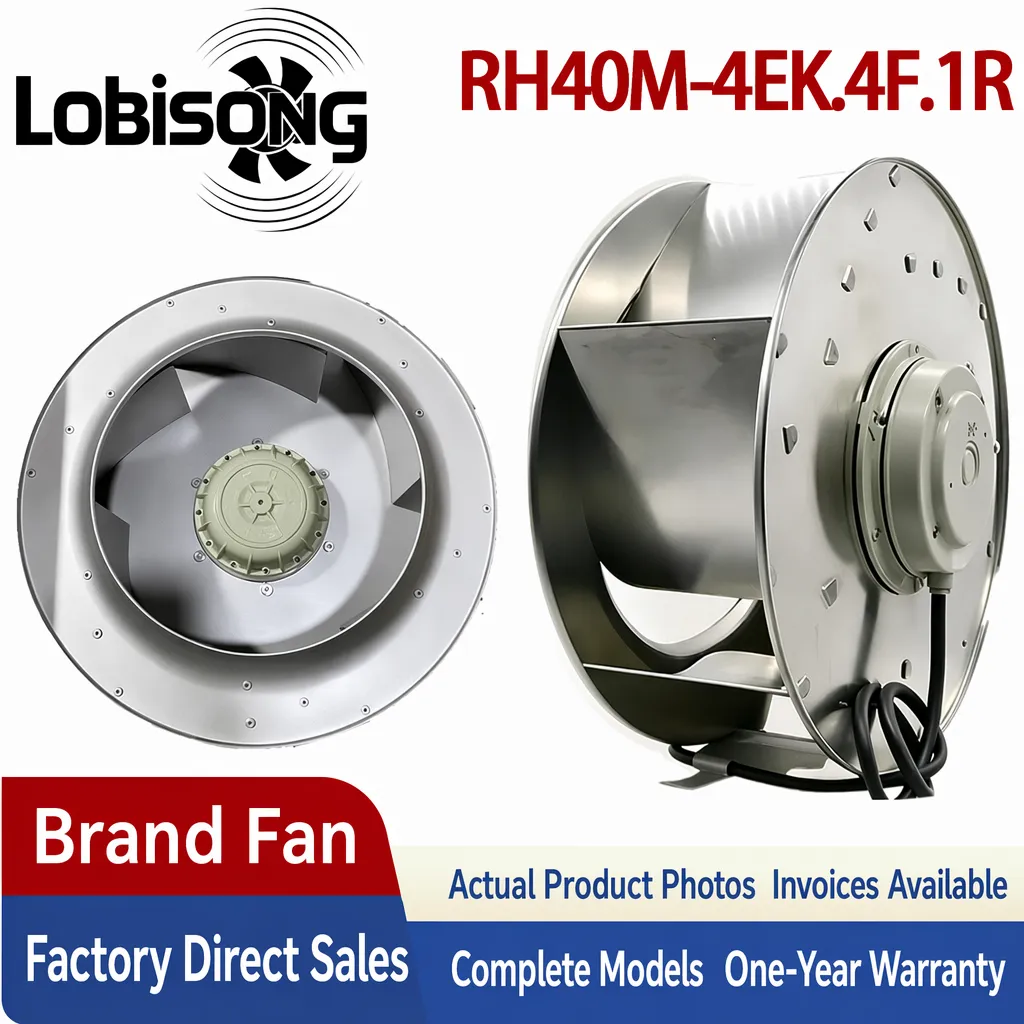
A high pressure backward curved centrifugal blower earns its place wherever a duct system demands a strong, stable pressure head rather than a large free-delivery volume. Process lines, extraction networks, and combustion trains often run against resistance that a standard forward-curved wheel cannot hold. The following sections map the real application scenarios where the combination of a backward curved impeller and a high-pressure casing pays off, and explain the engineering reason behind each fit.
The high pressure backward curved centrifugal blower uses blades that curve away from the direction of rotation, so the impeller sheds air without the stall-prone loading seen on forward-curved wheels. At high static pressure the backward curved profile keeps efficiency steady because the blade trailing edge faces the outlet, reducing turbulent backflow. Pressure rise comes from converting wheel rim speed into static head, so a smaller air flow at high rpm still produces the head a long duct needs. AMCA 210 defines the test method that separates this static performance from free-air claims.
Specifying for maximum free air flow often hides the penalty paid at operating static. In most industrial duty the fan lives on its curve where resistance is high, not at the open inlet. A backward curved centrifugal blower holds a flatter efficiency band across that region, so the same motor delivers more useful work. Turbo-style wheels and precision balance to ISO 1940 balance grade keep vibration low when the unit spins at elevated rpm, protecting bearings and belts. Buyers should read the full fan curve, not the peak number.
Pneumatic conveying moves powders and granules through pipe using air as the transport medium. Dense-phase lines need sustained pressure to keep the slug moving without saltation or blockage. A high-pressure machine supplies the steady head that keeps the conveying velocity in range while the line holds product. Wrong pressure lets material settle and form bridges. Plants running cement, plastic pellet, or grain lines rely on this head to keep throughput predictable across a long run, and to restart after a stoppage without a purge cycle.
Dust and fume extraction across a wide building runs long ducts, bends, and filter banks that stack resistance. A high pressure backward curved centrifugal blower sustains static pressure as filters load, so capture velocity at the hood stays above the minimum even when the media dirties. NFPA guidance for combustible dust calls for controlled, predictable airflow that does not surge. Where fume carries heat, the impeller sees thermal load, so material choice and balance matter. The high pressure profile keeps the system honest as resistance climbs through the day.
Combustion trains need forced-draft air pushed against furnace back-pressure. A high pressure backward curved centrifugal blower delivers the mass of air flow the burner requires without dropping out as the chamber pressurizes. Pressure rise here is the real job, not a by-product. Stable delivery prevents flame instability and uneven heat. Sizing must match the burner curve, and ISO 14694 vibration limits keep the rotating assembly safe on continuous duty at high rpm. The backward curved geometry resists the surge that forward wheels invite near the stall line, protecting the combustion control loop.
Drying ovens and curing tunnels push heated air through racks and filters where static resistance is high. A backward curved impeller keeps the velocity profile even so product dries uniformly. Laminar-flow booths demand a clean, low-turbulence sheet of air at the work face; the high pressure unit feeds the HEPA bank and holds face velocity as the filter loads. Each application scenario values the same trait — pressure held steady while air flow stays moderate. That signature makes the wheel a fit for clean, heated, and filtered process zones.
Older HVAC retrofits add MERV or HEPA filtration, energy wheels, and long duct extensions that the original fan cannot support. A high pressure backward curved centrifugal blower restores designed ventilation by recovering lost static head. In cleanrooms and labs the filtration bank dominates resistance, so the wheel must hold pressure as media loads. CE and UKCA documented units suit export duty. Specifying the right rpm and impeller diameter keeps noise and power in check while meeting the airflow target, and protects the existing duct from over-pressurization at the branch.
A Midwest plastics processor fought frequent line blockages in its pneumatic conveying of regrind. The existing forward-curved fan lost head as filters loaded and stopped moving material by mid-shift. The plant fitted a backward curved centrifugal blower rated for high static and verified impeller balance before commissioning. Blockages dropped, and shift output stabilized without extra labor. During procurement, confirm the fan curve at the duty point, inspect welds and bearing seats, and require ISO 9001-style quality records. In service, monitor rpm and vibration, clean the impeller on a schedule, and re-check balance after any rebuild to keep efficiency and static pressure where the design intended.
Selecting the right machine starts with the resistance profile, not the headline volume. A high pressure backward curved centrifugal blower fits wherever the duct, filter, or process stacks static load that a forward-curved wheel cannot hold — pneumatic lines, extraction networks, combustion air, drying, and high-static HVAC. Matching the fan curve to the duty point, confirming balance and documentation, and maintaining the impeller protects efficiency and uptime across the service life.
Which application scenarios need a high-pressure backward-curved machine?
Answer: Scenarios with long ducts, loaded filters, or back-pressure — pneumatic conveying, dust and fume extraction, forced-draft combustion, drying ovens, laminar-flow booths, and high-static HVAC. Each stacks resistance that a forward-curved wheel cannot hold. The high pressure backward curved centrifugal blower keeps static pressure steady as the system loads, so capture velocity and throughput stay predictable. Matching the fan curve to the duty point decides the fit.
Why does the backward curved impeller suit high static pressure?
Answer: Blades curve away from rotation, so the wheel sheds air without the stall-prone loading of forward-curved designs. At high static the trailing edge faces the outlet, cutting turbulent backflow and keeping efficiency on a flat band. Pressure rise comes from rim speed converted to static head, so moderate air flow still meets the duty. Precision balance limits vibration at elevated rpm, protecting bearings. This geometry resists surge near the stall line that destabilizes process control.
Can a standard centrifugal blower handle pneumatic conveying?
Answer: A standard centrifugal blower may move air but often lacks the steady head dense-phase lines demand. Conveying needs sustained pressure to keep slugs moving without saltation or blockage; a forward-curved wheel loses head as resistance climbs. Specifying a high-static, backward curved machine holds the conveying velocity in range across a long run and recovers after stoppage. Review the fan curve at the duty point and confirm motor margin before committing to the line.
How should the unit be inspected before commissioning?
Answer: Confirm the fan curve matches the duty point, not the open-inlet peak. Inspect welds, impeller balance records, and bearing seats for runout. Verify documentation such as CE, UKCA, and ISO 9001-style quality marks for export duty. Check rotation direction and belt tension, then run a no-load check for vibration against ISO 14694 limits. A clean impeller and correct rpm protect efficiency and static pressure once the system is loaded.
What maintenance protects efficiency over the service life?
Answer: Monitor rpm and vibration on a schedule, and clean the impeller before dust or product buildup shifts the balance. Re-check balance after any rebuild, and confirm the fan curve stays at the duty point as filters load. Lubricate bearings per the motor specification and watch for rising amp draw that signals resistance change. Keep spare seals and belts on hand. Document each interval so the static pressure and efficiency stay where the original design intended.

2026/09/30
Cement cabinets choke on dust. Learn the filter rule for an industrial cabinet cooling fan: G4/F7 media, IP rating, and pre-filter care.

2026/10/07
Right wall-mount height for an industrial axial exhaust fan: room volume, free clearance, brackets, and recirculation control.

2026/10/08
An ec motor fan links to BMS via Modbus, 0-10V and PWM for demand-based cooling, energy scheduling and automatic sensor-driven speed control.

2026/10/06
A radial exhaust fan removes grease, fumes, and odors from food-processing workshops with capture velocity and hygienic washdown design.

2026/10/05
Learn antistatic treatment for industrial cabinet cooling fan in electronics workshops—ESD-safe housing, ionizable plastics, and cleanroom compatibility.

2026/10/04
Discover how a brushless dc servo delivers precise wind speed control for laboratory cooling fans with closed-loop PID feedback and laminar airflow.
