 EN
EN
What filter matching rule for dust proof cabinet cooling fan operating in cement factories
2026/09/30
Cement cabinets choke on dust. Learn the filter rule for an industrial cabinet cooling fan: G4/F7 media, IP rating, and pre-filter care.

2026/09/07

Large industrial cooling fans move heavy air columns, and the motor behind the wheel decides whether that job is smooth, efficient, and quiet or rough, hot, and failure-prone. A three phase dc motor, often described as a BLDC or three-phase brushless motor and driven by an inverter, pairs the simplicity of DC control with the power density of a three-phase winding. For plant engineers sizing fans above a few hundred watts, the difference shows up as lower heat, steadier speed, and far less stress on the electrical supply.
A metal-finishing line ran several large wall fans on single-phase drives that pulled high inrush current each start. The breakers tripped during simultaneous restarts after a power dip, and the thermal overloads on the contacts burned out within a season. After switching to a three phase dc motor with soft-start inverter control, the same fans accelerated gradually, drew a fraction of the inrush, and the nuisance trips stopped. The mechanical output was unchanged; the electrical behavior was transformed.
A single-phase winding can spin a small fan, but it struggles as power climbs because it produces a pulsating rather than rotating field, which means less smooth torque and more vibration. At several hundred watts and above, that roughness becomes audible and the starting current becomes a real load on the supply. A three phase dc motor avoids this by generating a continuous rotating field from three windings, so the same frame size delivers more power with less heat. For large fans, the three-phase approach is less a luxury than a baseline requirement. The same physics explains why single-phase fans also surge harder on start and why their contacts erode faster. For a plant counting on continuous airflow, those small failures add up to downtime that costs far more than the motor itself.
The motor itself carries three windings fed by an inverter that chops the DC bus into timed pulses for each phase. The motor often uses a permanent magnet rotor, so the field is fixed and only the stator currents switch. A three phase dc motor therefore gets its rotating magnetic field from electronics, not from mechanical brushes. The motor controller decides exactly when each phase energizes, which removes the spark and wear of a brushed design and gives precise speed control without the maintenance burden brushes impose on a continuously running fan.
Field-oriented control, a form of vector control often called FOC, treats the motor current as two separate vectors: one for torque and one for the magnetic field. By keeping those vectors at the right angle, a three phase dc motor holds torque steady across the speed range and cuts the ripple that makes cheaper drives buzz. Sinusoidal commutation shapes the phase currents as smooth sine waves instead of crude steps, which lowers acoustic noise and reduces heating in the windings. That is why the motor can run a large fan quietly at low speed and still deliver full output on demand. The control loop runs thousands of times per second, so it also protects the windings from over-current during a stall. That fast response is what lets a large fan recover from a brief load spike without tripping the drive.
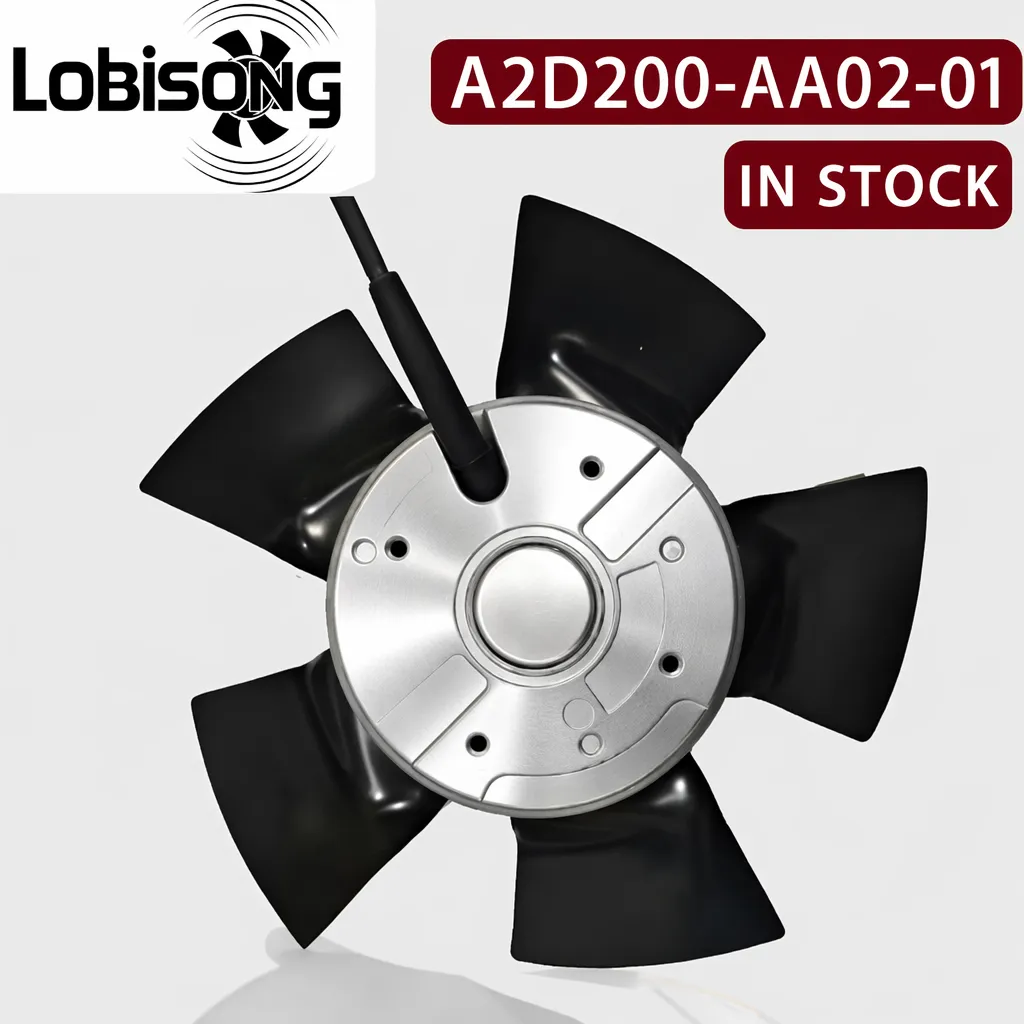
Fan power rises with the cube of speed, so a small overspeed doubles the demand. Size the three phase dc motor from the fan's power curve at the maximum required airflow, then add margin for filter loading and summer ambient. Confirm the inverter's current rating exceeds the motor's locked-rotor value, and check that the supply's power factor and harmonic limits suit the site. A drive that stresses the line defeats the efficiency gain the motor was chosen to provide. Oversizing wastes money and adds mass, while tight sizing leaves no buffer for a hot summer afternoon. A modest margin is the pragmatic choice for most industrial sites.
Mount the motor true to the fan shaft to avoid side loads on the bearings, and keep the motor controller and inverter in a cool, ventilated spot away from conductive dust. Inspect the phase connections and cooling paths every quarter, watching for rising current at a fixed speed, which signals bearing or winding wear. A three phase dc motor with sealed bearings runs for years, but only if the inverter settings match the nameplate and the cooling air stays clean. IEC 60034 sets the efficiency and testing basis for such machines. Good practice also logs the commissioning current so future inspections have a baseline to compare against, turning maintenance from guesswork into a measured check.
Choosing the drive for a large cooling fan is a system decision, not a parts decision. A three phase dc motor earns its place when the inverter, control method, and sizing are matched to the real fan curve and the site's electrical limits. Procurement gains the most by requesting the efficiency class, confirming FOC capability, and verifying the inverter's ratings before purchase. The payoff is smooth starts, steady speed, lower heat, and a fan line that stays online when the plant needs it.
Question: What are three-phase DC motors used for? Answer: It powers medium and large fans, pumps, and industrial drives where smooth speed control and high efficiency matter. The three-phase winding gives power density, while the inverter-driven DC control delivers precise torque. In large cooling fans it removes inrush trips and holds steady airflow without the wear that brushes impose on a continuously running machine.
Question: How is it different from a single-phase motor? Answer: A three-phase winding produces a naturally rotating field from three coils, so the same frame delivers more power with less heat and vibration. A single-phase winding makes a pulsating field that limits smooth torque and raises starting current as size grows, which matters once a fan passes a few hundred watts of demand.
Question: What does FOC do for the motor? Answer: Field-oriented control splits motor current into torque and field vectors and keeps them at the correct angle. This holds torque steady across speed and cuts ripple that causes buzz and extra heating. The motor therefore runs quietly at low speed yet still reaches full output when the load demands it, without the steps of crude commutation.
Question: Can the inverter harm the power supply? Answer: A poorly sized drive can draw distorted current and lower the local power factor, stressing other equipment. Size the inverter above the motor's locked-rotor current, respect site harmonic limits, and keep phase balance clean. Done right, the three phase dc motor actually reduces inrush compared with direct-on-line starting. A commissioning check that records baseline current makes later problems easy to spot before they trigger a trip.
Question: How should a three-phase DC motor be maintained? Answer: Mount it true to the shaft, keep the inverter cool and dust-free, and inspect phase connections quarterly. Watch for rising current at fixed speed, which reveals bearing or winding wear. Sealed bearings last for years, but the gain disappears if inverter settings drift from the nameplate or cooling air is allowed to clog with debris.

2026/09/30
Cement cabinets choke on dust. Learn the filter rule for an industrial cabinet cooling fan: G4/F7 media, IP rating, and pre-filter care.

2026/10/07
Right wall-mount height for an industrial axial exhaust fan: room volume, free clearance, brackets, and recirculation control.

2026/10/08
An ec motor fan links to BMS via Modbus, 0-10V and PWM for demand-based cooling, energy scheduling and automatic sensor-driven speed control.

2026/10/06
A radial exhaust fan removes grease, fumes, and odors from food-processing workshops with capture velocity and hygienic washdown design.

2026/10/05
Learn antistatic treatment for industrial cabinet cooling fan in electronics workshops—ESD-safe housing, ionizable plastics, and cleanroom compatibility.

2026/10/04
Discover how a brushless dc servo delivers precise wind speed control for laboratory cooling fans with closed-loop PID feedback and laminar airflow.
