 EN
EN
What filter matching rule for dust proof cabinet cooling fan operating in cement factories
2026/09/30
Cement cabinets choke on dust. Learn the filter rule for an industrial cabinet cooling fan: G4/F7 media, IP rating, and pre-filter care.

2026/09/20
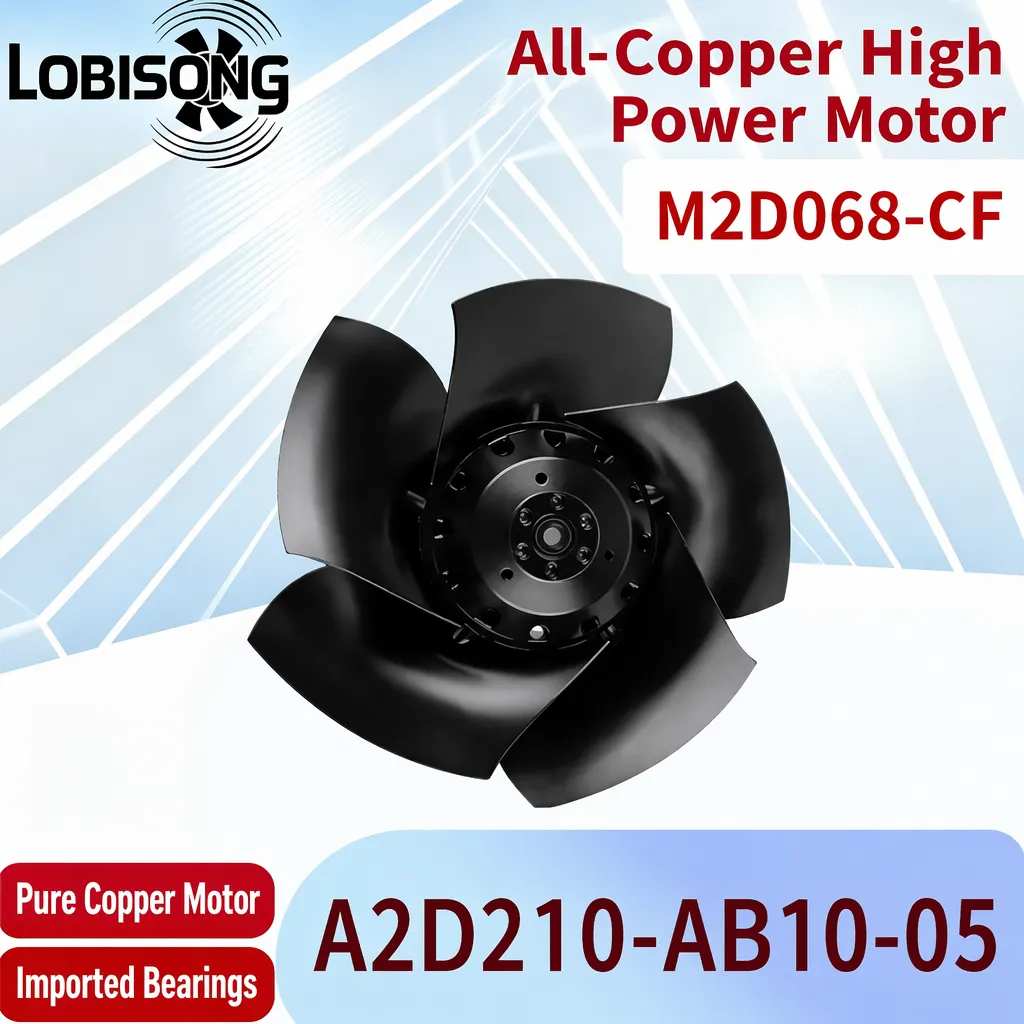
A backward curved centrifugal blower factory helps equipment builders match airflow hardware to exact cabinet, duct, and process limits instead of forcing a standard catalog unit into a mismatched system. Off-the-shelf fans frequently fall short on voltage, mounting geometry, or pressure, and a tailored build closes the gap. Custom engineering turns a generic blower into a component that fits the host machine and the local power grid.
A backward curved centrifugal blower factory typically begins customization at the electrical interface. Many clients run 115V, 230V, or 400V supplies, and single-phase versus three-phase input changes the motor winding layout. Frequency tolerance for 50Hz and 60Hz markets must be confirmed, since a 230V/50Hz unit behaves differently at 60Hz. Pure-copper windings and IEC 60034 efficiency classes guide the motor design, while UL 507 and CE/UKCA markings cover North American and EU safety expectations.
Voltage derating at high ambient temperature protects the insulation system. Engineers select conductor cross-section and thermal class to keep the winding within safe limits. A mismatch between supply and nameplate voltage shortens bearing life and raises operating temperature, so the factory documents the rated range on the label.
The backward curved centrifugal blower factory also reviews the physical envelope, because it often decides whether a fan fits the cabinet. A backward curved centrifugal wheel supports panel, flange, duct, or foot mounting, and the impeller diameter is trimmed or widened to hit the package limit. Galvanized steel or aluminum alloy housings keep weight down where the panel must meet vibration limits. Dimension control matters most in retrofit projects where the old fan must be replaced without cutting the enclosure. The factory reads the client's CAD outline and returns a sample that drops into the same holes. Tolerances on the mounting flange follow the customer's assembly standard to avoid on-site rework.
Duty environment selects the material. Indoor clean rooms use painted steel; humid or mildly corrosive areas call for stainless steel 304 or 316, while polypropylene suits weak-acid mist exposure. Ingress protection is specified per IEC 60529: an IP44 unit blocks solid objects and splashing water, and IP54 adds dust protection for dusty workshops. Non-sparking aluminum or bronze wheels are chosen where flammable vapor is present, referencing ATEX 2014/34/EU guidance.
RoHS and REACH compliance is confirmed for EU-bound shipments so the component passes material audits at the border.
The backward curved centrifugal blower factory plots the operating point where the fan curve meets the duct system resistance. Airflow requirement is defined by system resistance, not by a catalog peak. The factory measures volume and pressure on an AMCA 210 or ISO 5801 rig and separates static pressure, velocity pressure, and total pressure so the selected speed lands on the efficient part of the map. A backward curved wheel delivers stable pressure across a wide flow range, which suits variable process loads.
The delivered curve is stamped on the nameplate and filed with the batch record for traceability.
Rotor balance grade drives vibration and bearing life. Per ISO 1940, the impeller is balanced to a grade matched to its tip speed, and the result is logged. Precision ball bearings and a stiff outer-rotor motor keep the running speed stable under load. For quiet zones such as instrument rooms, low-noise tuning follows AMCA 300 reverberant-room method, and the housing is damped to cut panel resonance.
Balance is re-checked after the wheel is bonded or welded, because a small mass shift changes the grade. The factory tags each unit with its balance result so maintenance teams can compare against the original baseline during service.
In 2023 a European packaging-machine builder sent an inquiry to a backward curved centrifugal blower factory for a cabinet cooling need on a food-line control panel. The panel sat in a washdown area with periodic steam and ran on a 400V/50Hz supply with tight space behind the door. The buyer needed a blower that pulled warm air from the enclosure without letting moisture reach the motor, and the existing standard unit could not meet both limits at once.
The backward curved centrifugal blower factory found the standard units failed two tests: the IP rating was too low for steam, and the outlet shape did not match the panel cutout. The factory proposed an IP54 outer-rotor brushless EC motor with copper windings and a stainless steel 304 housing, plus a round flange redrawn to the client's bolt circle. The impeller was balanced to ISO 1940 grade, and the performance curve was mapped on an AMCA 210 bench to confirm the target flow at 68W draw.
The backward curved centrifugal blower factory shipped three prototype units for bench validation, then a pilot batch followed after sign-off. The installed blower held enclosure temperature within the design band through repeated washdown cycles, and moisture stayed outside the motor compartment. The client later extended the same custom outline to two sister machine models, which simplified spare-parts planning across the line.
A backward curved centrifugal blower factory turns a generic fan into a fitted component through voltage, size, mounting, curve, and material choices that match the host machine and the local grid. The right custom scope removes on-site rework, keeps the enclosure within thermal and ingress limits, and supports a longer service life. Specifying the duty early and sharing the panel drawing leads to faster validation and a build that fits on the first attempt. Buyers should verify the rated voltage range, IP mark, and balance grade on the nameplate, then schedule cleaning of the filter and bearing check per the duty cycle.
What customization service does an OEM/ODM blower factory provide for equipment builders?
Answer: A backward curved centrifugal blower factory provides OEM and ODM work that covers voltage and frequency, physical size, mounting style, performance curve, and material selection. Electrical input is matched to the local grid, the housing is redrawn to the panel cutout, and the wheel is balanced to the required grade. Material and ingress protection are chosen for the duty. This scope turns a standard blower into a fitted component.
Why must voltage and frequency be specified during the early design stage?
Answer: Supply voltage and frequency decide the motor winding layout and the thermal class of the insulation. A 230V/50Hz unit spins faster at 60Hz, which shifts the operating point and raises temperature. Confirming the range early prevents bearing wear and avoids a costly redesign after tooling starts. IEC 60034 efficiency classes and UL 507 or CE/UKCA safety marks are then applied correctly to the nameplate.
How is a custom performance curve built and verified before shipment?
Answer: The factory measures volume and pressure on an AMCA 210 or ISO 5801 test rig and plots the fan curve against the duct system resistance. Static and velocity pressure are separated to locate the efficient operating point. If the point drifts, the impeller blade angle or outlet width is revised and re-tested. The confirmed curve is stamped on the nameplate and stored with the batch record for traceability.
Can small batches or prototype units be produced before a full order?
Answer: A small pilot batch is common in custom projects because it lets the buyer validate fit, noise, and thermal behavior on the real panel before committing to volume. A few samples typically cover bench and field checks. The factory keeps the prototype drawing linked to the production version so the pilot result carries forward without re-engineering when the full run starts.
Do custom blower units require certification markings for export markets?
Answer: Export units carry the markings required by the destination market, such as CE and UKCA for Europe and UL 507 for North America, plus RoHS and REACH for material compliance. The factory applies the correct label and keeps the test report on file. Buyers should confirm the needed marks during inquiry so the build and documentation match the border and workplace rules such as OSHA ventilation guidance.

2026/09/30
Cement cabinets choke on dust. Learn the filter rule for an industrial cabinet cooling fan: G4/F7 media, IP rating, and pre-filter care.

2026/10/07
Right wall-mount height for an industrial axial exhaust fan: room volume, free clearance, brackets, and recirculation control.

2026/10/08
An ec motor fan links to BMS via Modbus, 0-10V and PWM for demand-based cooling, energy scheduling and automatic sensor-driven speed control.

2026/10/06
A radial exhaust fan removes grease, fumes, and odors from food-processing workshops with capture velocity and hygienic washdown design.

2026/10/05
Learn antistatic treatment for industrial cabinet cooling fan in electronics workshops—ESD-safe housing, ionizable plastics, and cleanroom compatibility.

2026/10/04
Discover how a brushless dc servo delivers precise wind speed control for laboratory cooling fans with closed-loop PID feedback and laminar airflow.
