 EN
EN
What filter matching rule for dust proof cabinet cooling fan operating in cement factories
2026/09/30
Cement cabinets choke on dust. Learn the filter rule for an industrial cabinet cooling fan: G4/F7 media, IP rating, and pre-filter care.

2026/09/09
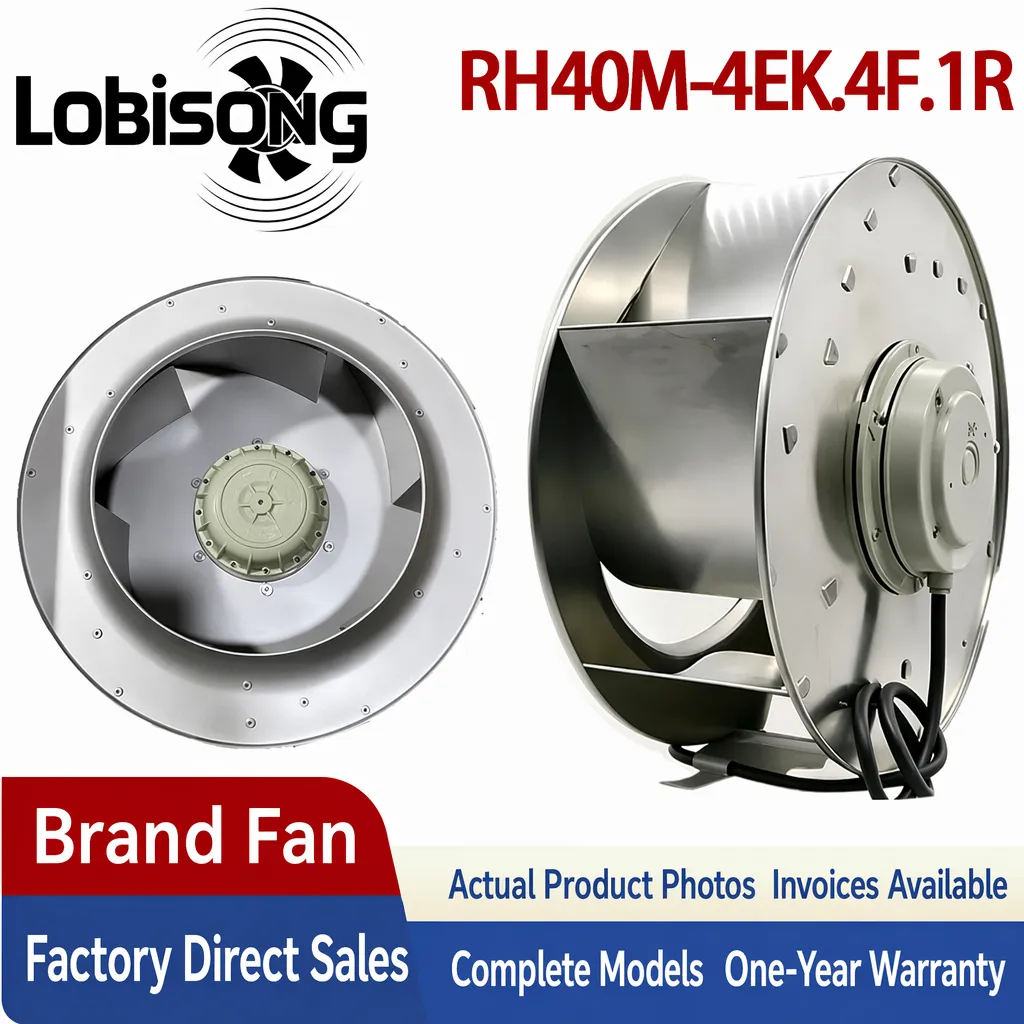
A backward inclined fan for air exhaust moves contaminated or warm air out of a workspace while keeping power use under control. Selecting the right unit starts long before comparing catalog numbers, because the wrong blade geometry or an under-matched static pressure rating turns a simple ventilation job into a chronic energy and maintenance problem.
The backward inclined fan for air exhaust earns its reputation from the blade exit angle. Blades tilt away from the direction of rotation, so air leaves the impeller with lower absolute velocity than in forward-curved designs. That lower exit velocity means less kinetic energy is wasted at the housing outlet, and more of the motor input becomes useful static pressure.
A backward inclined blade produces a non-overloading power characteristic. As flow rises toward the free-delivery end of the curve, the required shaft power peaks and then falls, so a motor sized at the peak can never be dragged past its rating by a dropped duct static pressure. This protects the drive train when dampers open or filters clog and resistance drops. AMCA 210 defines how this performance is measured, giving buyers a common basis to compare a centrifugal blower against its nameplate. Unlike a backward curved impeller, the inclined type holds efficiency across a wider flow range as filter resistance varies.
A regional panel builder once supplied extraction for a small powder-coating line. The brief listed only airflow, so a forward-curved unit was chosen on price. Within weeks the filters loaded, resistance fell, and the non-overloading margin was gone; the fan ran hot and the motor tripped. The retrofit swapped to a backward inclined centrifugal fan sized from a measured system curve, and the trips stopped while energy draw dropped.
The most common buying error is selecting rated volume without checking where that point sits on the system curve. Duct length, elbows, filters and a roof discharge all add resistance, and the real operating point is where the fan curve crosses the system resistance line. A backward inclined centrifugal fan should be specified at the curve intersection, not at a catalog peak that hides the real static pressure. For that reason a backward inclined fan for air exhaust should be validated with the measured resistance rather than a vendor estimate.
Oversizing is the quiet budget killer. Specifying too high an rpm adds noise, shortens bearing life and wastes efficiency, while a needlessly large motor adds cost without improving ventilation. The right approach fixes the duty point from the system curve, then picks the smallest impeller diameter and rpm that still meet the required static pressure. This keeps the centrifugal blower inside its tested envelope and respects the IEC 60034 efficiency class for the driving motor.
Exhaust rarely stays clean. Welding fume, solvent vapor or process moisture attack standard steel, so the housing and impeller need a coating or alloy matched to the gas. Epoxy phenolic linings suit mild acid, while 304 or 316 stainless resists broader corrosion. A backward inclined blade with smooth surface finish also sheds particulate and stays balanced longer. Specifiers should ask the supplier for the chemical compatibility statement and confirm the centrifugal fan is built for the actual airstream. When the application is a backward inclined fan for air exhaust handling solvents, the alloy choice decides service life.
Hot airstreams change every design assumption. Above roughly 200°C, standard grease and seals fail, so the impeller and shaft need heat-rated bearings and often an insulated inlet cone to keep the motor cool. A backward inclined centrifugal fan rated for high temperature also needs an impeller that will not warp under thermal load. ISO 14694 sets vibration limits that confirm the unit runs continuously at the stated temperature without premature bearing distress.
Belt drive gives easy speed adjustment and lets the motor sit away from the hot gas, which suits air exhaust where the airstream is dirty or warm. Direct drive is simpler and leaks less, but couples motor rpm directly to the impeller, so it suits clean, steady duty. A belt drive needs tension checks and a guarded enclosure, while direct drive trades flexibility for fewer wearing parts. Good ventilation layout leaves access for belt service. For a backward inclined fan for air exhaust in a dirty plant, belt drive usually wins on serviceability.
Vibration, not blade wear, is what usually ends a fan's life early. A quality impeller is balanced to a grade such as ISO 1940 G6.3 before shipment, and the inlet cone must align closely with the impeller eye so air enters without pre-swirl losses. Misalignment forces the motor to work harder and shortens bearing life. Buyers should request the balance certificate and inspect the inlet cone clearance during installation, because a misaligned centrifugal blower still runs rough and wastes efficiency. The same rule applies to any backward inclined fan for air exhaust headed for continuous operation.
Purchasing a backward inclined fan for air exhaust is less about picking the biggest number and more about matching blade shape, static pressure and build quality to the real airstream. A non-overloading curve, balanced impeller and correct material keep the unit efficient and safe through changing duty. Confirm the performance against AMCA 210, the balance grade against ISO 1940 and the vibration envelope against ISO 14694 before signing the order.
Why does a backward-inclined impeller avoid motor overload?
Answer: The blade angle makes power rise to a peak near the rated point and then fall as flow increases. A motor sized at that peak can never be pulled past its limit when duct resistance drops, because the non-overloading curve self-limits demand. This protects the drive in variable exhaust duty where filters clean or dampers open without warning. Static pressure and rpm stay within the tested envelope.
Which material suits a corrosive exhaust airstream?
Answer: Mild acid vapor calls for an epoxy phenolic lining on the housing and impeller, while broader chemical exposure needs 304 or 316 stainless. The selection follows the actual gas composition, not a generic clean-air assumption. Buyers should request a chemical compatibility statement and confirm the coating reaches the internal surfaces. A smooth blade finish also slows fouling and keeps the centrifugal fan balanced between cleanings.
Is belt drive or direct drive better for dirty exhaust?
Answer: Belt drive keeps the motor away from the hot, dirty airstream and allows simple speed changes, which suits most air exhaust duty. Direct drive removes belts and tension checks but couples motor rpm straight to the impeller, so it fits clean, steady loads. The decision depends on site maintenance skill and how much the ventilation demand varies. Either way, guarding and access for service must be part of the layout.
How is impeller balance verified before delivery?
Answer: A quality impeller is balanced to a grade such as ISO 1940 G6.3 and ships with a balance certificate. The inlet cone must also line up with the impeller eye to avoid pre-swirl losses. During installation, the clearance between cone and impeller should be checked, because an aligned centrifugal blower runs smooth and protects bearings. Vibration limits under ISO 14694 give a further acceptance check before the fan enters service.
When should the system curve be measured rather than estimated?
Answer: A backward inclined fan for air exhaust should be specified from a measured system curve whenever the duct run is long, has several elbows, or carries filters that load over time. Estimation hides resistance and pushes the unit off its efficient point. Measuring the actual static pressure at the duty flow lets buyers size the impeller and rpm correctly, avoiding both stall and wasted energy across the service life.

2026/09/30
Cement cabinets choke on dust. Learn the filter rule for an industrial cabinet cooling fan: G4/F7 media, IP rating, and pre-filter care.

2026/10/07
Right wall-mount height for an industrial axial exhaust fan: room volume, free clearance, brackets, and recirculation control.

2026/10/08
An ec motor fan links to BMS via Modbus, 0-10V and PWM for demand-based cooling, energy scheduling and automatic sensor-driven speed control.

2026/10/06
A radial exhaust fan removes grease, fumes, and odors from food-processing workshops with capture velocity and hygienic washdown design.

2026/10/05
Learn antistatic treatment for industrial cabinet cooling fan in electronics workshops—ESD-safe housing, ionizable plastics, and cleanroom compatibility.

2026/10/04
Discover how a brushless dc servo delivers precise wind speed control for laboratory cooling fans with closed-loop PID feedback and laminar airflow.
