 EN
EN
What filter matching rule for dust proof cabinet cooling fan operating in cement factories
2026/09/30
Cement cabinets choke on dust. Learn the filter rule for an industrial cabinet cooling fan: G4/F7 media, IP rating, and pre-filter care.

2026/09/17
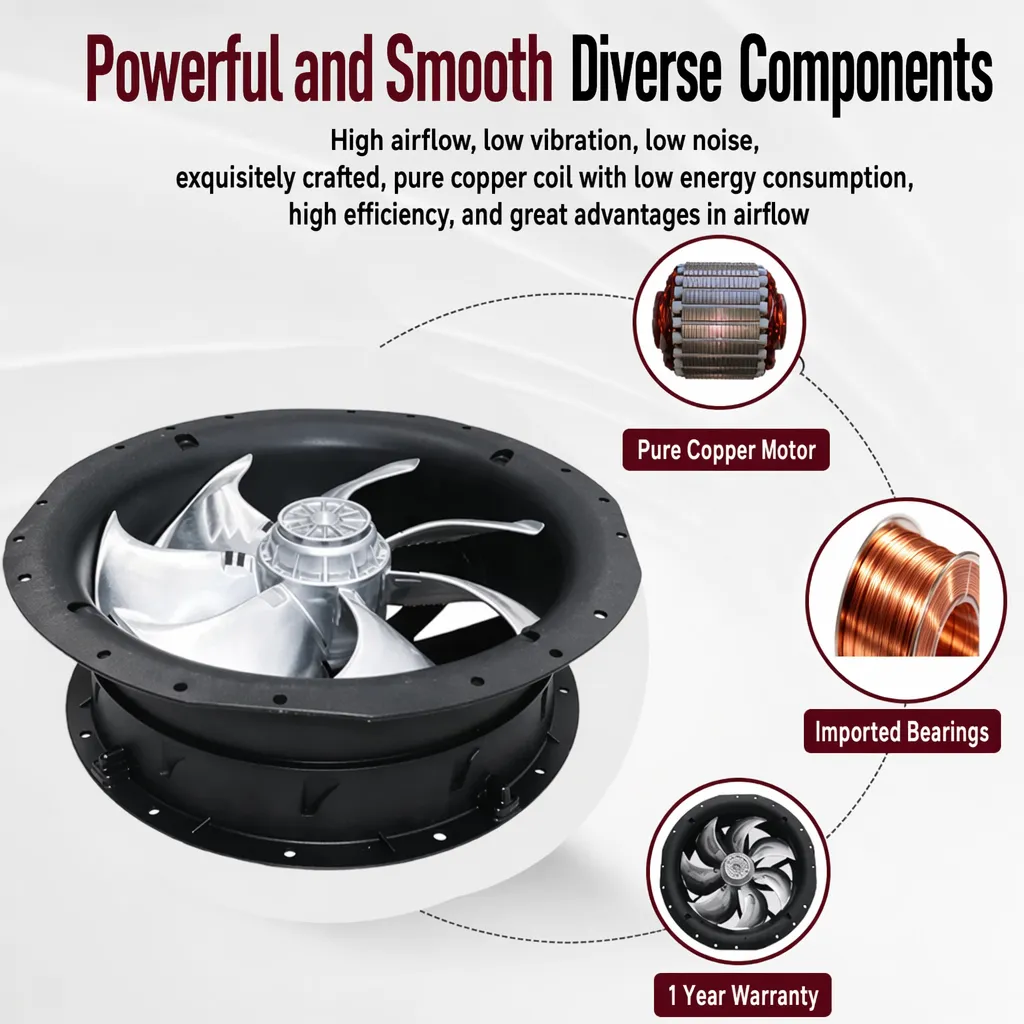
An industrial axial fan moves large volumes of air to keep machines, cabinets, and workshops within safe temperature limits. In dusty plants, however, fine particles settle on blades and guards and slowly choke the airflow the equipment depends on. A disciplined dust removal routine during periodic inspection is the simplest insurance against sudden downtime, and it should be part of every maintenance plan.
Dust accumulation on blade surfaces changes the aerodynamics of the wheel. On an industrial axial fan, a thin layer of particulate adds weight, increases imbalance, and reduces the contact area that pushes air, so the same motor draws more current to deliver less cooling. Poor heat dissipation means the bearing and winding run hotter, accelerating wear on the motor and the surrounding ventilation system. Left alone, the problem compounds: lower airflow raises temperature, which thickens deposits and traps more dust.
Watching the amp draw is a practical habit. A steady rise at constant speed signals fouling long before the wheel looks dirty, so cleaning can be scheduled instead of reacting to a trip. Pair that signal with a visual check of the guard, and the early stage of buildup is easy to catch.
A metal-cutting workshop ran an industrial axial fan above a grinding line. After nine months with no cleaning, operators reported weak air movement and a thermal trip on the control relay. Technicians measured a sharp pressure drop across the guard and found a packed layer of fines on the blades. The industrial axial fan was still spinning, but it no longer moved the CFM the room needed, so the control enclosure overheated during afternoon shifts. Airborne grit from the grinders had coated the wheel and narrowed every gap. After a disciplined dust-removal inspection and a fresh set of filter cartridges, the unit returned to rated airflow and the overheat trips stopped.industrial axial fan, dust removal, fan maintenance, lockout tagout, preventive maintenance
Before any housing is opened, the unit must be isolated from its energy source under a formal lockout tagout procedure. OSHA requires that equipment be de-energized and locked to protect workers from unexpected start-up while they clean near moving parts. Apply the lock, tag it with the technician's name, verify zero energy, and only then remove the guard. This single step prevents the most common and most severe injury during fan service, and it should never be rushed.
With the unit safe, lift the guard and wipe the fan blade and impeller with a soft brush and a damp, lint-free cloth. Avoid high-pressure air that drives dust deeper into the motor or the bearing cavity. Pay attention to the root of each blade where deposits build first, and to the hub where grit packs tight. Wipe the guard and the inner housing so nothing re-enters the airstream. A clean wheel restores balance and quiet operation.industrial axial fan, dust removal, fan maintenance, lockout tagout, preventive maintenance
Inspect the upstream filter cartridge and replace it if it is clogged, because a blocked filter forces the industrial axial fan to work against a higher pressure drop and wastes energy. Walk the connected ventilation ducts and look for settled dust that could re-contaminate the wheel. In dust-laden pipelines, schedule filter changes more often to protect both the centrifugal fan and axial units alike. While the guard is off, spin the wheel by hand and listen for roughness in the motor bearings. On such a unit, roughness signals wear that cleaning cannot reverse. Confirm the motor terminals are tight and free of conductive dust. These checks catch problems a cleaning alone cannot fix, and they keep the cooling fan reliable between inspections.
After reassembly, remove the lock only by the person who applied it, restore power, and run the unit under load. Compare the recovered airflow and temperature against the last recorded values. For this unit, the before-and-after numbers prove the cleaning worked. Log the date, the deposits found, and the parts replaced on an inspection checklist so the next technician has a clear baseline. Documented results are what turn a one-off cleanup into a managed program.
Keep the log where the next shift can read it. A short note on what was found and what was replaced turns a vague claim that the unit was cleaned into proof of care that supports sound procurement decisions later.
Skipping preventive maintenance turns a ten-minute wipe into a bearing replacement. When dust reaches the motor bearings, friction rises, noise grows, and the life of the assembly falls. A failed cooling fan can force a line stoppage that costs far more than the labor of a monthly check. Treating inspection as optional is what turns a manageable cleaning task into an unplanned outage.industrial axial fan, dust removal, fan maintenance, lockout tagout, preventive maintenance
Set a cadence that matches the dust load: light environments monthly, heavy grinding or livestock barns every two weeks. Pair each dust-removal pass with a quick review of energy efficiency, since a clean wheel draws less current for the same CFM. A simple, repeated routine beats an elaborate one performed rarely, and it keeps the whole ventilation system dependable. The unit rewards consistent care with steady output.
Review the schedule after each seasonal change, because dust load shifts with weather and production mix. A plan that fits summer may miss winter's different contaminants, so a brief quarterly review keeps the routine honest.
A clean wheel is a reliable wheel. Following a written dust-removal sequence — isolate, clean, filter, check, verify — keeps an industrial axial fan delivering rated airflow instead of drifting toward failure. Buyers who specify units with sealed bearing and IP-rated enclosures, then maintain them on schedule, get the longest service from their cooling investment.
What safety step must come before cleaning a fan?
Answer: Lockout tagout must be applied before any guard is removed. OSHA requires the equipment to be de-energized, locked, and verified at zero energy so the wheel cannot start while a person works near it. Skipping this step turns a routine cleaning into a serious hazard. A named lock and tag make responsibility clear and keep the technician safe throughout the task.
How often should dust removal be performed?
Answer: Cadence depends on the dust load. Light workshops can use a monthly interval, while grinding lines, livestock barns, and dust-laden pipelines need checks every two weeks or sooner. A written inspection checklist keeps the schedule honest. Frequent, short cleaning prevents the deep fouling that forces a bearing or motor replacement later.
Why does dust reduce cooling performance?
Answer: Dust accumulation adds weight and roughness to the blade, lowering the CFM the wheel can move. The motor then draws more current yet delivers less airflow, so heat dissipation suffers and temperature rises. That extra heat accelerates wear on the motor bearings and shortens service life. Regular cleaning restores the original aerodynamic balance and keeps cooling effective.
Which parts need attention beyond the blades?
Answer: An industrial axial fan relies on more than its wheel. The filter cartridge, guard, housing, and connected ducts all collect dust that re-enters the airstream. The motor bearings and terminals also need a check for roughness, heat, or loose connections. A complete inspection covers the whole airflow path, not just the visible blade surfaces.
Can compressed air be used to blow out dust?
Answer: High-pressure air is risky because it drives fine dust into the bearing cavity and the motor windings, where it causes long-term damage. A soft brush and a damp cloth remove deposits without forcing them deeper. For heavy buildup, vacuum first, then wipe. Gentle manual cleaning protects the precision parts and keeps the fan running smoothly.

2026/09/30
Cement cabinets choke on dust. Learn the filter rule for an industrial cabinet cooling fan: G4/F7 media, IP rating, and pre-filter care.

2026/10/07
Right wall-mount height for an industrial axial exhaust fan: room volume, free clearance, brackets, and recirculation control.

2026/10/08
An ec motor fan links to BMS via Modbus, 0-10V and PWM for demand-based cooling, energy scheduling and automatic sensor-driven speed control.

2026/10/06
A radial exhaust fan removes grease, fumes, and odors from food-processing workshops with capture velocity and hygienic washdown design.

2026/10/05
Learn antistatic treatment for industrial cabinet cooling fan in electronics workshops—ESD-safe housing, ionizable plastics, and cleanroom compatibility.

2026/10/04
Discover how a brushless dc servo delivers precise wind speed control for laboratory cooling fans with closed-loop PID feedback and laminar airflow.
