
 EN
EN
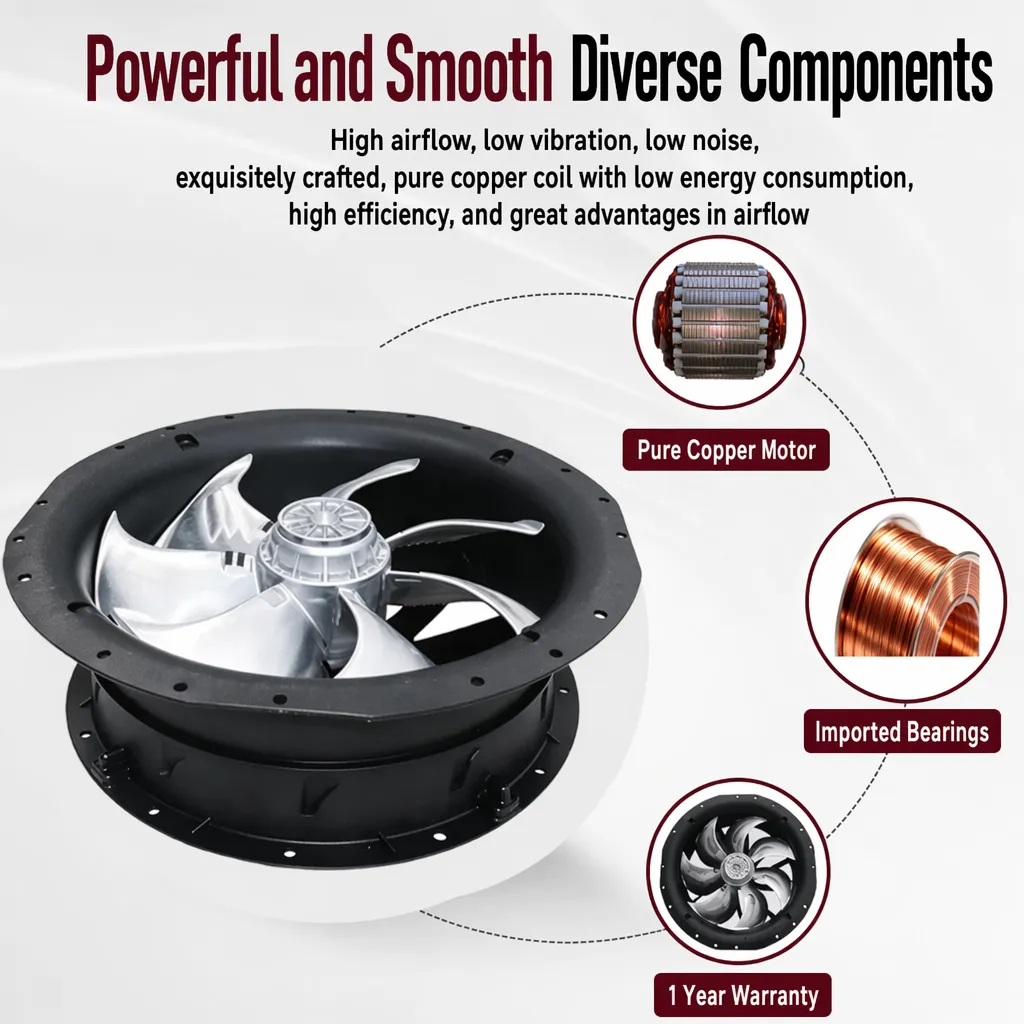
What Energy Efficiency Testing Standard for EC Axial Cooling Fan Finished Products
If you're sourcing ec axial fans and drives for industrial cooling applications, understanding the testing standards behind efficiency claims is not optional — it's the difference between a compliant product and one that fails regulatory documentation review. Buyers evaluating EC axial cooling fan finished products need to ask: under which standard was that efficiency number measured? The answer reveals both the reliability of the data and the supplier's compliance posture.
EC axial cooling fans — electronically commutated axial fans — combine variable speed drive capability with high-efficiency BLDC motors, making them genuine energy efficient industrial axial fan solutions for industrial applications. The finished product's energy efficiency is governed by several overlapping standards, each addressing a different dimension of the fan system. This article walks through the primary standards that apply to EC axial cooling fan finished products and explains how they interact.
ISO 5801 / DIN EN ISO 5801: The Aerodynamic Performance Test Standard
The foundation of any fan energy efficiency evaluation is aerodynamic performance testing. ISO 5801 (adopted in Europe as DIN EN ISO 5801) specifies the procedures for determining fan performance — airflow volume, total pressure, input power, and efficiency — under defined laboratory test conditions. This standard applies to all fan types, including ec axial fans and drives products, regardless of motor technology.
When a supplier presents airflow data or efficiency curves for an energy efficient industrial axial fan, those figures should be traceable to an ISO 5801-compliant test setup. In practice, this requires controlling inlet conditions, measuring shaft power accurately, and reporting results at standardized reference air density. A manufacturer that cannot produce an ISO 5801 test report may be drawing on in-house data generated under non-standard conditions — a sourcing risk that buyers supplying European projects frequently encounter.
A variable speed energy efficient cooling fan adds complexity: the ISO 5801 test must capture performance across the operating speed range, not just at the nominal design point. For products with EC motor drives, the test report should include efficiency data at multiple speed settings.
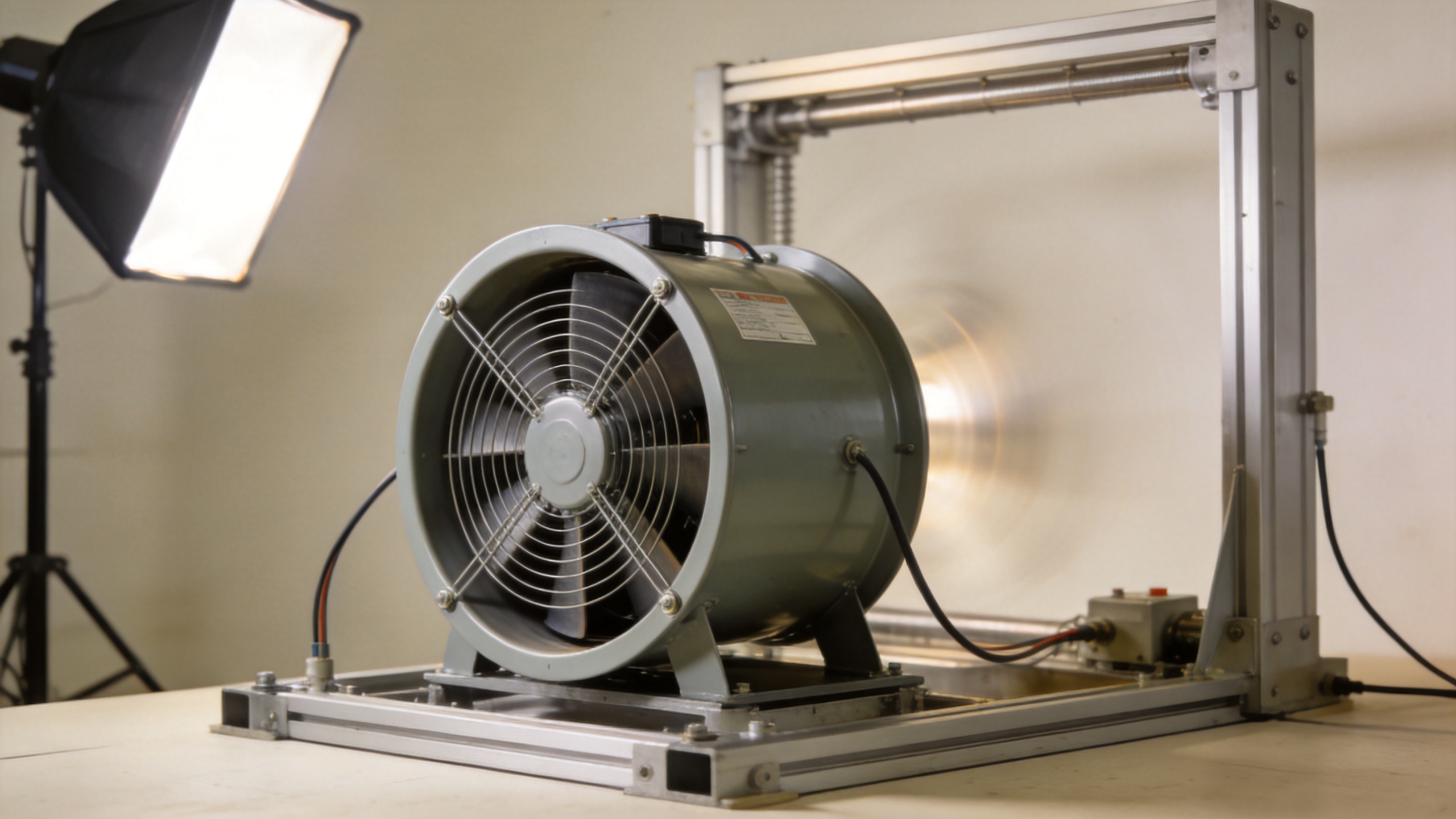
ISO 12759: Fan Efficiency Grade (FEG) Classification
ISO 12759 builds directly on ISO 5801 by establishing a classification scheme for fan efficiency: the Fan Efficiency Grade (FEG). Fans are assigned an FEG category — from FEG 60 to FEG 86 — representing a percentile ranking relative to comparable fan designs. An energy efficient industrial axial fan using EC motor technology, with optimized blade geometry and BLDC drive, typically achieves FEG 71 or above.
For buyers, FEG classification translates ISO 5801 test data into a standardized comparative benchmark. A fan claiming FEG 71 is asserting it outperforms at least 71% of comparable fans tested to the same standard. If that claim is backed by a third-party test report, it provides a reliable selection criterion when comparing EC axial fans from different manufacturers.
IEC 60034-30: Motor Energy Efficiency Classes
The EC motor inside an axial cooling fan is itself subject to IEC 60034-30, which defines international energy efficiency classes for electric motors: IE1 (Standard), IE2 (High), IE3 (Premium), and IE4 (Super Premium). EC or BLDC motors typically reach IE4 or above, substantially exceeding the IE2 and IE3 levels of conventional AC induction motors.
For a finished EC axial cooling fan product, the motor IE class is not a standalone compliance certificate — IEC 60034-30 covers the motor in isolation, not the full fan system. Buyers sourcing from an air mover axial fan factory should verify the stated motor IE class is supported by motor-level test certificates, not just catalog declarations.
IEC 61800-9-2: System-Level Efficiency Testing for EC Drives
One of the most practically significant standards for EC fan products is IEC 61800-9-2:2023, which specifies test methods for motor controller efficiency and the combined efficiency of motor-drive systems. Here the "drives" component becomes technically critical — evaluating ec axial fans and drives without assessing the drive half of the system leaves a significant efficiency gap unmeasured.
An EC axial cooling fan does not operate as a standalone motor — it depends on an integrated or external drive that controls commutation and speed. IEC 61800-9-2 defines how to measure the efficiency of that drive-plus-motor combination across partial load points. This system-level efficiency figure is more representative of real-world performance because cooling systems routinely operate a variable speed energy efficient cooling fan at partial speed for significant portions of operating hours.
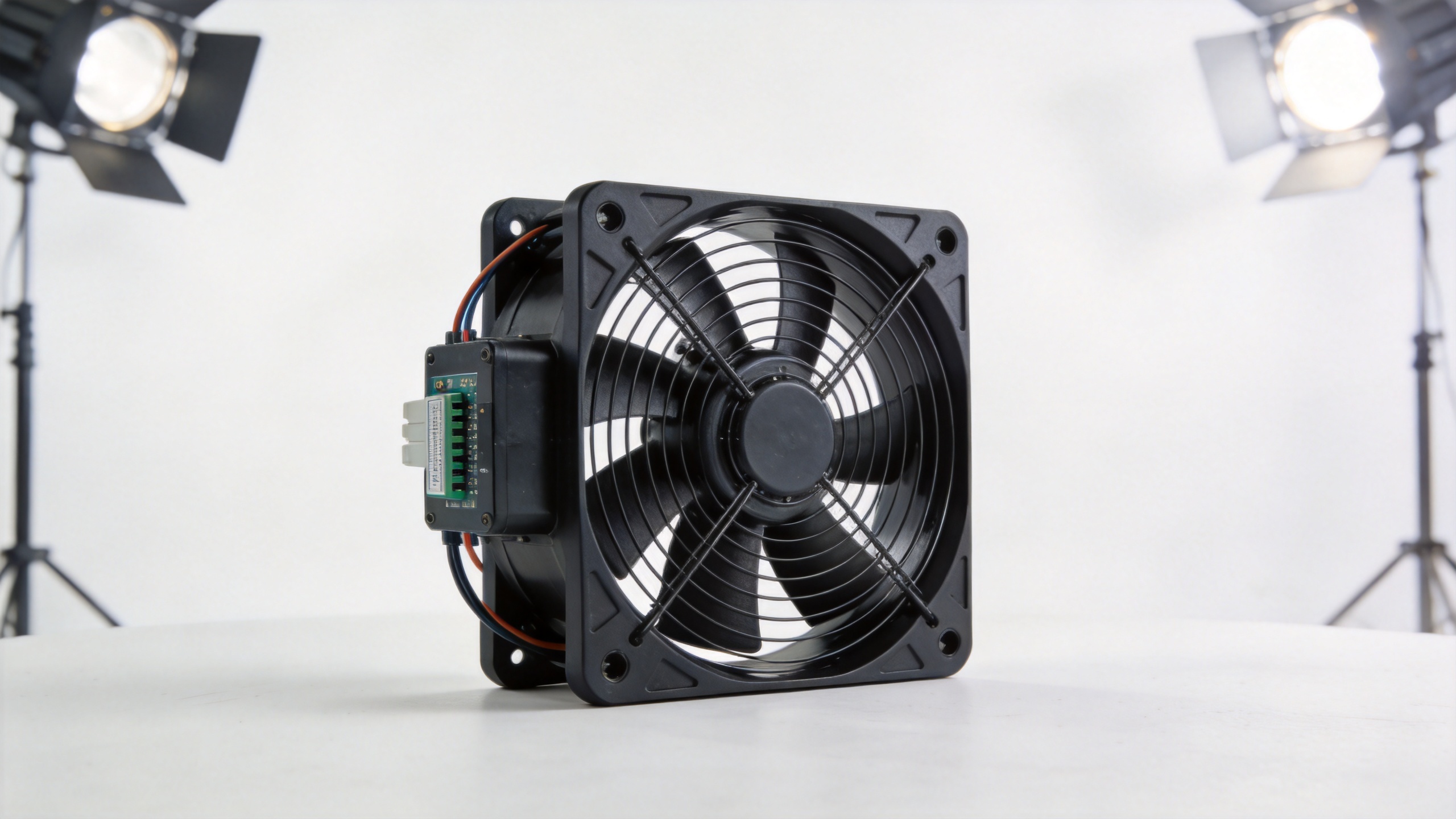
When evaluating EC axial cooling fan products, asking for drive system efficiency data tested against IEC 61800-9-2 is particularly relevant for HVAC systems and variable-load industrial cooling applications where lifecycle energy cost is a purchasing criterion.
EU Regulation 2024/1834 and the Fan Energy Index (FEI)
For buyers supplying the European market, the most operationally relevant compliance framework is currently EU Regulation 2024/1834 — the updated Ecodesign regulation for fans. This regulation defines minimum energy performance requirements for industrial fans using the Fan Energy Index (FEI) as the compliance metric. FEI measures how a fan's actual electrical input power compares to a standardized reference power for an equivalent duty point; an FEI value of 1.0 meets the minimum threshold.
Compliance testing for FEI purposes must be conducted in accordance with ISO 5801, creating a direct link between the aerodynamic test standard and the regulatory compliance framework. Manufacturers seeking CE marking for fans sold in the EU must provide FEI data supported by ISO 5801 test evidence. An air mover axial fan factory that regularly supplies European trading companies will already have this documentation prepared as part of standard export documentation.
Practical Documentation Requirements for EC Axial Fan Buyers
The energy efficiency of a finished EC axial cooling fan product sits at the intersection of multiple standards. When sourcing ec axial fans and drives, buyers should request documentation covering each level of the system:
- ISO 5801 / DIN EN ISO 5801 — fan aerodynamic performance test report (required for any efficiency claim)
- ISO 12759 — fan efficiency grade (FEG) classification certificate based on ISO 5801 results
- IEC 60034-30 — EC/BLDC motor efficiency class certificate (IE4 or above for a genuine energy efficient industrial axial fan)
- IEC 61800-9-2:2023 — motor drive system efficiency data across partial load points (critical for variable speed energy efficient cooling fan system compliance)
- EU Regulation 2024/1834 (FEI) — FEI compliance declaration with ISO 5801 test basis (required for European market buyers)
A well-qualified air mover axial fan factory supplying trading companies for European markets will have all five documentation layers ready for review. If any layer is missing, that gap signals either a market-specific testing limitation or a compliance issue that could affect downstream customers.
At Guangdong Lebisen Fan Co., Ltd, our EC axial fan product line is developed with the full compliance landscape of our target markets in mind — because our trading company customers need technical accuracy and documentation completeness when qualifying a supplier for new projects in Europe, North America, or South America.
Conclusion
The energy efficiency testing standard for EC axial cooling fan finished products is not a single document but a coordinated set: ISO 5801 for aerodynamic performance, ISO 12759 for fan efficiency grade, IEC 60034-30 for motor classification, IEC 61800-9-2 for drive system efficiency, and EU Regulation 2024/1834 for market compliance. For ec axial fans and drives applications in industrial cooling, understanding this framework allows buyers to ask sharper sourcing questions and evaluate supplier documentation with greater confidence.






