 EN
EN
What filter matching rule for dust proof cabinet cooling fan operating in cement factories
2026/09/30
Cement cabinets choke on dust. Learn the filter rule for an industrial cabinet cooling fan: G4/F7 media, IP rating, and pre-filter care.

2026/09/14
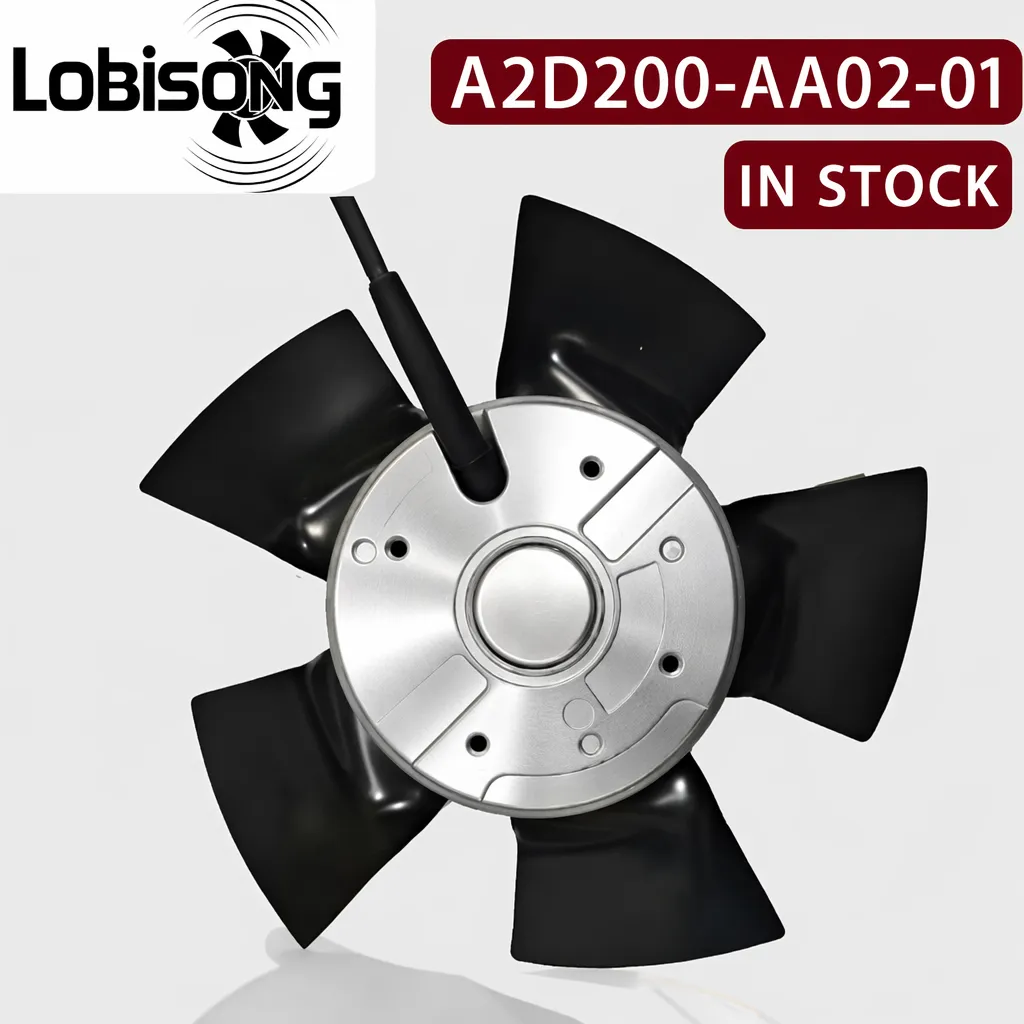
Industrial cooling accounts for a large share of plant electricity bills, and much of that cost comes from moving air at the wrong speed. When an engineering team evaluates modernization options, ec axial fans and drives stand out because they combine a high-efficiency motor with intelligent speed control in one package. The sections below focus on measured energy effects rather than feature lists.
EC motors replace mechanical commutation with electronic switching, so the rotor position is sensed and the windings are energized at the optimal moment. In a fan application this means ec axial fans and drives convert electrical input into airflow with far less heat loss than an AC induction equivalent. The efficiency gain is largest at reduced speed, where conventional motors lose efficiency quickly but commutated designs hold a flat, high curve across the operating range.
Most cooling duties never run at full output. A cabinet that needs peak airflow only during summer afternoons spends the rest of the year at thirty to sixty percent load. EC technology keeps consumption proportional to the cube-law relationship between speed and power, so trimming the speed a little removes a large share of the energy draw. That proportionality is exactly where the savings accumulate month after month. Building thermal mass smooths short spikes, which means the fan can linger at low speed far longer than a naive peak-rating suggests, and the controller exploits that slack automatically without manual resets.
An AC fan paired with an external variable-frequency drive can also modulate speed, yet the combined losses of the motor and the separate inverter add up. External drives also inject harmonic distortion back into the supply and often show a poorer power factor at light load, quietly raising the apparent demand that utilities bill. Against a retrofitted AC plus drive, ec axial fans and drives show the clearer efficiency edge because the drive sits on the motor, shortening the power path and cutting conversion losses. For continuous-duty cooling, the integrated approach returns lower total consumption per cubic meter of air moved.
Inside the EC assembly, a compact inverter takes the supply and synthesizes the correct frequency and voltage for the demanded speed. A VFD cabinet cooling loop benefits directly: as the converter load rises, the fan ramps without the inrush and hum of a contactor-switched AC unit. For specifiers weighing options, ec axial fans and drives remove the separate inverter entirely, which simplifies the bill of materials and shrinks conversion loss in the panel.
Closed-loop control turns a fan from a fixed blower into a thermal regulator. A temperature sensor feeds a PID control stage that trims the drive output several times per second, holding the enclosure at setpoint instead of overcooling. Well-tuned loops follow guidance such as IEC 61439 for enclosure thermal behavior, keeping internal hotspots within safe margins without over-provisioning the airflow. Overcooling wastes power and stresses components with thermal cycling. By matching output to need, ec axial fans and drives protect both the electronics and the energy budget through steady, demand-led operation.
Payback logic starts with two numbers: the annual kilowatt-hour reduction and the local electricity rate. Multiply them to get yearly savings, then divide the price premium of the EC package by that figure to reach a payback period. When the run hours are long, ec axial fans and drives shorten the payback period enough to clear most internal hurdle rates. The math stays transparent and easy to defend to finance teams.
Before procurement, confirm the rated static pressure matches the duct or heat-exchanger resistance, since a fan forced off its curve wastes power. Check the bearing type and the IP rating for the environment, and verify CE or UKCA marks for European and UK-bound shipments. Specifying ec axial fans and drives against the real static-pressure curve prevents off-curve waste. During commissioning, log the power consumption at several setpoints so the expected curve is documented, then request the supplier's test report before sign-off.
In practice, one Lobisong customer cooling a row of frequency-converter cabinets replaced contactor-switched AC units with EC axial models. The background problem was steady peak-speed running that inflated the summer bill and created audible noise on the shop floor. Heat built up fastest at the inverter bridges, where a fixed-speed fan could not respond to transient load. After the switch, the fans tracked converter load through a 0–10 V signal, and the engineering team reported quieter operation with a noticeable drop in procurement and energy outlay—figures kept qualitative, as real cases should. The same logic extends to servo and spindle motor cooling, where duty varies with the production schedule.
The evidence points one way: pairing an efficient motor with smart speed control delivers the deepest cuts in industrial cooling energy. For most duty cycles, ec axial fans and drives remove a substantial slice of avoidable consumption while keeping thermal stability. Procurement teams that model the payback period before purchase typically find the premium justified by continuous-duty savings. The right selection turns a cooling cost into a managed, predictable line item.
What makes EC axial fans more efficient than AC fans with a drive?
Answer: ec axial fans and drives use electronic commutation and an integrated inverter, so the power path is shorter and conversion losses are lower than an AC motor paired with a separate variable-frequency drive. Efficiency stays high across the speed range instead of falling at partial load. The integrated design also trims wiring and panel complexity, which reduces the hidden losses that accumulate in a conventional cooling loop.
Why does speed control matter so much for energy savings?
Answer: Fan power scales with the cube of speed, so a small reduction in revolutions removes a large share of consumption. Closed-loop control matches output to the actual cooling demand instead of running flat-out. In a VFD cabinet or humid workshop, load rises and falls through the day, and variable-speed operation captures the savings during every low-demand hour without manual intervention.
How is payback calculated for an EC fan upgrade?
Answer: Start with the annual kilowatt-hour reduction gained from the upgrade, then multiply by the local electricity rate to get yearly savings. Divide the price premium of the EC package by that yearly figure to reach the payback period. Long-running duty cycles shorten the period, while intermittent use lengthens it, so model the real operating hours rather than a nominal schedule.
Can EC axial fans connect to existing building control systems?
Answer: Most units accept standard control signals such as 0–10 V, PWM, or a Modbus interface, so they drop into existing building management and machine control loops. The drive reads the command and adjusts commutation timing to hold the target airflow. Confirm the signal type and protocol during procurement so the fan integrates cleanly with the current thermal management architecture.
Which standards should buyers check on an EC fan order?
Answer: For European and UK shipments, look for CE and UKCA marks, and request the supplier's efficiency declaration and test report before sign-off. Verify the IP rating suits the environment and that the bearing specification matches the duty. Asking the engineering team for pre-design selection advice helps confirm the static pressure and airflow align with the real cooling load.

2026/09/30
Cement cabinets choke on dust. Learn the filter rule for an industrial cabinet cooling fan: G4/F7 media, IP rating, and pre-filter care.

2026/10/07
Right wall-mount height for an industrial axial exhaust fan: room volume, free clearance, brackets, and recirculation control.

2026/10/08
An ec motor fan links to BMS via Modbus, 0-10V and PWM for demand-based cooling, energy scheduling and automatic sensor-driven speed control.

2026/10/06
A radial exhaust fan removes grease, fumes, and odors from food-processing workshops with capture velocity and hygienic washdown design.

2026/10/05
Learn antistatic treatment for industrial cabinet cooling fan in electronics workshops—ESD-safe housing, ionizable plastics, and cleanroom compatibility.

2026/10/04
Discover how a brushless dc servo delivers precise wind speed control for laboratory cooling fans with closed-loop PID feedback and laminar airflow.
