 EN
EN
What filter matching rule for dust proof cabinet cooling fan operating in cement factories
2026/09/30
Cement cabinets choke on dust. Learn the filter rule for an industrial cabinet cooling fan: G4/F7 media, IP rating, and pre-filter care.

2026/09/13
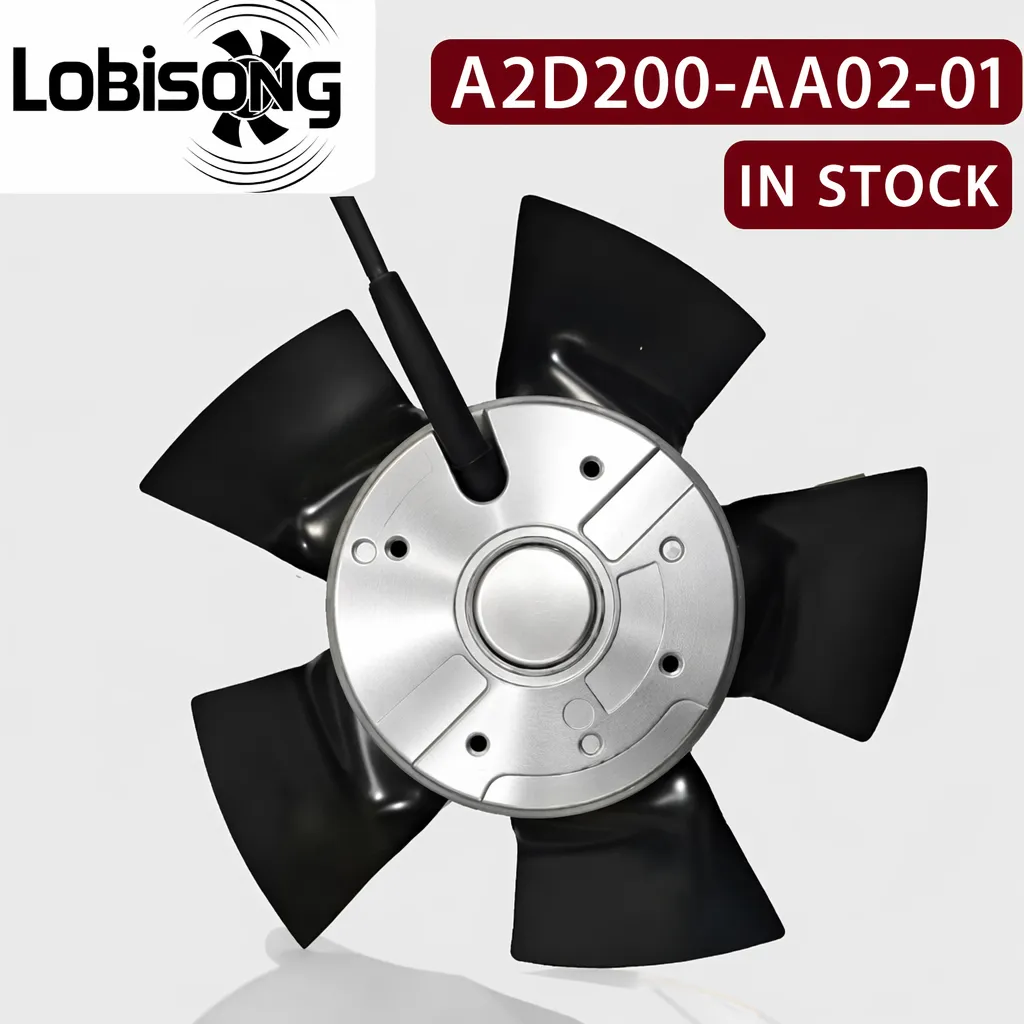
A coastal wastewater-treatment plant lost three standard axial fans in a single monsoon season because humid air condensed inside the motor cavity. That failure pattern is exactly why the waterproof cabinet cooling fan finished-product test exists: it proves the unit survives the humidity it will meet in the field, not just on a dry bench.
A regional treatment facility on the seaboard ran ordinary cabinet fans above the blower control enclosure. Salt-laden, 95% RH air seeped past the front grille and settled on the bearing seats. Within months, the waterproof cabinet cooling fan alternative—specified only after the third corrosion trip—was the unit that finally held up. The switch worked because the replacement had already passed a documented humidity-resistance regime at the factory, with the sealing gasket and cable gland proven before shipment.
Condensation forms when a cool motor winding meets warm, saturated air. Water films bridge the insulation resistance gap between live parts and the frame, inviting leakage current and slow corrosion of the sealing gasket. A plain fan with a snap-on filter screen but no verified seal will wick moisture along the cable entry. The damage is invisible until the bearing seizes or the motor winding shorts. A waterproof cabinet cooling fan with a documented humidity test resists this pathway, because the sealing gasket and cable gland were already proven against 95% RH. A sealed ball bearing tolerates brief damp contact far better than an open type, and a steadier ambient temperature setpoint reduces how often the dew point is crossed inside the enclosure.
Before a batch enters the chamber, the QA team fixes the acceptance criteria: target IP rating, maximum leakage current, minimum insulation resistance, and the duty cycle to be simulated. The waterproof cabinet cooling fan spec from the buyer typically calls for IP54 or IP55 at the enclosure, so the test plan mirrors that requirement rather than a generic in-house number. Clear limits turn a vague "moisture resistant" claim into a measurable pass or fail. Recording the motor winding class on the test card also helps, because a higher insulation class keeps the leakage current margin wider after the soak.
Each waterproof cabinet cooling fan sample is mounted on a test rig inside a constant-temperature-humidity chamber and held at 95% RH with a thermal cycle between low and high ambient temperature for a defined soak period. The thermal cycle stresses the sealing gasket through repeated expansion and contraction, exposing gaps a single static reading would miss. Recorded data feeds the release certificate, so the buyer sees the actual humidity chamber profile the unit endured. Operators log the duty cycle alongside the soak, since a fan that runs continuously dries its own interior faster than one left idle for long periods.
After conditioning, the enclosure is checked against EN 60529, the international IP code. A defined water jet and dust probe confirm the IP54 or IP55 boundary holds. The IP rating result is not assumed from the design drawing; it is measured on the finished product. The waterproof cabinet cooling fan that passes the chamber but fails the jet test is rejected before it reaches the cabinet, protecting the field installation from a hidden weak seal. A fresh sealing gasket is fitted for the jet test so the measurement reflects production hardware, not a worn service part.
Beyond humidity, a salt-spray stage reproduces the coastal corrosion threat directly. Samples face a mist of saline solution, then return to thermal cycling under load. This pairing shows whether the filter screen frame and hardware resist corrosion after repeated wet-dry swings. The waterproof cabinet cooling fan in such service must keep the filter screen frame and hardware intact through every wet-dry swing, so marine and wastewater units get the longer exposure window. A final leakage current reading after the spray stage proves the corrosion stayed cosmetic and never reached a conductive path.
Once the unit is dry, a megohmmeter measures insulation resistance across the motor winding to frame, while a leakage current test confirms no path to earth. Per IEC 60034 for rotating electrical machines, the winding must hold its dielectric value after the humidity soak. Any reading drift signals a compromised seal or trapped moisture inside the motor. The waterproof cabinet cooling fan that drifts here would have failed in the field within a season, so the reading gates the release. Running the unit through its rated duty cycle before the reading also confirms the bearing stays cool, which keeps the insulation resistance stable.
Release follows an AQL sampling plan documented under ISO 9001 quality control. Not every fan is destructively tested, but the lot certificate traces the humidity regime each unit type passed. Buyers should request that certificate and re-verify IP rating on arrival with a simple spray check. Stored spares stay in a dry room, and the snap-on filter screen is cleaned on the duty cycle the enclosure sees, keeping corrosion and condensation from returning.
Specifying a unit that has cleared a measured humidity-resistance regime removes the guesswork from enclosure cooling. The waterproof cabinet cooling fan that passes a 95% RH chamber, EN 60529 jet check, salt spray, and insulation test will keep corrosion trips out of the cabinet—even at a coastal wastewater site where ordinary fans failed. Procurement teams that ask for the test record turn a hidden risk into a documented, repeatable specification.
What does a finished-product humidity test actually measure?
Answer: A finished-product humidity test measures whether the sealed fan survives sustained moist air without losing dielectric or mechanical integrity. The chamber holds 95% RH while a thermal cycle flexes the sealing gasket, then insulation resistance and leakage current confirm the motor winding stayed dry. The IP rating is re-verified afterward, so the result reflects the real enclosure, not a design estimate.
Why does condensation damage a standard cabinet fan?
Answer: Condensation forms when warm saturated air contacts a cooler motor winding or bearing seat, leaving a water film inside the enclosure. That film bridges live parts to the frame, raising leakage current and starting corrosion on the sealing gasket and hardware. Over a duty cycle the bearing can seize and the motor winding can short, which is why ordinary fans fail in coastal or humid plants.
How is IP54 different from IP55 for these fans?
Answer: Both IP54 and IP55 block most dust and water spray, but IP55 withstands a lower-pressure water jet while IP54 resists splashing. EN 60529 defines the exact probe and jet test for each code. A waterproof cabinet cooling fan rated IP55 suits outdoor or washdown enclosures, whereas IP54 fits indoor cabinets with occasional spray exposure and steadier ambient temperature.
Can salt-spray testing predict coastal corrosion life?
Answer: Salt-spray testing reproduces the corrosive coastal environment in an accelerated form, so it predicts relative corrosion resistance rather than exact field years. Paired with thermal cycling under load, it shows whether the filter screen frame and hardware survive repeated wet-dry swings. Fans for marine or wastewater duty receive the longer mist exposure to stress the seal more severely.
Which certificate should buyers request at procurement?
Answer: Buyers should request the lot release certificate tracing the humidity regime, IP rating result per EN 60529, and insulation resistance values for the batch. Under ISO 9001, that document links each unit type to its test record. On arrival, a quick spray check and a visual seal inspection confirm the enclosure matches the certificate before the fan is mounted in service.

2026/09/30
Cement cabinets choke on dust. Learn the filter rule for an industrial cabinet cooling fan: G4/F7 media, IP rating, and pre-filter care.

2026/10/07
Right wall-mount height for an industrial axial exhaust fan: room volume, free clearance, brackets, and recirculation control.

2026/10/08
An ec motor fan links to BMS via Modbus, 0-10V and PWM for demand-based cooling, energy scheduling and automatic sensor-driven speed control.

2026/10/06
A radial exhaust fan removes grease, fumes, and odors from food-processing workshops with capture velocity and hygienic washdown design.

2026/10/05
Learn antistatic treatment for industrial cabinet cooling fan in electronics workshops—ESD-safe housing, ionizable plastics, and cleanroom compatibility.

2026/10/04
Discover how a brushless dc servo delivers precise wind speed control for laboratory cooling fans with closed-loop PID feedback and laminar airflow.
