 EN
EN
What filter matching rule for dust proof cabinet cooling fan operating in cement factories
2026/09/30
Cement cabinets choke on dust. Learn the filter rule for an industrial cabinet cooling fan: G4/F7 media, IP rating, and pre-filter care.

2026/09/11
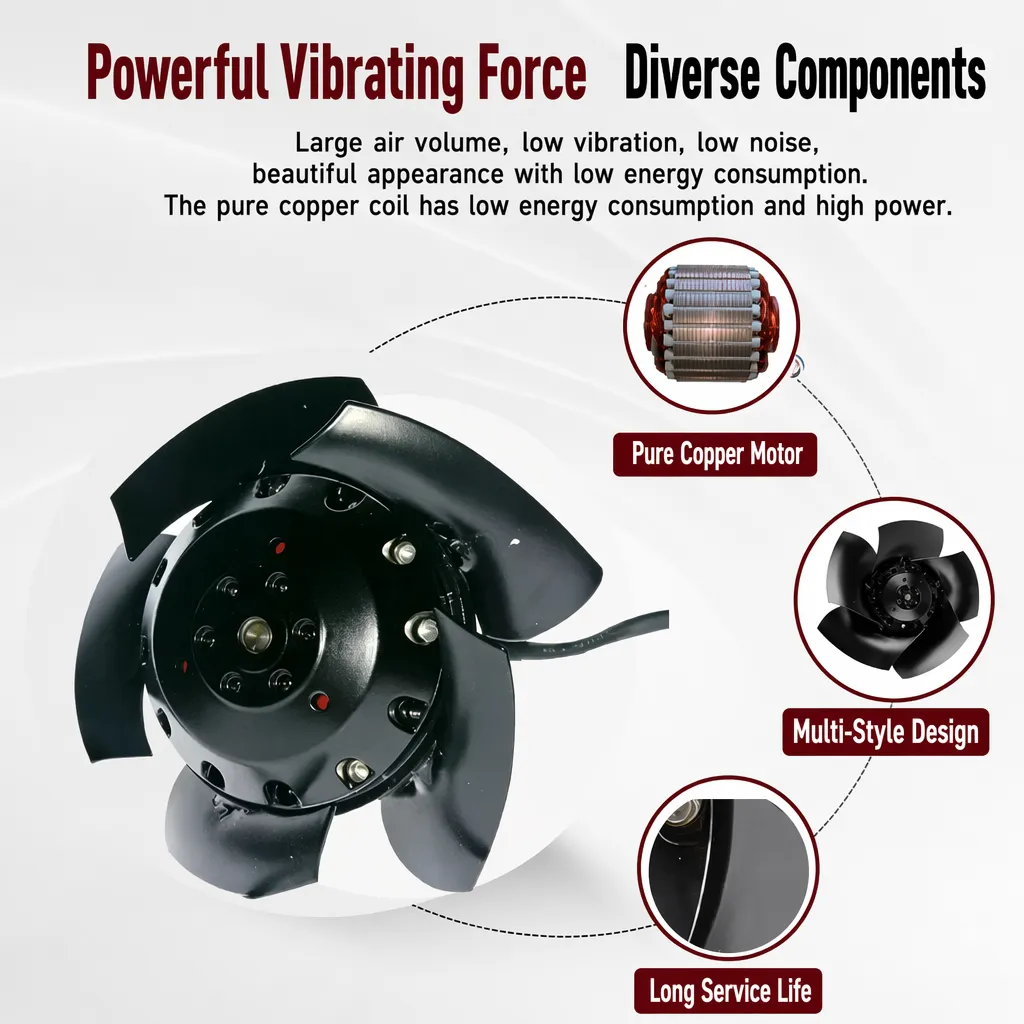
An industrial axial fan blade spins at thousands of RPM inside enclosures and HVAC ducts, yet the structure that holds it often gets less attention than the motor. The bracket is the only load path between the rotating assembly and the building. When that path is underspecified, the result is cracked welds, loosened bolts, and premature bearing failure. Buyers who understand bracket load standards reduce safety risk and total cost of ownership.
Static load describes the constant downward force a bracket carries when an industrial axial fan blade assembly, motor, and housing hang from a wall or ceiling. Dead-weight rating must exceed the combined mass with margin, because safety factors in ANSI and OSHA guidance typically call for at least a 4:1 design ratio for overhead suspended equipment. A bracket rated only to the exact unit weight leaves no buffer for asymmetric mounting or paint buildup. Certified fabricators document the proof load and yield point so specifiers can verify the margin rather than trust a catalog number.
The rotating mass of an axial fan blade assembly generates dynamic load that static rating alone never captures. Unbalanced blades produce centrifugal force that grows with the square of RPM, so a small imbalance at 2,800 RPM can multiply bearing shear and bracket bending stress far beyond the resting weight. Mechanical stress from startup surges, belt pulls, and airflow reaction must be added to dead load when sizing the bracket. AMCA performance data and enclosure design notes help engineers estimate combined thrust. A weight-only bracket fatigues at the weld root under duty.
Every bracket behind an industrial axial fan blade has a natural frequency set by steel thickness, span, and bolt pattern. When the fan's running speed excites that frequency, resonance amplifies vibration until fasteners loosen or the weld cracks. The standard practice is to keep the bracket's natural frequency at least 20 to 30 percent above or below the blade pass frequency to avoid the overlap zone. Structural integrity depends on this separation margin, not on steel mass alone. Field teams use a vibration meter to confirm the gap; Lobisong ships units pre-balanced to limit residual imbalance.
Vibration isolation breaks the path from motor to structure using springs or rubber mounts placed between bracket and frame. Proper isolation lowers transmitted force and extends the life of ball bearing and motor winding assemblies. The isolator must be selected by static deflection and load per mount, not by guesswork, because oversized isolators let the unit drift while undersized ones bottom out. Ingress protection matters where an industrial axial fan blade operates in washdown or coastal air, since corrosion weakens clamp load over time. HVAC and food lines pair isolation with stainless hardware for durability.
For an industrial axial fan blade, fastener torque is what actually holds the bracket to the structure, yet it is the step most often skipped on site. Bolt grade decides tensile strength; a low-grade bolt in a high-vibration location can stretch and lose clamp load within weeks. The clamp load must resist the combined shear from dead weight, dynamic load, and airflow reaction. Specifiers should match bolt grade to the bracket's proof load and request certification for critical overhead runs. A torque wrench calibrated on a schedule prevents both under-tightening and over-tightening, which strips threads or cracks the plate.
On an axial fan installation, correct fastener torque depends on the sequence as much as the value. Bolts should be tightened in a cross or star pattern so the bracket seats evenly and no corner floats. A re-torque interval after the first 100 running hours catches relaxation from new paint, soft washers, or thermal cycling. Documenting the torque value, sequence, and date gives maintenance a baseline for inspection. Sites following ANSI assembly guidance record these steps in the commissioning file. Skipping the re-torque is a common cause of nuisance vibration that later reads as a motor fault.
When sourcing an industrial axial fan blade and bracket, a clear specification protects the buyer before steel is cut. Require the supplier to state dead-weight rating, dynamic load capacity, bolt pattern, and material grade in writing. Ask for the bracket's natural frequency and proof load test, plus IP rating in wet or dusty sites. CE and UKCA documentation confirms the unit passed European conformity checks. Request weld procedure and inspection records. Specifying these items up front removes ambiguity and lets procurement compare bids on engineering merit. Lobisong supplies matched brackets and motors so the load path is validated.
Even with an industrial axial fan blade properly selected, the safest specification fails without on-site verification, so inspection belongs in the commissioning routine. Check for rust at the weld, movement under the bolt head, and paint cracks near the load line. A vibration reading taken at startup and again after the re-torque interval shows whether the bracket settled. Keep a log of fastener torque values and dates so trends surface early. Structural integrity is maintained by this discipline, not by a one-time install. Plants that train technicians to read these signs avoid unplanned downtime and protect people beneath it.
The load-bearing performance of an industrial axial fan blade mounting system is defined by how well static load, dynamic load, vibration isolation, and fastener torque are specified and verified together. Treating the bracket as a certified structural component rather than a flat plate turns a hidden failure point into a managed risk. Buyers who demand documented proof load, natural frequency separation, and a re-torque routine get longer service life and safer operation across HVAC, enclosure, and process applications.
What documents should a buyer request to verify bracket load standards?
Answer: A buyer should request written proof of dead-weight rating, dynamic load capacity, and the bracket's natural frequency for an industrial axial fan blade assembly before purchase. Ask for weld procedure records, bolt grade certification, and IP rating in wet or dusty sites. CE and UKCA marks confirm European conformity for the target market. These documents let procurement compare bids on engineering merit rather than price, and give the installation team a verified baseline for torque and inspection.
Why does bracket resonance cause premature fan failure?
Answer: Resonance occurs when the bracket's natural frequency overlaps the blade pass frequency, amplifying vibration until welds crack and bolts loosen. The problem builds silently because the force grows with running speed, not with visible load. A bracket sized only for static weight ignores this dynamic risk and fatigues at the weld root under duty. Keeping the natural frequency 20 to 30 percent away from excitation prevents the overlap. Field measurement with a vibration meter confirms the gap before commissioning.
How does fastener torque affect bracket structural integrity?
Answer: Fastener torque sets the clamp load that holds the bracket against the structure. Too little torque lets the unit walk and loosens under vibration, while too much strips threads or cracks the mounting plate. The correct value depends on bolt grade and the cross or star tightening pattern used. A calibrated torque wrench and a re-torque after the first 100 running hours keep the clamp load stable. Documenting the value gives maintenance a baseline for later inspection.
Can vibration isolation replace a stronger bracket design?
Answer: Vibration isolation reduces transmitted force to the building but does not replace structural capacity. Isolators must be selected by static deflection and load per mount, because oversized units let the fan drift and undersized ones bottom out. A weak bracket still carries dead weight and dynamic load at the weld, so isolation only manages the path, not the margin. The right approach pairs a properly rated bracket with tuned isolators and stainless hardware where corrosion reaches the clamp load.
Where should on-site bracket inspection focus during commissioning?
Answer: Inspection should start at the weld and bolt line: look for rust, movement under the bolt head, and paint cracks near the load path. Take a vibration reading at startup and again after the re-torque interval to see whether the bracket settled. Log each fastener torque value with its date so trends surface before failure. Structural integrity comes from this repeatable routine, not a one-time install, and protects both the equipment and personnel working below the unit.

2026/09/30
Cement cabinets choke on dust. Learn the filter rule for an industrial cabinet cooling fan: G4/F7 media, IP rating, and pre-filter care.

2026/10/07
Right wall-mount height for an industrial axial exhaust fan: room volume, free clearance, brackets, and recirculation control.

2026/10/08
An ec motor fan links to BMS via Modbus, 0-10V and PWM for demand-based cooling, energy scheduling and automatic sensor-driven speed control.

2026/10/06
A radial exhaust fan removes grease, fumes, and odors from food-processing workshops with capture velocity and hygienic washdown design.

2026/10/05
Learn antistatic treatment for industrial cabinet cooling fan in electronics workshops—ESD-safe housing, ionizable plastics, and cleanroom compatibility.

2026/10/04
Discover how a brushless dc servo delivers precise wind speed control for laboratory cooling fans with closed-loop PID feedback and laminar airflow.
