 EN
EN
What filter matching rule for dust proof cabinet cooling fan operating in cement factories
2026/09/30
Cement cabinets choke on dust. Learn the filter rule for an industrial cabinet cooling fan: G4/F7 media, IP rating, and pre-filter care.

2026/09/12
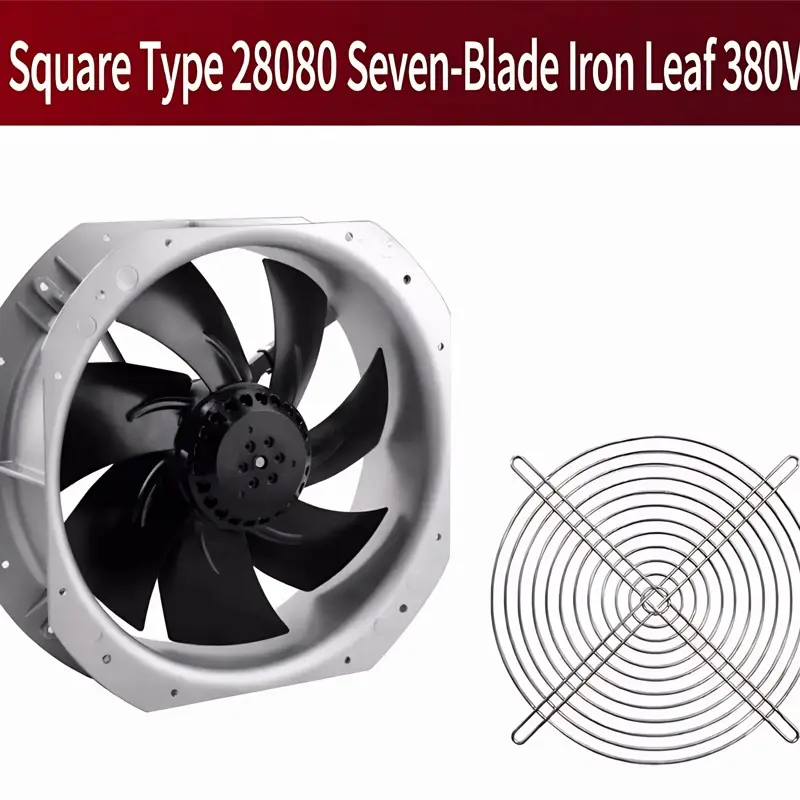
A silent cabinet fan is built to hold a low acoustic signature, so any abnormal running sound is a fault signal rather than normal operation. When that quiet unit starts humming or grinding after install, the correct response is a structured noise source analysis rather than blind part replacement. The method below separates mechanical, aerodynamic, and structural causes with field tools most workshops already own. Most sites carry a phone and a stethoscope, which is enough to begin the work on the same afternoon.
A silent cabinet fan normally hides its moving parts behind a rated low decibel level, which makes a sudden tonal noise or grinding tone stand out immediately. Most complaints trace to three distinct families. Bearing noise is mechanical and rotates with the shaft. Aerodynamic noise comes from airflow turbulence across the impeller and filter. Enclosure resonance is structure-bound, driven by panel vibration at a natural frequency. Each family needs a different measurement and a different repair, so the first job is to separate them before touching a single screw.
A control-panel builder commissioned a cabinet cooling unit and reported a low humming and grinding sound a week after install. The unit carried a quiet rating on paper, yet the panel emitted an irritating tone inside a quiet electrical room. That mismatch pointed away from a generic loud-fan problem and toward a specific source defect. A silent cabinet fan that breaks its rating this way usually hides one or two concurrent faults rather than a single loud component. With the background set, the team measured instead of replacing parts blindly, and logged the first spectrum the same afternoon.
Start with a simple field capture. Before logging, clear the airflow path of any packing foam left after install, since trapped material adds a false broadband hump. A phone spectrum app logged about 38 dBA at 1 m with the fan running, against a 31 dBA room baseline, a 7 dB rise that is audible but not alarming. The decisive detail is the shape. The app showed a sharp peak at 240 Hz sitting on broadband hiss. Tonal noise, a narrow peak, indicates a rotating or structural source. Broadband noise points to airflow turbulence across the impeller and filter. A silent cabinet fan complaint is solved faster once this split is recorded.
Frequency acts like a fingerprint in NVH work. Bearing defects usually show a peak near the shaft rotation order, here about 240 Hz, matching an outer-rotor motor at moderate speed. Aerodynamic noise spreads as broadband across hundreds to thousands of Hz with no single dominant line. Enclosure resonance appears as a strong tone tied to a panel natural frequency, often excited by a nearby forcing frequency. Mapping peak frequency to a physical component narrows the suspect list quickly and stops guesswork before any disassembly, which keeps service time short.
With the fan live, a mechanic pressed a stethoscope against the motor boss and the filter frame. The boss radiated a rhythmic clicking that tracked the 240 Hz peak. The frame showed a softer, sustained tone. Running the phone spectrum app side by side confirmed the bearing defect as the dominant source and the panel as a secondary resonance. A silent cabinet fan diagnosed this way needs no lab. The low-cost pairing isolates the source on site, keeping the whole analysis practical for field service teams that lack a sound chamber.
To rule out coincidence, the team tapped the filter frame and heard a ringing tone near the same band, a classic panel resonance. They then lifted the motor off the panel with a temporary spacer. The 240 Hz peak dropped about 9 dB while the frame tone stayed. That test separated the bearing defect, motor-bound and rotation-tied, from the enclosure resonance, structure-bound. It proved two concurrent faults rather than one cause, and it prevented a wrong bearing order that would have left the resonance untreated and the complaint open.
The repair matched the fault. A precision ball bearing swap removed the 240 Hz clicking at the source. A damping pad placed between motor and panel broke the vibration path that fed enclosure resonance, while vibration isolation grommets on the mounting feet stopped energy reaching the cabinet skin. Impeller imbalance was checked and rebalanced to avoid reintroducing a tonal noise line. The silent cabinet fan returned toward its rating without a full unit replacement, which kept the control panel in service and avoided long lead-time downtime for the builder.
After the fix, the spectrum app showed the 240 Hz peak gone and total level back near 31 dBA, matching the quiet rating. For documented proof, a formal check to ISO 3744, sound power measurement in a defined environment, and ISO 4871, declaration of noise emission values, gives comparable and CE-relevant data. Sound pressure readings alone are useful for spot checks, but the declared emission values give procurement and quality teams a reference they can trust. The abnormal running sound no longer registered in the electrical room, and the panel passed handover.
Diagnosing an abnormal running sound in a silent cabinet fan comes down to separating bearing noise, aerodynamic noise, and enclosure resonance before any action. Measure the decibel level, split tonal from broadband, and read frequency to locate the source. A stethoscope and a phone spectrum app isolate the fault on site, while a bearing swap plus damping pad and vibration isolation close the fix. Verify against ISO 3744 and ISO 4871 so the quiet rating is restored with evidence rather than assumption.
What is the first step when a cabinet fan develops an abnormal running sound?
Answer: Begin by measuring the sound with a phone spectrum app instead of guessing. Record the decibel level at 1 m and note whether the excess is a narrow tonal peak or broadband noise. A tonal line suggests a rotating or structural source, while broadband points to airflow turbulence. This classification steers the whole diagnosis and prevents wasted teardown work on the wrong component during troubleshooting.
How does bearing noise differ from aerodynamic noise in a spectrum?
Answer: Bearing noise appears as a sharp tonal peak tied to shaft rotation order, often a clean line at a fixed frequency. Aerodynamic noise from airflow turbulence spreads as broadband energy across a wide band with no single dominant line. Listening with a stethoscope on the motor boss versus the inlet confirms the location. The spectrum shape alone separates these two families before any disassembly is attempted by a technician.
Why does enclosure resonance mimic a bearing defect during diagnosis?
Answer: Enclosure resonance occurs when a panel natural frequency is excited by a forcing frequency from the running fan, producing a strong tone that can sit near the bearing order. A soft tap on the panel reveals a ringing tone at the same band, confirming structure-bound vibration. Lifting the motor off the panel with a spacer drops the peak if the fault is bearing-bound, isolating the true source accurately.
Which repair fixes a confirmed bearing defect in a quiet fan?
Answer: The silent cabinet fan returns to its rating after a precision ball bearing swap removes the rotation-tied clicking at the source. Add a damping pad between motor and panel to break the vibration path that feeds resonance, and fit vibration isolation grommets at the feet. Re-measure afterward; the tonal peak should vanish and total level should match the original quiet specification without further intervention.
Can ISO standards support a noise complaint resolution process?
Answer: A formal check to ISO 3744 measures sound power in a defined environment, while ISO 4871 governs declaration of noise emission values for comparable, CE-relevant data. These standards turn a subjective humming complaint into documented evidence. They help procurement and quality teams confirm whether a unit meets its declared quiet rating after the bearing swap and damping repair are completed successfully.

2026/09/30
Cement cabinets choke on dust. Learn the filter rule for an industrial cabinet cooling fan: G4/F7 media, IP rating, and pre-filter care.

2026/10/07
Right wall-mount height for an industrial axial exhaust fan: room volume, free clearance, brackets, and recirculation control.

2026/10/08
An ec motor fan links to BMS via Modbus, 0-10V and PWM for demand-based cooling, energy scheduling and automatic sensor-driven speed control.

2026/10/06
A radial exhaust fan removes grease, fumes, and odors from food-processing workshops with capture velocity and hygienic washdown design.

2026/10/05
Learn antistatic treatment for industrial cabinet cooling fan in electronics workshops—ESD-safe housing, ionizable plastics, and cleanroom compatibility.

2026/10/04
Discover how a brushless dc servo delivers precise wind speed control for laboratory cooling fans with closed-loop PID feedback and laminar airflow.
