
 EN
EN
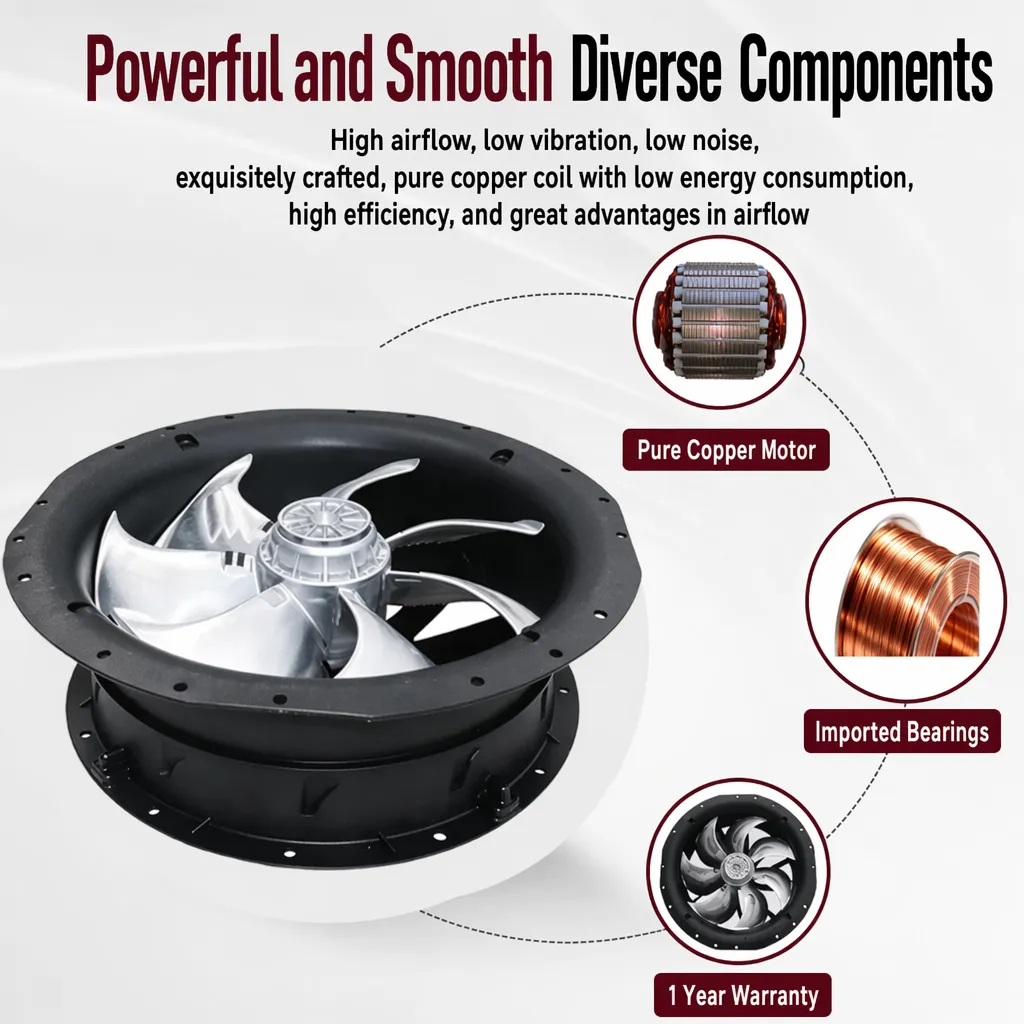
What Overheat Protection Function Should a DC Motor Driver Equip for Cabinet Fans
Have you ever replaced a cabinet fan only to find it fails again within months — not because of the blades or bearing, but because the motor driver burned out? In most of the industrial cabinet setups I have seen, overheating at the driver level is far more common than people expect. A motor driver brushless operating inside a control enclosure faces a demanding thermal environment, and without the right protection functions built in, that driver becomes the weakest link in the entire cooling chain.
This article outlines the core overheat protection functions a motor driver brushless for cabinet fan applications should carry, explains why each one matters in continuous-duty industrial environments, and offers a practical checklist for engineers evaluating their next motor driver brushless selection.
Why Cabinet Fan Motor Drivers Are Vulnerable to Heat
A motor driver brushless paired with cabinet cooling fans typically operates continuously — often at partial to full load — for thousands of hours per year. Whether deployed as a cabinet heat dissipation axial air mover unit or a compact blower configuration, the fan cannot be paused for thermal recovery the way an intermittent-duty load can. The driver must manage its own thermal state autonomously.
The enclosure ambient adds further stress. Industrial cabinets in manufacturing and process environments routinely see internal temperatures of 45°C to 60°C depending on load density and ventilation design. A motor driver brushless mounted close to heat-generating components faces an ambient that may already be near — or at — its rated upper limit before any self-generated losses are added.
The IP rating of the enclosure does not guarantee that the motor driver brushless inside it will remain thermally safe. A driver installed inside an IP65-rated cabinet can still overheat if internal airflow management is poor. The thermal environment the driver faces depends on enclosure layout and heat load, not protection class.
Five Overheat Protection Functions a Motor Driver Brushless Must Have
1. Over-Temperature Protection (OTP) — Thermal Shutdown
Over-Temperature Protection (OTP), also called thermal shutdown or thermal cutback, is the most fundamental protection function a motor driver brushless for cabinet fans should carry. OTP monitors the temperature of the driver's power stage — typically the MOSFET junction — and triggers a controlled shutdown or power reduction before junction temperatures reach destructive levels.
For industrial-grade BLDC driver ICs, OTP threshold temperatures typically range from 125°C to 175°C at the junction, with a hysteresis window of 10°C to 30°C for auto-recovery. When evaluating a motor driver brushless, look for the OTP trigger threshold in the datasheet — not just the maximum rated ambient temperature. The rated ambient tells you normal operating range; the OTP threshold tells you what the motor driver brushless does when pushed beyond those conditions.
2. Overcurrent Protection (OCP)
Overcurrent conditions arise from mechanical blockage, bearing seizure, or voltage transients. Without OCP, a sustained overload forces the driver's power semiconductors to dissipate far more heat than the design allows. For cabinet fan applications, cycle-by-cycle current limiting is generally preferable over hard shutdown — it allows the motor driver brushless to continue at reduced torque rather than cutting power entirely, which would eliminate cooling airflow when it is most needed.
3. Over-Voltage and Under-Voltage Protection (OVP / UVP)
Voltage anomalies indirectly cause thermal failure. Over-voltage pushes excess power into switching elements; under-voltage forces the motor to draw higher current to maintain torque, increasing thermal losses throughout the drive chain. A well-specified driver motor dc for cabinet fans should include both OVP and UVP with clearly defined lockout thresholds — for 24V systems, typically 20V–30V; for 48V systems, 40V–57V.
For a motor driver brushless deployed in continuous-duty cabinet cooling, graduated derating before hard lockout is preferred. This keeps the fan running at reduced speed during marginal voltage conditions rather than stopping it completely.
4. Locked-Rotor Protection (Stall Detection)
Locked-rotor conditions produce maximum current draw with zero mechanical output — the worst-case thermal scenario for any motor driver brushless. In cabinet fans, stall can result from dust accumulation on blades, bearing failure, or a foreign object in the fan assembly. Stall detection should trigger within 0.5 to 2 seconds of onset. Drivers with auto-restart and configurable retry count allow the motor driver brushless to recover from transient blockages without requiring manual intervention.
5. Soft-Start Function
Soft-start is not a protection function in the traditional sense, but it substantially reduces thermal stress at startup. Without it, a motor driver brushless at startup can see inrush current three to five times rated operating current. A properly tuned soft-start ramp limits this transient, reducing heat stress on the power stage and extending the service life of the motor driver brushless in applications where frequent power cycling occurs.
BLDC fan drivers are generally more efficient than their AC counterparts — at least in variable-speed applications where partial-load operation is common — and soft-start is one of the features that makes their thermal profile more predictable in continuous-duty cabinet cooling.
Auto-Reset vs. Latched Shutdown for Cabinet Fan Applications
When OTP or OCP triggers, the motor driver brushless may either auto-reset once the fault clears or latch into a fault state requiring external reset. For cabinet fan applications, auto-reset is typically the safer choice — a latched motor driver brushless that requires manual reset means the enclosure continues heating without cooling airflow until someone intervenes.
When integrating custom ec fans and drives into a cabinet thermal management system, specifying the fault recovery behavior upfront avoids mismatches between what the motor driver brushless does by default and what the system design requires. Missing this during the design phase tends to surface as an expensive fix during commissioning.
Evaluation Checklist for a Motor Driver Brushless in Cabinet Fan Use
- OTP trigger threshold: Check the datasheet for the actual thermal shutdown temperature, not just the rated ambient. For a motor driver brushless in a hot cabinet environment, the margin between rated ambient and OTP threshold is your safety window.
- OCP mode: Confirm whether OCP operates as current limiting or hard shutdown. Current limiting keeps the motor driver brushless running at reduced capacity, which is preferable for cooling continuity.
- OVP / UVP thresholds: Verify that the protection window matches your power supply output range including transient peaks.
- Stall detection and recovery: Look for configurable retry count or auto-restart, particularly in dusty environments where transient blade obstruction is common.
- Auto-reset behavior: If unattended continuous operation is required, confirm that the motor driver brushless defaults to auto-reset after OTP events rather than latching.
One thing worth adding from field experience: driver-to-motor compatibility at the specification level — not just voltage matching — is a step that is easy to overlook. I once selected a motor driver brushless matched on voltage alone, only to discover that its PWM switching frequency was incompatible with the fan motor's commutation requirements, which caused abnormal heating at partial speed. Checking driver compatibility on all relevant specification parameters, not just one, prevents this kind of failure.
Conclusion
A motor driver brushless for cabinet fan duty operates in a demanding thermal environment with no tolerance for unplanned downtime. The five protection functions covered here — OTP, OCP, OVP/UVP, locked-rotor protection, and soft-start — form the baseline feature set a motor driver brushless should carry before being deployed in continuous industrial cabinet cooling applications.
From a system integration perspective, selecting the right motor driver brushless is not only about matching electrical specifications. It is about ensuring the driver's protection architecture aligns with the fault scenarios the cabinet installation is likely to encounter, and that its recovery behavior keeps cooling airflow available for as long as safely possible when those faults occur.
Guangdong Lebisen Fan Co., Ltd specializes in industrial cooling fans , covering EC and BLDC variants suited for cabinet heat dissipation axial air mover unit configurations. The product range covers both AC and EC fan options, with technical documentation designed for international B2B procurement. For sourcing inquiries, contact [email protected] or visit www.lobisong.com.






