
 EN
EN
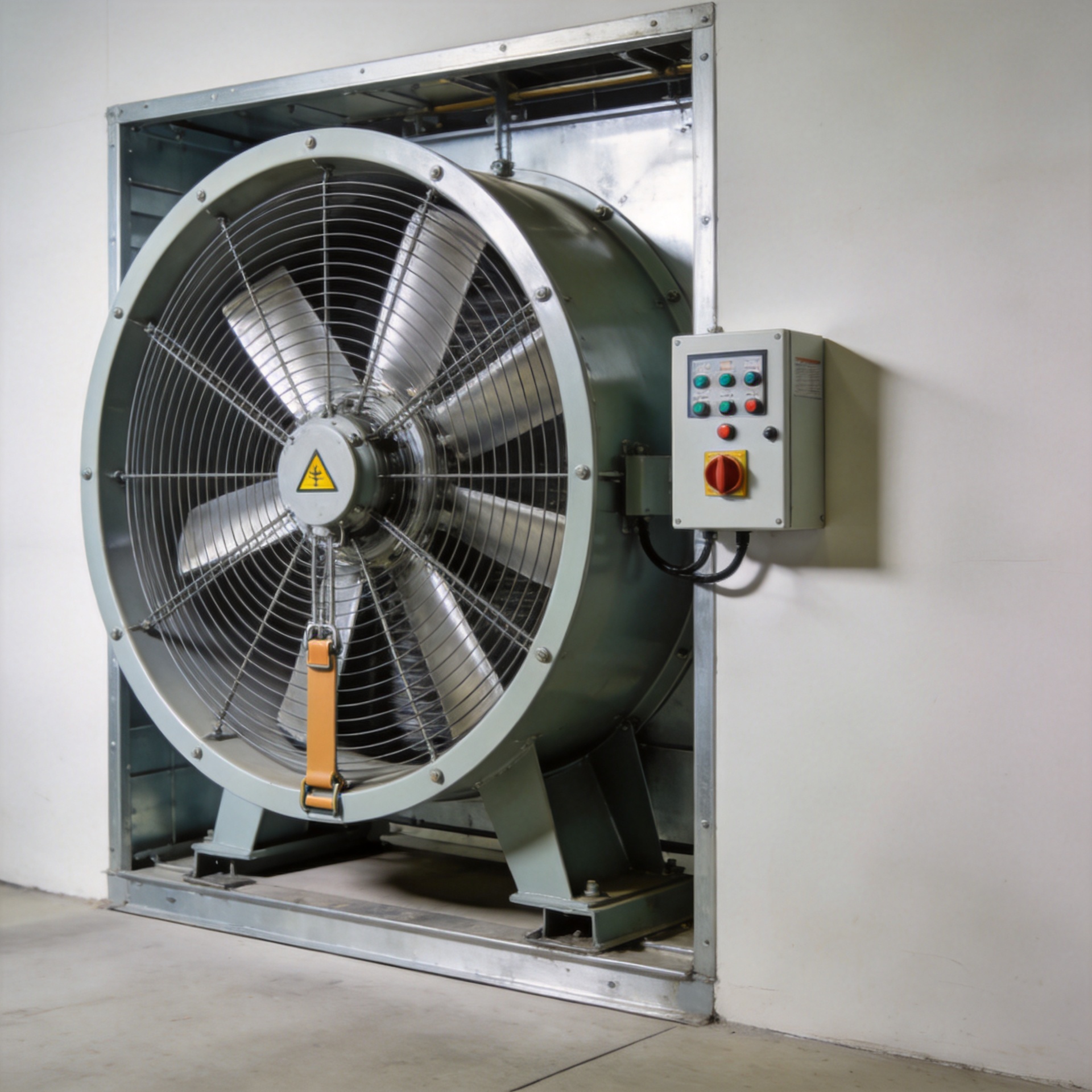
What Safety Interlock Protection Function Does an Industrial Axial Fan Control Cabinet Have?
As someone who has worked on equipment integration projects across manufacturing plants and ventilation system installations, I've found that one of the most overlooked aspects of deploying an industrial axial fan isn't the fan itself — it's how the control cabinet handles protection and interlock logic. Early in my career, I used to evaluate fan systems primarily on airflow performance and motor efficiency; over time, I realized the real differentiator in long-term reliability is whether the safety interlock protection built into the control cabinet actually matches the operational demands of the application.
So, what safety interlock protection functions does an industrial axial fan control cabinet typically include? Let's break them down systematically — because understanding each layer of protection is essential before you spec a system or assess a supplier's offering.
1. Overcurrent and Overload Protection
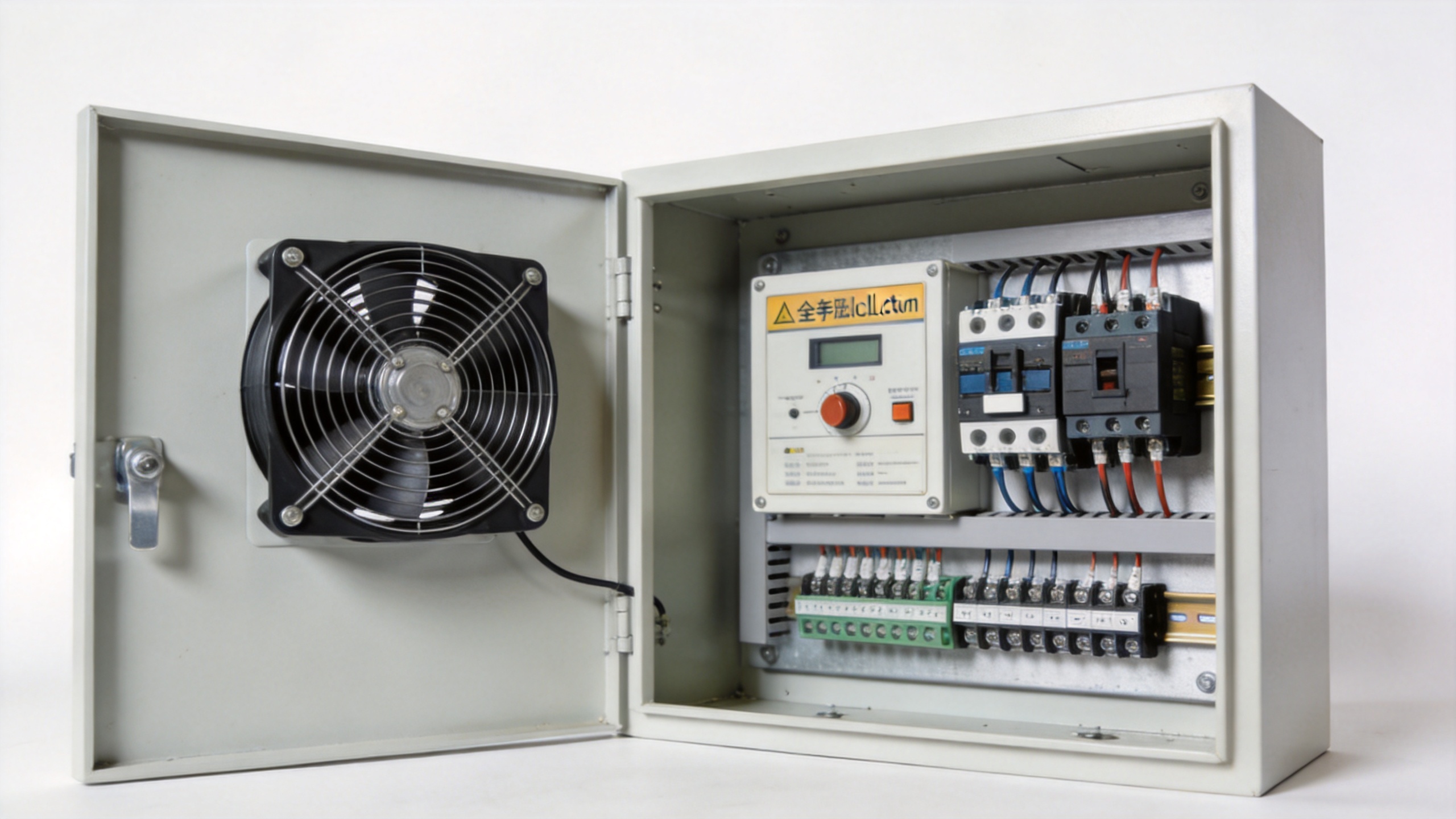
Overcurrent and overload protection is the first line of defense in any industrial axial fan control cabinet. This function typically relies on a thermal overload relay or electronic motor protection relay wired in series with the motor's main contactor. When the motor draws sustained current above its rated value — due to mechanical blockage, start-up current spikes, or abnormal load — the relay trips the circuit before heat accumulates and damages the motor windings.
In a properly configured electrical cabinet fan system, the overload threshold is set based on the motor's full-load current (FLA) rating, usually between 100% and 115% FLA. If your application involves frequent start-stop cycles or high ambient temperatures, you would need to account for these factors when configuring the relay setting — otherwise nuisance tripping or insufficient protection can both become real problems.
- Thermal overload relays are the most common type for standard axial fan motors (Class 10 or Class 20 trip time)
- Electronic relays offer adjustable trip curves and built-in logging for predictive maintenance
- Soft starters with integrated motor protection can handle both starting current control and overload detection in a single unit
2. Phase Loss and Phase Imbalance Protection
Three-phase industrial axial fans are particularly vulnerable to phase loss — a condition where one of the three supply phases loses power or drops significantly in voltage. When operating on two phases, a three-phase motor draws up to 200% of normal current on the remaining phases, causing rapid overheating and potential burnout within minutes. A properly designed industrial control cabinet exhaust fan system needs dedicated phase loss detection as a separate or integrated interlock function.
Phase imbalance protection works similarly: if the voltage difference across the three phases exceeds a set threshold (typically 2–5% for sensitive motors, up to 10% for general industrial applications), the protection relay trips and locks out the starter. This is especially critical in regions with unstable grid supply or where long cable runs introduce voltage drop.
3. Overtemperature Protection
Overtemperature protection operates on two levels in a modern intelligent temperature control cabinet fan system. First, motor-embedded thermistors (PTC sensors) or thermocouples monitor winding temperature directly. If the winding temperature exceeds the motor's insulation class limit — typically 120°C for Class B or 130°C for Class F motors — the control circuit opens the main contactor and initiates a fault alarm.
Second, the control cabinet itself monitors ambient temperature inside the enclosure. If cabinet internal temperature rises beyond the designed operating range (commonly 40–55°C), the fan control logic may trigger a cabinet cooling alarm or automatically reduce fan load. This dual-layer approach ensures that neither the motor nor the control components are exposed to damaging heat levels.
Have you ever walked into a facility where an axial fan had failed and the root cause turned out to be a failed thermistor connection rather than the motor itself? It's more common than expected — which is why regular testing of the temperature sensing circuit is as important as the protection relay itself.
4. Short Circuit Protection
Short circuit protection is typically provided by motor circuit breakers (MCBs) or fuses rated for the motor's short circuit current. This function reacts within milliseconds to interrupt catastrophic fault currents — protecting not only the fan motor but also the control cabinet wiring, the supply conductors, and the upstream distribution board.
Unlike overload relays — which handle sustained moderate overcurrents — short circuit protection devices must interrupt very high instantaneous currents (often 10–20 times rated motor current or higher). Motor circuit protectors (MCPs) combine both functions in a single device and are commonly used in compact PLC control cabinet industrial cooling axial fan installations where space is limited.
5. Emergency Stop (E-Stop) Interlock
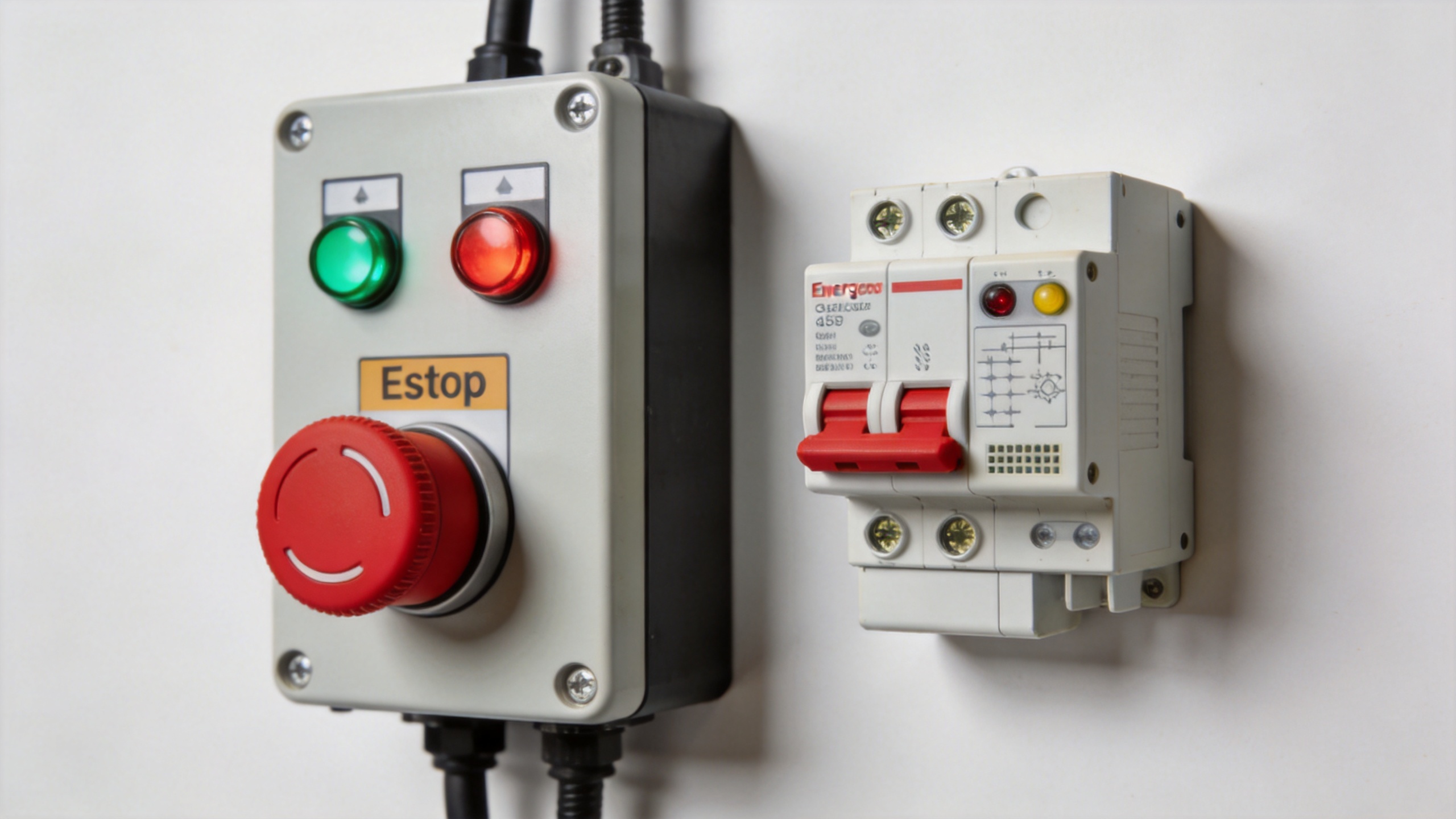
Emergency stop interlocks are a mandatory safety function in most industrial environments, governed by standards such as IEC 62061 and ISO 13849. In an industrial axial fan control cabinet, the E-stop circuit is hardwired — meaning it operates independently of any PLC logic or software-based control. Even if the PLC fails or a program error occurs, pressing the E-stop button will immediately de-energize the main contactor and bring the fan to a halt.
A hardwired interlock ensures the fan cannot restart unless the safety circuit is actively closed and the fault is manually acknowledged. This prevents automatic restart after an E-stop event — a critical requirement in facilities where personnel may be working near fan inlets or outlets.
- E-stop buttons must be easily accessible and clearly marked per IEC 60204-1 requirements
- Safety relay modules (e.g., dual-channel monitoring) are required for Category 3 or PLd safety functions
- Reset should be a deliberate manual action — not an automatic restart
6. Vibration and Bearing Fault Interlock (Advanced Systems)
In higher-end industrial axial fan control cabinets — particularly for large-frame fans in critical process applications — vibration monitoring interlocks are added as an additional protection layer. Accelerometers mounted on the fan housing or motor bearing housings feed real-time vibration data to the control system. When vibration amplitude exceeds preset thresholds (typically expressed in mm/s RMS velocity), the system issues a warning and, upon continued escalation, triggers an automatic shutdown.
From a system-level perspective, this is a good example of moving from thinking about individual components — "does the motor meet the current spec?" — to thinking about dynamic operating conditions: is the entire rotating assembly behaving within acceptable mechanical limits throughout its service life? Bearing wear, blade imbalance, and structural resonance all show up in vibration signatures well before visible mechanical failure occurs.
How These Protection Functions Work Together
In practice, an industrial axial fan control cabinet does not rely on a single protection mechanism in isolation. The interlock architecture integrates multiple layers into a coordinated fault management system:
- Detection layer: Sensors, relays, and monitoring modules continuously measure current, voltage, temperature, and vibration
- Interlock logic layer: Hardwired safety circuits and PLC-based logic evaluate conditions and trigger responses
- Actuation layer: Contactors, circuit breakers, or soft starters open the circuit and disconnect the motor
- Alarm and logging layer: Fault codes are recorded for diagnostics, and alarms alert maintenance personnel
This layered approach means that even if one protection element fails to respond — say, a thermistor gives an incorrect reading — another layer (the overload relay or overcurrent breaker) still provides a safety backstop. Redundancy in interlock design is the key difference between an industrial axial fan installation that runs reliably for years and one that becomes a recurring maintenance issue.
Choosing a Fan Supplier with Robust Control Cabinet Protection
When evaluating an industrial axial fan supplier, the control cabinet protection specification deserves as much attention as the fan's airflow performance data. Ask specifically about the interlock architecture, the relay settings methodology, and whether the cabinet design complies with relevant electrical safety standards (IEC 60439, UL 508A, or equivalent) for your target market.
A manufacturer with dedicated expertise in industrial fan control systems — rather than a general-purpose electrical panel assembler — will be better positioned to configure protection settings appropriate for your specific motor characteristics, duty cycle, and installation environment. This distinction matters, particularly for buyers in Europe and the Americas where regulatory compliance and long-term service support are part of the purchasing decision.
Understanding what each protection function does — and how they interlock with each other — gives you a solid foundation for evaluating proposals, specifying requirements, and avoiding the costly downtime that comes from under-protected or improperly configured fan systems.






