 EN
EN
What filter matching rule for dust proof cabinet cooling fan operating in cement factories
2026/09/30
Cement cabinets choke on dust. Learn the filter rule for an industrial cabinet cooling fan: G4/F7 media, IP rating, and pre-filter care.

2026/09/22
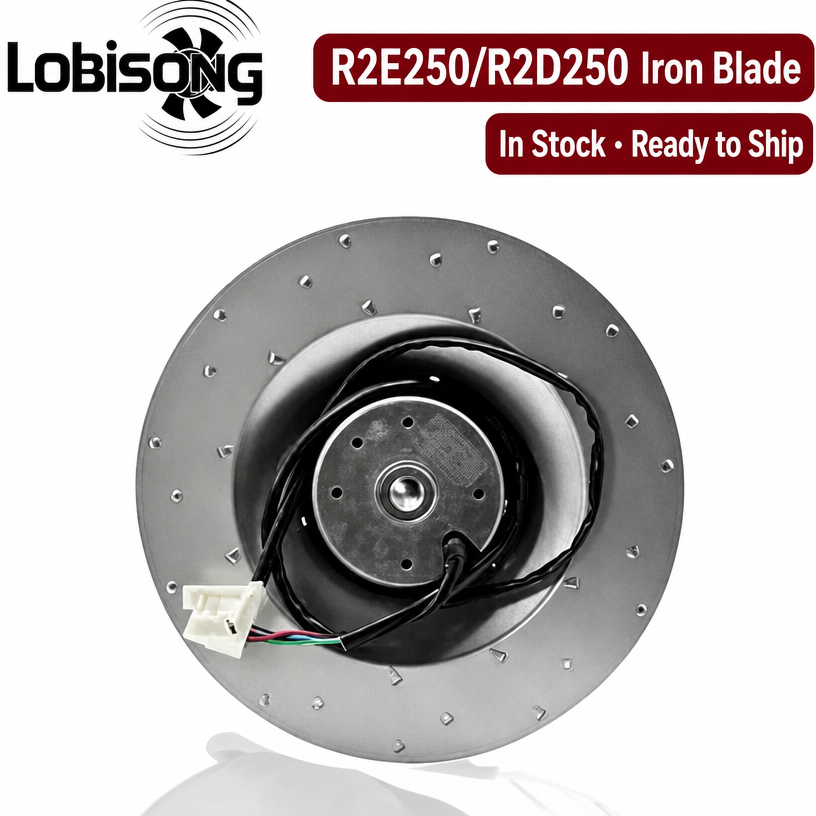
An industrial blower spins its impeller at thousands of revolutions per minute, and at that speed a single loose component carries enough energy to cause serious injury or equipment damage. Safety is therefore built into the machine from the design stage rather than added afterward. Blade tips, fasteners, shafts and casings are all treated as potential hazards, and each receives a protection measure matched to the failure mode it guards against. A buyer who reviews these design choices early avoids both accidents and unplanned downtime.
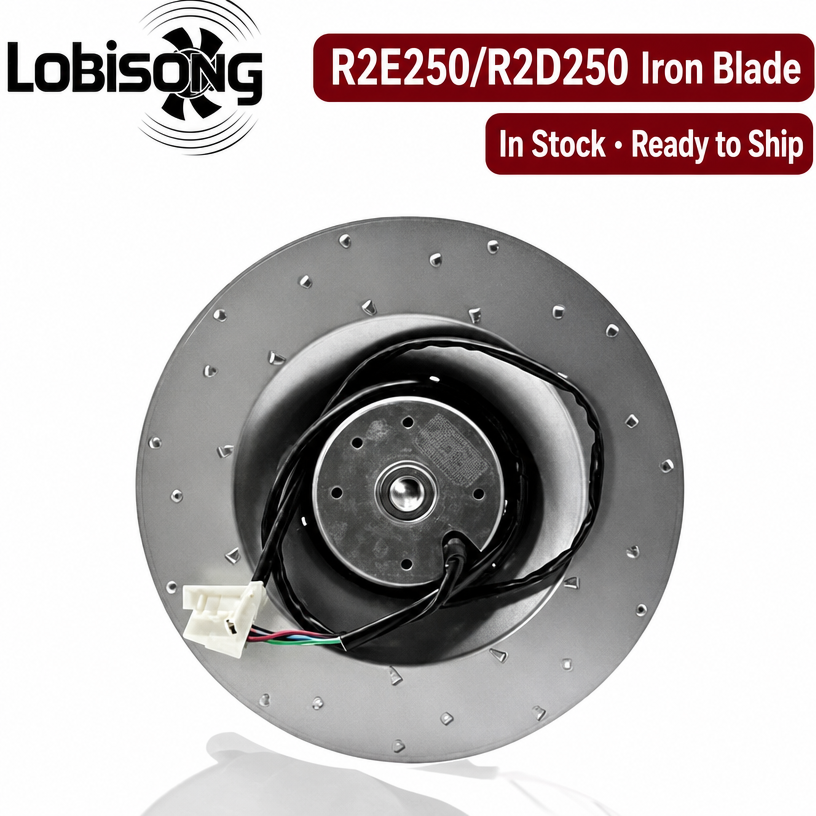
The first line of protection is physical separation. Inlet and outlet guards stop hands, tools and debris from reaching the rotating impeller, while a fully enclosed casing contains fragments if a blade ever fails. A well designed industrial blower keeps every moving edge behind a barrier rated for the environment, and the guards are sized so that airflow is unaffected yet fingers and foreign objects are excluded. Casing material is chosen for impact resistance, not only for corrosion resistance.
Rotational balance is a safety feature as much as a comfort one. An unbalanced impeller vibrates, loosens fasteners and shortens bearing life, so each industrial blower impeller is balanced to a defined grade before shipment. Electrical drives add overspeed protection that cuts power if the set speed is exceeded, which matters when a blocked outlet could let the impeller run away. These measures prevent the most common failure path: small imbalance growing into catastrophic fracture.
Modern industrial blower units embed vibration and temperature sensors that watch the rotating assembly continuously. Rising vibration often precedes a bearing failure, and rising temperature signals lubrication loss or load blockage. When a threshold is crossed, the control system raises an alarm or trips the drive before damage spreads. Linking these signals to the plant monitoring network lets maintenance act on trend data rather than on a sudden breakdown.
Access doors and inspection covers carry interlocks so the industrial blower cannot start while a guard is open. An emergency stop, clearly positioned and wired for fail-safe operation, removes power immediately. For blowers in hazardous areas, the same interlock logic connects to gas detection and ventilation status, ensuring the machine only runs under safe conditions. These controls are simple, but they remove the human error that causes most incidents.
A safe design only stays safe with disciplined maintenance. Bolts loosen under thermal cycling, guards bend during cleaning, and sensors drift with age. A practical routine checks guard integrity, impeller clearance and balance marks at every service, and verifies that interlocks still function. Replacing worn parts with approved equivalents preserves the original safety margins, while undocumented field modifications can silently remove a protection that the certification depended on.
The safe speed is set by the impeller material, balance grade and the casing's containment rating, and the manufacturer states a maximum in the datasheet. Operation should stay below this figure, with overspeed protection as a backup rather than a routine limit. Exceeding it risks blade separation regardless of how well the rest of the machine is guarded, so speed control is a core safety function.
Inlet and outlet guards sized to exclude access to the impeller are the baseline, supplemented by a fully enclosed casing. The exact mesh and strength follow local machinery safety standards, and guards must not be removed for cleaning or testing while the blower is energized. A documented guard design also helps during inspections, where missing or modified guards are a common finding.
Vibration is the earliest signal of imbalance, misalignment or bearing wear in a rotating impeller. Monitoring turns an invisible degradation into a measurable trend, so maintenance can act before a failure stops production. It also protects safety, because a severely unbalanced impeller is far more likely to shed a blade or damage its shaft under load.
Often yes. Adding guards, vibration sensors and drive interlocks to an older industrial blower is usually feasible, and rebalancing the impeller restores margin lost to years of service. The work should be documented against the original design so the upgraded machine keeps its safety case intact, and any change to the rotating assembly must be approved before operation.
Responsibility is shared: the manufacturer designs and certifies safe equipment, while the operator maintains guards, interlocks and monitoring through the service life. Clear handover documentation, including maximum speeds and inspection intervals, lets the plant owner prove that the rotating impeller hazard has been controlled continuously, not only at the moment of commissioning.
Safety in an industrial blower is a chain of measures, from balanced impellers and guarded casings to sensors and interlocks, and the chain only holds when every link is maintained. Treating the rotating impeller as a managed hazard rather than a background noise lets plants run high speed machines with confidence and with far fewer incidents.

2026/09/30
Cement cabinets choke on dust. Learn the filter rule for an industrial cabinet cooling fan: G4/F7 media, IP rating, and pre-filter care.

2026/10/07
Right wall-mount height for an industrial axial exhaust fan: room volume, free clearance, brackets, and recirculation control.

2026/10/08
An ec motor fan links to BMS via Modbus, 0-10V and PWM for demand-based cooling, energy scheduling and automatic sensor-driven speed control.

2026/10/06
A radial exhaust fan removes grease, fumes, and odors from food-processing workshops with capture velocity and hygienic washdown design.

2026/10/05
Learn antistatic treatment for industrial cabinet cooling fan in electronics workshops—ESD-safe housing, ionizable plastics, and cleanroom compatibility.

2026/10/04
Discover how a brushless dc servo delivers precise wind speed control for laboratory cooling fans with closed-loop PID feedback and laminar airflow.
