
 EN
EN
What Selection Criteria of Three Phase Permanent Magnet BLDC Motor for Industrial Blowers
When specifying a motor for an industrial blower, the engineers who get selection right tend to start with the application scenario — the blower's operating envelope, ambient conditions, and control architecture — rather than chasing the highest rated spec on a datasheet. In practice, a three phase dc motor built on permanent magnet brushless DC (BLDC) technology typically delivers better efficiency and control range than both AC induction alternatives and older brushed DC designs for industrial blower applications, provided it is matched to the actual load profile.
This article walks through the key selection criteria when sourcing a three phase permanent magnet bldc motor for industrial blower applications.
1. Power Rating and Voltage Compatibility
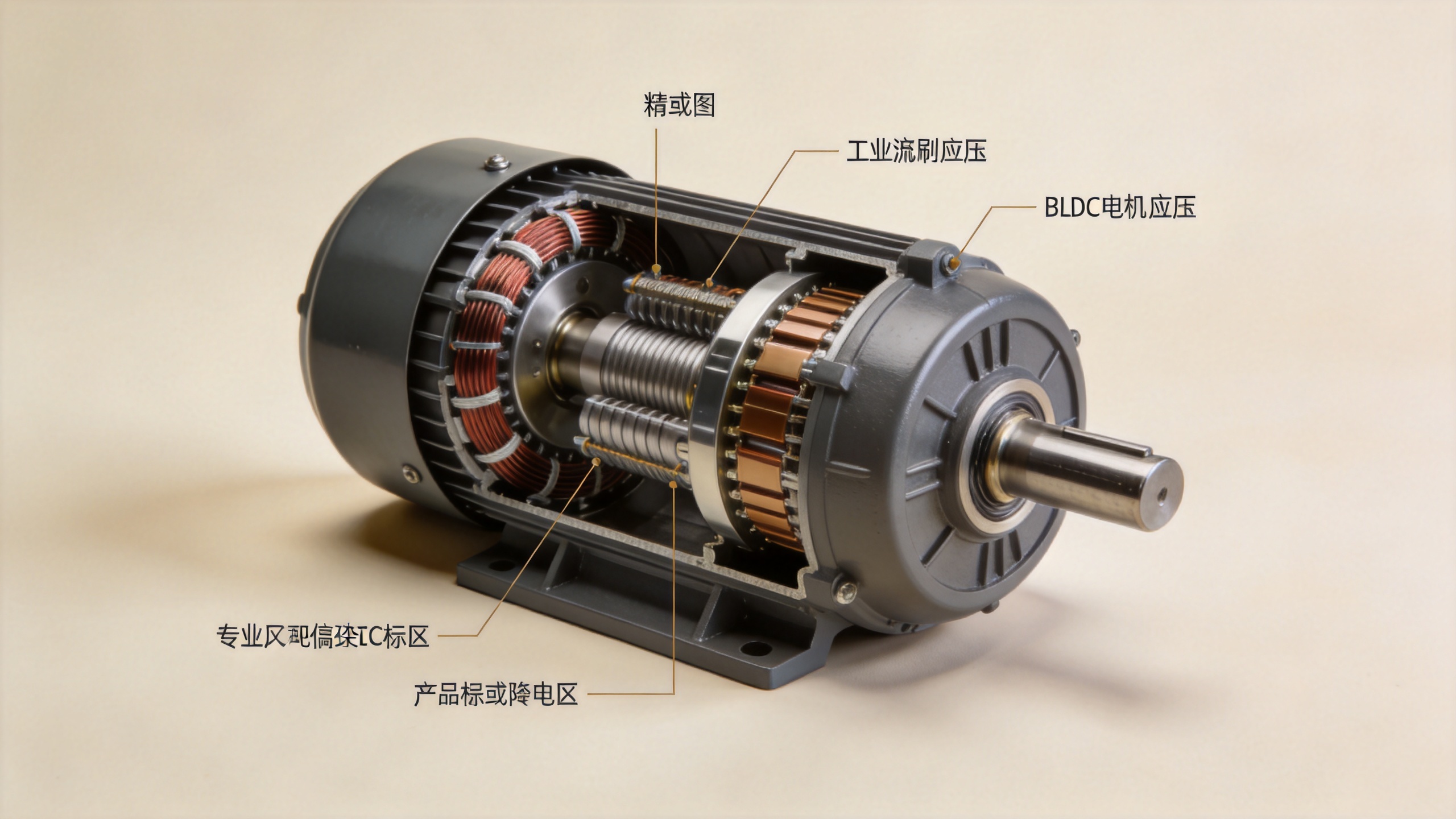
The starting point is matching shaft power output to the blower's hydraulic power requirement at the intended operating point. The motor must deliver sufficient torque across the full operating range without entering a thermally stressed region. A common mistake is sizing the motor exactly at peak demand; under real conditions with clogged filters or higher backpressure, the motor will be pushed into overload. A 20–30% power margin is a reasonable starting point for continuous-duty blower applications.
Voltage compatibility is equally important. Three-phase BLDC motors for industrial blowers are typically designed for 24V, 48V, 310V DC bus, or higher depending on the drive system. Confirm that your bus voltage, drive topology, and motor winding impedance are matched before committing — a mismatch here is one of the most common sourcing errors in OEM blower integration.
2. Efficiency and Power Factor
A high efficiency permanent magnet dc motor maintains a relatively flat efficiency curve from roughly 30% to 100% of rated speed, which is exactly where variable-speed blowers operate most of the time. Published data suggests BLDC motors can reduce energy consumption by up to 65% compared to conventional AC motors in equivalent continuous-duty applications — meaningful when calculating total cost of ownership.
For procurement, request the motor efficiency map, not just the peak efficiency figure. A motor rated at 92% peak that drops to 75% at 50% load is not necessarily better than one holding 87% efficiency down to 40% load.
3. IP Rating and Environmental Protection
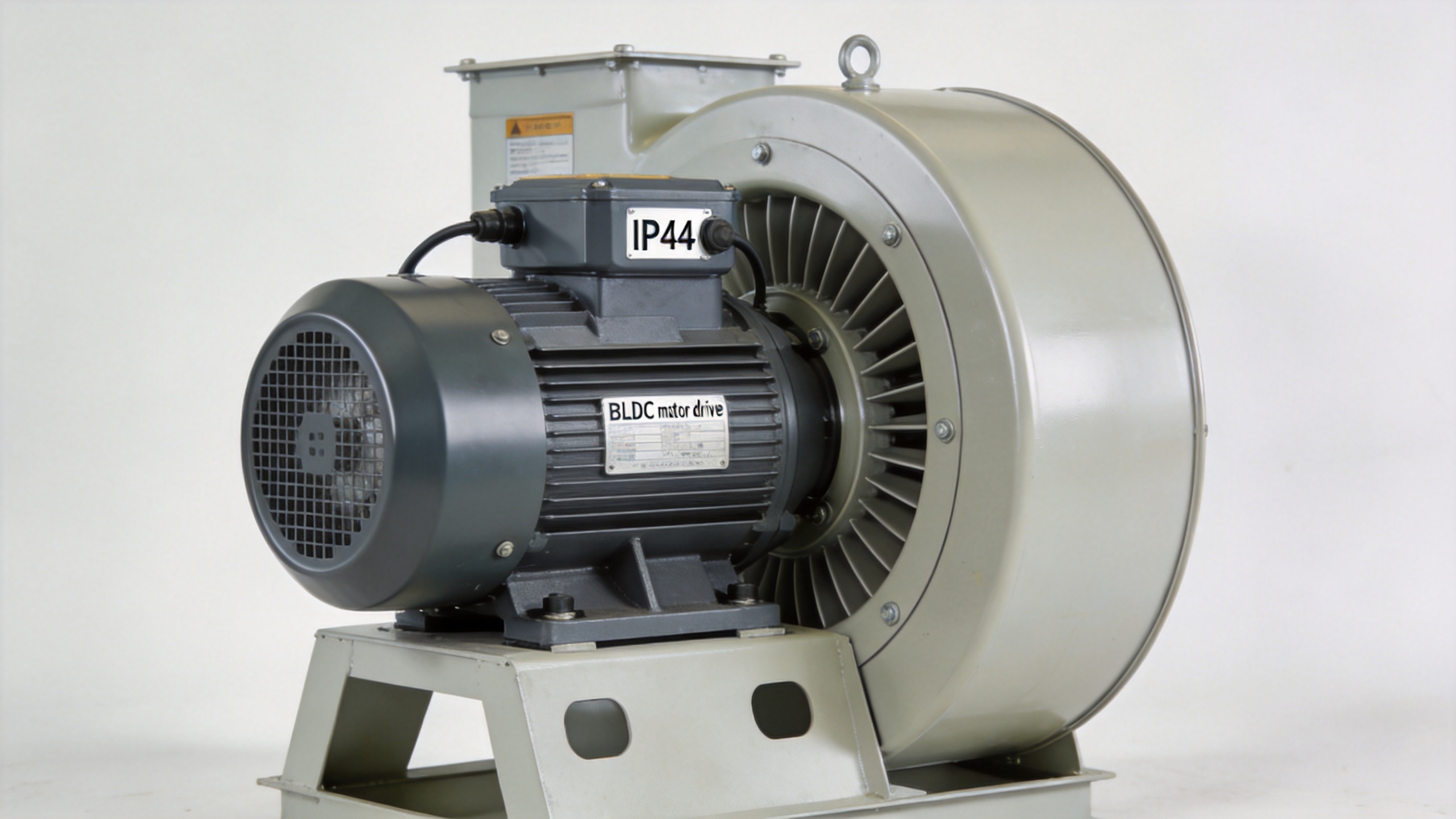
Industrial blower installations vary in environmental exposure. A minimum IP54 rating is appropriate for most general industrial applications — protection against dust and water splashing from any direction. Wet or washdown environments typically call for IP55 or IP65. Some specialized applications require IP67 or higher.
When reviewing IP ratings, pay attention to the complete motor assembly including shaft seal and any integrated Hall sensor feedback elements. An IP54-rated motor body with a lower-rated shaft seal is effectively limited to the weaker specification.
4. Insulation Class and Thermal Rating
The insulation class defines the maximum continuous operating temperature the motor winding can handle without degradation over its design life. For industrial blower duty, Class F insulation (maximum continuous winding temperature 155°C, practical design limit around 130°C) is the standard baseline. Applications with elevated ambient temperatures — blowers handling hot process air above 60°C or motors in poorly ventilated enclosures — should use Class H insulation (180°C maximum).
Do not confuse the insulation class with the ambient temperature rating on the nameplate. The ambient limit is derived from the insulation class minus expected temperature rise at rated load.
5. Speed Range and Variable Speed Control Compatibility
For most industrial blower applications, direct-drive BLDC with electronic speed control is preferred over a gear reduction bldc magnet motor with external gearing. Blowers benefit from variable speed for both energy efficiency and process control — the fan affinity laws mean reducing speed to 80% of maximum cuts power consumption by roughly half.
Confirm the controllable speed range. A motor with a 10:1 speed range (10% to 100% of rated speed) provides far more operational flexibility than one limited to 50% to 100%. Drive and controller compatibility also deserves attention: the motor's back-EMF constant, inductance, and Hall sensor specification must be matched to the drive being used.
6. Mounting Configuration and Mechanical Integration
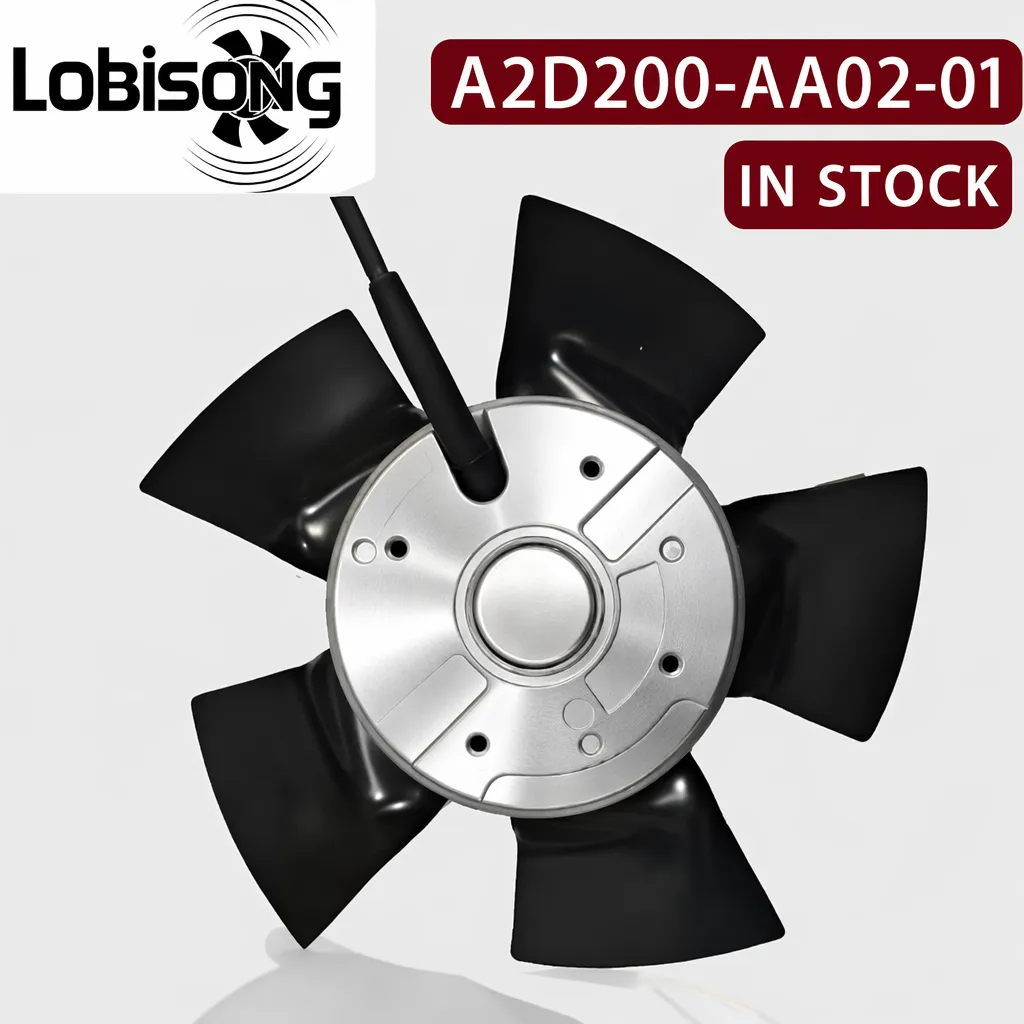
External rotor BLDC motors — where the fan impeller mounts directly onto the outer rotor — are widely used in centrifugal blower and backward-curved fan designs because they eliminate a separate shaft and coupling, reduce parts count, and improve dynamic balance. Inner-rotor BLDC motors with a protruding shaft are common in belt-driven or close-coupled blower designs.
Check that the motor's frame size, flange dimensions, and shaft diameter conform to your mechanical assembly requirements. Confirm the radial and axial bearing load capacity relative to impeller weight and aerodynamic side forces.
7. Certifications and Compliance
For industrial air handling blower applications sold into European, North American, and South American markets, relevant certifications include CE marking, UL or CSA listing, and RoHS compliance. Energy efficiency regulations are tightening in most major markets — confirm whether the motor meets applicable minimum energy performance standards for your target market and request certified test reports for the specific model.
Selecting the Right Supplier
Lebisen specializes in industrial fan and blower products including BLDC motor-driven fans and EC axial fan systems, serving trading company buyers across European, North American, and South American markets. Their product range covers both AC and EC/BLDC motor variants, allowing buyers to consolidate procurement across different blower specifications without managing multiple supplier relationships.
When engaging suppliers for three phase permanent magnet bldc motor procurement, request the complete efficiency map, thermal derating curves, and certified test reports — not just product family datasheets. Technical support at the application level is worth more than marginal unit pricing savings on motors that generate field problems.
Summary: Key Selection Criteria
- Power rating: Size with 20–30% margin above maximum blower operating point.
- Voltage: Match motor winding to drive bus voltage; confirm impedance compatibility.
- Efficiency: Evaluate efficiency map across the speed range, not just peak efficiency.
- IP rating: IP54 minimum for general industrial duty; IP55–IP65 for wet environments.
- Insulation class: Class F as baseline; Class H for elevated ambient conditions.
- Speed range: 10:1 or better preferred for variable-speed blower systems.
- Drive compatibility: Validate back-EMF constant, inductance, and sensor specs against the drive.
- Mounting: External rotor for direct-coupled fans; inner rotor with shaft for belt-drive designs.
- Certifications: CE, UL/CSA, RoHS, and applicable energy efficiency standards for target market.
The right three phase dc motor for an industrial blower is rarely the one with the highest single datasheet number. It is the one that fits the operating scenario, survives the environment, and integrates cleanly with the drive and mechanical system.






