 EN
EN
What filter matching rule for dust proof cabinet cooling fan operating in cement factories
2026/09/30
Cement cabinets choke on dust. Learn the filter rule for an industrial cabinet cooling fan: G4/F7 media, IP rating, and pre-filter care.

2026/09/17
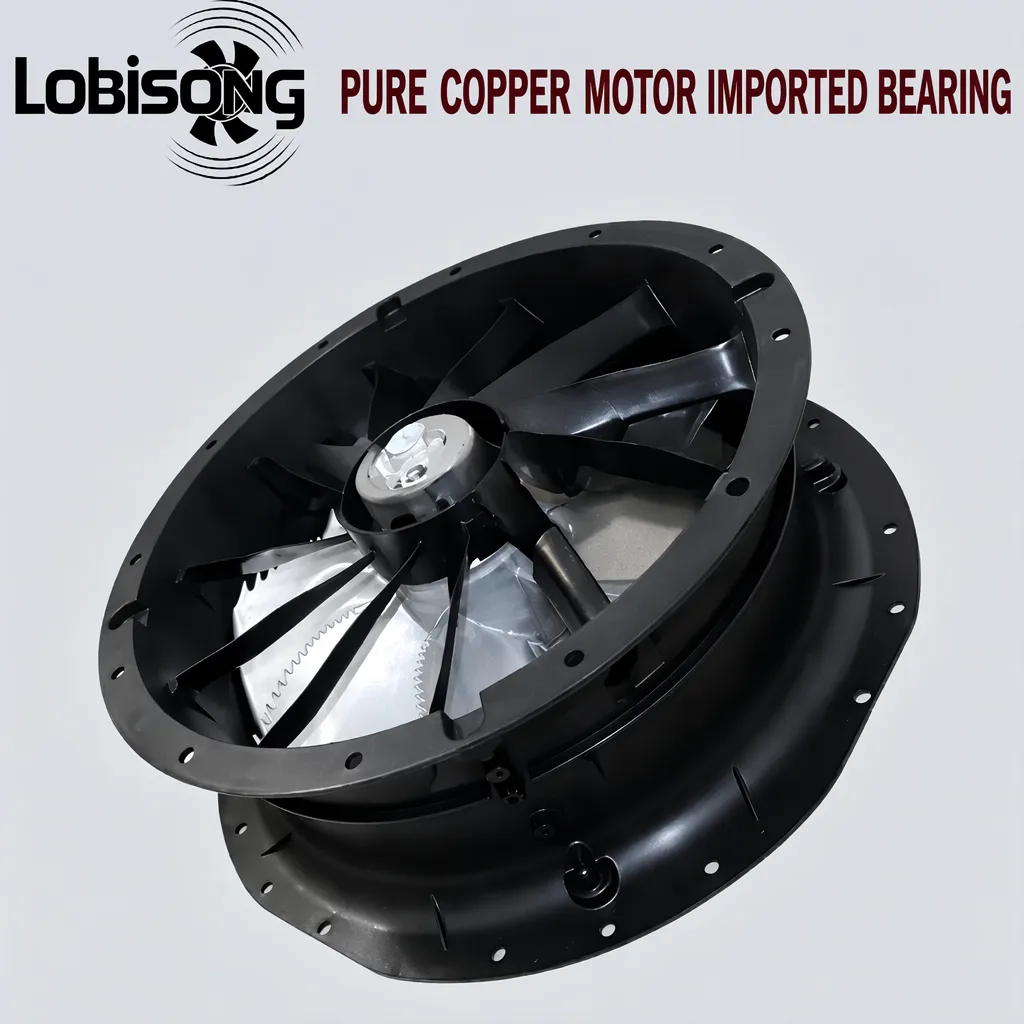
Selecting the right drive for a fan system is less about picking the largest motor and more about finding the true operating point. A permanent magnet dc motor delivers high starting torque and steady speed control, which makes it popular for industrial ventilation where load varies. Yet many plants pair it with a blower whose airflow and static-pressure demand sit far from the motor's efficient range, and the mismatch shows up later as heat, noise and early failure.
A blower is defined by its pressure–quantity (P-Q) curve: static pressure on one axis, airflow on the other. The fan can only deliver combinations along that curve. A permanent magnet dc motor must be sized so its torque–speed envelope overlaps the point where the system resistance line crosses the P-Q curve. That crossing is the operating point. If the motor's available torque at a given RPM falls below what the blower needs at that pressure, the shaft slows, current climbs and temperature rises. Reading the P-Q curve before purchase is the single most useful step in motor–blower matching.
Static pressure is the resistance the blower pushes against — filters, ducts, cabinet walls. A centrifugal fan needs more torque as static pressure rises; an axial fan needs less but loses airflow fast when pressure builds. A permanent magnet dc motor holds speed well under load because the field is fixed by magnets, so its torque response is predictable. Sizing must cover the worst-case static pressure, not the average, or the motor will sit in overload during filter loading and hot afternoons. Dusty ducts and long runs make the effect worse.
Rated power must clear the blower's absorbed power at the design operating point, with margin for debris and aging. A common rule keeps the motor's continuous rating about 15–25% above the blower's peak absorbed power on the P-Q curve. Under-sizing an industrial blower hides until the cabinet warms; over-sizing wastes energy and adds cost. Copper windings and precision ball bearings help the motor survive thermal swings, but they cannot fix a fundamentally wrong power choice. For most ventilation duties a permanent magnet dc motor with 15–25% headroom runs cool and quiet.
RPM sets where on the P-Q curve the system lands. Too few RPM and airflow drops below the cooling need; too many and the motor draws excess current near the curve's steep section. Match the motor's rated RPM to the blower's high-efficiency speed, then confirm torque at that RPM covers the static-pressure demand. Outer-rotor and brushless designs shift the torque profile, so compare curves, not nameplate numbers alone. Thermal management depends on this alignment more than on peak rating. When the load is steady, a permanent magnet dc motor keeps RPM stable without extra control hardware.
A packaging plant cooled its frequency-converter enclosures with wall fans rated for free air, not for the dusty, restricted VFD cabinet inlet. The chosen permanent magnet dc motor looked adequate on paper yet ran near its torque limit once filters loaded. On a summer afternoon the enclosure hit its trip temperature, the drive shut down and a line stopped for hours. Inspection showed the motor running hot, with current above its nameplate continuous value. The root cause was simple: the free-air rating ignored the cabinet's inlet restriction.
The fix replaced the motor with one sized to the blower's actual operating point at high static pressure, keeping 20% power margin and a duty cycle matched to continuous running. Ball bearings and IP54 protection resisted dust. After commissioning, enclosure temperature fell within the safe band, no thermal trips occurred across a full production season, and the blower held its airflow target. The case shows that matching to the P-Q curve, not the catalogue free-air figure, prevents burnout. The replacement permanent magnet dc motor was chosen from the blower's curve, not a catalogue.
Ask suppliers for the blower's P-Q curve and the motor's torque–speed envelope, then confirm the overlap. Verify copper windings, bearing type, ingress protection and relevant marks such as CE or IEC compliance for the target market. Request the duty cycle and thermal class. A supplier that cannot show the operating point math should raise concern. For dust-laden or humid sites, specify protection and check the motor's overload protection settings against the blower's locked condition.
A permanent magnet dc motor stays reliable when the operating point is protected. Clean filters and ducts on a schedule so static pressure does not creep up. Monitor current draw; a steady rise signals the blower drifting from its design point. Check ball bearings for noise and heating, and keep the enclosure ventilation path clear. Following OSHA ventilation guidance for control rooms and NFPA electrical-room practice reduces fire and trip risk. Right sizing plus disciplined maintenance keeps the system efficient for years. Tracking motor efficiency over time also reveals bearing wear early, letting teams act before a small drift becomes a costly shutdown.
What is the safest way to read a blower P-Q curve for motor selection?
Answer: Plot the system resistance line over the blower's pressure–quantity curve and find where it crosses. That crossing is the true operating point. Size the drive so its torque–speed envelope covers that point with margin for filter loading and hot weather. Ask the supplier for the torque envelope, not just nameplate power, and confirm the overlap before purchase.
How does static pressure change the motor torque requirement?
Answer: Static pressure is the resistance from filters, ducts and cabinet walls. A centrifugal fan needs more torque as pressure rises, while an axial fan loses airflow quickly. Size for the worst-case pressure, not the average, or the drive sits in overload when filters load. Checking pressure at the dirty-filter condition protects the system.
Why did the VFD cabinet motor burn out in the case study?
Answer: The original drive was rated for free air, ignoring the cabinet's restricted inlet. Real static pressure pushed the operating point beyond the motor's comfortable torque band, so current ran above the continuous limit until thermal trip. Sizing to the actual P-Q operating point, with 20% power margin and a continuous duty cycle, removed the overload.
Which maintenance steps keep the operating point stable?
Answer: Clean filters and ducts on a schedule so static pressure does not creep upward. Monitor current draw and treat a steady rise as drift from the design point. Inspect ball bearings for noise and heat, and keep the ventilation path clear. Following OSHA and NFPA guidance for control rooms lowers fire and trip risk over time.
Can any DC motor be paired with every industrial blower?
Answer: Not every pairing works. A permanent magnet dc motor must match the blower's P-Q curve, static-pressure demand and duty cycle. The fixed field gives predictable torque only when the operating point sits inside its envelope. Confirm rated power, RPM and torque against the real resistance line before choosing a model.

2026/09/30
Cement cabinets choke on dust. Learn the filter rule for an industrial cabinet cooling fan: G4/F7 media, IP rating, and pre-filter care.

2026/10/07
Right wall-mount height for an industrial axial exhaust fan: room volume, free clearance, brackets, and recirculation control.

2026/10/08
An ec motor fan links to BMS via Modbus, 0-10V and PWM for demand-based cooling, energy scheduling and automatic sensor-driven speed control.

2026/10/06
A radial exhaust fan removes grease, fumes, and odors from food-processing workshops with capture velocity and hygienic washdown design.

2026/10/05
Learn antistatic treatment for industrial cabinet cooling fan in electronics workshops—ESD-safe housing, ionizable plastics, and cleanroom compatibility.

2026/10/04
Discover how a brushless dc servo delivers precise wind speed control for laboratory cooling fans with closed-loop PID feedback and laminar airflow.
