 EN
EN
What filter matching rule for dust proof cabinet cooling fan operating in cement factories
2026/09/30
Cement cabinets choke on dust. Learn the filter rule for an industrial cabinet cooling fan: G4/F7 media, IP rating, and pre-filter care.

2026/09/28
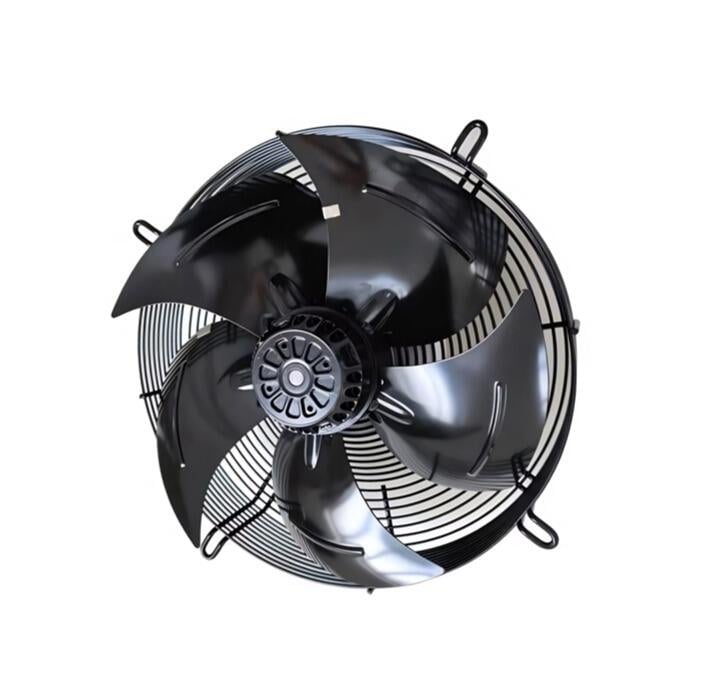
A variable speed backward curved centrifugal blower holds a unique place in industrial ventilation because it can hold a set static pressure while the process load keeps shifting. Coating and drying lines, cleanrooms, and thermal-management enclosures all need steady air pressure rather than a fixed volume of air. The right adjustment method keeps the impeller inside its safe operating window and protects the motor winding from overheating during long duty cycles.
The variable speed backward curved centrifugal blower earns its reputation from blade geometry. Curved blades that sweep away from rotation let the wheel shed load as flow rises, so the power curve stays nearly flat near the rated point. This contrasts with forward-curved wheels, which keep climbing in power as resistance drops. For procurement engineers, the practical meaning is clear: the machine resists runaway current when the duct opens unexpectedly during a process upset.
Static pressure is the force the fan develops against a closed or partially closed system. It is measured in pascals or inches of water column and reported on the fan curve. When an oven door closes or a filter loads up, backpressure climbs, and the wheel must push harder to maintain airflow. Reading system resistance early prevents the motor from sitting at a stall point where efficiency falls and heat builds inside the enclosure.
Every installation has a system curve that rises as flow increases. The intersection with the fan curve sets the operating point. Good design starts by listing every obstruction: duct length, elbows, filters, dampers, and the oven mouth. Each adds resistance the blower must overcome. CE and UKCA documentation from the supplier should include a parameter sheet that maps RPM to expected static pressure, helping buyers confirm the unit fits the real layout before purchase.
A variable speed backward curved centrifugal blower relies on a variable frequency drive that changes motor speed by adjusting supply frequency, which directly changes RPM and therefore air delivery. A controlled ramp prevents mechanical shock and avoids a current spike at startup. Setting a sensible acceleration time lets the impeller spin up smoothly, protects precision bearings, and keeps thermal management of the cabinet stable. Most drives accept a 0–10 V or PWM signal from the controller to set the target speed without manual intervention.
The most accurate wind pressure adjustment uses a static pressure transmitter placed in the duct. The controller compares the measured value to the setpoint and trims the VFD output continuously. Consider a powder-coating drying line: the oven pulls fresh air only when a batch enters cure. Early fixed-speed units could not follow the swing, so pressure sagged and coating thickness varied. Engineers added a transmitter and a variable speed backward curved centrifugal blower on VFD control. Pressure now tracks oven demand within seconds, and reject rates from uneven cure dropped noticeably.
Older plants trim pressure with inlet or outlet dampers, which waste energy by choking flow. Modern practice prefers speed control because throttling raises system resistance while a VFD lowers energy use at part load. The blower reaches the target pressure smoothly through that speed command rather than through wasteful throttling. Dampers still help fine balancing across a multi-fan array, but the primary wind pressure adjustment should come from frequency control. ANSI and NFPA 70 wiring rules apply when installing the drive and motor harness inside an industrial enclosure.
Correct matching begins with the real duty cycle. A drying tunnel that needs 800 Pa at 3000 m³/h demands a different impeller than a light extraction job. Plot the system curve, then pick the wheel size and RPM band that cross near the efficient zone. Oversizing forces the drive to run slow and cool; undersizing makes it scream at maximum frequency and shortens bearing life. Field verification with a pitot tube or transmitter confirms the predicted CFM before sign-off.
A variable speed backward curved centrifugal blower should be specified from the worst-case static pressure, not the average. Adding filtration or a longer duct later raises resistance, so a modest headroom in the motor rating avoids premature trips. Reviewing the curve with the supplier prevents the common mistake of buying on peak CFM alone while ignoring the backpressure the real system will present.
Backward-curved wheels show a self-limiting power characteristic. As flow increases toward free delivery, the required shaft power peaks and then falls, so the motor never sees the climbing demand that forward-curved designs do. This protects the brushless outer-rotor motor and pure-copper windings during transient oven events. A variable speed backward curved centrifugal blower therefore keeps current bounded where forward-curved units would overload. The wheel stays safer when a damper fails open, because the drive current remains bounded instead of surging toward the thermal limit.
Selecting the wind pressure adjustment method starts with the duty profile, then matches the fan curve to measured system resistance. Buyers should request the parameter sheet, confirm CE or UKCA marks, and verify the VFD accepts the building management signal. During commissioning, set a gentle ramp, place the transmitter on the clean side of filtration, and log current at full load. Routine care matters: log bearing temperature and recheck the transmitter tap each quarter, because dust on the impeller slowly shifts the system curve and erodes pressure stability. Replace filters on schedule so the static pressure setpoint holds steady. The variable speed backward curved centrifugal blower remains the practical choice where pressure must track a changing process rather than a fixed airflow.
What is the most reliable wind pressure adjustment method for a backward-curved blower?
Answer: The most reliable method combines a variable frequency drive with a static pressure transmitter in a closed loop. The transmitter reads duct pressure, the controller compares it to the setpoint, and the drive trims motor speed continuously. This holds steady airflow as oven demand or filter load changes. Speed control also saves energy at part load compared with damper throttling, which only wastes power by raising resistance.
Why do backward-curved blades avoid motor overload during pressure swings?
Answer: Backward-curved impellers show a self-limiting power curve. As flow rises toward free delivery, required shaft power peaks and then falls, so the motor never faces the climbing demand seen in forward-curved designs. When a damper fails open or an oven door swings, drive current stays bounded instead of surging. This protects the pure-copper windings and precision bearings, keeping the machine inside its thermal limit during transient process events without extra protective hardware.
How should the VFD ramp be set during commissioning?
Answer: Set a gentle acceleration and deceleration time so the impeller spins up without a current spike or mechanical shock. A typical ramp of several seconds protects precision bearings and keeps cabinet thermal management stable. The drive should accept a 0–10 V or PWM signal from the building controller. After the ramp is set, log full-load current and confirm the operating point sits near the efficient zone on the supplied fan curve.
Can a fixed-speed blower track changing oven pressure demand?
Answer: A variable speed backward curved centrifugal blower handles shifting demand far better than a fixed-speed unit. Fixed-speed machines deliver a near-constant volume, so when oven doors open or filters load, static pressure drifts and airflow becomes unstable. Adding a VFD and transmitter lets the wheel speed up or slow down to hold the setpoint. Without variable speed, operators must rely on dampers, which waste energy and still leave pressure to wander during fast process cycles.
Do CE and UKCA marks matter when selecting the blower?
Answer: CE and UKCA marks matter for European and British buyers because they show the unit met documented safety and electromagnetic compatibility requirements. Request the certificate and the parameter sheet that maps RPM to static pressure before purchase. Verify the drive wiring follows NFPA 70 and ANSI guidance for the industrial enclosure. Marks alone do not replace a correct system-curve match, but they confirm the supplier maintains traceable engineering documentation for audit and compliance needs.

2026/09/30
Cement cabinets choke on dust. Learn the filter rule for an industrial cabinet cooling fan: G4/F7 media, IP rating, and pre-filter care.

2026/10/07
Right wall-mount height for an industrial axial exhaust fan: room volume, free clearance, brackets, and recirculation control.

2026/10/08
An ec motor fan links to BMS via Modbus, 0-10V and PWM for demand-based cooling, energy scheduling and automatic sensor-driven speed control.

2026/10/06
A radial exhaust fan removes grease, fumes, and odors from food-processing workshops with capture velocity and hygienic washdown design.

2026/10/05
Learn antistatic treatment for industrial cabinet cooling fan in electronics workshops—ESD-safe housing, ionizable plastics, and cleanroom compatibility.

2026/10/04
Discover how a brushless dc servo delivers precise wind speed control for laboratory cooling fans with closed-loop PID feedback and laminar airflow.
