 EN
EN
What filter matching rule for dust proof cabinet cooling fan operating in cement factories
2026/09/30
Cement cabinets choke on dust. Learn the filter rule for an industrial cabinet cooling fan: G4/F7 media, IP rating, and pre-filter care.

2026/09/11
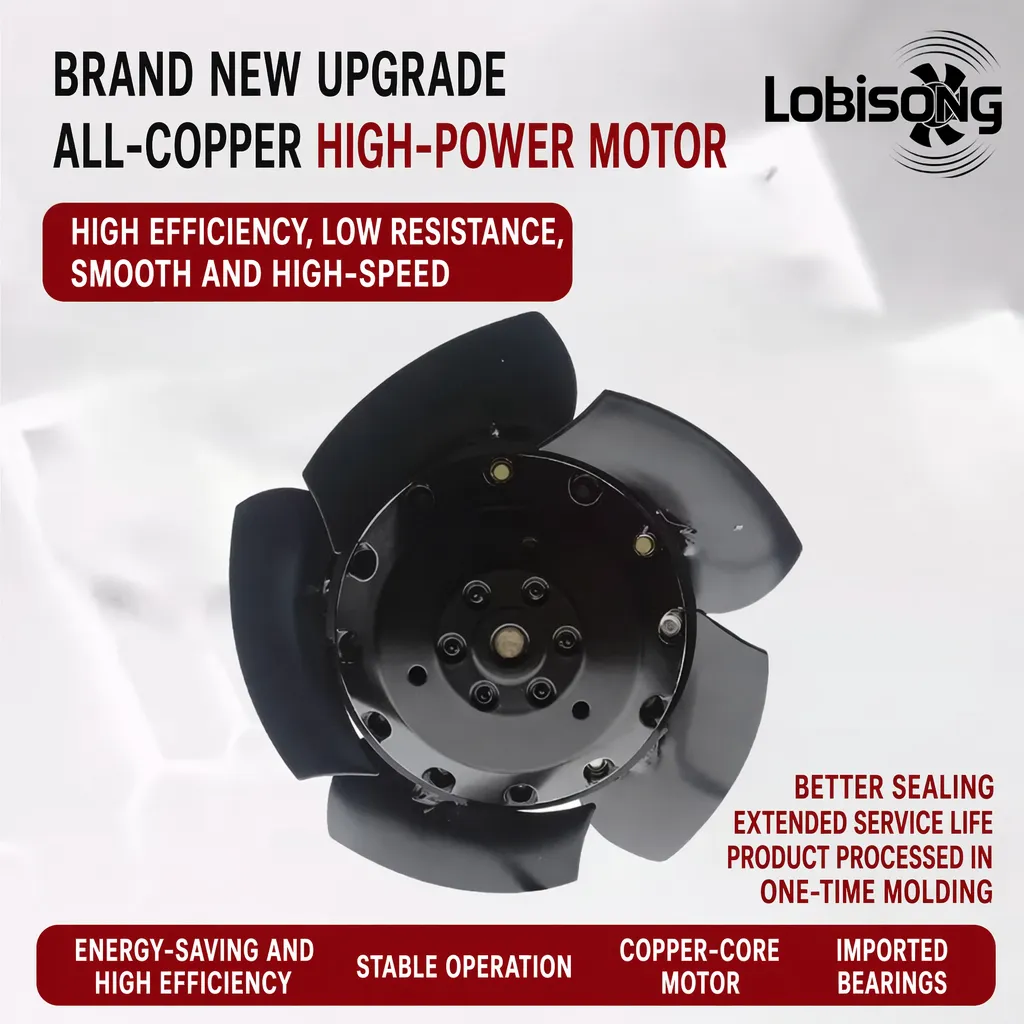
A portable industrial cooling fan must move air where mains power is unreliable, and the 48v brushless dc motor has become a practical choice for that task. By running on battery or inverter supply at a safe low voltage, it meets the needs of field crews who require dependable cooling without heavy infrastructure. The following sections explain the engineering reasons behind the choice and how to apply it in mobile duty.
Portable cooling equipment often runs far from fixed mains, yet a 48v brushless dc motor keeps the supply inside the extra-low-voltage window defined by IEC 61140 for SELV circuits. Below the 60V DC threshold, touch-risk controls stay straightforward, so field crews avoid the heavy isolation and enclosure interlocks required above that line. This matters when a battery cart or a small inverter must feed a fan on a workshop floor, a mine adit, or an outdoor electrical enclosure. Designers gain a safer starting point without sacrificing usable power, and certification paperwork stays lighter for CE and UKCA marking.
A 48VDC bus matches common lithium and lead-acid battery banks, so engineers pair modules without awkward step-down converters that waste energy as heat. For a 48v brushless dc motor, the 48V bus also aligns with off-the-shelf charge controllers, so solar panels or vehicle alternators can top up the pack during long deployments. Inverter-coupled setups convert stored DC to the motor input with high efficiency, and many portable cabinets already standardize on 48V rails for telecom and industrial duty. That compatibility shortens commissioning and lets one battery platform serve several cooling units across a site, which simplifies spare-parts planning for maintenance teams. Voltage sag stays modest under load, protecting stable airflow.
Lower current at 48V versus 12V or 24V means thinner conductors for the same wattage, reducing harness weight that mobile frames must carry. Moving a 48v brushless dc motor between sites therefore needs no crane or large crew, which suits rapid disaster-response cooling. Lighter cabling also lowers trip hazards and eases rapid redeployment between enclosures. Combined with sealed connectors and a compact enclosure, the result is a cooling unit that travels well and stays manageable for one technician during setup in remote or temporary installations. Less copper also trims cost without hurting performance.
Conventional brushed motors wear a commutator and carbon brushes that demand periodic replacement, a poor fit for units deployed where spare parts are scarce. The 48v brushless dc motor removes those contact parts, so the failure mode tied to brush erosion disappears. Fewer wearing items mean longer service intervals, which keeps portable cooling available through long shifts and reduces the skill level required for on-site upkeep away from a workshop. Electronic commutation also allows precise speed control, so operators tune airflow to the actual thermal load.
The 48v brushless dc motor draws less current than a 24V equivalent for equal power, so copper losses fall and more energy reaches the impeller. High-purity copper windings and an outer-rotor layout raise torque density while keeping the rotating mass close to the fan, improving airflow per watt. Precision ball bearings support the shaft under continuous duty, holding static pressure steady as the fan pushes air through filters and duct bends. The electrical efficiency translates directly into longer battery runtime, a decisive factor when a unit must run through an entire shift on stored energy.
Heat is the enemy of portable electronics, so motor and driver share a thermal budget that the enclosure must respect. When a 48v brushless dc motor runs hot, derating protects it, but good design avoids that by spreading heat through an aluminum frame or finned housing with controlled PWM drive, avoiding hot spots that shorten component life. Ventilation draws air across the windings so the system sustains rated CFM without throttling, keeping the cooling target stable even as ambient temperature climbs during summer field operation.
Before choosing a 48v brushless dc motor, confirm the pack's peak discharge rating exceeds locked-rotor current, then size the battery by multiplying fan input watts by desired runtime and adding a margin for inverter losses and cold-weather capacity drop. A matched inverter rated above starting surge prevents nuisance trips, while a modest duty cycle buffer protects against unexpected load. Field teams benefit from a simple runtime chart stuck to the unit, turning abstract watt-hours into a clear hours-remaining reference for operators who swap packs between shifts without guesswork.
Dust and moisture follow portable gear everywhere, so an IP44 or IP54 enclosure rating protects the motor and driver from the elements during outdoor or workshop use. Inspect sealed cable glands, keep air intakes clear of debris, and verify ball-bearing noise during routine checks. Store batteries at partial charge in moderate temperatures, and document each deployment so wear patterns surface early. A practical scenario: a food plant retrofit placed battery-fed fans at three outdoor packing lines; sealed enclosures and monthly bearing checks kept every unit running through a humid season with no unplanned stoppage.
Across mobile deployments, the 48v brushless dc motor earns its place by pairing safe low voltage with brushless durability and battery-friendly efficiency, giving procurement teams a cooling solution that performs wherever the work moves. The combination of SELV compliance, inverter compatibility, and low maintenance makes it a sound selection for field crews who cannot afford downtime far from a service base.
What makes a 48V supply safer than higher-voltage options for portable fans?
Answer: A 48V DC bus sits below the 60V SELV limit defined by IEC 61140, so portable cooling fans avoid the heavy isolation and enclosure interlocks needed above that line. Lower touch risk simplifies field handling and reduces certification burden for CE and UKCA marking. Crews can service the unit with basic precautions, and battery or inverter faults stay contained without specialized protection hardware on site.
How does a brushless DC motor reduce maintenance in remote use?
Answer: By eliminating carbon brushes and a mechanical commutator, the 48v brushless dc motor removes the wear items that fail first in brushed units. Fewer replacement parts mean longer service intervals and less skill required for on-site upkeep. Electronic commutation also allows precise speed control, so field teams keep airflow steady without opening the enclosure. This reliability matters where spare parts and trained technicians are scarce.
Why does battery compatibility matter for mobile cooling fans?
Answer: A 48VDC bus matches common lithium and lead-acid battery banks plus standard charge controllers, so engineers avoid lossy step-down converters. One battery platform can serve several cooling units, simplifying spare-parts planning. Inverter coupling converts stored DC efficiently, and solar or vehicle alternators can top up packs during long deployments. That flexibility keeps air moving through power outages and off-grid shifts without rewiring.
Which ingress protection rating suits outdoor portable fans?
Answer: An IP44 rating blocks solid objects larger than 1mm and splashing water, while IP54 adds dust protection for gritty sites such as mines or workshops. Sealed cable glands and gasketed enclosures keep the motor and driver safe from moisture and debris. Inspect intakes regularly and keep the air path clear so filtration does not starve the impeller of needed airflow volume during continuous duty.
Can a brushless DC fan run a full shift on stored energy?
Answer: Runtime depends on battery capacity, fan input watts, inverter losses, and ambient load, so specifiers multiply watts by target hours and add margin for cold-weather capacity drop. A matched inverter rated above starting surge prevents nuisance trips. With efficient copper windings and outer-rotor torque density, a well-sized pack sustains rated CFM through an entire shift without mid-day recharging on site.

2026/09/30
Cement cabinets choke on dust. Learn the filter rule for an industrial cabinet cooling fan: G4/F7 media, IP rating, and pre-filter care.

2026/10/07
Right wall-mount height for an industrial axial exhaust fan: room volume, free clearance, brackets, and recirculation control.

2026/10/08
An ec motor fan links to BMS via Modbus, 0-10V and PWM for demand-based cooling, energy scheduling and automatic sensor-driven speed control.

2026/10/06
A radial exhaust fan removes grease, fumes, and odors from food-processing workshops with capture velocity and hygienic washdown design.

2026/10/05
Learn antistatic treatment for industrial cabinet cooling fan in electronics workshops—ESD-safe housing, ionizable plastics, and cleanroom compatibility.

2026/10/04
Discover how a brushless dc servo delivers precise wind speed control for laboratory cooling fans with closed-loop PID feedback and laminar airflow.
