 EN
EN
What filter matching rule for dust proof cabinet cooling fan operating in cement factories
2026/09/30
Cement cabinets choke on dust. Learn the filter rule for an industrial cabinet cooling fan: G4/F7 media, IP rating, and pre-filter care.

2026/09/02
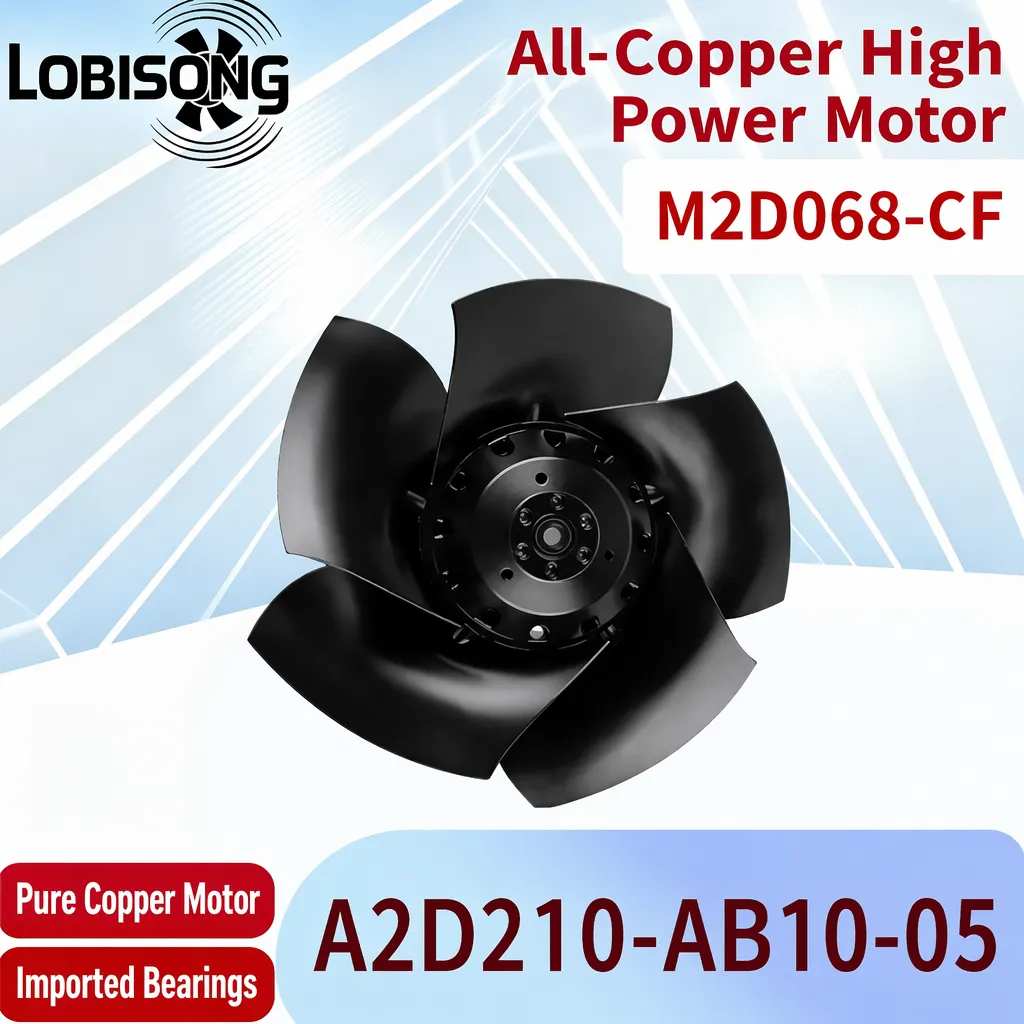
Energy storage cabinets integrate high‑density battery modules, battery management systems (BMS), and power conversion subsystems into tightly packed enclosures. Managing internal temperatures inside these enclosures determines long‑term battery cell health, cycle lifetime, and operational safety. Because modern energy storage cooling architectures run predominantly on direct current, specifying the right motor topology for system ventilation is a critical design step.
Selecting a 48V DC motor for enclosure ventilation aligns directly with standard system bus architectures. Most commercial and industrial battery racks operate on nominal DC buses centered around 48 V. Connecting a low‑voltage fan motor directly to this established bus removes the need for auxiliary power conversion hardware, eliminating unnecessary step‑down electrical losses and streamlining enclosure certification.
Thermal engineers must manage electrical dissipation within the cabinet wiring harness itself. Power loss across cabling follows the resistive power relationship:
Power loss = Operating current² × Conductor resistance
Power loss is measured in watts, current in amperes, and conductor resistance in ohms.
When maintaining a target airflow capacity, operating at lower voltages forces current up proportionally. Halving system voltage doubles current draw, quadrupling resistive line losses along the harness.
| Motor Nominal Voltage | Relative Operating Current | Relative Wiring Loss | Enclosure Thermal Impact |
|---|---|---|---|
| 12 V | 4.0x | 16.0x | Severe heat load generated in harness |
| 24 V | 2.0x | 4.0x | Moderate harness heating; larger copper gauge required |
| 48 V | 1.0x | 1.0x | Minimal copper loss; optimal thermal budget protection |
| 60 V+ | 0.8x | 0.64x | Reduced loss, but introduces over‑voltage insulation risks |
By utilizing a 48V DC motor, systems operate at a significantly higher voltage threshold than 12 V or 24 V alternatives. For identical wattage, the reduced current draw preserves energy while cutting unwanted heat generated by internal wiring and terminal connectors. A battery cabinet fan powered by a 48V supply protects the thermal budget in two ways: it cuts internal copper loss while simultaneously relieving thermal demand on the primary cooling system.
Operating high‑power equipment inside a compact rack demands small, flexible components. Lower current draw allows engineers to specify thinner wire gauges and smaller connection terminals. Thinner cables simplify cable routing through tight wireways, improving air passage pathways around battery trays.
A 48V brushless DC motor operates comfortably below strict Extra‑Low Voltage (ELV) safety thresholds. This keeps safety compliance simple while retaining the dramatic current reduction necessary for field reliability.
In a streamlined cooling setup, the nominal 48V DC bus feeds power directly to the brushless motor driver. At the same time, the central BMS sends pulse‑width modulation (PWM) speed control signals straight to the driver, allowing the 48V brushless DC motor to adjust fan speed based on real‑time cell temperatures.
Integrating speed control directly with the BMS eliminates extra AC‑to‑DC or DC‑to‑DC converters. Removing these intermediate conversion stages cuts potential hardware failure points, significantly raising overall system mean time between failures (MTBF).
System designers select a battery cabinet fan by calculating required volumetric airflow against total static head pressure created by dense battery cell spacing. Once volumetric requirements are set, electrical parameters must be validated against bus capacity.
Deploying a 48V DC motor across an energy storage fleet ensures predictable current draw across fluctuating ambient operating ranges, giving thermal systems consistent operational margins.
A commercial energy storage facility faced ongoing maintenance issues with localized thermal hot spots and intermittent power trips. Original cabinet builds utilized 24 V cooling units. High current draw generated elevated thermal readings across terminal blocks, degrading wire insulation over time.
Engineering teams resolved these issues by retrofitting the system with a high‑efficiency 48V brushless DC motor assembly connected directly to the primary 48 V DC link.
Transitioning to a dedicated 48V brushless DC motor setup eliminated recurring wiring faults while streamlining the primary thermal management architecture.
When evaluating thermal management suppliers, procurement specifications must go beyond nominal voltage and physical frame dimensions. Request verified performance curves, motor efficiency maps, bearing life specifications, and control interface compatibility reports.
Supplier Evaluation Matrix
Manufacturing partners with specialized automated production lines and comprehensive in‑house testing facilities, such as Lobisong, engineer durable 48V DC motor cooling solutions optimized for demanding energy storage cooling applications. By conducting rigorous DC‑bus simulation testing and static pressure validations, Lobisong delivers high‑reliability low‑voltage fan motor options designed to withstand long service lives inside dense enclosures. Supported by broad international export experience spanning North America, South America, Europe, and Asia, Lobisong provides fully traceable quality documentation, complete compliance backing, and reliable supply chain support for global energy storage integrators.
Prioritizing efficient energy storage cooling through direct‑bus 48V brushless DC motor selection safeguards battery lifespan, reduces operational downtime, and secures long‑term site profitability。

2026/09/30
Cement cabinets choke on dust. Learn the filter rule for an industrial cabinet cooling fan: G4/F7 media, IP rating, and pre-filter care.

2026/10/07
Right wall-mount height for an industrial axial exhaust fan: room volume, free clearance, brackets, and recirculation control.

2026/10/08
An ec motor fan links to BMS via Modbus, 0-10V and PWM for demand-based cooling, energy scheduling and automatic sensor-driven speed control.

2026/10/06
A radial exhaust fan removes grease, fumes, and odors from food-processing workshops with capture velocity and hygienic washdown design.

2026/10/05
Learn antistatic treatment for industrial cabinet cooling fan in electronics workshops—ESD-safe housing, ionizable plastics, and cleanroom compatibility.

2026/10/04
Discover how a brushless dc servo delivers precise wind speed control for laboratory cooling fans with closed-loop PID feedback and laminar airflow.
