
 EN
EN
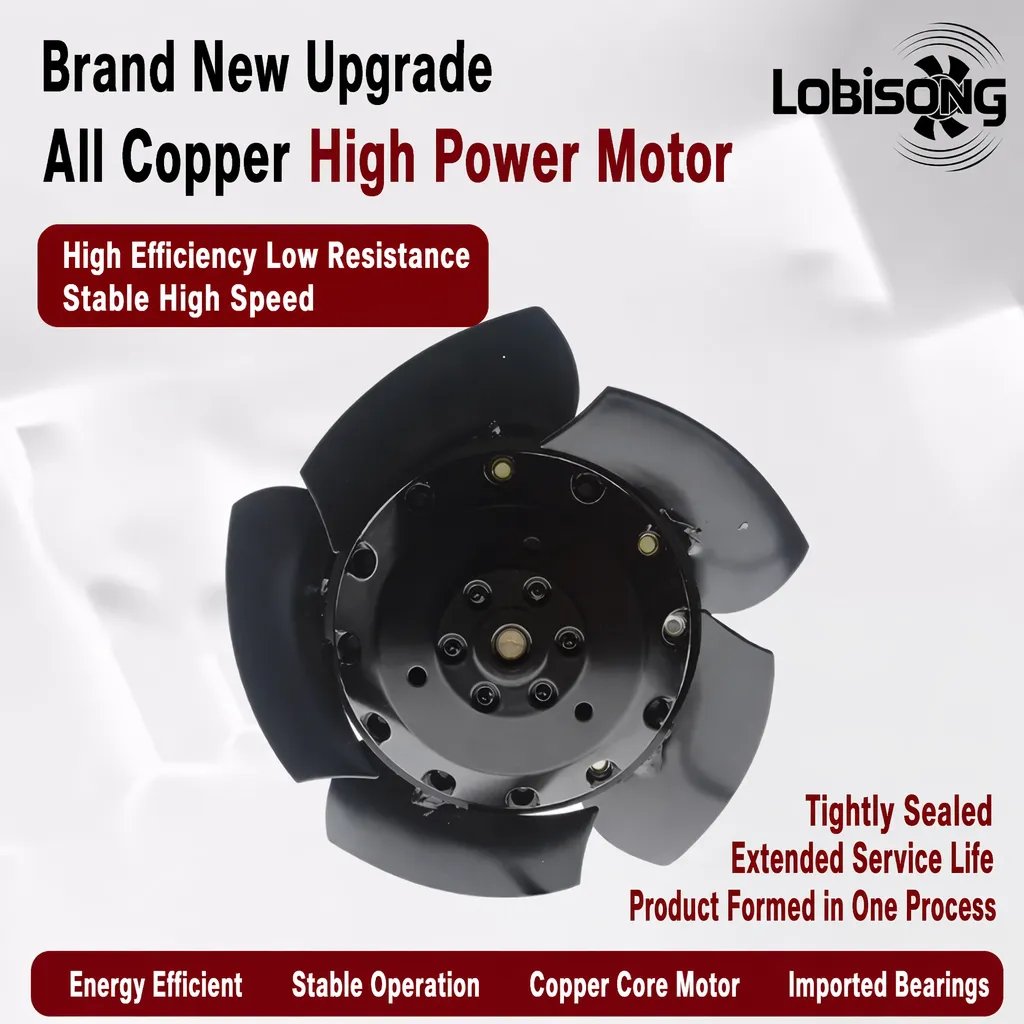
Why Backward Centrifugal Fan Suit Air Circulation System of Food Refrigeration Warehouses
When I first started working on fan selection for cold storage projects, I made the same mistake most people make: I focused almost entirely on airflow ratings. It wasn't until I saw the actual performance gap — in a ducted refrigeration warehouse layout — that I realized peak airflow tells only part of the story. The real differentiator for food refrigeration warehouse applications is whether the fan can maintain consistent airflow against the system resistance built into a ducted cold air distribution network. That is where the backward centrifugal fan consistently proves its value over alternatives.
The Air Circulation Challenge in Food Refrigeration Warehouses
Food refrigeration warehouses present a specific set of demands that make fan selection more complex than it might appear on paper. Cold air from the refrigeration units must be distributed evenly across storage areas that may span hundreds of square meters. Uneven distribution leads to temperature gradients, localized humidity buildup, and inconsistent product temperatures — all of which carry real consequences for food safety and shelf life compliance.
The air circulation system in these environments typically involves ducted distribution paths, evaporator coils, and multiple air outlets. Each component adds resistance to the airflow path. A backward centrifugal fan is engineered to handle this kind of system resistance; fans that perform impressively in open-air benchmarks often deliver significantly reduced airflow when installed in these real-world configurations. This kind of performance gap tends to be more noticeable in larger cold storage facilities than in smaller single-zone rooms.
Food cold storage facilities typically require air changes in the range of 4 to 10 times per hour, depending on the product category and relevant food safety standards. Maintaining this air change rate consistently — under variable load conditions and across different seasons — requires a fan with strong static pressure performance, not just high free-delivery airflow. A properly selected backward centrifugal fan handles both requirements without asking the buyer to trade one against the other.
Key Technical Requirements for Refrigeration Warehouse Fans
Static Pressure Performance in Ducted Systems
In ducted cold storage air distribution, total system resistance is rarely negligible. The fan must overcome resistance from ductwork, evaporator coil pressure drop, filters, and air outlets combined. This is precisely why a backward centrifugal fan is widely specified for these installations: its backward-curved blade geometry efficiently converts the kinetic energy of moving air into static pressure, maintaining required airflow delivery even when duct system resistance is high.
If your facility has a low-resistance duct layout, many centrifugal fan types will perform adequately — but in systems with multiple bends, longer duct runs, or significant coil resistance, the static pressure advantage of a backward centrifugal fan becomes harder to ignore. Industrial cold air blowers designed for cold storage applications are typically built around backward curved impeller technology for exactly this reason.
Non-Overloading Power Characteristics
Food refrigeration warehouses operate continuously — 24 hours a day, year-round. Motor reliability under sustained operation is not something operators can afford to compromise. One technically important characteristic of the backward centrifugal fan is its non-overloading power curve: as airflow through the system increases — for example, if a damper opens or duct resistance drops — the shaft power reaches a defined peak and then stabilizes or decreases, rather than continuing to climb. This inherent characteristic prevents motor overload even when operating conditions shift from the original design point.
Forward curved designs do not share this property. Their power consumption can continue rising as system resistance falls, creating a risk of motor burnout in installations where operating conditions vary. For a warehouse running continuous refrigeration cycles, the non-overloading behavior of the backward centrifugal fan simplifies motor protection design and reduces the risk of unexpected shutdowns during peak storage periods.
Operation in Cold and Humid Environments
Performance data on datasheets is typically measured under standard test conditions. In a cold storage warehouse, the actual operating environment differs in several ways: lower air density at colder temperatures, condensation risk on external fan surfaces, and exposure to cleaning agents used in food hygiene protocols. These conditions influence both aerodynamic performance and motor thermal management over time.
External rotor motor designs — which are common in backward centrifugal fan configurations — place the motor windings in proximity to the airflow path, allowing the moving air to contribute to motor cooling. In refrigeration environments where the airstream itself is cold, this arrangement can extend motor service life compared to configurations where motor heat builds up independently of the fan airflow.
Why the Backward Centrifugal Fan Addresses These Requirements
When these factors are considered together, the fit between backward centrifugal fan characteristics and food refrigeration warehouse air circulation requirements is not accidental. The static pressure efficiency suits ducted distribution layouts. The non-overloading power curve supports continuous operation without motor over-protection complexity. The aerodynamic efficiency means the backward centrifugal fan can deliver required air change rates at lower noise output than less efficient alternatives.
By selecting a backward centrifugal fan designed for cold storage applications, warehouse operators typically achieve stable airflow distribution, reduced humidity concentration in localized zones, and consistent cold air coverage across the storage volume. These outcomes directly support food quality preservation and compliance with cold chain temperature requirements.
Comparing Backward Centrifugal Fans to Other Options
There is a reasonable argument for using axial fans in simpler cold storage configurations — particularly in smaller single-zone facilities with minimal ductwork and direct air discharge. The lower acquisition cost and simpler installation can make sense in those contexts. That said, as soon as a food refrigeration warehouse involves ducted air distribution to multiple zones, or requires consistent air change rates under variable seasonal loads, the static pressure advantage of the backward centrifugal fan becomes a substantive engineering reason rather than a preference.
Industrial cold air blowers — centrifugal units sized and configured specifically for cold storage and industrial refrigeration — represent one practical category within this space. When evaluating these products, the key specification to confirm is not free-delivery airflow alone, but the static pressure curve across the expected operating resistance range of your specific duct system. A backward centrifugal fan rated at a given airflow in open-air testing may deliver measurably more at the same operating point under real duct resistance conditions than a forward-curved alternative, because its static pressure output remains higher at the operating resistance point.
Selection Considerations for Food Refrigeration Warehouse Applications
When evaluating backward centrifugal fan options for cold storage air circulation systems, the first question to ask is not what the maximum airflow is, but what the system resistance is at the design air change rate, and whether this fan maintains adequate airflow at that resistance point. That shift in focus often changes the selection outcome.
Beyond the performance curve, food refrigeration warehouse applications have additional requirements worth confirming: corrosion resistance of impeller and housing materials in environments exposed to moisture and cleaning agents; IP rating appropriate for wet-cleaning protocols; and availability of certifications for the target market, including CE marking for European supply chains. Industrial cold air blowers designed for food environments sometimes carry additional hygiene certifications worth checking against your specific compliance requirements.
Guangdong Lebisen Fan Co., Ltd manufactures a range of backward centrifugal fan products, including external rotor configurations suited to cold storage and industrial ventilation applications. For buyers evaluating backward centrifugal fan options for food refrigeration warehouse air circulation systems, matching the full P-Q performance curve against actual system resistance remains the most reliable basis for a technically sound selection.






