 EN
EN
What filter matching rule for dust proof cabinet cooling fan operating in cement factories
2026/09/30
Cement cabinets choke on dust. Learn the filter rule for an industrial cabinet cooling fan: G4/F7 media, IP rating, and pre-filter care.

2026/09/21
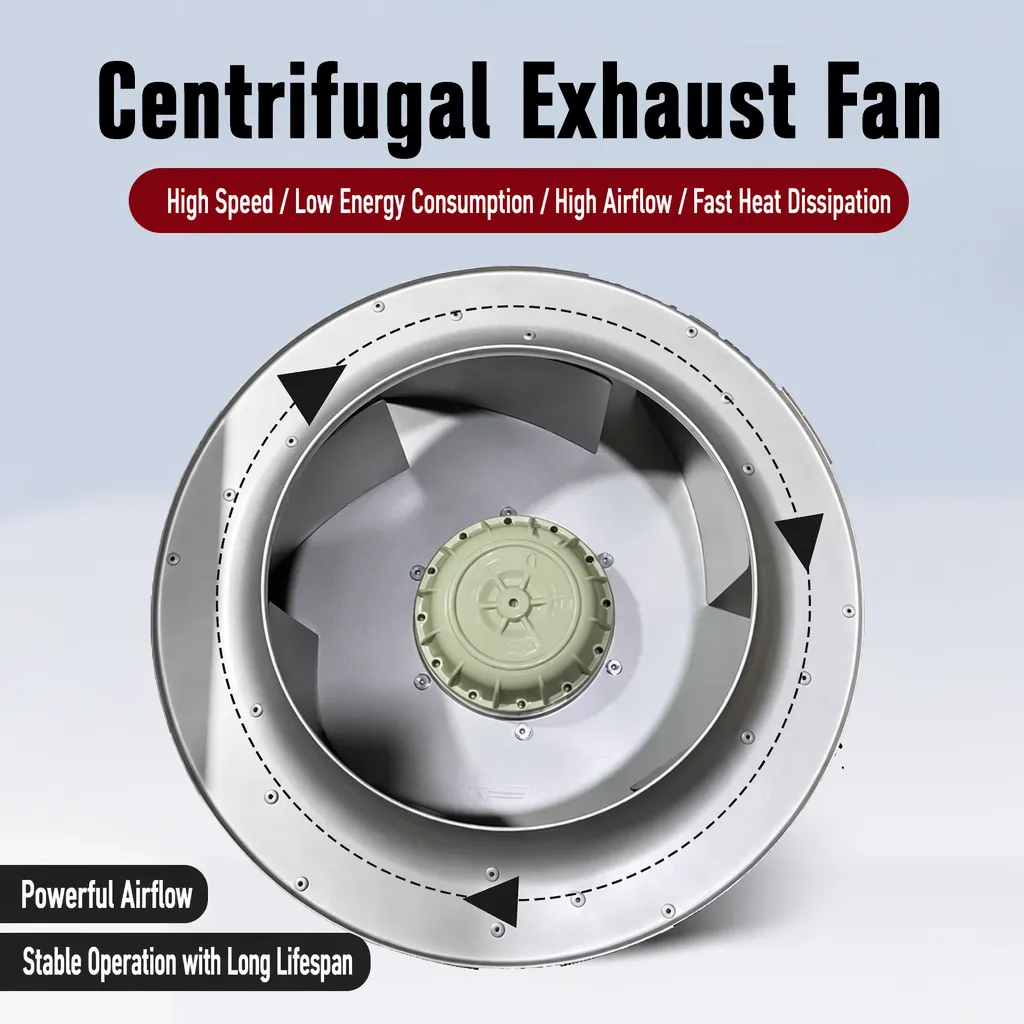
An airfoil backward inclined fan moves more air per unit of input power than a conventional flat-blade centrifugal unit, and the reason lies in blade geometry rather than motor size. In continuous-duty ventilation, the efficiency gap compounds into noticeable energy reduction across a year of operation. Understanding the aerodynamic advantage helps plant engineers select equipment that lowers operating cost without oversizing the drive.
An airfoil backward inclined fan carries a contoured airfoil cross-section similar to an aircraft wing, while ordinary centrifugal fans often use flat or forward-curved blades that meet the airstream at a blunt angle. As air passes the curved suction side, the blade develops lift while keeping the boundary layer attached at higher incidence. Flow separation is delayed, so the impeller turns rotation into pressure rise with less wasted kinetic energy. The contoured profile also lowers blade-surface drag, allowing the same tip speed to push a larger volume of air. Compared with a flat-blade model, the airfoil blade sustains attached flow to a higher incidence angle, keeping the fan curve stable across the operating range.
Turbulence behind a flat blade dissipates energy as heat and noise instead of useful airflow. The airfoil backward inclined design guides the stream smoothly off the trailing edge, cutting wake and eddy formation. Lower turbulence means more of the developed static pressure reaches the duct, so system resistance is overcome at fewer revolutions. Higher static efficiency, not higher speed, is what raises air delivery. When an airfoil backward inclined fan is matched to the same duty point as a flat-blade model, the curve shows a clear gain in delivered volume. Plants gain steadier pressure and quieter operation, which supports NFPA 91 exhaust requirements for vapor conveyance. An airfoil backward inclined fan therefore holds its efficiency advantage even when the duct network changes over time.
A sheet-metal plant in southern China operated a VFD cabinet line where ordinary flat-blade centrifugal fans cooled the frequency-converter enclosures. The cabinets ran hot during summer, and the fans drew steady current around the clock to hold temperature. The maintenance lead found the airflow was uneven, with recirculation at the cabinet inlet and heat building near the drives. Energy records showed the cooling fans consumed a sizable share of the line's auxiliary power, and the flat blades were nearing bearing wear after two years of continuous duty. Overheating also raised the risk of drive failure and unplanned stops, while uneven flow meant some cabinets ran hotter than the nameplate implied.
The retrofit selected a double-inlet airfoil backward inclined fan sized to the cabinet line's pressure requirement, paired with a pure-copper outer-rotor motor and precision ball bearings. After commissioning, the same cooling duty was met at a lower drive speed, and the cabinet inlet showed more uniform velocity with less recirculation. Energy use for cabinet cooling dropped by a noticeable margin month over month, and the workshop reported quieter running. The smoother airflow also eased heat stress on the VFD components, extending service intervals and reducing unplanned stops on the production line. Replacing the flat-blade units with an airfoil backward inclined fan cut the drive speed needed for the same cooling duty, which is where the measured energy saving comes from.
Credible performance claims rest on repeatable testing. Fan air performance is verified under AMCA 210 and ISO 5801 for volume and pressure, while ISO 1940 governs impeller balance grades that keep vibration low. Motor efficiency follows IEC 60034, and IP ratings are confirmed to IEC 60529. An airfoil backward inclined fan that passes these checks delivers the published curve rather than a marketing figure. CE and UKCA markings confirm the unit meets EU and UK equipment requirements, and RoHS and REACH cover material compliance for export markets. Specifying an airfoil backward inclined fan with documented AMCA 210 and ISO 5801 data lets buyers compare models on equal terms instead of marketing claims. Published curves should be read against the real system resistance because a fan only performs to design when installed near the test condition.
Buyers should request the performance curve at the target duty point and confirm ingress protection matches the environment, such as IP54 for dusty enclosures. On arrival, inspect the impeller for balance marks, check bearing smoothness by hand, and verify the nameplate voltage and certification. In use, avoid throttling that forces the fan far from its efficient zone, and keep the filter screen clean to protect airflow. Maintenance should follow a schedule: clean blades, re-grease or replace bearings at the interval, and re-check balance after any blade repair. UL 507 and ATEX 2014/34/EU apply where North American safety or explosive-atmosphere rules are relevant. Recording operating current each quarter helps spot dirt buildup or bearing wear before failure.
The advantage of an airfoil backward inclined fan comes from controlled aerodynamics rather than brute speed. By delaying flow separation and lowering turbulence, the airfoil blade converts more rotation into useful static pressure, so the same motor moves more air with less power. The VFD cabinet case shows measurable energy reduction without sacrificing cooling. For procurement teams, the lesson is to specify tested performance, correct IP rating, and a maintenance plan so the efficiency gain survives years of duty.
What is the core difference between an airfoil blade fan and a flat-blade fan?
Answer: The core difference is blade shape. An airfoil blade has a curved, wing-like cross-section that manages airflow with attached flow, while a flat blade meets air at a blunt angle and creates more turbulence. This geometry lets the airfoil backward inclined fan convert rotation into static pressure with less loss, so more air reaches the duct per watt of input power. Selection should still match the duty point and the site's ingress protection.
Why does an airfoil blade reduce power consumption compared with a flat blade?
Answer: A flat blade sheds a turbulent wake that wastes energy as heat and noise. The airfoil profile keeps the boundary layer attached and guides air off the trailing edge smoothly, so less input power is lost to drag. Because more rotation becomes useful static pressure, the same cooling duty is met at a lower speed. Lower speed also means reduced bearing wear and quieter running, extending service life without added cost to the operator.
How is the air delivery efficiency of such a fan verified?
Answer: Efficiency is confirmed through standardized testing rather than estimates. Volume and pressure are measured under AMCA 210 and ISO 5801, while ISO 1940 sets impeller balance grades that keep vibration low. Motor performance follows IEC 60034. Buyers should request the published fan curve at the target duty point and check that the unit carries CE or UKCA markings for export compliance, then verify field volume with a pitot traverse.
Can this fan type operate in dusty or humid industrial settings?
Answer: Yes, with the correct ingress protection. Units built to IEC 60529 ratings such as IP54 or IP44 shield the motor and bearings from dust and moisture. Pure-copper windings and precision ball bearings resist degradation in demanding duty. For explosive atmospheres, ATEX 2014/34/EU and NFPA 91 rules may apply. Selecting the right IP rating and a washable filter screen keeps airflow stable in harsh sites.
Do airfoil blade fans require different maintenance than ordinary units?
Answer: Maintenance follows the same discipline but rewards consistency. Inspect the impeller for balance marks, keep blades clean, and replace or re-grease bearings at the set interval. Re-check balance after any blade repair, and clean the filter screen to protect airflow. A scheduled plan preserves the efficiency gain and avoids unplanned stops, so the unit holds its performance across years of continuous operation without surprise failures.

2026/09/30
Cement cabinets choke on dust. Learn the filter rule for an industrial cabinet cooling fan: G4/F7 media, IP rating, and pre-filter care.

2026/10/07
Right wall-mount height for an industrial axial exhaust fan: room volume, free clearance, brackets, and recirculation control.

2026/10/08
An ec motor fan links to BMS via Modbus, 0-10V and PWM for demand-based cooling, energy scheduling and automatic sensor-driven speed control.

2026/10/06
A radial exhaust fan removes grease, fumes, and odors from food-processing workshops with capture velocity and hygienic washdown design.

2026/10/05
Learn antistatic treatment for industrial cabinet cooling fan in electronics workshops—ESD-safe housing, ionizable plastics, and cleanroom compatibility.

2026/10/04
Discover how a brushless dc servo delivers precise wind speed control for laboratory cooling fans with closed-loop PID feedback and laminar airflow.
