 EN
EN
What filter matching rule for dust proof cabinet cooling fan operating in cement factories
2026/09/30
Cement cabinets choke on dust. Learn the filter rule for an industrial cabinet cooling fan: G4/F7 media, IP rating, and pre-filter care.

2026/09/18
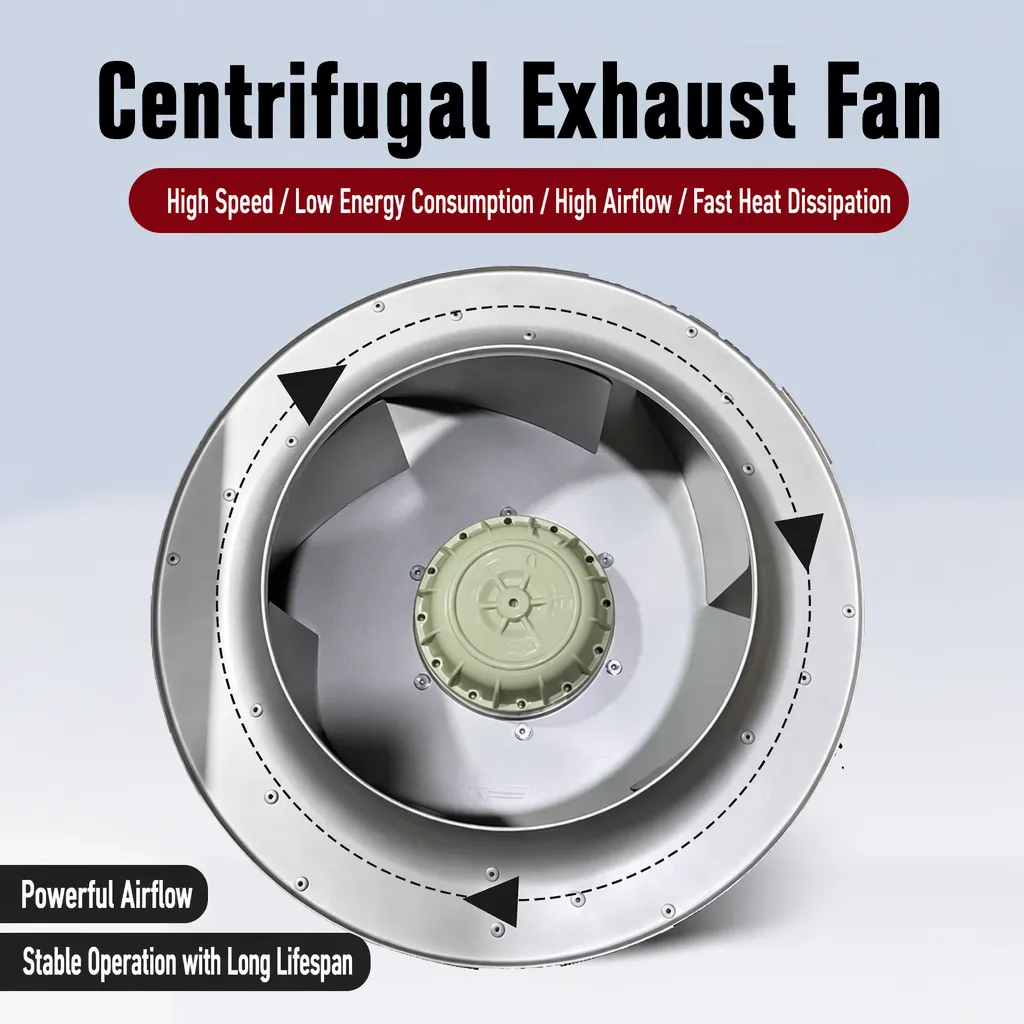
Constant-temperature workshops demand tightly held air conditions, and the air supply system sits at the heart of that control loop. A backward inclined centrifugal blower is often the preferred air mover in such spaces because its wheel geometry delivers stable pressure against a varying duct network. When supply air stays steady, temperature fluctuation at the workpiece or instrument bench drops to a manageable band, which protects both product quality and measurement accuracy for the whole constant temperature workshop.
The air supply system rarely sees a fixed load. Filters clog, dampers move, and cleanroom partitions change as production shifts. A backward inclined centrifugal blower suits this environment because its operating characteristic resists sudden swings in pressure. Where a different wheel type might surge or stall as resistance climbs, the backward inclined wheel keeps delivering air without dramatic flow collapse, so the constant temperature workshop holds its setpoint with less intervention from operators.
Turbulent flow at the supply diffuser mixes supply and room air unpredictably. That uneven mixing creates hot and cold pockets that a thermostat cannot correct fast enough, pushing temperature fluctuation outside the permitted range. Smooth, well-directed airflow from a properly selected centrifugal fan reduces eddies near sensitive benches. Stable delivery also lowers noise and vibration, which matters in metrology and pharmaceutical spaces where quiet, calm conditions support consistent readings and protect measurement accuracy.
The backward inclined blade angles air away from the direction of rotation, so the wheel does not keep accelerating as flow drops. The resulting fan curve is non-overloading: power peaks at a point and then falls, protecting the motor from runaway demand. For a constant temperature workshop, that means the air supply system can track a variable frequency drive signal with predictable response, keeping static pressure within a narrow band across the day and easing thermal control.
A backward inclined centrifugal blower therefore pairs naturally with automated control loops. Because the wheel will not overload at low flow, the drive can modulate speed freely without risking motor damage. That freedom lets the building management system hold static pressure steady even as filter loading and occupancy change through the shift.
Industrial ducts carry fine dust, especially near process lines. A backward inclined centrifugal blower places material on the back of the blade, where centrifugal action helps shed buildup rather than letting it accumulate on the leading edge. This impeller design maintains efficiency longer between cleanings. Less fouling preserves the fan curve shape, so thermal control stays reliable and energy efficiency does not drift as the operating weeks accumulate inside the constant temperature workshop.
A regional metrology lab calibrated gauges in a constant temperature workshop held near 20 °C. Their legacy axial supply fans could not hold static pressure when filters loaded, and temperature fluctuation reached roughly ±0.8 °C during the afternoon. That drift exceeded the lab's tolerance and forced repeated recalibration. The air supply system had become the weak link, not the instruments themselves, which were within spec and professionally maintained.
The facility replaced the axial units with backward inclined centrifugal blowers on a variable frequency drive, sized to the measured duct resistance. Within two weeks, temperature fluctuation settled to about ±0.2 °C, and cleanroom air movement turned noticeably calmer. Recalibration rejects fell, and the constant temperature workshop met its internal standard without manual damper adjustments through the production shift, freeing technicians for higher-value work.
Specify the blower from the real duct network, not a catalogue average. Measure resistance at design airflow, add margin for filter loading, and read the fan curve at that operating point. Oversizing wastes energy and invites throttling losses; undersizing starves the air supply system and widens temperature fluctuation. Ask the supplier for the performance curve at the intended voltage and frequency, and confirm CE or relevant compliance for the destination market before purchase.
A backward inclined centrifugal blower should be selected at the knee of its non-overloading curve, where efficiency is high and speed headroom remains for summer peaks. Cross-check the chosen unit against the documented cleanroom pressure cascade so the constant temperature workshop keeps a positive, stable relationship with adjacent rooms.
Plan a quarterly check of belt tension, bearing temperature, and inlet cone alignment. Log amperage against the baseline fan curve so a slow rise flags fouling before it harms thermal control. Keep filters on schedule, because a loaded filter is the fastest way to push static pressure out of band. These simple habits extend service life and hold the constant temperature workshop within its temperature and cleanliness targets without surprise downtime.
A backward inclined centrifugal blower rewards this discipline with years of stable operation. Document each inspection and trend the readings, because a small, steady climb in amperage often precedes the larger failures that disrupt thermal control and force costly recalibration of sensitive instruments.
For any constant temperature workshop, air supply stability decides whether temperature targets hold. A backward inclined centrifugal blower earns its place by holding static pressure against a changing duct network, resisting dust, and matching a variable frequency drive without overloading the motor. The metrology case shows the payoff: tighter thermal control, calmer cleanroom conditions, and less manual effort. Specify from real resistance, inspect on schedule, and the workshop stays within tolerance.
What makes a backward inclined blower suitable for a constant-temperature workshop?
Answer: The backward inclined design holds static pressure steady as duct resistance changes, which keeps the air supply system predictable. Stable delivery reduces temperature fluctuation and turbulent flow near sensitive benches. Its non-overloading fan curve protects the motor under varying load. For metrology and pharmaceutical spaces, calm, consistent airflow supports accurate measurement and cleaner conditions without constant manual adjustments.
How does pressure fluctuation affect temperature control in a cleanroom?
Answer: Pressure fluctuation shifts the volume and direction of supply air, creating uneven mixing that produces warm and cool pockets. A thermostat reacts late to those pockets, so temperature fluctuation grows beyond tolerance. A constant temperature workshop needs steady static pressure to keep airflow laminar and predictable. Selecting a blower with a stable fan curve against the real duct network is the practical way to limit that variation.
Why is the fan curve important when selecting a centrifugal fan?
Answer: The fan curve shows how airflow and static pressure relate across the operating range. The backward inclined design offers a non-overloading curve, so motor demand peaks then falls as flow drops, avoiding overload. Reading the curve at the measured duct resistance confirms the air supply system will hold setpoint. Ignoring the curve risks oversizing, wasted energy, or undersizing that starves the constant temperature workshop of conditioned air.
Can a variable frequency drive improve thermal control in a workshop?
Answer: Yes. A variable frequency drive modulates blower speed to match real-time demand, holding static pressure within a narrow band as filters load or dampers move. Paired with a backward inclined centrifugal blower, the drive tracks the fan curve smoothly and trims energy use during light load. The result is steadier airflow, lower temperature fluctuation, and less manual intervention across the production shift in the constant temperature workshop.
What maintenance keeps a centrifugal blower efficient over time?
Answer: Check belt tension, bearing temperature, and inlet alignment quarterly, and log amperage against the baseline fan curve to catch fouling early. Replace filters on schedule so static pressure stays in band, and inspect the impeller for dust buildup that erodes efficiency. These steps preserve the non-overloading characteristic and keep the air supply system delivering stable, clean airflow that protects thermal control in the workshop.

2026/09/30
Cement cabinets choke on dust. Learn the filter rule for an industrial cabinet cooling fan: G4/F7 media, IP rating, and pre-filter care.

2026/10/07
Right wall-mount height for an industrial axial exhaust fan: room volume, free clearance, brackets, and recirculation control.

2026/10/08
An ec motor fan links to BMS via Modbus, 0-10V and PWM for demand-based cooling, energy scheduling and automatic sensor-driven speed control.

2026/10/06
A radial exhaust fan removes grease, fumes, and odors from food-processing workshops with capture velocity and hygienic washdown design.

2026/10/05
Learn antistatic treatment for industrial cabinet cooling fan in electronics workshops—ESD-safe housing, ionizable plastics, and cleanroom compatibility.

2026/10/04
Discover how a brushless dc servo delivers precise wind speed control for laboratory cooling fans with closed-loop PID feedback and laminar airflow.
