 EN
EN
What filter matching rule for dust proof cabinet cooling fan operating in cement factories
2026/09/30
Cement cabinets choke on dust. Learn the filter rule for an industrial cabinet cooling fan: G4/F7 media, IP rating, and pre-filter care.

2026/09/04

Modern automated production lines run almost continuously, and heat is the silent enemy of every drive cabinet. A single overheated VFD can halt an entire cell, so the cooling method chosen at spec time shapes years of upkeep. A brushless cabinet cooling fan pulls heat out of VFD and inverter enclosures without the wearing parts that cause most field failures. For plants sourcing from global suppliers, the maintenance saving appears directly on the service ledger, not just on the purchase invoice. Clean, steady cooling protects the drives that keep the whole line moving through every shift of the week.
A conventional fan relies on a commutator and carbon brushes to switch current direction. The brushless cabinet cooling fan eliminates both parts, so there is nothing to grind down during rotation. Removing the commutator removes the single biggest source of friction and sparking inside the motor. Fewer moving contacts means fewer surprise shutdowns on a busy automated production line, and far less carbon dust settling on nearby electronics that control the process. On a three-shift packaging line, a brushed filter fan failed every few months and pulled electricians away from other work to open the cabinet. Replacing it with a brushless unit removed that recurring call-out and kept the line running through peak season. In a brushless motor, rotor position is read by Hall sensors or estimated by sensorless electronics, so current commutation occurs in firmware instead of across a physical contact. That eliminates the brush bounce and arc erosion that pit commutator segments and eventually raise resistance until the drive faults.
A brushless motor spins on sealed ball bearings that tolerate continuous duty far better than sleeve types. Combined with pure-copper windings, the brushless motor keeps winding temperature low and efficiency steady across long shifts. Stable thermal behavior is what lets cabinet cooling run unattended for thousands of hours. Because the brushless cabinet cooling fan has no brush to wear, bearing life becomes the main limit, and quality bearings push that limit out for years of quiet service. Field reports from continuous plants show the brushless approach cuts fan-related service calls sharply once the brushes are gone.
Copper windings carry current with less resistance, so the motor generates less internal heat. Lower heat generation slows insulation aging and protects the drive electronics in the enclosure. For any brushless fan, good thermal management is the reason airflow stays consistent year after year instead of drifting toward failure. Tight thermal control also reduces the load on upstream cooling and helps the whole cabinet hold its designed temperature budget without intervention. Specifiers working through hot summers should confirm the rated operating range, since margin there protects the fan when ambient temperatures climb toward the limit.
Cabinet environments collect fine dust that clogs airways and shortens component life. When airflow drops, the failure rate of sensitive drives climbs and unplanned downtime follows. A brushless cabinet cooling fan with a clean inlet maintains the designed air path, while a blocked one simply moves heat back into the cabinet. Effective cabinet cooling depends on keeping that air path clear, because dust is the hidden tax paid on every operating hour of the line. A planned filter change takes minutes, while an overheated drive can stop a cell for hours, so the math favors clean air.
The IP54 filter screen stops most dust at the inlet while staying easy to remove. A tool-free washable filter lets technicians rinse and refit it in minutes during a planned stop. A fan built for IP54 keeps its protective rating through repeated cleaning cycles. Quick service shrinks the maintenance window and protects the ingress protection seal, which is why many buyers specify IP54 for harsher production floors with cutting or grinding nearby. A short monthly glance at the screen during a routine walk keeps small problems from becoming unplanned stops. A quick pressure-drop check or a look at the clean-side screen catches restriction early, before the temperature curve bends upward and the drive begins to derate.
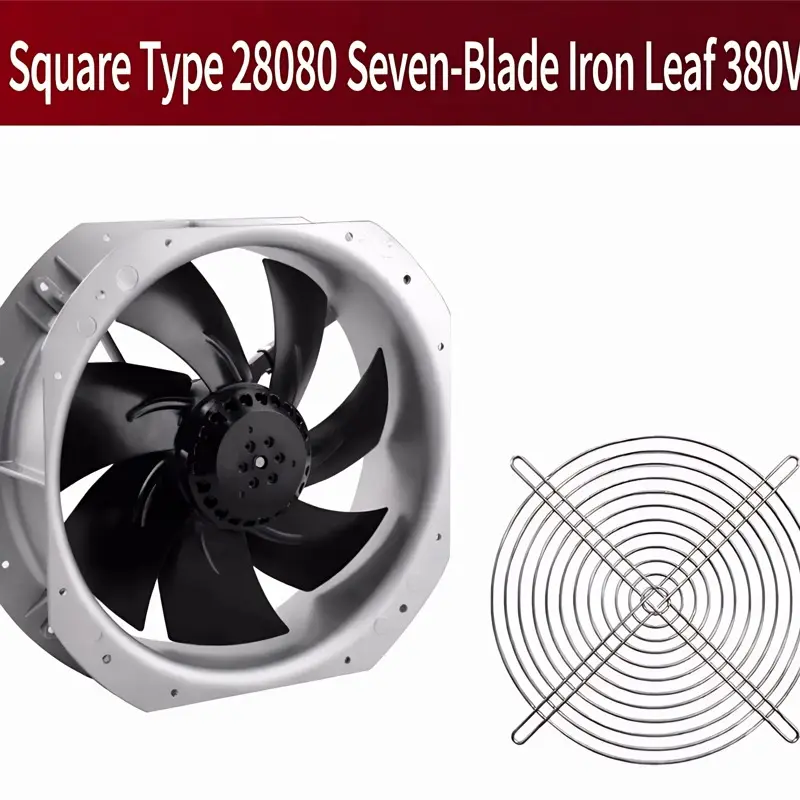
Long service life is the core of the saving. A longer lifespan means fewer replacements, fewer spare units on the shelf, and fewer hours spent on the ladder. Over a multi-year horizon the maintenance cost of a brushless cabinet cooling fan stays low because there is little to wear, little to lubricate, and little to fail. Procurement teams value that predictability when they model total cost of ownership for the line and plan the spare-parts budget. Some teams track runtime with a simple log, which makes the low failure rate visible to management at audit time.
Compliance matters when a component ships across borders. CE and UKCA marks show the fan meets defined safety and electromagnetic standards for European buyers. Specifiers can also check IEC and EN standards for ingress protection and insulation class, which turns a commodity part into a documented, auditable choice. Requesting CAD drawings and test certificates during sourcing closes the quality loop and protects the automated production line against non-compliant imports.
The economics are straightforward: fewer wearing parts, cleaner air, and longer service life combine to shrink the upkeep budget of any automated production line. Choosing a brushless cabinet cooling fan converts a recurring service task into a near-forgotten one, letting maintenance teams focus on production instead of fans. Lower maintenance cost follows naturally from removing the parts that wear.
A brushless cabinet cooling fan removes the commutator and brushes that wear out in traditional units. Without those contacts there is no carbon dust, no sparking, and no periodic brush replacement. The brushless motor relies on electronic commutation and sealed ball bearings, so the moving system stays stable for far longer. Maintenance shifts from scheduled part swaps to occasional filter cleaning, cutting labor and spare-part spend on the floor.
Dust accumulates on the inlet and impeller, restricting airflow and raising the temperature inside the enclosure. Higher temperatures accelerate insulation aging and push drives toward thermal trip, which raises the failure rate. A washable filter and IP54 screen keep most particles out, preserving the designed airflow. Clean air paths are the simplest way to protect both fan and connected equipment from avoidable, heat-driven shutdowns.
Lifespan depends on duty, ambient heat, and load, but brushless designs with ball bearings and copper windings commonly run tens of thousands of hours. Continuous duty at moderate temperature favors a long service life with little degradation in airflow. Specifiers should review the rated operating range and ingress protection rating to match real floor conditions. Correct sizing and clean filters keep the actual lifespan close to the rated figure.
Yes. Most units use a tool-free washable filter that clips out for rinsing and clicks back in place. The IP54 filter screen is the main consumable and needs no special tooling to maintain. Periodic inspection of ball bearing noise and airflow is enough for most plants. Simple service keeps the maintenance cost predictable and the cabinet protected, which suits sites with limited technical staff on shift.
CE and UKCA marks matter most for buyers shipping or operating equipment in Europe and the UK. They confirm the fan meets defined safety, electromagnetic, and ingress protection requirements under regional law. Buyers in other regions still benefit from the disciplined testing those standards imply. Requesting the certificates during sourcing protects the automated production line against non-compliant imports and simplifies customs and audit paperwork.

2026/09/30
Cement cabinets choke on dust. Learn the filter rule for an industrial cabinet cooling fan: G4/F7 media, IP rating, and pre-filter care.

2026/10/07
Right wall-mount height for an industrial axial exhaust fan: room volume, free clearance, brackets, and recirculation control.

2026/10/08
An ec motor fan links to BMS via Modbus, 0-10V and PWM for demand-based cooling, energy scheduling and automatic sensor-driven speed control.

2026/10/06
A radial exhaust fan removes grease, fumes, and odors from food-processing workshops with capture velocity and hygienic washdown design.

2026/10/05
Learn antistatic treatment for industrial cabinet cooling fan in electronics workshops—ESD-safe housing, ionizable plastics, and cleanroom compatibility.

2026/10/04
Discover how a brushless dc servo delivers precise wind speed control for laboratory cooling fans with closed-loop PID feedback and laminar airflow.
