 EN
EN
What filter matching rule for dust proof cabinet cooling fan operating in cement factories
2026/09/30
Cement cabinets choke on dust. Learn the filter rule for an industrial cabinet cooling fan: G4/F7 media, IP rating, and pre-filter care.

2026/09/08
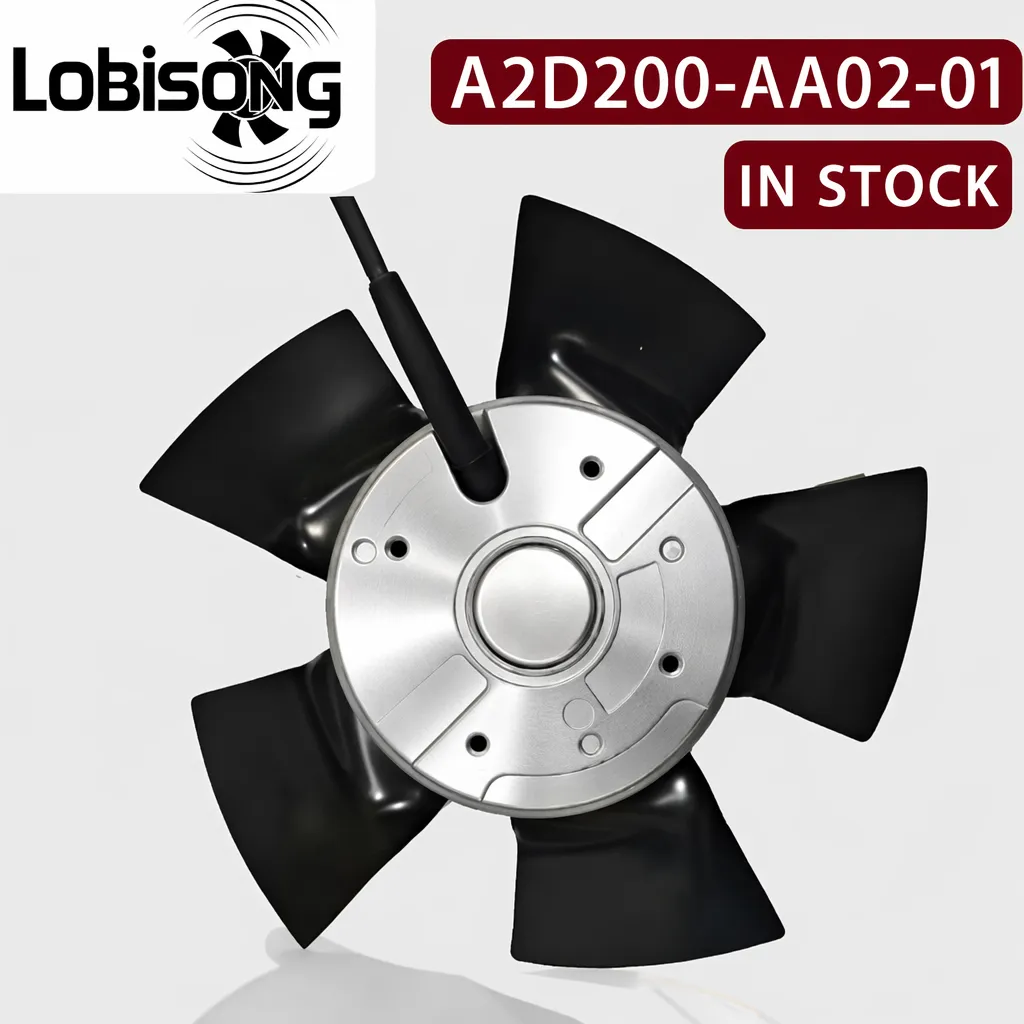
A brushless dc servo gives an industrial cabinet cooling fan a way to hold speed without the mechanical spark and brush chatter that older motors introduce. In a sealed electrical cabinet, every bit of vibration travels into the mounted drives, relays, and backplane. Understanding why this motor type reduces vibration amplitude starts with how it is built and controlled.
A data-center cabinet line reported intermittent alarm trips on its variable-frequency drives during summer peaks. The maintenance lead suspected the cooling fan before any drive, and asked the team to evaluate a brushless dc servo as a replacement for the aging axial unit. The hunch was simple: the trips rose with cabinet temperature, and the loudest cabinet also ran the roughest fan.
The original fan used a brushed motor with worn commutator contacts. At speed it produced a steady hum plus a higher-frequency tick from the brushes. Accelerometer readings on the cabinet skin showed a clear peak near the fan's running speed, and the amplitude grew as the bearings loosened with hours of service. That peak lined up with complaints of loose connector backshells found during routine audits.
After the swap, the same accelerometer showed the dominant peak drop by more than half. Without brushes, there was no tick, and electronic commutation kept torque smooth. Operators noted the cabinet was quieter and the drive alarms stopped during the next heat wave. The change was a direct illustration of how motor design moves the vibration problem upstream, before it reaches the sensitive electronics.
Vibration is not only a noise issue. Repeated micro-motion works connectors loose, fatigues solder joints, and shifts optical alignment in any sensors mounted nearby. In a control cabinet, a relay that chatters under resonance can drop a signal at the worst moment. Left alone, the amplitude grows as fasteners back off, creating a feedback loop that ends in unplanned downtime and a difficult root-cause search. The cost of that failure shows up later as scrap, overtime, and a credibility hit with the customer who expected a quiet, stable cabinet.
Most fan vibration starts at the rotor. An unbalanced wheel throws force into the housing at every revolution, and that force scales with rpm squared. Brushed motors add a second source: the commutation event itself. Cogging in a poorly tuned controller creates a once-per-pole torque ripple that the structure feels as a low buzz. Bearing wear then amplifies everything, turning a small defect into a loud, failing unit.
A brushless dc servo replaces mechanical brushes with a Hall sensor array that reports rotor position to the drive. The controller energizes the right winding at the right time, so there is no spark and no brush tick. Because commutation is electronic, the torque stays even through each step. The Hall sensor also lets the system hold a tight speed band, which keeps the forcing frequency away from structural resonance of the cabinet panels.
Smooth output depends on two things: a well-balanced rotor and a controller that limits torque ripple. A brushless dc servo reaches good dynamic balance by trimming the wheel and checking it on a balance rig, often to a fine grade. On the drive side, sinusoidal commutation shapes the current so the ripple stays small. Lower ripple means less alternating force into the frame, so the cabinet sees a steadier load instead of a buzzing one.
A brushless dc servo maps duty cycle to rpm without hunting, and it can ramp gently to avoid a hard transient that would excite the structure. Some designs add an isolation mount between the fan and the panel, breaking the path that carries energy into the cabinet. Together, smooth PWM and soft mounting keep the dominant frequency clear of the panel's natural resonance, so the cabinet skin stays calm across the speed range.
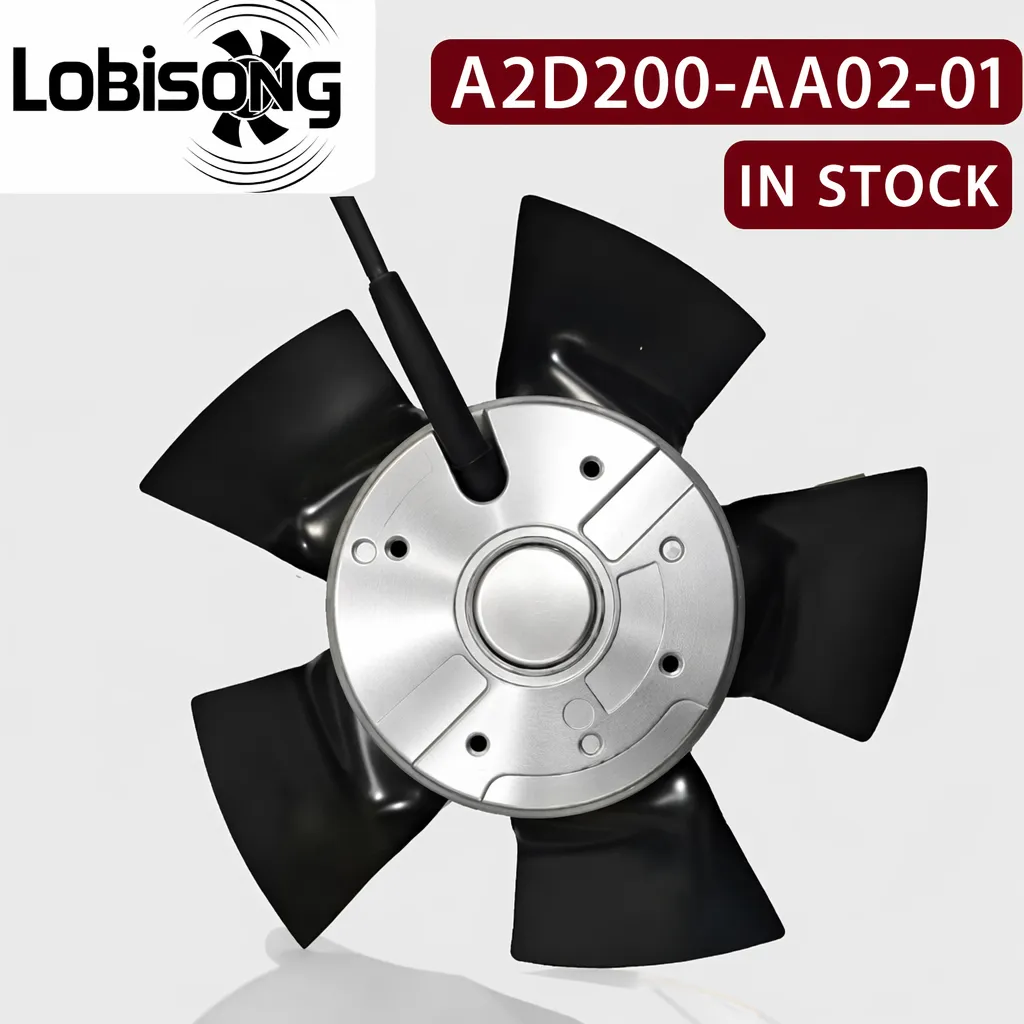
Motor and machine builders reference UL 1004 for motor safety and NFPA 79 for electrical machinery, while IEC 60034 defines efficiency and test methods for rotating machines. These documents do not dictate a vibration limit for every fan, but they establish the discipline of documented testing and rated performance. A procurement spec that cites them gives the supplier a clear bar and gives the buyer a defensible acceptance record.
Buyers should ask for a declared balance grade, a bearing type, and a vibration figure at rated speed, then verify one unit on arrival with a simple accelerometer check. In service, listen for a change in tone and re-torque the mounting hardware on a schedule. Replace the fan at the first sign of growing amplitude rather than after a failure. A short incoming test and a logged maintenance routine protect the cabinet far better than a reactive fix.
A brushless dc servo reduces vibration in a cabinet cooling fan by removing brushes, balancing the rotor, and shaping torque through electronic commutation and PWM. The result is lower amplitude at the cabinet skin, fewer loose connectors, and quieter operation. Specifying a balance grade and checking one unit on arrival keeps the benefit real across the installed fleet.
Question: Why does a brushless dc motor vibrate less than a brushed fan? Answer: A brushed fan adds vibration from spark and commutator chatter, while a brushless dc servo uses electronic commutation with a Hall sensor to keep torque smooth. No brushes means no tick, and a balanced rotor removes the main force into the frame. The result is lower amplitude at the cabinet skin and quieter running under load. Specifying a balance grade locks in the gain.
Question: How is rotor balance checked on a low vibration motor? Answer: The wheel is mounted on a balance rig that spins it and shows where material must be removed or added. Good dynamic balance brings the residual unbalance below a stated grade, often verified at the rated rpm. Manufacturers log the result so the buyer can confirm it. A balanced rotor throws far less force into the housing, which is the root of most fan vibration.
Question: What causes torque ripple in a fan motor? Answer: Torque ripple comes from the commutation method and controller tuning. A six-step drive produces a larger ripple than sinusoidal commutation, and a poorly tuned loop makes it worse. The ripple becomes a low-frequency force the cabinet feels as a buzz. Sinusoidal control keeps ripple small, so the structure sees a steady load instead of a pulsing one that excites resonance.
Question: Can an isolation mount really reduce cabinet vibration? Answer: Yes. An isolation mount sits between the fan and the panel and absorbs the energy that would otherwise travel into the cabinet structure. Soft rubber or elastomer elements break the stiff path, lowering the transmitted amplitude. It works well when paired with a balanced rotor and smooth PWM control. Mounting hardware should be re-torqued on schedule so the benefit does not drift away with service hours.
Question: Where should vibration be measured during acceptance? Answer: Measure on the cabinet skin near the fan and on the fan housing itself, using a small accelerometer at rated speed. The new fan should show a dominant peak well below the level of the unit it replaces, with no sharp resonance near panel natural frequencies. Logging the reading creates an acceptance record. Repeat the check in service to catch bearing wear before it grows into a failure.

2026/09/30
Cement cabinets choke on dust. Learn the filter rule for an industrial cabinet cooling fan: G4/F7 media, IP rating, and pre-filter care.

2026/10/07
Right wall-mount height for an industrial axial exhaust fan: room volume, free clearance, brackets, and recirculation control.

2026/10/08
An ec motor fan links to BMS via Modbus, 0-10V and PWM for demand-based cooling, energy scheduling and automatic sensor-driven speed control.

2026/10/06
A radial exhaust fan removes grease, fumes, and odors from food-processing workshops with capture velocity and hygienic washdown design.

2026/10/05
Learn antistatic treatment for industrial cabinet cooling fan in electronics workshops—ESD-safe housing, ionizable plastics, and cleanroom compatibility.

2026/10/04
Discover how a brushless dc servo delivers precise wind speed control for laboratory cooling fans with closed-loop PID feedback and laminar airflow.
