 EN
EN
What filter matching rule for dust proof cabinet cooling fan operating in cement factories
2026/09/30
Cement cabinets choke on dust. Learn the filter rule for an industrial cabinet cooling fan: G4/F7 media, IP rating, and pre-filter care.

2026/08/26
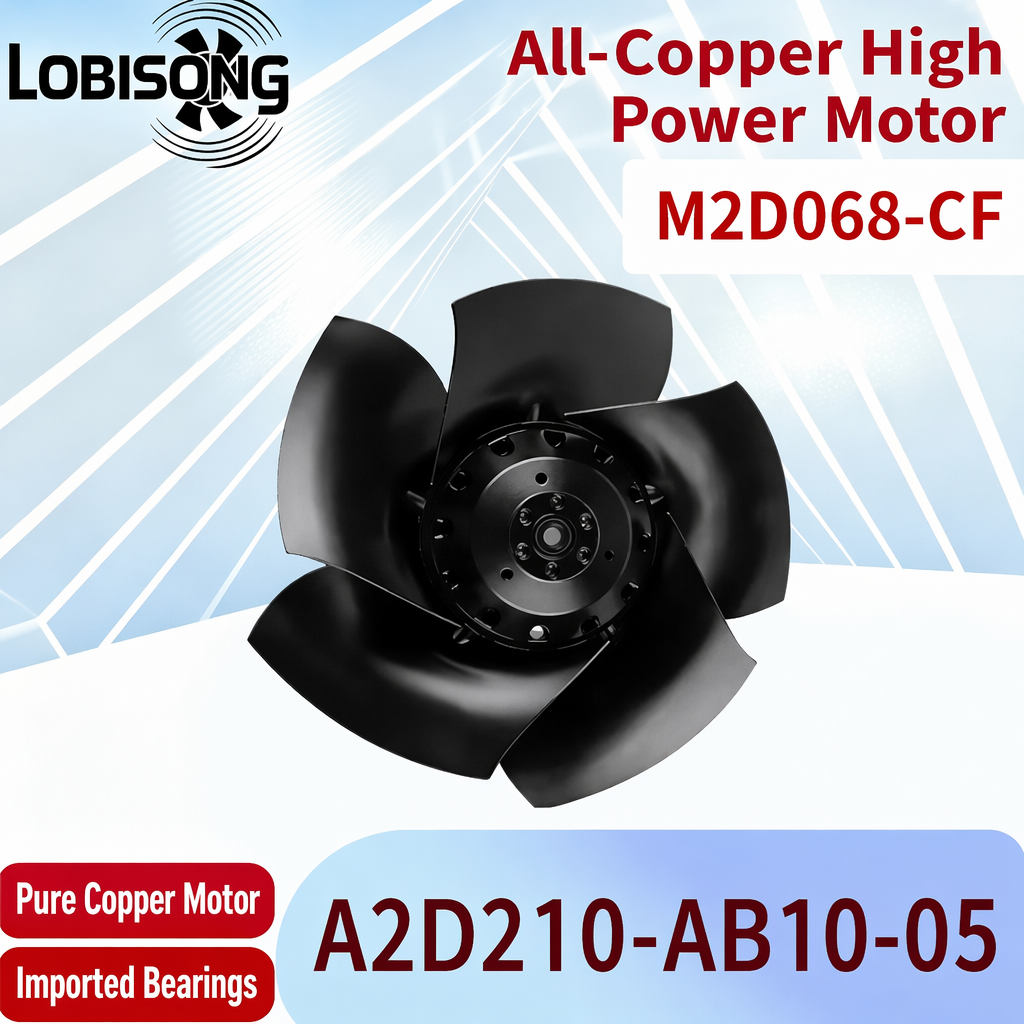
In electronics validation, semiconductor burn-in testing, and environmental testing laboratories, cabinet enclosures house high-density components that generate substantial operational heat. Maintaining precise internal thermal conditions is vital. Temperature fluctuations compromise test accuracy, leading to false validation failures or premature component degradation during stress testing.
To maintain stable thermal environments, test bench designers rely on high-precision air management systems driven by advanced motor technology. Integrating a specialized brushless dc servo drive into a testing cabinet cooling fan system delivers the exact speed control, energy efficiency, and operational stability required for continuous testing procedures.
The fundamental advantage of utilizing a brushless dc servo motor in environmental enclosures lies in its closed-loop feedback architecture. Standard cooling fans run on open-loop induction or basic brushed DC circuits, which drift in speed as ambient temperatures, supply voltages, or system backpressures shift.
In contrast, a brushless dc servo configuration combines electronic commutation with real-time feedback sensors—such as hall sensors or optical encoders—to constantly monitor and adjust shaft RPM. This closed-loop system allows the dc motor servo motor to hold fan speeds within tight tolerances, typically within ±1% of the designated setpoint.
In demanding validation setups, this speed stability translates directly into consistent airflow. Air speed remains rock-solid whether internal filters are brand new or partially loaded with airborne dust. Furthermore, because a brushless dc servo lacks mechanical brushes, it eliminates physical friction, brush dust contamination, and electrical spark noise. Removing electromagnetic interference (EMI) is particularly critical inside validation chambers housing sensitive signal analyzers, data acquisition units, and high-frequency measuring probes.
Deploying a precision testing cabinet cooling fan powered by a dc motor servo motor offers distinct performance advantages over conventional fan designs:
Wide Dynamic Speed Regulation: Operators can continuously throttle fan speeds from ultra-low quiet modes up to full-velocity exhaust. This dynamic range allows a single testing cabinet cooling fan assembly to adapt to varying thermal profiles across different test protocols.
Millisecond Thermal Response: Advanced brushless dc servo drives deliver rapid acceleration and deceleration curves. When internal thermal sensors register a sudden temperature spike during high-load processor tests, the dc motor servo motor ramps up fan speed in milliseconds to prevent thermal throttling.
Proportional Energy Savings: Electrical power consumption scales dynamically with speed. Running fans at partial capacity during low-heat test cycles reduces total energy consumption and lowers ambient room noise.
Extended Service Lifespan: Eliminating mechanical brush wear extends operational life beyond 50,000 to 70,000 continuous operating hours. This longevity prevents unexpected fan failures that could interrupt multi-week semiconductor burn-in cycles.
Comparing common motor topologies highlights why a brushless dc servo system remains the top choice for precision testing environments:
Brushless DC Servo Motors: Offer closed-loop feedback, high dynamic speed control, low EMI output, high static efficiency, and exceptional lifespan. They excel in applications requiring precise, automated thermal management.
Stepper Motors: Provide good positional accuracy at low speeds, but suffer from high noise, thermal self-heating, and severe torque drop-offs at higher operational RPMs.
Traditional Brushed DC Motors: Feature low initial acquisition costs, but suffer from rapid brush wear, electrical sparking noise, high EMI emissions, and unpredictable speed regulation under varying backpressure.
While simple brushed motors suit basic enclosure cooling, high-reliability validation setups demand the precision and longevity inherent to a dc motor servo motor design.
Modern electronics laboratories rely on automated test equipment (ATE) software to manage long-duration testing cycles. A modern testing cabinet cooling fan integrated with a brushless dc servo drive supports digital communication interfaces such as Pulse Width Modulation (PWM), 0-10V analog speed control, and RS485/MODBUS protocols.
This digital connectivity allows laboratory control systems to adjust fan speeds automatically based on real-time board temperatures. In a burn-in test scenario lasting several weeks, the test manager software logs airflow rates, tracks motor health telemetry, and adjusts the testing cabinet cooling fan output dynamically without requiring manual operator intervention.
Field upgrades replacing older brushed fans with a brushless dc servo cooling system demonstrate measurable benefits: internal thermal variations drop significantly, operational noise decreases, and scheduled maintenance intervals extend from months to years.
Specifying the correct testing cabinet cooling fan requires evaluating key operational parameters before installation:
Required RPM and Airflow Capacity: Match the motor speed range—typically 200 to 4,000 RPM—against the volumetric airflow (CFM) needed to dissipate peak thermal wattage.
Static Pressure Performance: Select impellers capable of pushing air through dense card cages, dust filters, and restrictive cable channels.
Ingress Protection Ratings: For testing environments involving high humidity, salt spray, or dust exposure, choose fan assemblies with IP54 or IP65 sealed motor housings.
Acoustic Noise Control: Ensure acoustic noise ratings remain below 45 dBA during low-to-medium load operation to maintain a quiet laboratory work environment.
Designing high-reliability thermal management hardware requires working with experienced cooling equipment manufacturers capable of delivering tight manufacturing tolerances and proven component longevity.
Lobisong (lobisong.com) manufactures high-efficiency DC and EC cooling fan assemblies powered by advanced brushless motor technology. Operating five automated production lines featuring precision motor winding, automated welding, assembly, and dynamic blade balancing stations, Lobisong ensures consistent product quality across every unit built.
Holding international CE and UKCA certifications, Lobisong provides custom OEM and ODM testing cabinet cooling fan solutions to equipment manufacturers worldwide. Offering fan models across diverse voltage ranges with custom speed control parameters, robust IP-rated motor protection, and reliable global delivery performance, Lobisong supports test engineering teams with durable thermal management hardware engineered for continuous performance.

2026/09/30
Cement cabinets choke on dust. Learn the filter rule for an industrial cabinet cooling fan: G4/F7 media, IP rating, and pre-filter care.

2026/10/07
Right wall-mount height for an industrial axial exhaust fan: room volume, free clearance, brackets, and recirculation control.

2026/10/08
An ec motor fan links to BMS via Modbus, 0-10V and PWM for demand-based cooling, energy scheduling and automatic sensor-driven speed control.

2026/10/06
A radial exhaust fan removes grease, fumes, and odors from food-processing workshops with capture velocity and hygienic washdown design.

2026/10/05
Learn antistatic treatment for industrial cabinet cooling fan in electronics workshops—ESD-safe housing, ionizable plastics, and cleanroom compatibility.

2026/10/04
Discover how a brushless dc servo delivers precise wind speed control for laboratory cooling fans with closed-loop PID feedback and laminar airflow.
