 EN
EN
What filter matching rule for dust proof cabinet cooling fan operating in cement factories
2026/09/30
Cement cabinets choke on dust. Learn the filter rule for an industrial cabinet cooling fan: G4/F7 media, IP rating, and pre-filter care.

2026/09/07
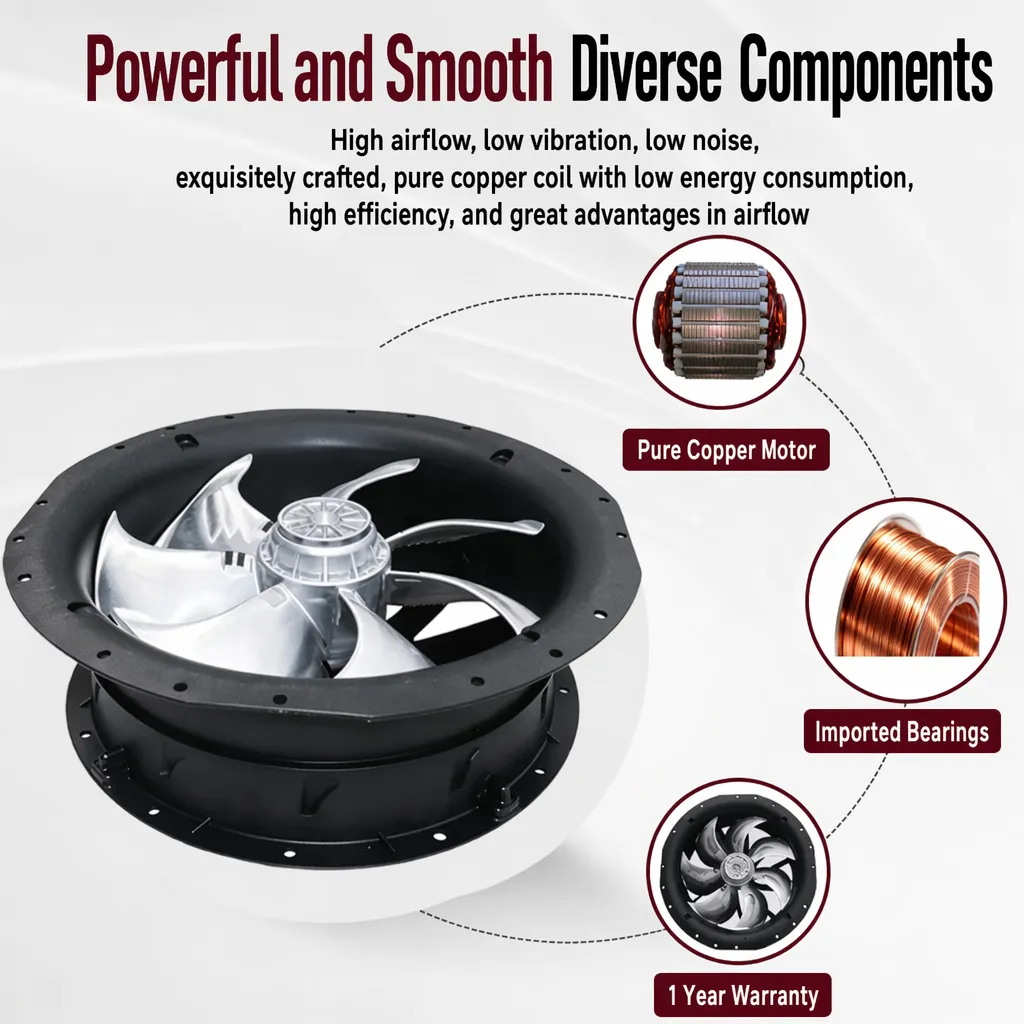
Supermarket equipment rooms sit behind the sales floor and hold refrigeration racks, compressors, inverters and lighting ballasts. A commercial axial air mover fan becomes necessary when this enclosed space traps heat and stale air. Without steady air movement, temperatures climb, components degrade and energy use rises. Good air circulation keeps the room within a safe operating band and protects the store's cold chain.
Refrigeration compressors and condensing units release large amounts of rejected heat into a confined footprint. Lighting and power add more. When exhaust is weak, the air layer near the ceiling warms while cooler air pools at the floor. A commercial axial air mover fan solves this by pulling warm air across the room and pushing it toward return ducts. The result is a more even temperature profile and lower peak loads on the cooling system.
Supermarket layouts place these rooms beside fresh and frozen departments, so any heat spillover threatens product safety. Staff seldom notice the slow drift until a compressor trips on thermal overload. Documenting inlet and outlet temperatures exposes the trend early.
Still air acts like an insulating blanket around hot components. Heat that should leave the room instead soaks back into cabinets and electronics. Ventilation designed only for code minimums often falls short during summer peaks or when extra display cases are added. Air circulation fan performance drops further when filters clog and louvers stick.
Better airflow shortens the path heat must travel and reduces the temperature difference the refrigeration system fights against. Small improvements in movement translate into measurable savings on the electricity bill.
The propeller draws air axially and throws it in a straight line, which suits the long, narrow shape of most equipment rooms. A robust motor spins the blades at a controlled speed, and the blade pitch sets how much air each revolution delivers. Louvers and ceiling brackets direct the stream so it sweeps the whole volume rather than one corner.
Selection depends on the room's length, obstacle layout and required air changes per hour. Oversizing wastes energy; undersizing leaves hot pockets. A simple CFM calculation against room volume keeps the choice honest, and a commercial axial air mover fan should be matched to that target rather than guessed.
CFM measures the volume of air moved each minute. Static pressure is the resistance the fan must push against from ducts, filters and turns. A steeper blade pitch raises both airflow and load on the motor, so balance matters. Low noise designs use wider blades at slower rpm to keep comfort without sacrificing movement.
Propeller fans shine where resistance is low and volume is high. They pair well with ceiling mounts that keep floor space clear for service access. Regular cleaning preserves the rated CFM as dust builds on the blades of the commercial axial air mover fan over time.
Sustained heat shortens compressor life and invites condensation on cold surfaces. Moisture plus warmth grows mold and corrodes terminals. Equipment room cooling that lags the heat load forces longer run times, which then generates even more heat. The spiral raises repair frequency and the chance of a stock-losing breakdown during trading hours.
Upgrading to a commercial axial air mover fan breaks the loop by moving heat out before it accumulates. A failed compressor can idle an entire frozen aisle within hours. The cost of lost product often dwarfs the price of a proper axial fan and a maintenance plan.
Hot electrical enclosures drift outside their rated temperature, increasing nuisance trips and arc risk. NFPA 70 (National Electrical Code) expects ventilation that supports safe operating conditions for installed equipment. OSHA 29 CFR 1910 sets general industry duties for a safe workplace, which includes managing heat where staff service machines. IEC 60034 guides efficiency expectations for the driving motor.
Ignoring these links turns a comfort issue into a compliance gap. A documented airflow check during planned maintenance closes the loop and keeps the supermarket within expected operating limits.

Confirm the input voltage matches the site and the IP rating suits the humidity. Check bearing type, listed certifications and the stated CFM at the expected static pressure. Compare blade material against the room's chemical exposure. When sourcing a commercial axial air mover fan, a supplier working to ISO 9001 controls incoming inspection, which reduces the odds of a weak unit reaching the floor.
Ask for the fan curve, not just a single number. Real performance lives across the operating range, not at one test point, so the ceiling height and obstacle map should guide the final choice.
Fix the unit to a solid ceiling or wall structure clear of the discharge path of compressors. Keep louvers free and the intake unblocked. Set a schedule to wipe blades, tighten mounts and log amperage. Energy savings from steady airflow repay the small labor cost within a season.
A commercial axial air mover fan on the ceiling keeps floor space open for service. Train the on-call technician to spot rising temperature trends before they become failures. A five-minute weekly look prevents a five-hour emergency.
A commercial axial air mover fan is the practical answer to poor air circulation in supermarket equipment rooms. It moves heat out, supports ventilation, and lowers the load on refrigeration. Correct sizing, careful installation and routine checks keep the airflow fan efficient for years. Pair the choice with basic standards awareness and a simple maintenance habit to protect equipment, product and staff.
Question: What does a commercial axial air mover fan do in an equipment room? Answer: It pulls warm, stagnant air across the room and pushes it toward return ducts, lowering peak temperatures around compressors and cabinets. Steady movement prevents heat from soaking back into electronics and supports safer operation. The unit keeps the space within a stable band so refrigeration runs shorter cycles and consumes less electricity during trading hours.
Question: Why is air circulation important for supermarket equipment room cooling? Answer: Trapped air insulates hot components and forces the cooling system to work against a wider temperature gap. Good circulation shortens the path heat must travel and reduces run time for compressors. That protects the cold chain, lowers energy use and reduces trips caused by thermal overload. Stable airflow also limits condensation that can corrode terminals and damage sensitive controls.
Question: How should blade pitch and CFM be chosen for an axial fan? Answer: CFM sets the air volume needed for the room size and required air changes per hour. Blade pitch controls how much air each revolution moves and how hard the motor works. Match the pitch to the expected static pressure from ducts and filters. A fan curve across the operating range gives an honest view, while a single labeled number can mislead the selection and leave hot pockets behind.
Question: Can an axial fan run quietly near staff areas? Answer: Yes. Low noise versions use wider blades at slower speed and balanced propellers to cut tonal sound while keeping airflow. Mounting on a solid ceiling structure with isolation reduces vibration transfer. Proper sizing avoids the whine of an overworked unit. Routine blade cleaning maintains the rated CFM so the fan does not strain and grow louder as dust accumulates over months of service.
Question: Where should the fan and louvers be positioned for reliable results? Answer: Place the unit high on a ceiling or wall where warm air collects, aimed along the room length toward the return. Keep louvers clear and the intake path unblocked by pipes or racks. Avoid directing discharge straight onto compressors. A layout that sweeps the whole volume prevents dead corners. Document the position during install so maintenance can verify alignment during later scheduled inspections.

2026/09/30
Cement cabinets choke on dust. Learn the filter rule for an industrial cabinet cooling fan: G4/F7 media, IP rating, and pre-filter care.

2026/10/07
Right wall-mount height for an industrial axial exhaust fan: room volume, free clearance, brackets, and recirculation control.

2026/10/08
An ec motor fan links to BMS via Modbus, 0-10V and PWM for demand-based cooling, energy scheduling and automatic sensor-driven speed control.

2026/10/06
A radial exhaust fan removes grease, fumes, and odors from food-processing workshops with capture velocity and hygienic washdown design.

2026/10/05
Learn antistatic treatment for industrial cabinet cooling fan in electronics workshops—ESD-safe housing, ionizable plastics, and cleanroom compatibility.

2026/10/04
Discover how a brushless dc servo delivers precise wind speed control for laboratory cooling fans with closed-loop PID feedback and laminar airflow.
