 EN
EN
What filter matching rule for dust proof cabinet cooling fan operating in cement factories
2026/09/30
Cement cabinets choke on dust. Learn the filter rule for an industrial cabinet cooling fan: G4/F7 media, IP rating, and pre-filter care.

2026/09/13
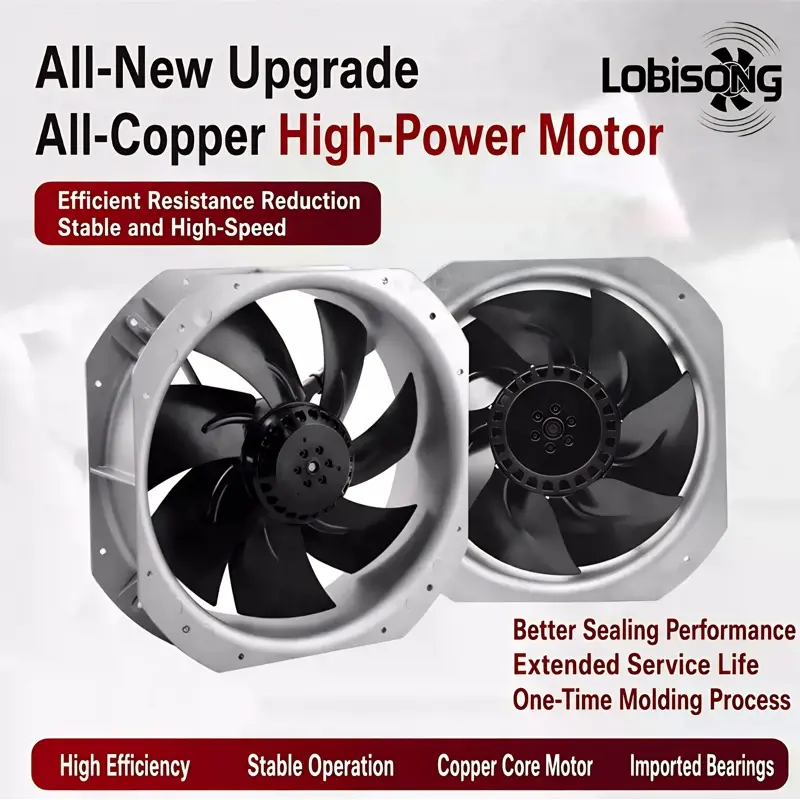
Shopping malls look calm from the atrium, yet their plant rooms work hardest when foot traffic peaks. Behind the scenes, air-handling units, chilled-water pumps, transformers and telecom closets generate steady heat on busy weekends. A commercial industrial fan built for continuous duty keeps these sealed spaces within a safe temperature band.
A regional mall's AHU plant room and electrical room ran fine for years at moderate occupancy. On peak shopping days the VFD cabinets and enclosed transformer room drifted above their safe limits, and the timer exhaust fans could not sustain airflow through the crowd period. The team specified 24/7 commercial industrial fan units with washable filter screens, matched to static pressure and airflow (CFM). Enclosure temperature then held steady.
High-frequency ventilation means sustaining a defined airflow against fixed resistance day and night while the load swings. The difference between a plant room that survives a heat wave and one that trips a breaker is often the duty rating of the ventilation hardware.
A commercial industrial fan moves heat out of the enclosure before it accumulates. The heat source is continuous: VFD losses, transformer core loss and compressor discharge feed the same small volume. The fan must beat the room's static pressure and deliver the airflow (CFM) needed to cap the ambient temperature.
Proper thermal management means matching the fan curve to the system curve, not frame size alone. Outer-rotor brushless motors with pure-copper motor winding hold efficiency across the speed range, and precision ball bearings keep the unit stable during long continuous run. ASHRAE guidance for equipment spaces reinforces steady, adequate airflow rather than intermittent bursts.commercial industrial fan, mall equipment room ventilation, AHU plant room cooling, continuous duty fan
A mall plant room combines several heat sources that peak together. VFD cabinets, transformer core loss and compressor discharge rise as crowds arrive, so the enclosure sees its worst case during shopping peaks rather than at night. Sizing for the daytime peak prevents the temperature creep that harms sensitive devices.commercial industrial fan, mall equipment room ventilation, AHU plant room cooling, continuous duty fan
Duty cycle defines how long a fan runs within a given period. A mall plant room needs a near-100% duty cycle, because the unit may run for thousands of hours. Sizing starts from the heat load, then selects the airflow (CFM) and the static pressure to beat. A well-chosen commercial industrial fan matches this curve without forcing the motor into overload.
Specifiers should confirm the continuous-run rating, not a short-test figure. A unit rated for intermittent use will overheat its motor winding in 24/7 service, raising failure risk during the peak the room must survive.
The bearing and motor winding decide how many hours a unit delivers before maintenance. Precision ball bearings tolerate the speed changes that crowd-driven load swings cause, while a pure-copper winding dissipates heat better than lower-cost alternatives. Good heat dissipation protects the enclosure and its devices.
A commercial industrial fan with precision components also supports quiet operation. Many plant rooms now choose EC variants that modulate speed with the load, trimming noise level when closed and pushing full airflow when crowds arrive.
Mall plant rooms sit near loading docks, dust and moisture, so filtration matters. Washable snap-on filter screens capture dust without a consumable cycle, and an IP54 enclosure rating keeps the motor safe from grease and humidity. The EN 60529 IP code, required for CE-marked equipment, defines that protection level.
Filter choice affects static pressure: a clogged screen raises resistance and drops airflow (CFM). Washable screens let staff restore performance with a quick rinse, keeping the duty cycle uninterrupted and protecting the fan from dust.
Plant rooms often share a wall with corridors, offices or retail. A 24/7 fan must keep its noise level low or complaints follow. Outer-rotor brushless designs run smoothly, and isolation pads cut transmission to adjacent areas.
Selecting a unit with a low sound rating protects both equipment and occupant comfort. Where a telecom closet sits above a restaurant, even a few decibels matter, so the fan should be chosen with its noise curve reviewed alongside airflow (CFM) and static pressure figures.
Electrical and transformer rooms rarely get a second chance, so redundancy is standard practice. NFPA guidance for electrical rooms stresses reliable cooling, and a second commercial industrial fan on standby covers the first unit's service window without dropping protection.
Redundancy also softens supply risk. Two smaller units often beat one large unit, because a single failure then leaves partial cooling rather than none, and maintenance can rotate without shutting the room down.
Buyers should check the duty-cycle rating, the IP rating and the documented noise level first. Confirm the airflow (CFM) and static pressure match the room's heat load, then verify the motor winding and bearing for continuous run.
A commercial industrial fan that meets these points turns a heat-prone plant room into a stable asset. Inspect the fan curve, the enclosure rating and the service access before committing, and the mall keeps its equipment rooms safe through every peak season.
Shopping-mall equipment rooms face a unique test: heat that builds with the crowd and never stops on busy days. Sustained ventilation depends on hardware rated for the job. A commercial industrial fan sized for 24/7 duty, protected by a washable filter screen and an IP-rated enclosure, holds the temperature band through peak load and protects the VFDs and transformers. The right choice pairs reliability with low noise level and sensible redundancy, keeping the plant room quiet, clean and cool.
What duty cycle rating does a mall plant room fan need?
Answer: A mall plant room demands a near-continuous duty cycle because heat loads persist for thousands of hours each season. A unit rated only for intermittent duty will overheat its motor winding under 24/7 service and fail during peak crowds. Specifiers should request documented continuous-run data, not a short bench test, and confirm the bearing and motor winding suit sustained operation.
How does static pressure affect fan selection for equipment rooms?
Answer: Static pressure is the resistance the fan must overcome from ducts, louvers and filter screens. Undersizing against this value drops airflow (CFM) and lets the enclosure temperature climb. Correct selection matches the fan curve to the system curve at the room's operating point, so the required airflow is delivered even with a partially loaded filter screen installed.
Why are washable filter screens better than disposable ones in malls?
Answer: Washable filter screens avoid the recurring cost and stockout risk of disposable media in dust-prone mall plant rooms. Staff restore performance with a quick rinse, keeping the duty cycle uninterrupted. This protects the motor and bearing from dust-bound strain and helps hold static pressure steady, which matters more than a marginally lower first purchase price for a room that runs all year.
Can a single commercial industrial fan cool a transformer room without backup?
Answer: A single fan can cool a small transformer room, yet NFPA-aligned practice favours redundancy for critical electrical spaces. A second unit on standby covers the first during service and avoids a total cooling loss. For rooms with high peak load, two smaller fans often outperform one large unit because a failure then leaves partial airflow rather than none, protecting the enclosure.
Which noise level is acceptable for a plant room next to retail?
Answer: A plant room beside offices or retail should target a low documented noise level, since 24/7 operation makes even small differences noticeable. Outer-rotor brushless motors and isolation mounts cut transmission, and EC speed control lowers sound when the mall is closed. Review the noise curve alongside airflow (CFM) and static pressure, because the quietest choice still must deliver the required cooling duty.

2026/09/30
Cement cabinets choke on dust. Learn the filter rule for an industrial cabinet cooling fan: G4/F7 media, IP rating, and pre-filter care.

2026/10/07
Right wall-mount height for an industrial axial exhaust fan: room volume, free clearance, brackets, and recirculation control.

2026/10/08
An ec motor fan links to BMS via Modbus, 0-10V and PWM for demand-based cooling, energy scheduling and automatic sensor-driven speed control.

2026/10/06
A radial exhaust fan removes grease, fumes, and odors from food-processing workshops with capture velocity and hygienic washdown design.

2026/10/05
Learn antistatic treatment for industrial cabinet cooling fan in electronics workshops—ESD-safe housing, ionizable plastics, and cleanroom compatibility.

2026/10/04
Discover how a brushless dc servo delivers precise wind speed control for laboratory cooling fans with closed-loop PID feedback and laminar airflow.
