
 EN
EN
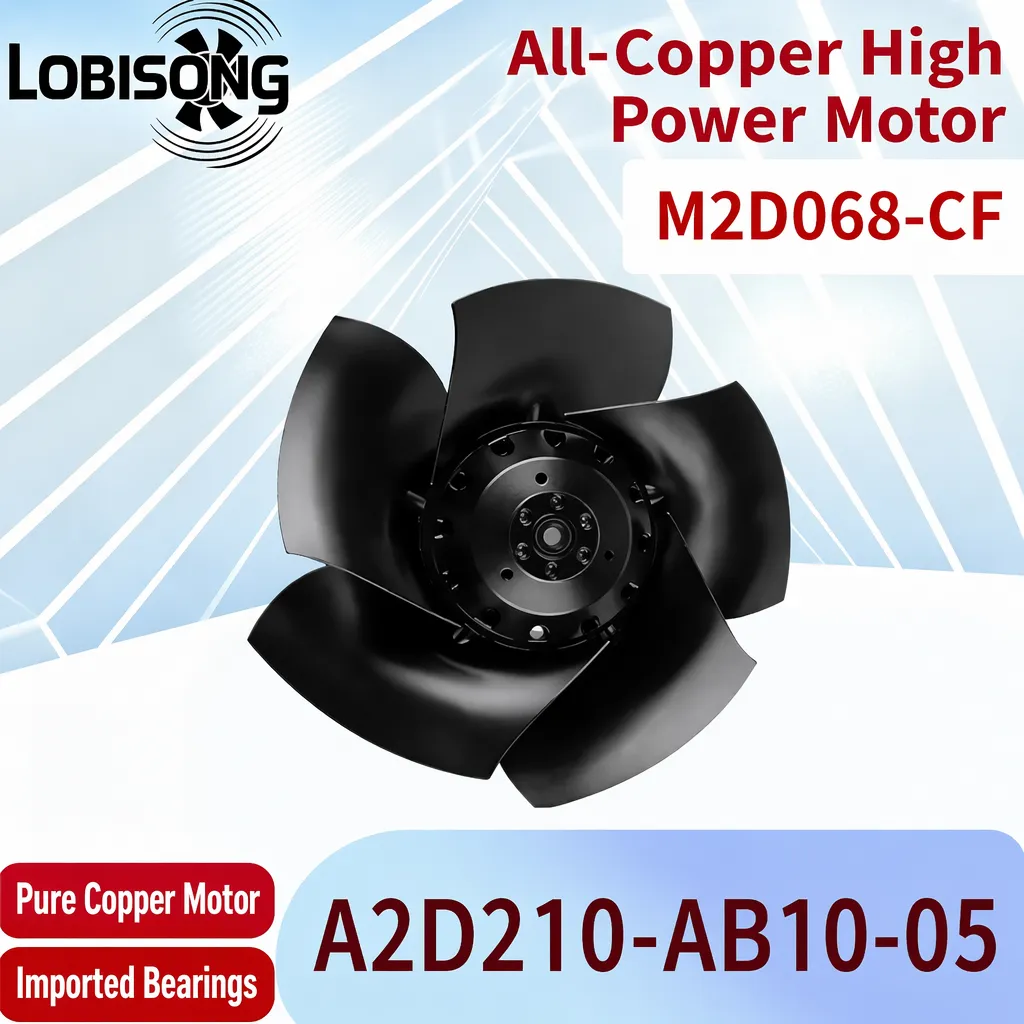
Why DC Axial Fan Manufacturers Optimize Motor Structure for Energy Efficiency Promotion
If you have been evaluating sourcing options for industrial cooling solutions recently, you will have noticed that dc axial fan manufacturers are placing significantly more emphasis on motor structure than they did even five years ago. The shift is not incidental. It comes from a convergence of regulatory pressure, rising energy costs, and real technical progress in brushless motor architecture — and understanding the reasoning behind it helps buyers make more informed procurement decisions.
From my experience working with industrial thermal management applications, one of the most common misconceptions I encounter is treating motor efficiency as a static datasheet number. The datasheet shows peak efficiency at rated speed, but in real-world installations, fans spend the majority of their operating hours at 30–70% of rated speed. It is at these partial-load conditions where motor structure choices have the largest measurable impact — and where the gap between an optimized and an unoptimized motor becomes most financially significant.
The Efficiency Gap in Traditional Motor Designs
Conventional AC induction motors used in earlier generations of axial fans typically achieve electrical-to-mechanical efficiency in the 60–80% range. The remainder of input power is lost primarily as heat in rotor resistance (I²R losses) and through magnetic core losses in the stator laminations. For a fan running continuously in an industrial environment, that efficiency gap translates directly into energy costs that accumulate over years of operation.
DC axial fan manufacturers recognized early that the path to higher energy efficiency ran through the motor architecture itself. Brushless DC (BLDC) and EC (electronically commutated) motor designs address the core inefficiencies of induction motors by replacing the copper-wound induction rotor with a permanent magnet rotor assembly. This eliminates rotor copper losses entirely — one of the primary sources of inefficiency in conventional motor designs.
Key Motor Structure Optimizations in Modern DC Axial Fan Manufacturing
When dc axial fan manufacturers describe motor structure optimization for energy efficiency, they are typically referring to a set of interrelated design decisions that collectively determine how much of the electrical input reaches the airstream as useful work:
- Permanent magnet rotor design: By replacing the induction rotor with high-energy permanent magnets (typically neodymium-iron-boron alloys), manufacturers eliminate the rotor excitation losses that account for a significant fraction of induction motor energy waste. Permanent magnet designs achieve peak efficiencies above 90% — with some EC outer rotor axial fan configurations reported to exceed 92% at rated operating conditions.
- EC and BLDC commutation architecture: Electronically commutated motors synchronize the stator switching sequence with the rotor position using hall-effect sensors or sensorless back-EMF detection. This enables the motor to maintain high efficiency across a much wider speed range than slip-dependent induction motors, which is particularly valuable in automatic speed control energy efficient axial exhaust fan applications where the fan modulates speed in response to temperature signals.
- Stator winding optimization: Advanced winding configurations reduce copper losses in the stator windings by optimizing the number of turns, conductor cross-section, and slot fill factor. For ec brushless low power energy efficient axial blower designs, stator optimization directly reduces resistive heating losses, especially at partial load.
- IE motor efficiency class alignment: Many dc axial fan manufacturers are engineering their motor designs to meet or exceed IE3 (premium efficiency) and ie4 motor high energy efficient axial ventilator standards. The IE4 super-premium efficiency class requires the near-elimination of rotor copper losses — a requirement that essentially mandates permanent magnet or synchronous reluctance motor topologies rather than traditional induction designs.
Regulatory and Market Forces Driving Motor Structure Investment
Motor structure optimization among dc axial fan manufacturers is not purely about competitive differentiation. It is increasingly mandated by regulation. The European Union's Ecodesign Regulation sets minimum energy efficiency tiers for fans supplied into the European market, with successive requirements that have tightened over time. Buyers sourcing fans for European projects must now confirm that the fan products they select meet applicable ErP efficiency tiers — a requirement that has directly accelerated the transition toward BLDC and EC motor architectures among export-focused manufacturers.
Market data reinforces the same picture. The global EC axial fan segment has been growing at a compound annual growth rate of approximately 6.3%, with the market valued around USD 2.5 billion and projected to approach USD 4.1 billion by 2034. This sustained growth reflects real demand from industrial buyers upgrading aging AC fan installations and from OEM equipment builders specifying energy-efficient components in new designs. DC axial fan manufacturers investing in motor structure optimization are positioning themselves for this expanding segment.
Why Partial Load Performance Changes the Efficiency Calculation
I would not go so far as to say that rated-speed efficiency figures are meaningless — they are not — but in most industrial applications, the number that actually determines operating cost is the part-load efficiency profile. EC and BLDC motor designs maintain their efficiency advantage most clearly at 40–80% of rated speed, which is where variable-speed cooling applications actually operate the majority of the time.
When I first encountered the price difference between standard DC axial fans and EC motor variants, the premium seemed steep. It was not until working through the energy savings calculation over a three-to-five year horizon that the lifecycle cost advantage became clear. Industry data from comparable industrial applications suggests that upgrading from conventional induction or brushed motor fans to EC outer rotor axial fan designs can reduce energy consumption by 30–50%, with BLDC configurations showing reductions of up to 40% in air handling unit applications. At industrial electricity rates, that level of savings typically justifies the premium within two to three years of operation.
What This Means When Sourcing From DC Axial Fan Manufacturers
For trading companies and procurement buyers evaluating dc axial fan manufacturers, the motor structure optimization trend has practical implications for supplier selection. A manufacturer that has invested in EC or BLDC motor architecture for its axial fan product line will generally be better positioned to support buyers facing energy efficiency compliance requirements, particularly for the European market.
When evaluating dc axial fan manufacturers on energy efficiency grounds, consider asking for efficiency curves across the full speed range — not just peak efficiency at rated conditions. A manufacturer that can provide part-load efficiency data at 50% and 70% of rated speed is demonstrating genuine transparency about real-world performance. For applications involving automatic speed control energy efficient axial exhaust fan configurations, this data is directly actionable for energy savings calculations.
Lebisen Fan, based in Guangdong, has developed its product range to include EC axial fan and BLDC motor variants precisely to address this market requirement. The EC and BLDC technology investments position the company to serve trading company buyers whose downstream customers in Europe and North America need fan products that meet current and evolving efficiency standards — without requiring buyers to source from separate motor and fan component suppliers.
Conclusion
The reason dc axial fan manufacturers are optimizing motor structure for energy efficiency promotion is ultimately straightforward: the regulatory environment requires it, the market is rewarding it, and the technology to achieve it is now commercially proven at scale. For buyers, understanding the distinction between motor architectures — and knowing which efficiency metrics to request from suppliers — is the most direct path to sourcing products that deliver on energy savings claims over their operational lifetime.






