
 EN
EN
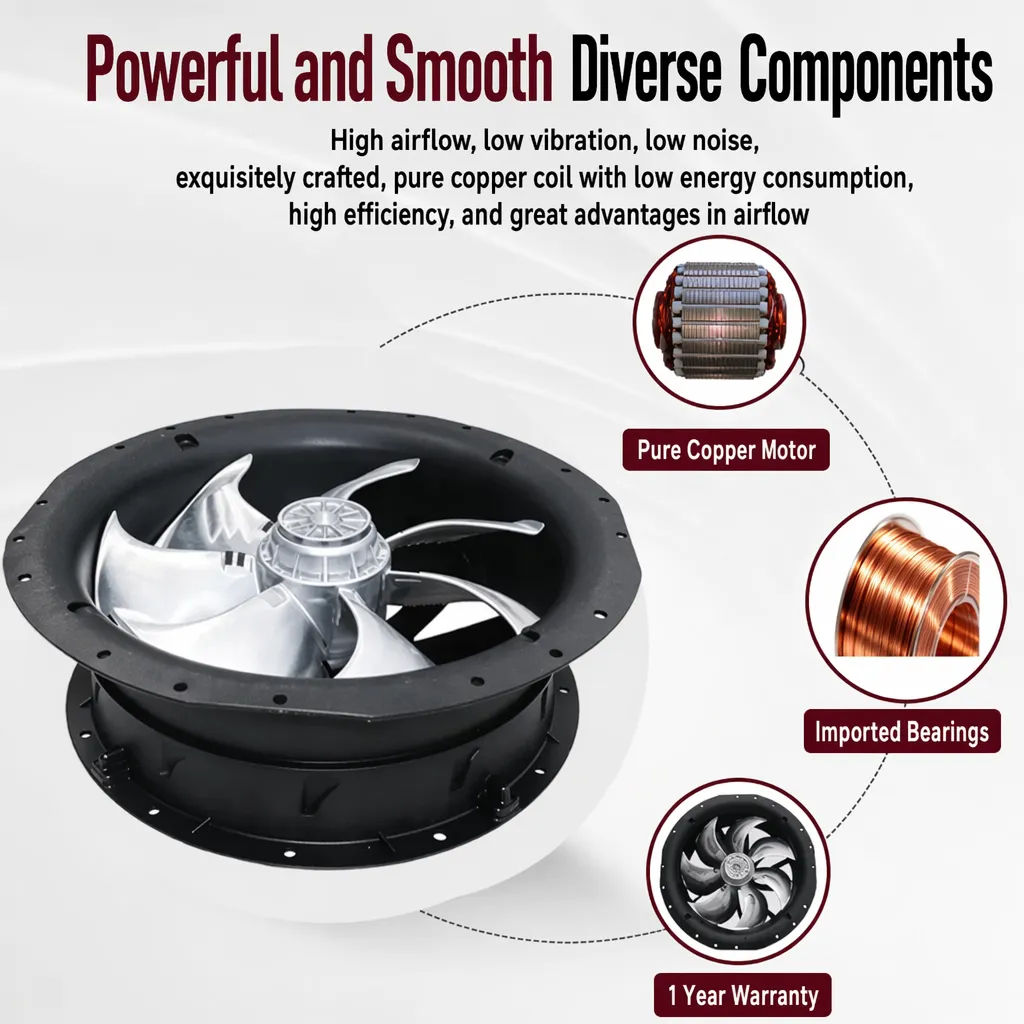
Why DC Motor Driver Integrate Over Current Short Circuit Protection for Cabinet Fan Safety
Working with cabinet cooling systems across industrial and commercial enclosures, one question comes up consistently: why does a motor driver brushless circuit need integrated overcurrent and short-circuit protection? It seems like an extra layer of complexity. But when you look at what actually happens inside an electrical cabinet when a fan motor stalls or a winding fault occurs, the answer becomes clear — and the stakes become difficult to ignore.
The Risk Environment: What Makes Cabinet Fan Applications Different
Cabinet fans operate inside enclosed electrical enclosures housing sensitive components — control boards, power supplies, PLCs, and sometimes high-value industrial equipment. Unlike open-air applications, a fault in a cabinet fan motor does not just damage the fan itself. It can propagate heat and electrical disturbance into the cabinet environment, affecting everything nearby.
Have you ever considered what happens when a cabinet fan motor locks up while the driver motor dc continues supplying current? The current draw can spike to several times the rated operating level within milliseconds. Without protection, that current surge flows continuously through the motor windings and driver circuitry. Winding insulation degrades rapidly under sustained overcurrent, magnets can permanently demagnetize from heat stress, and the driver MOSFETs or gate circuits absorb power beyond their design rating.
The enclosed cabinet environment makes thermal recovery slow, as heat cannot dissipate freely. Damage accumulates faster than it would in open-air installations. This is why any serious motor driver brushless design intended for cabinet applications must account for protection from the start — not as an optional add-on.
How Overcurrent Protection Works in a Brushless Motor Driver
A motor driver brushless circuit continuously monitors the phase current flowing through the motor during commutation. Inside the driver IC, a comparator circuit compares real-time current readings against a configurable threshold. When current exceeds this threshold (whether from a stall event, a blocked fan blade, or a winding-to-winding fault), the driver disables the gate signals to the bridge MOSFETs within microseconds.
The response speed matters here. In a short-circuit fault, the current can rise from normal operating level to several hundred percent above rated within a fraction of a millisecond. A protection circuit that responds in microseconds rather than milliseconds prevents the energy from reaching a level that causes physical damage to the silicon, driver traces, or motor windings.
One engineering observation that tends to be underappreciated: the protection threshold in a motor driver brushless design must be calibrated carefully to handle motor starting currents without nuisance tripping. BLDC fans draw a brief inrush current at startup that is higher than steady-state operating current. A threshold set too conservatively will trigger false shutdowns during normal start sequences. A threshold set too aggressively may miss genuine overcurrent events before damage begins. Balancing these requirements is part of what separates a well-engineered integrated drive brushless pmdc motor design from a basic driver circuit.
Short-Circuit Protection: A Different Response Profile
Short-circuit faults — whether from a winding-to-frame fault, a damaged cable, or a failed MOSFET in the bridge — present a different protection challenge than sustained overcurrent. Current rises faster and higher, and the window before damage occurs is shorter.
In BLDC driver design, short-circuit protection typically relies on dedicated current sense comparators separate from the slower overcurrent detection path. These comparators operate in the nanosecond to low-microsecond range and are designed to disable the entire gate drive output immediately upon detecting a current spike above the short-circuit threshold. Some designs use desaturation detection on the bridge transistors as a parallel mechanism.
For cabinet fan applications specifically, short-circuit protection in the driver motor dc circuit serves a dual function: it protects the motor from instantaneous winding damage, and it prevents the fault from propagating into the cabinet power supply and other connected loads. An unprotected short in a fan driver can cause supply voltage dips that reset or corrupt connected control systems — a consequence that extends well beyond the fan itself.
Why Continuous Overload Is Equally Dangerous
It is easy to focus on sudden fault events, but continuous overload below the short-circuit threshold is often the more common damage pathway in real installations. Consider a compact cabinet ec axial fan driver unit running in a partially blocked airflow condition — the motor works harder to maintain speed, drawing current above its rated level but below any fault threshold the driver recognizes as a hard fault.
Thermal protection addresses this scenario. A good motor driver brushless design includes internal or external temperature sensing that reduces power delivery or initiates a controlled shutdown when the driver or motor thermal state reaches a safe limit. Toshiba's technical documentation for cooling fan BLDC controllers explicitly lists thermal shutdown, overcurrent protection, and motor lock detection as integrated fault detection functions — treating them as a package rather than optional features.
Continuous overload below fault thresholds silently degrades motor insulation and demagnetizes permanent magnets over time. The motor may operate for weeks or months before a measurable performance drop occurs. By then, the damage is not recoverable without motor replacement. A well-integrated motor driver brushless with thermal monitoring can catch this degradation mode early enough to allow intervention before replacement becomes necessary.
IEC Standards and the Design Baseline
IEC motor circuit protection standards provide the baseline framework for protection integration in motor driver brushless designs. The relevant challenge — balancing inrush current accommodation against fault clearing speed — is recognized explicitly in these standards. A driver circuit that meets IEC requirements for motor branch circuit protection must clear short-circuit faults rapidly while avoiding nuisance tripping from the motor's own transient current profile during startup and commutation transitions.
For international buyers sourcing cabinet fan systems for European markets, this matters from a compliance documentation perspective. A driver motor dc design that integrates overcurrent and short-circuit protection in a traceable, testable way supports CE declaration and ErP compliance documentation that trading company buyers need when selling into European projects.
Practical Implications for Cabinet Fan Selection
When evaluating a BLDC fan driver for cabinet cooling applications, the protection feature set should be treated as a core specification rather than a secondary consideration. Verify that the datasheet explicitly states:
- Overcurrent threshold and response time for the motor driver brushless
- Short-circuit detection method and shutdown response time
- Thermal shutdown temperature and hysteresis
- Motor lock detection (stall protection) behavior and auto-restart policy
A supplier whose driver motor dc documentation omits these specifications may not have implemented them, or may have implemented them without characterization testing. In cabinet fan applications where a single fan failure can cause cascading thermal issues, undocumented protection behavior is a procurement risk that experienced buyers recognize.
Matching the Driver to the Application
Sourcing a motor driver brushless from a different manufacturer than the motor creates a common integration failure mode: incompatible protection thresholds discovered only after installation. When the motor and driver are matched and tested as a unit — as in a well-designed integrated drive brushless pmdc motor combination — the overcurrent threshold is calibrated against the specific motor's winding resistance and back-EMF profile, ensuring that protection responds correctly under the actual operating conditions of that motor.
For trading company buyers sourcing for panel builder or system integrator customers in Europe and North America, specifying a matched motor driver brushless combination reduces the technical risk that downstream customers encounter during integration and commissioning. The thermal and electrical protection features are only as reliable as the match between the driver's protection parameters and the motor's actual fault behavior.
Conclusion
Overcurrent and short-circuit protection in a motor driver brushless circuit is not a marketing feature — it is a fundamental engineering requirement for any application where a fan fault can cause collateral damage to the equipment it is cooling. In cabinet fan applications, where the consequences of an unprotected fault extend beyond the fan itself, integrated protection is what separates a driver motor dc design suitable for this environment from one that is not. Understanding what protection the driver implements, how it responds, and how its thresholds are calibrated against your specific motor is the right starting point for cabinet fan system selection.






