 EN
EN
What filter matching rule for dust proof cabinet cooling fan operating in cement factories
2026/09/30
Cement cabinets choke on dust. Learn the filter rule for an industrial cabinet cooling fan: G4/F7 media, IP rating, and pre-filter care.

2026/09/03
Why old factories bleed energy through constant-speed fans
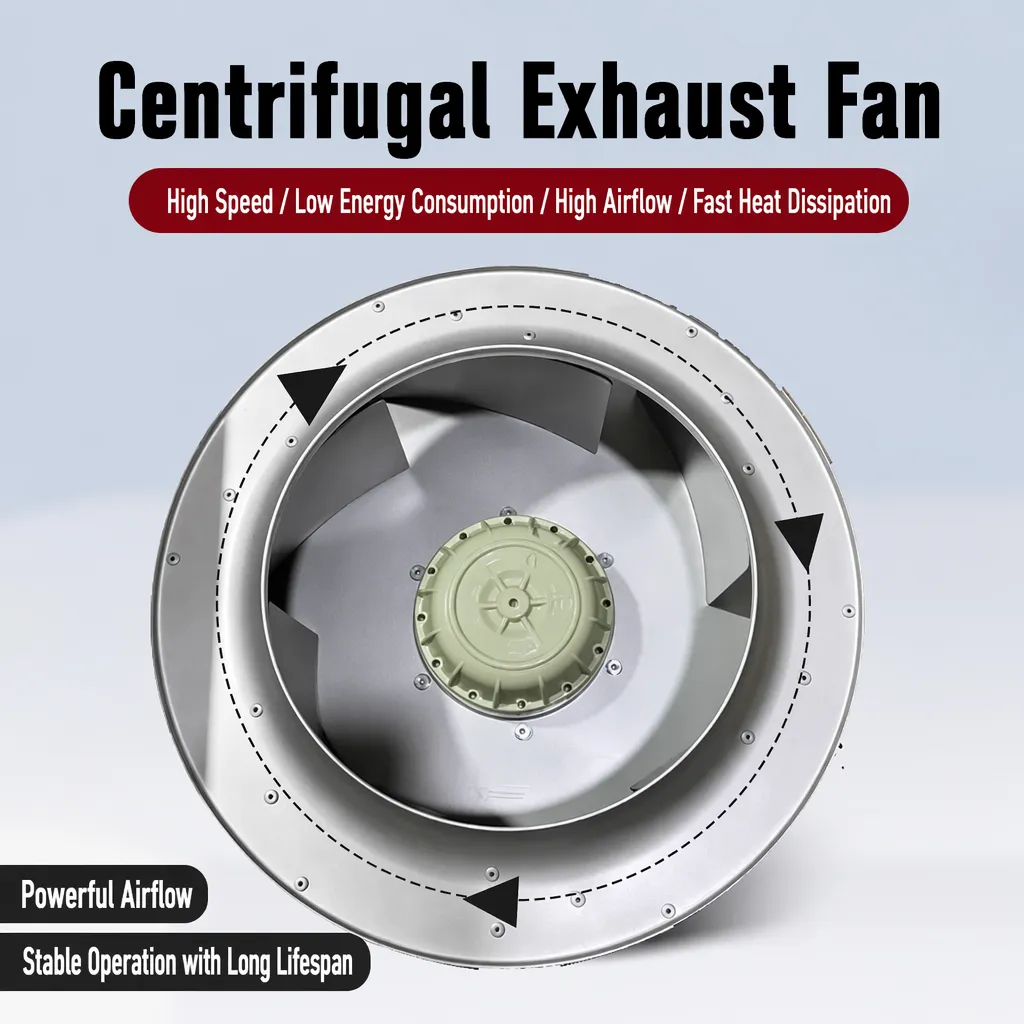
Most legacy systems run a fixed-speed motor against a damper, which wastes energy the moment demand drops. An EC backward curved centrifugal blower avoids that waste by slowing the wheel instead of throttling the outlet. Constant-speed fans consume roughly the same power at half load as at full load, because the motor ignores the actual pressure requirement and simply fights the closed damper. Over a year of mixed production, those idle kilowatts add up to a surprising share of the plant's electricity bill, and the heat that wasted energy becomes also loads the cooling system.
Few factories run at design peak around the clock. Shift patterns, seasonal outside air, and varying batch sizes mean the fan spends most hours at partial load. That is exactly where fixed-speed designs perform worst, because they were sized for the rare worst case and then throttled the rest of the time. A plant drawing less than full air for eighty percent of the week gains almost nothing from an oversized constant-speed unit, while a speed-controlled design tracks the load and trims consumption in real time. Recognizing this duty profile is the first step in any credible energy retrofit.
A textile mill built in the 1990s exhausted heat and lint through large belt-driven centrifugal fans that ran continuously at fixed speed. Even at night, when production paused, the fans kept pulling air and the motors kept drawing current. The site had completed lighting and compressor upgrades, yet the ventilation load remained the single largest uncontrolled draw on the meter. Management wanted to cut the figure without rebuilding the ductwork or stopping production for long.
Engineers replaced the belt drives with direct-coupled EC backward curved centrifugal blower units controlled by duct static pressure. Because the wheels slowed during low-demand periods, motor current fell sharply versus the old fixed-speed baseline. The plant avoided duct reconstruction by matching the new units to the existing openings, and commissioning happened during a scheduled weekend. Within the first operating season, the ventilation energy dropped enough that the project recovery beat the internal payback target, while lint buildup also eased thanks to steadier, better-matched airflow.

The EC motor integrates the electronics into the rotor, switching direct current without the brushes and losses of older designs, so it holds high efficiency across a wide speed range instead of only at one rated point. Pair that with a backward curved impeller, whose blade shape resists stall and sustains pressure even as volume changes, and the wheel stays near its peak efficiency island at part load. Unlike a forward-curved wheel that can surge, the backward curved profile keeps the airstream stable, which is why it suits variable-speed duty where the operating point moves constantly.
Throttling a damper raises system resistance so the fan works against itself, and bypassing air dumps conditioned volume straight to waste. Both leave the motor at full speed while throwing away the benefit. A speed-controlled EC backward curved centrifugal blower instead moves the operating point along the fan curve to meet the real demand, so power scales with the cube of the airflow reduction. Halving the required volume can cut energy toward an eighth of the original draw, which is the core reason variable speed wins on any duty with a shifting load.
Energy programs increasingly reference motor efficiency classes such as IE3 and IE4, and regional rules like the EU Ecodesign framework set minimums that older fixed-speed units fail. Specifying an EC backward curved centrifugal blower against these benchmarks keeps a retrofit compliant and future-proof. AMCA and ISO 14694 help verify the published performance, while ISO 50001 gives plants a structure for tracking the savings so the project survives staff turnover and budget reviews. Citing the references also keeps supplier claims comparable instead of vague.
Buyers should confirm the duty point on the performance curve, the control signal type, and the pressure sensor location, because a badly placed sensor makes even a good blower hunt. Request the part-load efficiency map, not just the nameplate, and verify the enclosure rating for the lint or dust present. On the operation side, log motor current and static pressure weekly, and review the speed profile to confirm the unit is actually slowing during low demand. A centrifugal blower manufacturer can tune the setpoint, but only measured data shows whether the savings hold after the commissioning team leaves.
An EC backward curved centrifugal blower turns a fixed electricity drain into a load that follows the process. For old factories chasing lower bills without new ductwork, that shift from constant speed to controlled speed is where the savings actually live.
Why do these blowers suit old factories?
Older plants often run fixed-speed fans against dampers, wasting energy whenever demand drops. An EC backward curved centrifugal blower matches airflow to the real load through built-in speed control, so it slows during quiet hours instead of fighting a closed damper. That tracks the partial-load profile most factories actually have, cutting consumption without rebuilding the existing ductwork.
How much energy can variable speed control save?
Fan power scales roughly with the cube of airflow, so halving the required volume can cut energy toward an eighth of the fixed-speed draw. Real savings depend on how often the plant runs below peak, which is common in shift-based factories. The biggest gains appear where dampers or bypass were previously throttling a constant-speed motor against itself.
What does the backward curved impeller do differently?
The blade shape resists stall and holds pressure as volume changes, keeping the airstream stable across a moving operating point. That stability is why it suits variable-speed duty, where a forward-curved wheel might surge. The profile also sustains efficiency near part load, so the wheel stays close to its peak efficiency island instead of falling off the curve.
Which motor efficiency class should a retrofit target?
Aim for IE3 as a floor and IE4 where the duty justifies it, since regional rules such as the EU Ecodesign framework already set minimums that older units fail. Specifying against these classes keeps the project compliant and comparable across suppliers. Always review the part-load efficiency map, not only the single nameplate point, because that is where the fan actually runs.
Can existing ductwork be kept during the retrofit?
In many cases yes, because the new units are matched to the existing openings and static pressure rather than resizing the whole system. A site survey confirms the duty point and any filter or damper changes needed. Keeping the ductwork limits downtime and cost, which is why these upgrades often avoid a full reconstruction.
How is the savings verified after installation?
Log motor current and duct static pressure weekly, and review the speed profile to confirm the wheel actually slows during low demand. Compare the measured draw against the old fixed-speed baseline over a full season. The commissioning team can tune the setpoint, but only ongoing data proves the savings survive after the work ends.

2026/09/30
Cement cabinets choke on dust. Learn the filter rule for an industrial cabinet cooling fan: G4/F7 media, IP rating, and pre-filter care.

2026/10/07
Right wall-mount height for an industrial axial exhaust fan: room volume, free clearance, brackets, and recirculation control.

2026/10/08
An ec motor fan links to BMS via Modbus, 0-10V and PWM for demand-based cooling, energy scheduling and automatic sensor-driven speed control.

2026/10/06
A radial exhaust fan removes grease, fumes, and odors from food-processing workshops with capture velocity and hygienic washdown design.

2026/10/05
Learn antistatic treatment for industrial cabinet cooling fan in electronics workshops—ESD-safe housing, ionizable plastics, and cleanroom compatibility.

2026/10/04
Discover how a brushless dc servo delivers precise wind speed control for laboratory cooling fans with closed-loop PID feedback and laminar airflow.
