 EN
EN
What filter matching rule for dust proof cabinet cooling fan operating in cement factories
2026/09/30
Cement cabinets choke on dust. Learn the filter rule for an industrial cabinet cooling fan: G4/F7 media, IP rating, and pre-filter care.

2026/09/02
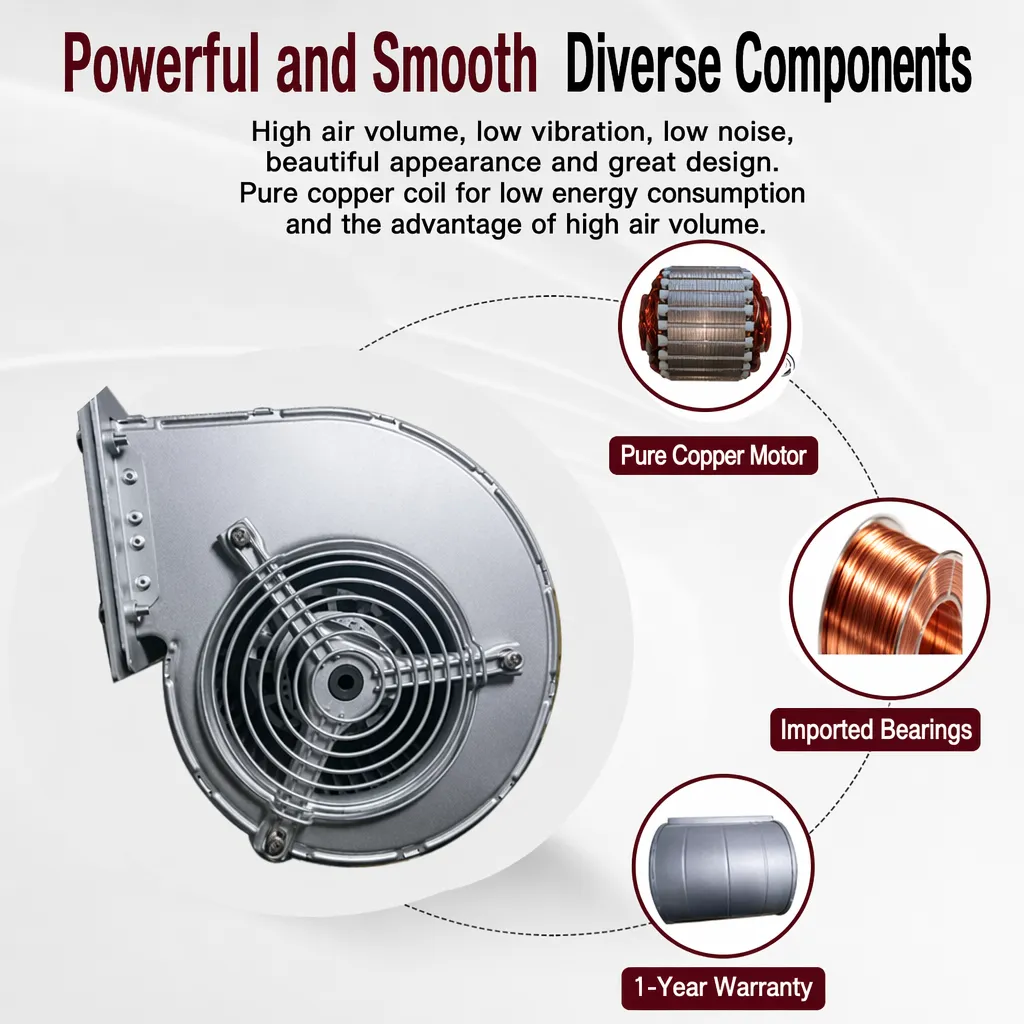
Electronically commutated (EC) fan technology represents a major evolution in high‑efficiency air movement systems. An EC motor is fundamentally a brushless DC motor with built‑in commutation electronics and inverter drives housed directly inside the motor hub. Because modern EC centrifugal fans and drives unite the electric motor and speed controller into a single compact housing, the hardware natively speaks digital control languages right out of the box.
Adding an external communication gateway or connecting directly to a Building Management System (BMS) allows engineers to adjust operating parameters remotely. Traditional AC motor setups rely on external variable frequency drives (VFDs) placed inside distant control cabinets, creating complex wiring layouts. Integrated EC fans and drives eliminate this architectural split entirely. The control intelligence stays directly on the motor shaft, allowing power connections and digital communication buses to run along streamlined pathways for effortless smart ventilation deployment.
Integrated EC fans and drives accept digital control inputs across multiple physical interfaces and communication protocols:
Facilities operators can read real‑time rotational speed, current draw, internal electronics temperature, and operational fault codes without visiting the mechanical room. Standardizing on open protocols like Modbus or BACnet shortens commissioning schedules while delivering deep visibility into overall system health.
Remote capability goes far beyond starting, stopping, or altering simple fan speed. Connecting EC centrifugal fans and drives to an IoT gateway unlocks complete remote parameter configuration and continuous asset monitoring:
Enabling direct parameter writes through central management software allows remote teams to optimize smart ventilation performance across dozens of distributed buildings from a single centralized dashboard.
Selecting the right motor drive architecture impacts operational efficiency, system wiring complexity, and long‑term diagnostic capabilities.
| Architecture Type | Control Flexibility | System Efficiency | Wiring Complexity | Remote Monitoring Depth |
|---|---|---|---|---|
| Traditional AC Motor + VFD | Basic (Analog) | Moderate | High (Separate Panels) | Limited Status Readouts |
| Integrated EC Fans & Drives | High (Native Fieldbus) | Excellent | Low (Single Power/Bus Cable) | Comprehensive Local Data |
| EC + IoT Gateway Integration | Unlimited (Cloud/IP) | Excellent | Minimal (Wireless/IP Ready) | Full Remote Monitoring |
While legacy AC motors paired with external VFDs provide basic speed control, they require heavy electrical panels and offer limited diagnostic data. Integrated EC fans and drives combined with modern gateways form the optimal foundation for scalable IoT fan control, eliminating costly control cabinet construction.
Consider a multi‑building office complex running dozens of legacy air‑handling units without centralized diagnostic oversight. The facility suffered from persistent balancing issues, high energy consumption, and high operational costs driven by manual on‑site troubleshooting. Upgrading the infrastructure to high‑efficiency EC centrifugal fans and drives equipped with Modbus communication and IP gateways transformed facility operations.
Building managers gained the capability to adjust pressure setpoints remotely based on real‑time zone occupancy. Continuous operational data allowed maintenance personnel to resolve flow imbalances before tenant complaints occurred. Eliminating unnecessary manual technician visits reduced emergency maintenance calls by roughly 70%, proving that remote smart ventilation parameters directly lower long‑term operating overhead.
Exposing ventilation controls to remote networks requires strict network architecture planning:
Because connected EC centrifugal fans and drives respond immediately to incoming network commands, robust cybersecurity policies are essential to safeguard critical industrial ventilation infrastructure.
Implementing scalable IoT fan control strategies requires partnering with manufacturing specialists who deliver fully validated hardware and software protocols. Sourcing components from experienced suppliers with automated production lines and rigorous testing infrastructure—such as Lobisong—ensures every EC centrifugal fans and drives package operates flawlessly under demanding field conditions.
Suppliers offering fully documented Modbus register maps, certified ingress protection, and comprehensive international export documentation streamline integration across Europe, India, Russia, and the Americas. Precision‑manufactured EC fans and drives from reliable partners like Lobisong simplify field commissioning, accelerate digital transformation, and deliver durable performance across modern remote monitoring applications.

2026/09/30
Cement cabinets choke on dust. Learn the filter rule for an industrial cabinet cooling fan: G4/F7 media, IP rating, and pre-filter care.

2026/10/07
Right wall-mount height for an industrial axial exhaust fan: room volume, free clearance, brackets, and recirculation control.

2026/10/08
An ec motor fan links to BMS via Modbus, 0-10V and PWM for demand-based cooling, energy scheduling and automatic sensor-driven speed control.

2026/10/06
A radial exhaust fan removes grease, fumes, and odors from food-processing workshops with capture velocity and hygienic washdown design.

2026/10/05
Learn antistatic treatment for industrial cabinet cooling fan in electronics workshops—ESD-safe housing, ionizable plastics, and cleanroom compatibility.

2026/10/04
Discover how a brushless dc servo delivers precise wind speed control for laboratory cooling fans with closed-loop PID feedback and laminar airflow.
