 EN
EN
What filter matching rule for dust proof cabinet cooling fan operating in cement factories
2026/09/30
Cement cabinets choke on dust. Learn the filter rule for an industrial cabinet cooling fan: G4/F7 media, IP rating, and pre-filter care.

2026/09/11
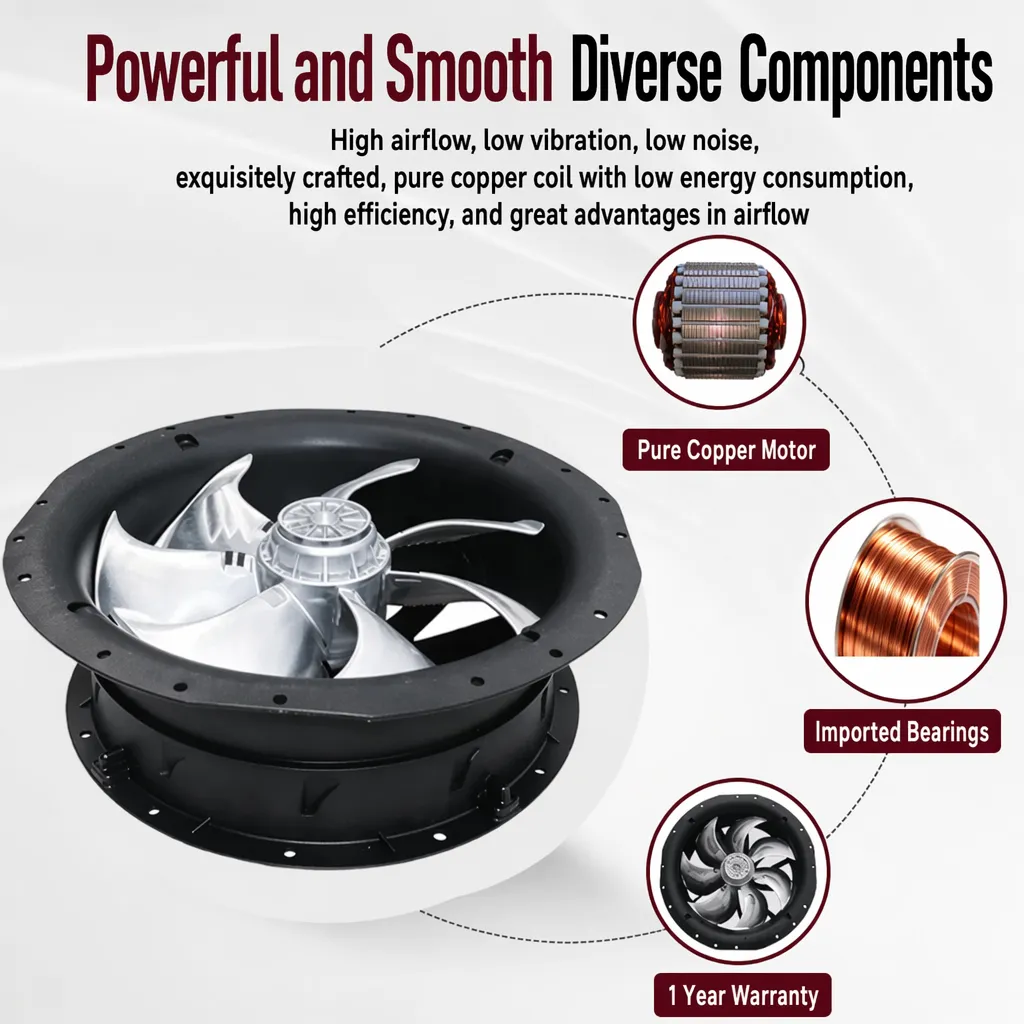
Manufacturing enterprises across Europe now face binding carbon-neutral commitments, yet cooling and ventilation remain the quietest line on the energy bill. Replacing legacy fans with energy saving ec fans and drives is one of the fastest, most measurable routes to cut electricity use and emissions on the shop floor. The appeal is practical: the technology is mature, payback shows on the meter, and the change needs no production stop.
Most procurement engineers underestimate how much electricity disappears into thermal management. Spindle cabinets, servo drives, frequency converters and machinery enclosures need continuous airflow, and in warm climates that load runs all year. When a plant sets a decarbonization target, the obvious moves are rooftop solar and compressed-air upgrades, but the fans that move heat are often left untouched. Upgrading to energy saving ec fans and drives addresses this overlooked load with mature technology rather than experimental capital projects, so it belongs early in any efficiency program.
Traditional AC induction fans are sized for the worst-case summer peak and then run at a fixed speed. The motor works hardest at full load, yet most hours the cabinet needs only a fraction of that airflow. Running a fixed-speed AC fan against a throttled damper wastes energy twice: the motor leaves its efficiency sweet spot, and the restriction dissipates pressure as heat. Specifying EC units instead removes the damper loss and keeps the motor near its rated operating point.
The advantage lies in how the motor is controlled. An EC unit pairs a brushless outer-rotor motor with an integrated controller built from power electronics. Instead of mechanical commutation, the drive switches current electronically at the precise rotor angle. That is why energy saving ec fans and drives deliver strong motor efficiency even when the load is light. The electronically commutated design keeps the magnetic field aligned with the rotor, so less current is lost as heat and more torque reaches the impeller at low speed.
A variable speed drive lets the fan track real thermal demand instead of running flat out. Because EC technology integrates the inverter into the motor assembly, there is no separate VFD cabinet to wire and cool. At part-load, where most factories actually live, an EC fan holds high efficiency where an AC induction motor with an external drive slips into a poor band. Retrofitting with energy saving ec fans and drives therefore widens the power saving gap as the duty cycle moves away from full speed.
A metal-components workshop in southern Europe ran enclosure cooling on AC fans set to maximum year-round, pushing the summer peak over site capacity. The background problem was simple: energy consumption kept climbing while cabinet air was often cooler than necessary. The solution was a staged retrofit with energy saving ec fans and drives sized to the real heat load, with the variable speed drive tied to a cabinet-temperature sensor. The effect was immediate — cooling electricity dropped sharply, carbon emission fell in step, and the maintenance team gained diagnostic feedback through the controller.
Procurement teams should verify the enclosure protection rating, confirm the available voltage, and request the technical parameter sheet and CAD drawing before selection. Units with IP54 or IP44 protection and a washable snap-on filter screen suit dusty machinery spaces. During commissioning, set the speed curve against measured cabinet temperature rather than a fixed setpoint. Installing energy saving ec fans and drives with the correct frame size keeps the swap mechanical, while routine filter inspection protects motor efficiency over the equipment life.
Savings only count once measured. Under ISO 50001 energy management, the plant establishes a baseline, defines objectives, and tracks performance with documented data. The EU ErP efficiency regulations set minimum requirements that EC technology comfortably meets, giving buyers a recognizable compliance anchor. CE marking confirms the unit satisfies the relevant EU directives. Adopting EC units inside this framework turns a fan upgrade from a vague green gesture into a line item auditors and customers can verify.
Translating kilowatt-hours saved into carbon emission reductions needs the site emission factor and a consistent measurement boundary. A procurement engineer who shows reduced energy consumption, lower operating cost, and a defensible sustainability figure strengthens the case for the next phase. The honest approach is to report measured savings and avoid overstating, letting the numbers carry the argument. That transparency turns a single retrofit into a repeatable program across the enterprise.
Summary: Manufacturing enterprises under carbon-neutral pressure gain a practical lever by upgrading thermal management. Across the duty cycle, energy saving ec fans and drives hold high motor efficiency at part-load, cut energy consumption, and lower carbon emission in a way auditors can verify under ISO 50001 and EU ErP. The combination of EC technology, a variable speed drive, and a disciplined retrofit turns a quiet energy line into a measurable sustainability win.
What makes an EC fan more efficient than an AC induction fan?
Answer: An EC fan integrates a brushless motor with an electronic controller built from power electronics, so current switches at the exact rotor angle. This electronically commutated design keeps efficiency high even at part-load, where an AC induction motor paired with an external drive loses efficiency. The result is consistent motor efficiency across the real duty cycle and meaningful power saving without adding a separate variable speed drive cabinet.
Why does fan speed need to track actual cooling demand?
Answer: Cabinets and enclosures rarely need peak airflow every hour, yet fixed-speed AC fans run flat out regardless. Matching speed to measured temperature lets the fan deliver only the air the load requires. Because most factories operate at part-load for most hours, this tracking is where the largest share of energy consumption is avoided, directly reducing operating cost and the associated carbon emission of the site.
How is a retrofit planned without disrupting production?
Answer: A staged retrofit begins with a baseline of current energy consumption and cabinet temperatures, then replaces the worst-performing units first. Selecting energy saving ec fans and drives with the correct enclosure rating and voltage keeps the swap simple. Linking the variable speed drive to a temperature sensor automates control, and the upgrade is completed during scheduled maintenance windows to avoid stopping the production line.
Can existing AC systems be converted, or is full replacement required?
Answer: In many enclosures the AC fan can be replaced by a drop-in EC unit of the same frame size, which avoids rewiring a separate variable speed drive. The electronically commutated motor contains its own controller, so the retrofit is mostly mechanical. Full replacement of the cabinet is rarely needed. Confirming the voltage and protection rating beforehand keeps the conversion straightforward and protects long-term motor efficiency.
Where do ISO 50001 and EU ErP fit into the decision?
Answer: ISO 50001 provides the measurement discipline: baseline, objectives, and tracked performance data that prove savings are real. EU ErP efficiency regulations set the minimum efficiency a compliant product must meet, and CE marking confirms conformity with EU directives. Together they give procurement a verifiable framework, so a fan upgrade supports a credible sustainability report rather than an unsupported claim.

2026/09/30
Cement cabinets choke on dust. Learn the filter rule for an industrial cabinet cooling fan: G4/F7 media, IP rating, and pre-filter care.

2026/10/07
Right wall-mount height for an industrial axial exhaust fan: room volume, free clearance, brackets, and recirculation control.

2026/10/08
An ec motor fan links to BMS via Modbus, 0-10V and PWM for demand-based cooling, energy scheduling and automatic sensor-driven speed control.

2026/10/06
A radial exhaust fan removes grease, fumes, and odors from food-processing workshops with capture velocity and hygienic washdown design.

2026/10/05
Learn antistatic treatment for industrial cabinet cooling fan in electronics workshops—ESD-safe housing, ionizable plastics, and cleanroom compatibility.

2026/10/04
Discover how a brushless dc servo delivers precise wind speed control for laboratory cooling fans with closed-loop PID feedback and laminar airflow.
