 EN
EN
What filter matching rule for dust proof cabinet cooling fan operating in cement factories
2026/09/30
Cement cabinets choke on dust. Learn the filter rule for an industrial cabinet cooling fan: G4/F7 media, IP rating, and pre-filter care.

2026/09/24
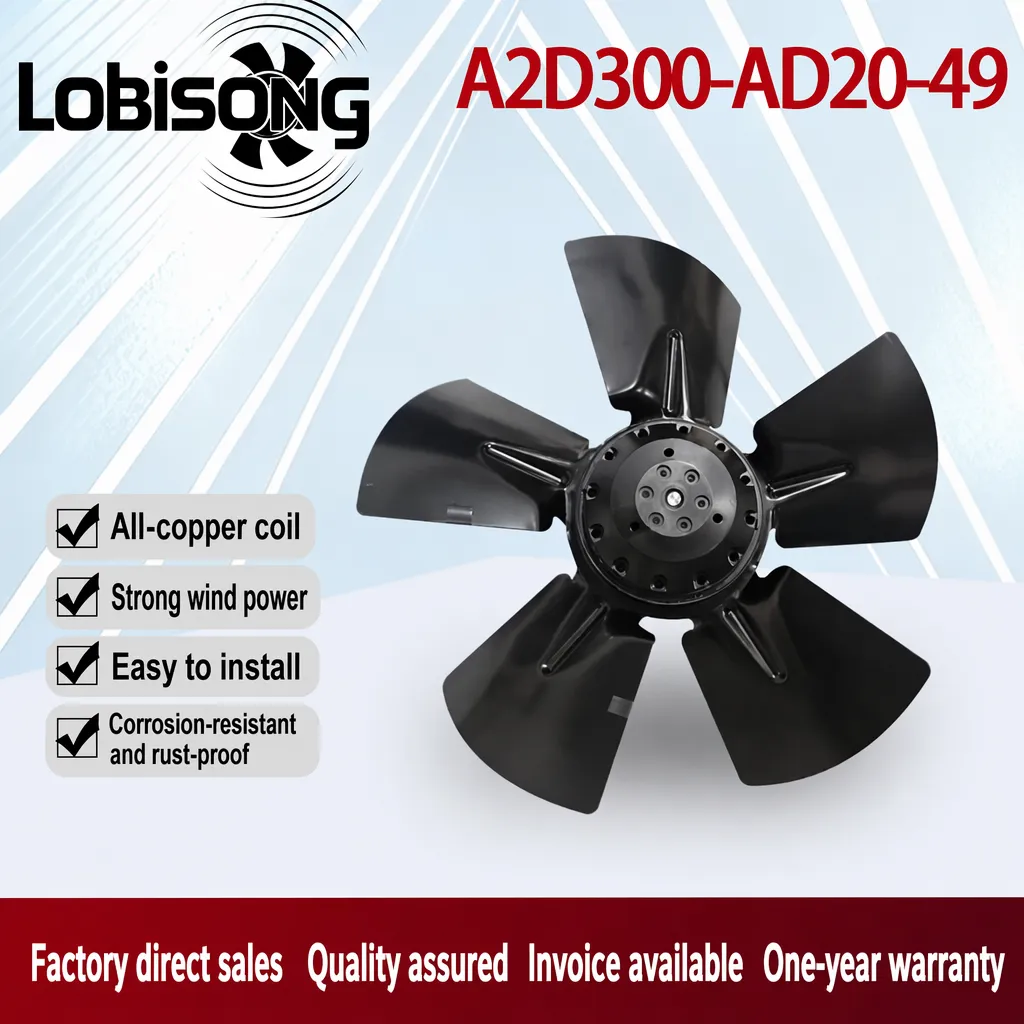
Many industrial workshops run a steady production rhythm where the thermal load barely changes shift to shift. In such spaces a fixed speed backward inclined fan delivers the constant airflow the process needs without the cost and complexity of a variable-speed drive. Stable temperature control depends on predictable air movement, and a constant-load line rewards simplicity over modulation.
A stable process holds throughput, inlet temperature, and equipment heat output within a narrow band for long periods. A constant-load drying oven line, for example, bakes at one setpoint through a full production day. The cooling duty stays fixed, so the ventilation demand does not fluctuate. A fixed speed backward inclined fan answers this need by moving the same volume hour after hour. When load stays steady, airflow that varies only adds instability to the workshop. The plant controller can then focus on the recipe instead of chasing air balance.
Variable speed control earns its keep when the thermal load rises and falls. For a steady state load, the drive spends its life at one setting and delivers nothing extra. Adding an inverter, sensor loop, and controller increases first cost and failure points. A fixed speed motor running at the duty point removes that overhead. Maintenance teams gain fewer components to troubleshoot and a cleaner electrical panel. Energy use stays flat and predictable, which helps the facility budget and removes the tuning that variable systems demand.
Constant airflow keeps the temperature gradient across the workshop uniform. Without speed changes, the operating point sits where the fan curve meets the system curve and stays there. Operators avoid the hot spots and cold zones that appear when flow surges or drops. Stable temperature supports product quality and protects heat-sensitive equipment from thermal cycling stress. The inclined blade wheel sustains this steady movement with low noise. Uneven flow would force the process to slow or scrap batches, so the steady state protects both output and schedule.
The inclined blade design uses a backward-leaning airfoil that pushes air outward with low turbulence. Compared with forward-curved wheels, the backward inclined impeller resists overload and runs efficiently near its design efficiency region. At a steady state, this means the motor draws consistent power and the wheel stays clear of debris buildup. A fixed speed backward inclined fan therefore matches the ductwork pressure rise without hunting for a setpoint. The airfoil shape also sheds dust better than curved blades, which keeps the duty point from drifting as the season changes.
The system curve shows how resistance grows with flow through filters, ducts, and coils. The duty point is where that curve crosses the fan curve. For a constant load, the duty point is fixed and known at design time. Selecting the fixed speed backward inclined fan at this crossing avoids running off the efficient island. AMCA test standards give the performance data needed to place the operating point with confidence during specification.
Once installed, the fan holds the operating point with no control input. The inclined blade shape naturally limits flow if resistance creeps up, protecting the motor from overcurrent. Under a steady state, the wheel speed and air volume remain constant. This stability is exactly what stable temperature workshops require, and it removes the tuning work that variable systems demand. A fixed speed backward inclined fan keeps the duty point where the system curve drew it.
A food-drying plant needed even heat removal across a tunnel oven that ran at one recipe all day. The thermal load was constant, so a speed-change system would have sat idle at a single setting. The plant instead fitted a fixed speed backward inclined fan sized to the calculated duty point. Floor temperature stayed within a tight band, product moisture came out uniform, and the simple drive cut commissioning time for the maintenance crew. Operators reported fewer alarms because the air balance no longer needed attention during the shift. The maintenance lead noted that the spare list dropped to a single wheel and motor.
Choose the model from the documented system curve, not a rule of thumb. Verify the rated voltage matches the supply and confirm CE or UKCA documentation for the market. EN standards cover the mechanical safety of the housing where applicable. Mount the unit on a rigid base to limit vibration, and check the inclined blade wheel for dust every quarter. Bearing condition can be judged by sound and temperature during routine rounds. Replace the washable filter on schedule to protect the motor from lint. Ask the supplier for the acoustic figure and the inlet condition to confirm the unit fits the bay. A short run-in test on site proves the duty point before final sign-off.
Selecting ventilation for a steady process should follow the load, not the trend. A fixed speed backward inclined fan suits stable temperature industrial production workshops because the thermal demand stays constant and the duty point does not move. With the operating point fixed by the system curve, constant airflow keeps temperature even and maintenance stays simple. Procurement teams get dependable performance without paying for control they will never use. The steady state also shortens operator training, since the unit runs the same way every shift and gives no surprise behavior to manage.
What makes a fixed speed fan suitable for stable workshops?
Answer: A stable workshop holds a near-constant thermal load, so the ventilation demand barely changes. The fixed speed fan runs at one duty point and supplies constant airflow without modulation. The backward inclined blade delivers efficient pressure rise with low turbulence. This matches a steady process where speed changes add no benefit. The simple drive reduces components and upkeep while keeping temperature even across the floor.
Why does variable speed control not help a constant load process?
Answer: Variable speed earns value when load swings through the day. On a constant load line, the drive settles at a single setting and contributes nothing extra. It adds an inverter, sensors, and a control loop that raise cost and create failure points. A fixed speed motor at the duty point already meets the demand. Removing modulation simplifies the electrical panel and shortens commissioning without hurting performance.
How is the duty point determined from the system curve?
Answer: The duty point is the intersection of the fan curve and the system curve, which plots resistance against flow. Engineers calculate the pressure drop across ducts, filters, and coils at the required volume. AMCA publication 211 provides standardized rating methods for this work. Plotting both curves shows where the fixed speed fan will operate. Sizing to that crossing keeps the unit in its efficient region and avoids overload at steady state.
Can a backward inclined fan maintain constant airflow during a steady state?
Answer: Yes. The inclined blade impeller turns at a fixed RPM and moves a predictable volume once the operating point is set. Because the load does not vary, the system curve stays put and the crossing with the fan curve remains stable. The wheel naturally limits flow if resistance rises slightly, protecting the motor. This self-regulating behavior keeps constant airflow and even temperature without any control input from operators.
Where should maintenance attention focus for long service?
Answer: A fixed speed backward inclined fan needs little active control, but routine care protects the blade and motor. Inspect the inclined wheel for dust each quarter and wash the pre-filter on schedule. Listen for bearing noise and feel motor temperature during rounds. Confirm voltage stays at rating and the mount remains rigid. These simple steps keep the duty point stable and extend service life in a steady workshop.

2026/09/30
Cement cabinets choke on dust. Learn the filter rule for an industrial cabinet cooling fan: G4/F7 media, IP rating, and pre-filter care.

2026/10/07
Right wall-mount height for an industrial axial exhaust fan: room volume, free clearance, brackets, and recirculation control.

2026/10/08
An ec motor fan links to BMS via Modbus, 0-10V and PWM for demand-based cooling, energy scheduling and automatic sensor-driven speed control.

2026/10/06
A radial exhaust fan removes grease, fumes, and odors from food-processing workshops with capture velocity and hygienic washdown design.

2026/10/05
Learn antistatic treatment for industrial cabinet cooling fan in electronics workshops—ESD-safe housing, ionizable plastics, and cleanroom compatibility.

2026/10/04
Discover how a brushless dc servo delivers precise wind speed control for laboratory cooling fans with closed-loop PID feedback and laminar airflow.
