 EN
EN
What filter matching rule for dust proof cabinet cooling fan operating in cement factories
2026/09/30
Cement cabinets choke on dust. Learn the filter rule for an industrial cabinet cooling fan: G4/F7 media, IP rating, and pre-filter care.

2026/09/28
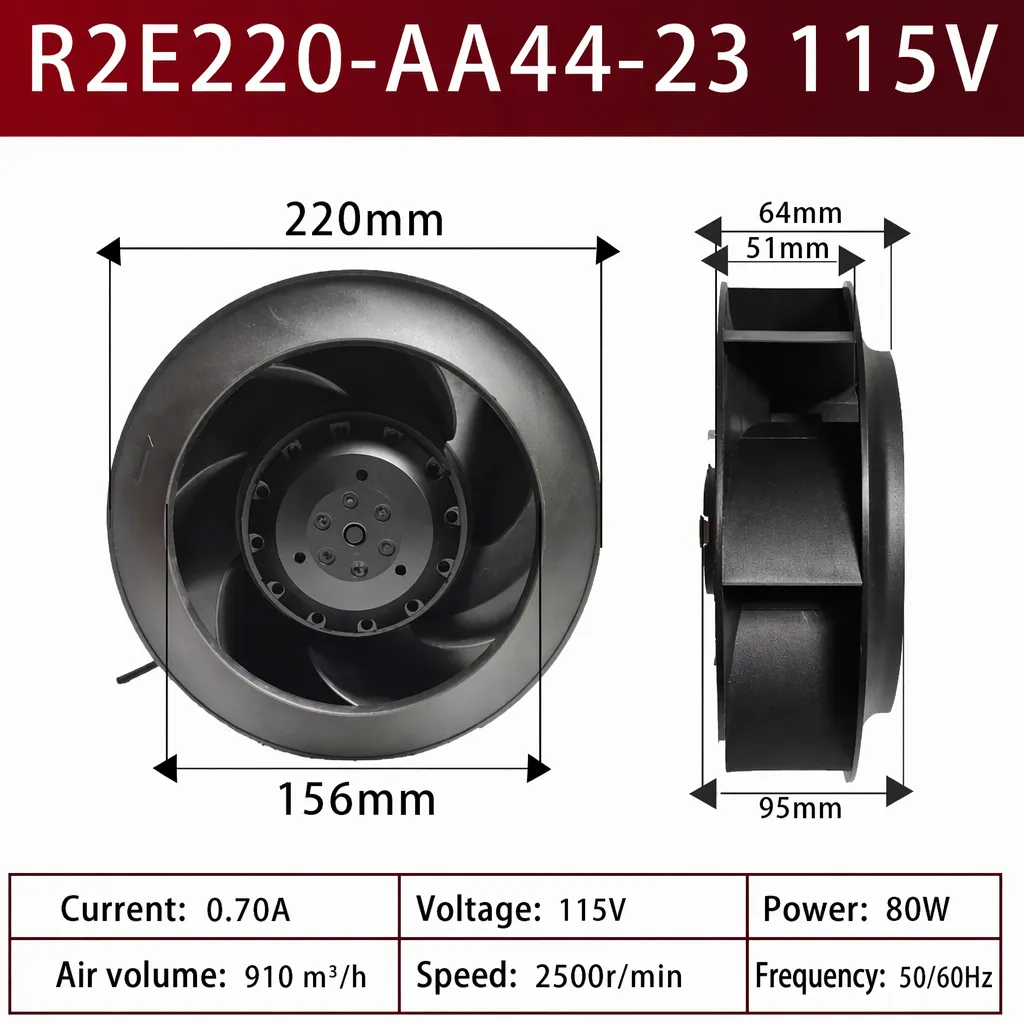
Chemical plants run processes that never sleep. A heavy duty centrifugal fan assigned to exhaust or process duty must move corrosive, hot, and particle-laden air for twenty-four hours a day, seven days a week. Standard ventilation equipment quickly fails under such load, yet purpose-built units keep running. The engineering behind these fans decides whether a plant stays online or faces a costly unplanned shutdown.
A heavy duty centrifugal fan relies on its motor winding insulation to survive heat that builds during nonstop operation. Insulation class F or H defines the maximum allowable temperature rise above ambient; class H withstands roughly 180°C. Continuous duty means the winding never fully cools, so the chosen class directly limits how long the motor survives. Specifying the correct class prevents thermal breakdown when process air stays hot for months on end.
Bearing selection decides mechanical endurance under sustained rotation. The L10 rating predicts the hours at which roughly ten percent of a bearing population fails under a given load and speed. For continuous duty, engineers calculate L10 at the actual RPM and radial load, then apply a service factor. A fan running 8,000 hours per year needs an L10 rating several times higher than intermittent equipment to avoid mid-life bearing replacement and the associated downtime. Higher rotational speed shortens L10 sharply because fatigue accrues with every revolution, so derating the listed value for 24/7 service is essential. Premium grease and sealed bearing cartridges resist the heat and moisture found near chemical process streams. Documenting the assumed load spectrum protects the buyer when comparing bids from different suppliers.
Adequate airflow through the motor compartment carries heat away during nonstop operation. Continuous running removes the cool-down window that intermittent units enjoy between cycles. Proper impeller balance and bearing fit reduce friction heat, while the chosen enclosure directs cooling air where it matters. Ignoring thermal design lets winding temperature creep upward until insulation ages prematurely and efficiency drops.
Chemical atmospheres carry acid mist, chlorine, and alkaline dust that attack bare metal. Epoxy phenolic or fluoropolymer coatings shield the impeller and housing from chemical attack. The right coating chemistry matches the specific vapor present; a chlor-alkali environment demands different protection than a fertilizer plant. Without proper coating, corrosion thins the impeller and unbalances the wheel within a single season. Surface preparation matters as much as the topcoat; blast cleaning to a defined profile and a verified dry-film thickness keep the barrier intact under thermal cycling. Routine washdown with compatible agents removes deposited salts before they penetrate the substrate.
Beyond coatings, material grade matters for a heavy duty centrifugal fan exposed to aggressive streams. Stainless steel or FRP construction resists corrosive airflow where painted carbon steel would degrade. The enclosure and duct connection also need compatible materials and an adequate IP rating to block moisture ingress. Matching impeller metallurgy to the process stream keeps airflow stable and static pressure consistent across the duty cycle. Where the airstream also carries abrasive dust, hardened wear plates on the blade leading edges slow erosion that would otherwise shift the wheel balance. Selecting the housing liner to match the impeller avoids galvanic corrosion at contact points.
A chlor-alkali facility needed nonstop extraction above its cell building. Background: the exhaust handled warm, chlorine-laden air with trace acid mist. Problem: a previous standard blower corroded and seized within eight months. Solution: engineers installed a heavy duty centrifugal fan with class H motor, L10-uprated bearings, and a fluoropolymer-coated impeller. Effect: the unit ran continuously for over two years with only routine lubrication, eliminating repeated shutdowns and protecting production uptime.
Continuous operation hides developing faults until they turn catastrophic. Installing vibration sensors on the bearing housing lets maintenance teams spot imbalance or lubrication loss before seizure. Trending vibration against baseline RPM protects the motor and impeller. A heavy duty centrifugal fan with monitored bearings converts a potential total failure into a planned bearing change during a scheduled process lull, sharply reducing downtime risk. Setting alarm and trip thresholds from the supplier's balance grade gives objective criteria instead of guesswork. Recording spectra each month builds a trend that reveals bearing raceway wear weeks before audible symptoms appear.
Buyers should request documentation of insulation class, L10 bearing calculation, and coating specification before purchase. On site, set a lubrication and visual inspection schedule tied to operating hours, not calendar months. Confirm CE or UKCA marking for European and UK sites, and verify the enclosure IP rating matches the atmosphere. Sound specification and disciplined maintenance extend service life well past the first replacement cycle and keep the heavy duty centrifugal fan dependable. Ask for the fan curve at the specified density and temperature, since hot, corrosive air changes both volume and static pressure. Keeping a matched spare wheel and bearing kit on site shrinks any unavoidable outage from days to a single shift.
Continuous chemical-plant duty punishes any weak link in a ventilation system. A heavy duty centrifugal fan earns its place through motor insulation class, uprated L10 bearings, corrosion-resistant coatings, and disciplined monitoring. For a chemical plant ventilation fan, these details decide whether the unit survives months of hot process air or fails in weeks. Procurement engineers who verify these details at specification stage protect production uptime and avoid the steep cost of emergency replacement. A continuous duty industrial blower is not a commodity; it is a reliability decision, not a line-item saving, and the same logic applies to any industrial process fan in nonstop service.
Frequently Asked Questions
Question
What motor insulation class suits continuous chemical-plant duty?
Answer: Class F or H insulation is typical for nonstop chemical-plant service. Class H tolerates roughly 180°C winding temperature, which matters when the motor never cools between cycles. Specifying the correct class prevents thermal breakdown during months of hot process air. Engineers should match the class to measured ambient and process temperatures rather than a generic catalog value. For a chemical plant ventilation fan or any continuous duty industrial blower, this is the first specification that separates a durable unit from a short-lived one.
Question
Why do bearings fail early in 24/7 chemical fans?
Answer: Bearings fail early when L10 life is calculated for intermittent duty but the fan runs continuously. Sustained RPM and radial load accumulate fatigue far faster than catalog assumptions suggest. Corrosive vapor also degrades grease and raceways. Selecting L10-uprated bearings, sealing against the process atmosphere, and scheduling lubrication by operating hours keeps the drive train alive through years of nonstop service without surprise seizure. In a heavy duty centrifugal fan, bearing selection is not a minor detail; it is the difference between planned maintenance and midnight failure.
Question
How should buyers specify corrosion protection for the impeller?
Answer: Buyers should identify the exact vapor mix—acid, chlorine, or alkaline—then match coating chemistry and impeller material to it. Fluoropolymer or epoxy phenolic coatings suit aggressive streams, while stainless or FRP suits severe duty. Request the coating specification in writing and confirm the enclosure IP rating blocks moisture. Verifying these details at order stage prevents premature wheel imbalance and unplanned maintenance later. For a corrosion resistant centrifugal fan, the coating and material must be chosen for the specific stream, not for a generic chemical label.
Question
Can vibration monitoring reduce chemical-plant downtime?
Answer: Yes. Vibration sensors on the bearing housing reveal imbalance, misalignment, or lubrication loss long before seizure. Trending the signal against baseline RPM lets teams schedule a planned bearing change during a process lull instead of suffering a midnight failure. For fans running without stop, this condition-based approach converts unpredictable breakdowns into controlled maintenance and protects plant availability. On a continuous duty industrial blower, vibration trending is the cheapest insurance available, and it applies equally to any industrial process fan in critical service.
Question
Do CE and UKCA marks matter for chemical-plant fans?
Answer: A heavy duty centrifugal fan shipped to Europe or the UK must carry CE or UKCA marking to satisfy machinery and electromagnetic compliance. These marks confirm documented risk assessment and declared specifications rather than measured performance superiority. For procurement engineers, the marking is a baseline proof of conformity and a practical check that the supplier maintains traceable engineering documentation for the installed unit. Whether the unit is a chemical plant ventilation fan, a corrosion resistant centrifugal fan, or a general industrial process fan, the documentation trail matters as much as the hardware.

2026/09/30
Cement cabinets choke on dust. Learn the filter rule for an industrial cabinet cooling fan: G4/F7 media, IP rating, and pre-filter care.

2026/10/07
Right wall-mount height for an industrial axial exhaust fan: room volume, free clearance, brackets, and recirculation control.

2026/10/08
An ec motor fan links to BMS via Modbus, 0-10V and PWM for demand-based cooling, energy scheduling and automatic sensor-driven speed control.

2026/10/06
A radial exhaust fan removes grease, fumes, and odors from food-processing workshops with capture velocity and hygienic washdown design.

2026/10/05
Learn antistatic treatment for industrial cabinet cooling fan in electronics workshops—ESD-safe housing, ionizable plastics, and cleanroom compatibility.

2026/10/04
Discover how a brushless dc servo delivers precise wind speed control for laboratory cooling fans with closed-loop PID feedback and laminar airflow.
