 EN
EN
What filter matching rule for dust proof cabinet cooling fan operating in cement factories
2026/09/30
Cement cabinets choke on dust. Learn the filter rule for an industrial cabinet cooling fan: G4/F7 media, IP rating, and pre-filter care.

2026/09/22
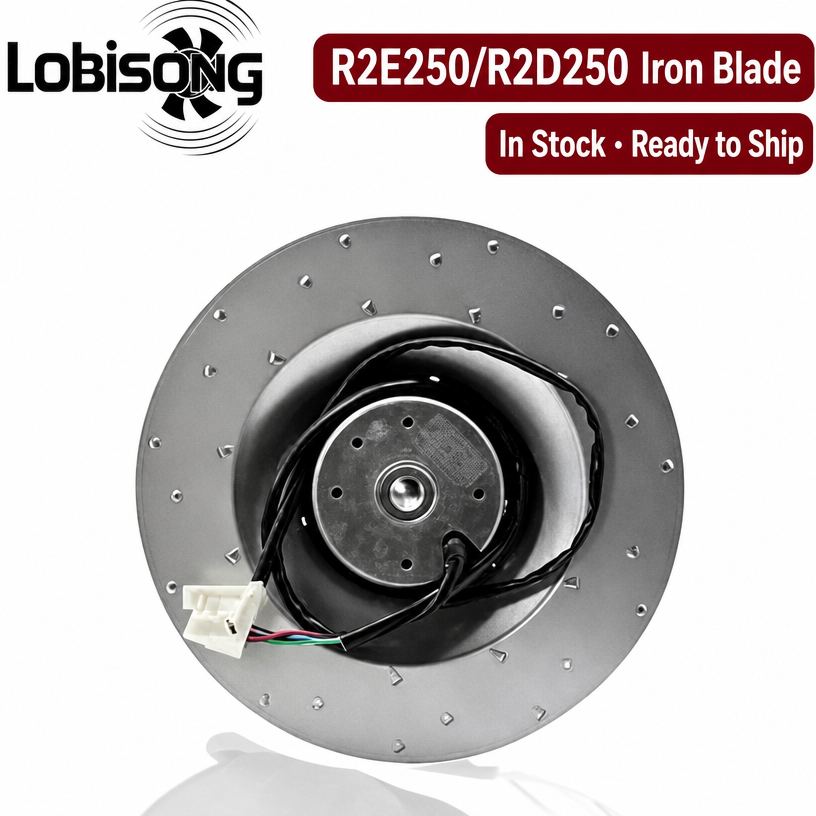
Data storage equipment rarely fails because of bad luck. It fails because heat accumulates where airflow is weakest: drive bays at the top of an enclosure, controllers boxed in by cables, power supplies starved of intake air. Every ten degree rise above the rated intake temperature roughly halves the service life of electronic components, and a thermal shutdown in a storage cabinet can interrupt access to data for an entire facility. A correctly selected high airflow cabinet cooling fan addresses the cause directly instead of masking the symptom with alarms and restarts.
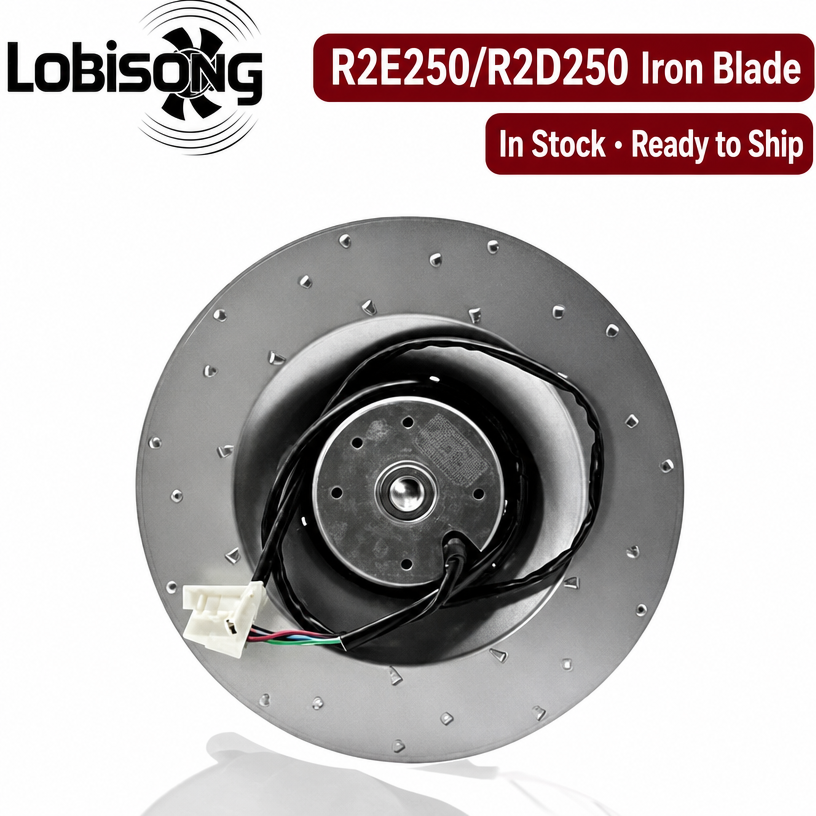
The starting point is arithmetic, not guesswork. Every watt dissipated inside the enclosure must be carried away by air leaving the cabinet. Divide the total heat load by the allowed inlet-to-outlet temperature rise and the result is the airflow the cabinet cooling fan must deliver at the actual resistance of the enclosure, filters and vents included. A fan chosen this way keeps drive temperatures in their specified band even on the hottest production day, which is precisely what prevents protective shutdowns.
Air follows the path of least resistance, so a powerful fan with a poorly organized path still leaves hot spots. Front-to-back flow with blanking panels in unused rack spaces, sealed cable penetrations and separated hot exhaust prevent recirculation inside the cabinet. When the airflow path is engineered together with the high airflow cabinet cooling fan, every drive and controller receives its share of cool intake air instead of the exhaust from its neighbor.
Any single fan will eventually fail, so shutdown prevention depends on redundancy. N+1 configurations allow one cabinet cooling fan to stop without breaking the cooling chain, and tachometer signals alert maintenance long before the second unit is stressed. Ball bearings and temperature-rated components extend service intervals, which matters in unmanned equipment rooms where a failure may go unnoticed for days.
Data storage loads fluctuate with backup windows and workload peaks. A high airflow cabinet cooling fan with electronic speed regulation ramps up when drive temperatures climb and settles down when the load lightens, cutting noise and power draw while keeping a safety margin. Constant temperature control also avoids the thermal cycling that loosens connectors and shortens electronics life.
A distribution company kept losing storage cabinets to afternoon shutdowns each summer. Measurement showed intake air at acceptable temperature but exhaust recirculation pushing drive bay temperatures past their limit. The fix combined blanking panels, a sealed floor cutout and replacement of undersized units with a high airflow cabinet cooling fan pair in N+1 arrangement, matched to the calculated heat load. Cabinet temperatures stabilized eight degrees lower, and the facility completed the following two summers without a single thermal shutdown, verifying that the airflow path, not the ambient weather, had been the root cause.
A procurement team can avoid most shutdown risks with five checks. Confirm the fan delivers its rated flow at the real system resistance, not in free air. Verify redundancy fits the criticality of the cabinet, with alarm contacts wired to monitoring. Check bearing type and rated life against the maintenance schedule. Confirm speed control range matches the load profile of the storage equipment. Finally, ensure spare availability so a failed cabinet cooling fan is replaced in hours rather than weeks, because redundancy only covers a failure while the spare is on site.
Calculate from heat load, not from cabinet size. Divide the total watts dissipated inside by the allowed temperature rise and the density specific heat of air, then add margin for filter loading. In practice a fully loaded storage cabinet often needs several hundred cubic meters per hour, which only a properly sized high airflow cabinet cooling fan can sustain at the real resistance of the enclosure.
Follow the natural airflow direction of the equipment. Most storage cabinets are designed for front-to-back cooling, so mount the fan to extract hot exhaust at the top rear while intake air enters at the bottom front through filtered openings. Mounting position matters as much as fan power, because a wrong position encourages recirculation and leaves drive bays in stagnant heat.
Sometimes, but redundancy is lost. A single powerful unit cools effectively while it runs, yet its failure removes all forced cooling at once. For data storage equipment, N+1 redundancy with smaller matched fans is usually safer than one large cabinet cooling fan, because a single failure then costs only part of the airflow while the alarm summons maintenance.
A thermal shutdown arrives gradually: performance first degrades, drives report rising temperatures, and the event repeats at the same daily peak. A power fault is instantaneous and random. Log temperatures for a week when shutdowns repeat on a schedule, because that pattern almost always points to cooling capacity or airflow distribution rather than the electrical supply.
Plan a quarterly visual check of filters and blades and an annual measurement of airflow and bearing noise. Dust loading is the main enemy, gradually cutting delivered flow until hot spots return. Recording the current draw or speed signal of each fan at service visits makes degradation visible early, so the unit can be replaced during planned maintenance instead of during an emergency.
Shutdown risk in data storage equipment is an airflow problem before it is an electrical one. Sizing a high airflow cabinet cooling fan from measured heat load, engineering the airflow path and adding redundancy with alarms converts thermal protection from a recurring incident into a permanent, verifiable condition of the equipment room.

2026/09/30
Cement cabinets choke on dust. Learn the filter rule for an industrial cabinet cooling fan: G4/F7 media, IP rating, and pre-filter care.

2026/10/07
Right wall-mount height for an industrial axial exhaust fan: room volume, free clearance, brackets, and recirculation control.

2026/10/08
An ec motor fan links to BMS via Modbus, 0-10V and PWM for demand-based cooling, energy scheduling and automatic sensor-driven speed control.

2026/10/06
A radial exhaust fan removes grease, fumes, and odors from food-processing workshops with capture velocity and hygienic washdown design.

2026/10/05
Learn antistatic treatment for industrial cabinet cooling fan in electronics workshops—ESD-safe housing, ionizable plastics, and cleanroom compatibility.

2026/10/04
Discover how a brushless dc servo delivers precise wind speed control for laboratory cooling fans with closed-loop PID feedback and laminar airflow.
