 EN
EN
What filter matching rule for dust proof cabinet cooling fan operating in cement factories
2026/09/30
Cement cabinets choke on dust. Learn the filter rule for an industrial cabinet cooling fan: G4/F7 media, IP rating, and pre-filter care.

2026/09/15
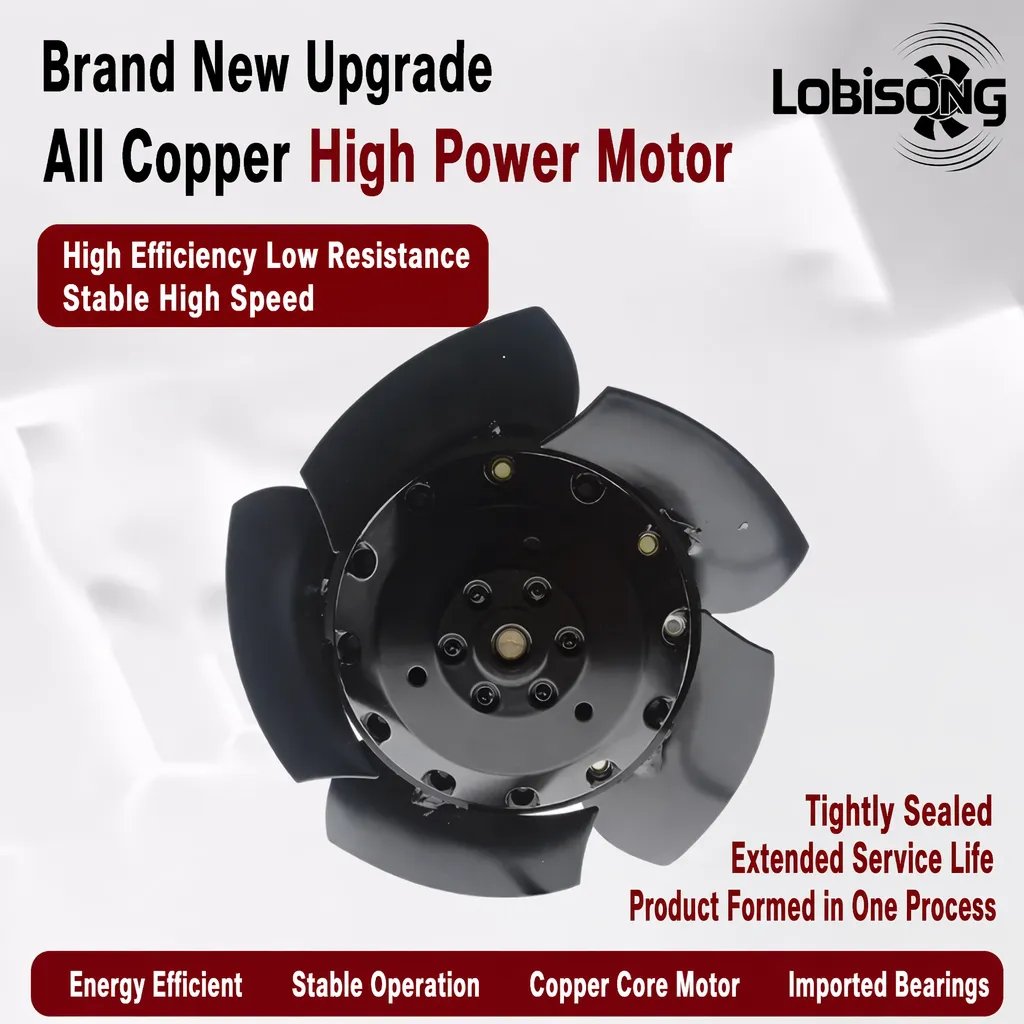
Factory managers evaluating capital equipment often overlook how a qualified high efficiency industrial cooling fan manufacturer influences multi-year expense. Cooling represents a persistent, rarely idle load in most production halls, and small differences in daily energy draw compound across years. The right fan selection reduces electricity consumption, limits maintenance interruptions, and protects production uptime without requiring frequent hardware replacement.
A high efficiency industrial cooling fan manufacturer that publishes full performance curves lets procurement build an accurate total-cost-of-ownership model. A ventilation system is not a one-time purchase; it is a decade-long operating commitment. Rising electricity tariffs make energy the largest lever on lifetime cost. Total-cost-of-ownership analysis separates the invoice from the hidden stream of electricity, labor, and downtime that follows.
Most facilities discover that electricity dwarfs the initial price within two to three years. A high efficiency industrial cooling fan manufacturer addresses this by pairing an outer-rotor brushless motor with pure copper windings that convert input power into airflow with fewer losses. Lower losses mean reduced wattage per unit of delivered air, so the same thermal management system sustains the enclosure at a smaller ongoing cost. Procurement teams should request the airflow (CFM / m³/h) and static pressure curves before comparing quotes, because a fan that moves more air against higher resistance does real work for less.
TCO combines purchase price, expected energy use, maintenance frequency, and expected service life. Multiply annual kilowatt-hours by the local tariff, add inspection labor, then divide by rated lifespan. Fans with higher efficiency but a similar invoice win once the curve is extended past year three. This method exposes why cheap upfront units often cost more across a ten-year horizon.
A credible high efficiency industrial cooling fan manufacturer validates each efficiency claim with test data rather than marketing language. High efficiency is not a label; it emerges from specific component decisions that reduce waste heat and mechanical friction. Internal thermal overload protection cuts power before insulation fails, while matching the rated duty cycle to the application avoids chronic overheating.
The outer-rotor brushless motor places magnets on the spinning shell, lowering inertia and raising responsiveness under variable load. Pure copper windings conduct current with less resistive heating than alternatives, improving energy efficiency and reducing the cooling load on the motor itself. Imported precision ball bearings keep the shaft stable under continuous vibration. PWM control matches speed to demand instead of running flat-out, trimming partial-load consumption.
A galvanized steel impeller shaped for backward-curved flow raises static pressure while keeping noise modest. Optimized blade angles distribute airflow (CFM / m³/h) evenly across the heat source, improving heat dissipation without forcing higher RPM. Die-cast aluminum housing dissipates warmth and resists corrosion in humid lines. Where fine particulate exists, an IP54 rating shields the internals better than IP44, preserving the bearing and winding investment. Filter loading raises resistance over time, so a static pressure margin prevents shortfall.
The following case shows how a high efficiency industrial cooling fan manufacturer performs in a real production setting.
A compressor manufacturer in Eastern Europe operated packaged units cooled by European-brand fans. Those fans consumed notable energy and generated noise that complicated workshop conditions. The procurement team faced rising electricity invoices and limited room to renegotiate supply pricing with the incumbent vendor.
After eight months of operation, the manufacturer recorded about 22% lower total purchasing cost for cooling fans compared with the previous European-brand fans, alongside low noise and responsive technical support. The saving combined reduced energy draw with fewer replacement orders. This scenario illustrates how a well-chosen fan, supported by PWM control and precision ball bearings, delivers measurable economic relief across a single operating year.
A high efficiency industrial cooling fan manufacturer that ships with clear documentation shortens the buyer's learning curve and reduces handling errors. Concrete steps help capture the efficiency advantage instead of losing it to poor receiving and maintenance practice.
Request the full performance sheet: airflow (CFM / m³/h), static pressure, RPM, IP rating, operating temperature range, and bearing type. Confirm CE, UKCA, CCC, IEC, or EN marks for the target market. OSHA ventilation guidance and ISO 9001 manufacturing discipline signal a supplier that controls process quality. On arrival, verify the label, spin the impeller for smooth rotation, and check the housing for damage before mounting.
Schedule inspection every six months in clean rooms and quarterly in dusty plants. Clean the impeller, confirm thermal overload protection resets, and log RPM drift to catch early wear. A disciplined high efficiency industrial cooling fan manufacturer relationship includes accessible spare parts and clear service notes. Early detection of bearing noise prevents sudden failure, preserving the energy efficiency achieved at commissioning and protecting production continuity.
Choosing the right partner reshapes the economics of climate control on the factory floor. A high efficiency industrial cooling fan manufacturer that engineers outer-rotor brushless motors, pure copper windings, and thermal overload protection delivers savings through lower energy draw and fewer service events across the asset's life. Factory managers who apply total-cost-of-ownership thinking turn a recurring expense into a controlled, predictable operating cost.
What defines a high efficiency industrial cooling fan manufacturer?
Answer: A qualified supplier builds outer-rotor brushless motors with pure copper windings, supplies full airflow and static pressure curves, and holds CE, UKCA, or IEC marks. Such a supplier publishes duty cycle and IP rating, supports PWM control, and follows ISO 9001 discipline. Verification of datasheet transparency and thermal overload protection matters more than branding when selecting a long-term ventilation partner.
How does static pressure affect fan selection?
Answer: Static pressure measures resistance the fan must overcome to move air through filters, ducts, and the enclosure. Selecting a fan with insufficient static pressure leaves the airflow (CFM / m³/h) short of design, causing heat buildup. Backward-curved impellers and outer-rotor motors sustain pressure at moderate RPM. Reviewing the pressure curve against the installed system prevents undersizing and protects the thermal management system from chronic overheating.
Why is thermal overload protection important for continuous duty?
Answer: Compressor units and production lines often run nonstop, raising motor temperature toward insulation limits. Internal thermal overload protection cuts power before damage occurs, preventing fire risk and unplanned stoppage. NFPA enclosure guidance and IEC motor standards emphasize protective devices for continuous operation. Pairing protection with precision ball bearings and a rated duty cycle keeps the fan alive through heat spikes that would destroy lesser parts.
Which maintenance checks extend fan service life?
Answer: Inspect every six months in clean rooms and quarterly in dusty plants. Clean the impeller, verify the bearing spins freely, and confirm thermal overload protection resets. Log RPM drift to catch early wear. OSHA workplace ventilation recommendations support scheduled inspection that sustains heat dissipation. A simple logbook of vibration, noise, and current draw reveals degradation before failure, protecting uptime and the energy efficiency achieved at startup.
Where should IP rating be matched to the environment?
Answer: IP44 suits dry indoor control cabinets, while IP54 resists dust and splashing common near process lines. Matching the IP rating to ambient conditions prevents premature failure of the motor and bearing. Die-cast aluminum housing adds corrosion resistance in humid areas. Review the site before ordering, and confirm the selected enclosure rating with the supplier so the fan survives the actual plant atmosphere across its service life.

2026/09/30
Cement cabinets choke on dust. Learn the filter rule for an industrial cabinet cooling fan: G4/F7 media, IP rating, and pre-filter care.

2026/10/07
Right wall-mount height for an industrial axial exhaust fan: room volume, free clearance, brackets, and recirculation control.

2026/10/08
An ec motor fan links to BMS via Modbus, 0-10V and PWM for demand-based cooling, energy scheduling and automatic sensor-driven speed control.

2026/10/06
A radial exhaust fan removes grease, fumes, and odors from food-processing workshops with capture velocity and hygienic washdown design.

2026/10/05
Learn antistatic treatment for industrial cabinet cooling fan in electronics workshops—ESD-safe housing, ionizable plastics, and cleanroom compatibility.

2026/10/04
Discover how a brushless dc servo delivers precise wind speed control for laboratory cooling fans with closed-loop PID feedback and laminar airflow.
