 EN
EN
What filter matching rule for dust proof cabinet cooling fan operating in cement factories
2026/09/30
Cement cabinets choke on dust. Learn the filter rule for an industrial cabinet cooling fan: G4/F7 media, IP rating, and pre-filter care.

2026/08/25
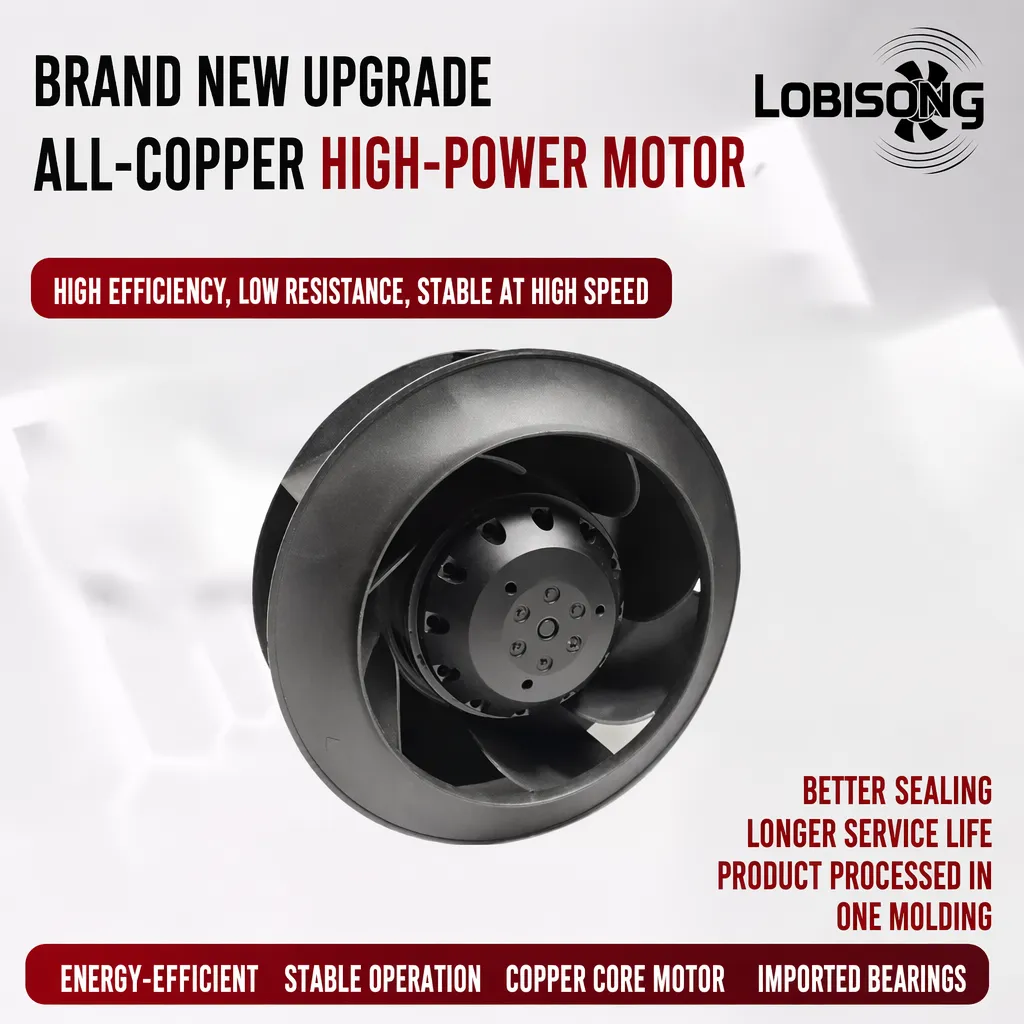
In heavy manufacturing facilities like steel mills, foundries, forge shops, and heat-treating plants, ventilation systems operate under punishing conditions. Equipment in intermittent heating workshops cycles rapidly between ambient room temperatures and scorching conditions, often experiencing spikes exceeding 400°C in a matter of minutes. Under these demanding conditions, specifying a standard air mover leads directly to premature failure. Keeping operations running smoothly requires a high temperature centrifugal fan engineered specifically to endure repeated thermal stress without warping, cracking, or losing airflow efficiency.
When furnace doors open and close throughout a shift, rapid temperature swings create unequal thermal expansion across rotating parts and stationary housings. Over time, these thermal spikes degrade mechanical assemblies, destroy bearings, and cause severe impeller fatigue. Understanding how to select a thermal shock resistant fan ensures continuous uptime, keeps workers safe, and lowers long-term maintenance overhead.
Understanding Thermal Stress in Intermittent Operations
Thermal stress occurs when different zones of a fan expand or contract at uneven rates. When hot air suddenly surges into a cold housing, the outer tip of an impeller blade heats up and expands far faster than the heavy hub at the center. This temperature gradient creates extreme internal stress at weld joints and blade roots.
In an active industrial heating ventilation layout, thermal shock is not a rare occurrence—it happens dozens of times every single day. The resulting mechanical strain causes subtle micro-cracks in the impeller, warps the scroll housing, and forces drive shafts out of alignment. Deploying a dedicated heat resistant centrifugal blower built with low-expansion alloys absorbs these rapid thermal transitions, preventing catastrophic blade detachment and bearing seizure.
Key Material Properties That Prevent Failure
Material selection forms the first line of defense against rapid thermal cycling. Standard carbon steel and lightweight aluminum alloys behave differently under severe temperature fluctuations:
316SS and 304SS Stainless Steels: Stainless alloys feature relatively low thermal expansion coefficients and maintain exceptional tensile yield strength at elevated temperatures. Utilizing stainless steel in a high temperature centrifugal fan minimizes physical deformation during rapid heating and cooling cycles.
Cast Iron: Cast iron provides excellent rigidity and dampens vibration at moderate temperatures, but it becomes brittle under frequent thermal shocks above 450°C.
Carbon Steel: Carbon steel offers a cost-effective choice for medium-duty industrial heating ventilation setups where thermal ramp rates are predictable and controlled.
Aluminum Alloys: While popular for light commercial fans, aluminum loses structural integrity rapidly above 200°C and expands significantly, making it unsuitable as a thermal shock resistant fan material in heavy industrial environments.
Selecting the right alloy for a heat resistant centrifugal blower prevents permanent structural deformation and preserves dynamic balance across thousands of operating hours.
Engineering Design Features for Extreme Heat
Conquering severe thermal cycling requires smart mechanical engineering alongside robust metallurgy. Premier manufacturers integrate several structural features into every high temperature centrifugal fan:
Heat Dissipation Hub Fins: Cast or machined cooling fins located on the fan hub help radiate thermal energy away from the shaft before it reaches sensitive bearing blocks.
Extended Shaft and External Drive Mounts: Positioning the drive motor entirely outside the hot airstream shields electrical windings from direct thermal exposure. An extended shaft paired with a cooling disk allows a heat resistant centrifugal blower to handle gas temperatures up to 600°C while the motor runs cool in ambient air.
Backward-Curved Impeller Blades: Backward-curved blade geometries distribute mechanical and thermal stress far more evenly across the shroud than forward-curved designs, drastically reducing fatigue points at weld seams.
Precision Dynamic Balancing: High-temperature operation amplifies even minor weight imbalances. Balancing every thermal shock resistant fan impeller to ISO 2.5 standards prevents destructive vibration as metal components expand during operation.
Real-World Reliability in Heat Treatment Facilities
Field performance data highlights the clear operational difference between standard ventilation units and purpose-built fans. At an industrial carburizing facility in Germany, production lines cycled between 120°C and 560°C every four hours, subjecting process exhaust equipment to relentless thermal shocks.
Standard aluminum process fans installed on adjacent lines suffered blade cracking and bearing failure within three months. Upgrading the line to a dynamically balanced 316SS high temperature centrifugal fan eliminated structural fatigue completely. The upgraded heat resistant centrifugal blower units ran continuously for over eighteen months without requiring emergency maintenance or losing airflow pressure.
Investing in a rugged thermal shock resistant fan configuration pays for itself quickly by eliminating unplanned shutdown costs, replacing emergency repair calls with predictable maintenance schedules, and protecting upstream production processes.
Selection Checklist for High-Temperature Applications
When sourcing a high temperature centrifugal fan for an intermittent heating workshop, evaluate these critical factors before finalizing your design:
Thermal Ramp Rate (°C/min): The rate of temperature change often causes more damage than the peak temperature itself. Ensure test data verifies performance under rapid heating ramps.
Dynamic Balance Standards: Confirm the impeller is dynamically balanced to ISO 2.5 or better to accommodate thermal expansion without inducing severe vibration.
Sealing and Expansion Joints: Flexible housing seals and expansion joints prevent hot exhaust gases from escaping while allowing the housing metal to expand freely.
Motor Thermal Isolation: Verify that drive belts, couplings, and motor bearings are protected by physical heat shields and continuous cooling disks.
Full-Penetration Welds: All impeller welds should undergo non-destructive testing to ensure no internal voids exist where stress cracks could form under thermal strain.
Equipping your industrial heating ventilation system with an appropriately spec'd heat resistant centrifugal blower keeps air moving reliably through the most punishing operating cycles.
Manufacturing Expertise and Supply Chain Reliability
Long-term reliability in high-temperature ventilation relies on precision manufacturing, rigorous dynamic balancing, and consistent material standards. Guangdong Lebisen Fan Co., Ltd. (Lobisong) brings over eleven years of specialized industry experience to designing and building heavy-duty process fans, industrial blowers, and custom ventilation solutions.
Operating five automated production lines equipped with modern winding, precision welding, assembly, and automated blade balancing test stations, Lobisong delivers consistent quality across every high temperature centrifugal fan build. Backed by CE and UKCA certifications, Lobisong exports high-performance thermal shock resistant fan units to nineteen countries across Europe, the Americas, India, and beyond.
With a proven 98% on-time delivery rate, a 54% customer repurchase rate, and flexible OEM/ODM customization capabilities, Lobisong delivers the supply chain reliability, manufacturing capacity, and engineering expertise required to keep demanding industrial heating ventilation setups operating smoothly year after year.

2026/09/30
Cement cabinets choke on dust. Learn the filter rule for an industrial cabinet cooling fan: G4/F7 media, IP rating, and pre-filter care.

2026/10/07
Right wall-mount height for an industrial axial exhaust fan: room volume, free clearance, brackets, and recirculation control.

2026/10/08
An ec motor fan links to BMS via Modbus, 0-10V and PWM for demand-based cooling, energy scheduling and automatic sensor-driven speed control.

2026/10/06
A radial exhaust fan removes grease, fumes, and odors from food-processing workshops with capture velocity and hygienic washdown design.

2026/10/05
Learn antistatic treatment for industrial cabinet cooling fan in electronics workshops—ESD-safe housing, ionizable plastics, and cleanroom compatibility.

2026/10/04
Discover how a brushless dc servo delivers precise wind speed control for laboratory cooling fans with closed-loop PID feedback and laminar airflow.
