 EN
EN
What filter matching rule for dust proof cabinet cooling fan operating in cement factories
2026/09/30
Cement cabinets choke on dust. Learn the filter rule for an industrial cabinet cooling fan: G4/F7 media, IP rating, and pre-filter care.

2026/09/21
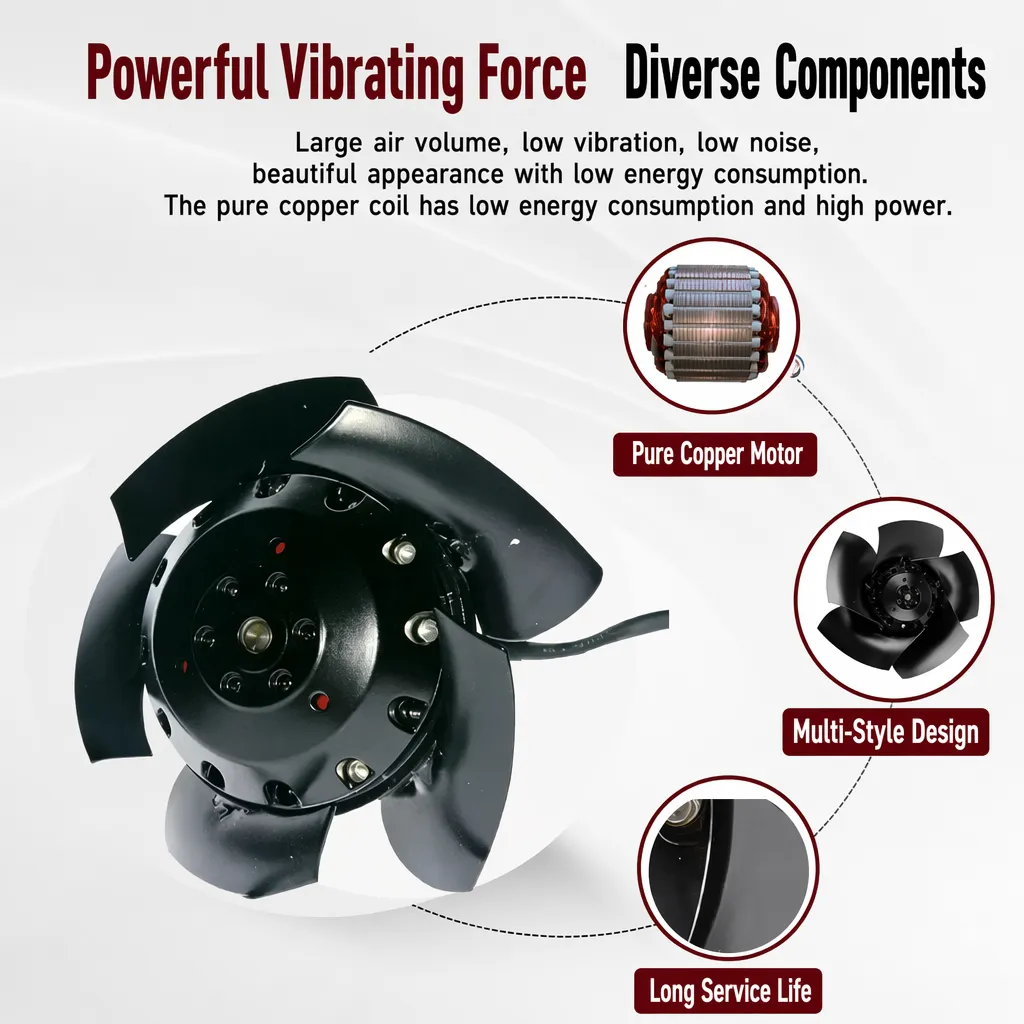
High-temperature smelting workshops present one of the harshest duties for ventilation equipment. Industrial cooling fans with water circulation address this by pairing evaporative cooling with jacketed motor protection, sustaining airflow where radiant heat would otherwise overwhelm air-only systems. The following sections explain the principle, the smelting context, a real case and practical procurement advice.
Smelting workshops generate radiant heat that ordinary ventilation cannot offset. Industrial cooling fans with water rely on evaporative cooling: a pump drives water circulation through wetted media, and moving air passes the saturated surface so the latent heat of vaporization absorbs thermal energy before the air reaches operators and equipment. This lowers supply-air temperature without raising electrical load proportionally. The physics is simple yet effective in dry, hot environments where sensible-only cooling stalls. Water consumption stays modest because the loop recirculates, and make-up water replaces only what evaporates. A well-designed evaporative stage can drop ambient temperature near furnaces by a noticeable margin while keeping humidity within a tolerable band for control rooms and motor enclosures. Thermal management becomes far more predictable than with fans that merely move hot air.
Beyond evaporative pads, durable units use a water jacket around the fan housing or motor stator. Coolant circulates through the jacket, carrying heat away from the motor and bearing zone to a remote heat exchanger or cooling tower. Heat pipes accelerate conduction from hot spots to the water loop, stabilizing motor winding temperature under sustained radiant load. Industrial cooling fans with water benefit from stainless steel 304 or 316 jackets that resist scale and corrosion from mineral-laden water, while aluminum alloy housings reduce weight. The water circulation path is sealed and filtered, so particulates from smelting off-gas do not foul the core. This hybrid of evaporative intake and jacketed motor protection lets the fan survive where air-only designs fail thermally, extending both uptime and component life. Selecting the right coolant flow rate prevents local boiling and keeps the heat exchanger effective across shift peaks, while routine loop flushing limits deposit buildup on the jacket walls.
Electric-arc and induction furnaces radiate intense heat across the shop floor, pushing ambient temperature above comfort and equipment limits. Control cabinets, VFD drives and motor windings age faster when surrounding air stays hot. Passive airflow alone moves warm air around without removing the heat source, so temperatures creep upward during continuous casting or refining shifts. Water-based cooling attacks the load directly: evaporative make-up air and jacketed motor circuits reduce both room temperature and component temperature at once. Industrial cooling fans with water deliver this combined effect, so thermal management becomes predictable rather than reactive. Protecting sensitive instruments and extending service intervals for rotating equipment keeps the smelting workshop productive through the hottest part of every shift. Roof and wall exhaust matched to OSHA 29 CFR 1910.94 ventilation guidance further supports the air balance and reduces heat recirculation near the furnace line.
Air-only fans deliver volume but not temperature reduction when intake air is already hot. At high ambient, the temperature differential that drives heat removal collapses, so motors approach thermal trip points and bearings lose lubrication margin. Dust and fume in smelting areas clog filters quickly, cutting airflow and raising static pressure. Without water circulation, operators must oversize fans and accept higher energy draw, yet still face hot spots near the furnace. Industrial cooling fans with water break this ceiling by adding latent-heat removal and motor jacket cooling, sustaining performance when ordinary axial or centrifugal units would degrade. Specifiers should weigh duty cycle, fume load and water quality, and review OSHA 29 CFR 1910.94 ventilation guidance before selecting a cooling strategy for extreme smelting duty.
A non-ferrous smelting workshop in southern China faced chronic overheating near its holding furnaces, where ambient air exceeded safe limits for control cabinets during summer shifts. Air-only exhaust could not hold temperatures down, and frequent motor trips disrupted production. The plant introduced industrial cooling fans with water circulation at furnace-side positions, pairing evaporative intake with water-jacketed motor housings and corrosion-resistant stainless steel construction. After commissioning, surface temperatures around cabinets dropped to a manageable range and unplanned motor stops fell markedly. Operators reported steadier conditions in the control room, and maintenance intervals lengthened because bearings and windings ran cooler through the hottest part of each shift. The result showed measurable gains in uptime without adding disproportionate energy cost.
Procurement teams should verify IP44 or IP54 ingress protection, pure-copper windings and precision ball bearings, plus CE and UKCA markings for export markets. Incoming inspection must confirm balanced impellers to ISO 1940 grades and fan performance per AMCA 210 or ISO 5801. During use, monitor water quality to limit scaling in the jacket and replace make-up water on a schedule. Clean evaporative media and filters weekly in heavy-fume areas, and check the pump and seals for leaks. Industrial cooling fans with water should use motors meeting IEC 60034 efficiency classes, and units in dusty zones benefit from NFPA 91 compliant exhaust routing. Regular bearing lubrication and thermal imaging of the stator extend reliable operation under smelting heat.
Extreme heat in smelting workshops demands more than moving air. By combining evaporative water circulation with jacketed motor protection, industrial cooling fans with water deliver stable temperatures, safeguard control cabinets and reduce unplanned stops. Proper selection, inspection and maintenance turn this approach into a dependable part of the plant's thermal management plan for high-temperature production.
What is the working principle of water-circulation cooling in smelting workshops?
Answer: Water-circulation cooling combines evaporative pads with a sealed jacket around the motor. A pump moves water through wetted media where moving air loses heat by vaporization, then coolant in the jacket carries stator heat to a remote heat exchanger. This dual path removes both room heat and component heat. Balanced impellers and corrosion-resistant stainless steel keep the loop reliable under fume and high ambient load.
Why do air-only fans struggle in extreme high-temperature smelting areas?
Answer: Air-only fans move warm air but cannot lower its temperature when intake air is already hot. The temperature differential that drives heat removal collapses, so motors approach thermal trip limits and bearings lose lubrication margin. Dust and fume clog filters fast, raising static pressure and cutting airflow. Water-assisted designs add latent-heat removal and jacket cooling, sustaining performance where plain units degrade.
How is a water-jacket cooling fan maintained in dusty smelting plants?
Answer: Maintenance centers on water quality and cleanliness. Replace make-up water on a schedule to limit scaling inside the jacket, and clean evaporative media and filters weekly where fume is heavy. Inspect pump seals for leaks and verify coolant flow. Apply bearing lubrication per interval and use thermal imaging on the stator. These steps keep the loop efficient and extend service life under smelting heat.
Can industrial cooling fans with water operate safely near molten metal?
Answer: Yes, with correct design and placement. Units use sealed water loops, non-sparking aluminum or bronze parts and corrosion-resistant housings rated to IP44 or IP54. Motors built to IEC 60034 efficiency classes and protected by jackets stay below trip temperature. Positioning away from direct splash and following NFPA 91 exhaust routing reduces risk, so the equipment runs reliably beside holding furnaces.
Do these cooling systems require special electrical certifications?
Answer: Export units should carry CE and UKCA markings, with motors meeting IEC 60034 efficiency requirements and ingress protection per IEC 60529. Performance testing follows AMCA 210 or ISO 5801, and impeller balance meets ISO 1940. In explosive-dust zones, ATEX 2014/34/EU alignment may apply. Specifiers should confirm the needed marks with the supplier before purchase to satisfy local compliance.

2026/09/30
Cement cabinets choke on dust. Learn the filter rule for an industrial cabinet cooling fan: G4/F7 media, IP rating, and pre-filter care.

2026/10/07
Right wall-mount height for an industrial axial exhaust fan: room volume, free clearance, brackets, and recirculation control.

2026/10/08
An ec motor fan links to BMS via Modbus, 0-10V and PWM for demand-based cooling, energy scheduling and automatic sensor-driven speed control.

2026/10/06
A radial exhaust fan removes grease, fumes, and odors from food-processing workshops with capture velocity and hygienic washdown design.

2026/10/05
Learn antistatic treatment for industrial cabinet cooling fan in electronics workshops—ESD-safe housing, ionizable plastics, and cleanroom compatibility.

2026/10/04
Discover how a brushless dc servo delivers precise wind speed control for laboratory cooling fans with closed-loop PID feedback and laminar airflow.
