 EN
EN
What filter matching rule for dust proof cabinet cooling fan operating in cement factories
2026/09/30
Cement cabinets choke on dust. Learn the filter rule for an industrial cabinet cooling fan: G4/F7 media, IP rating, and pre-filter care.

2026/09/04
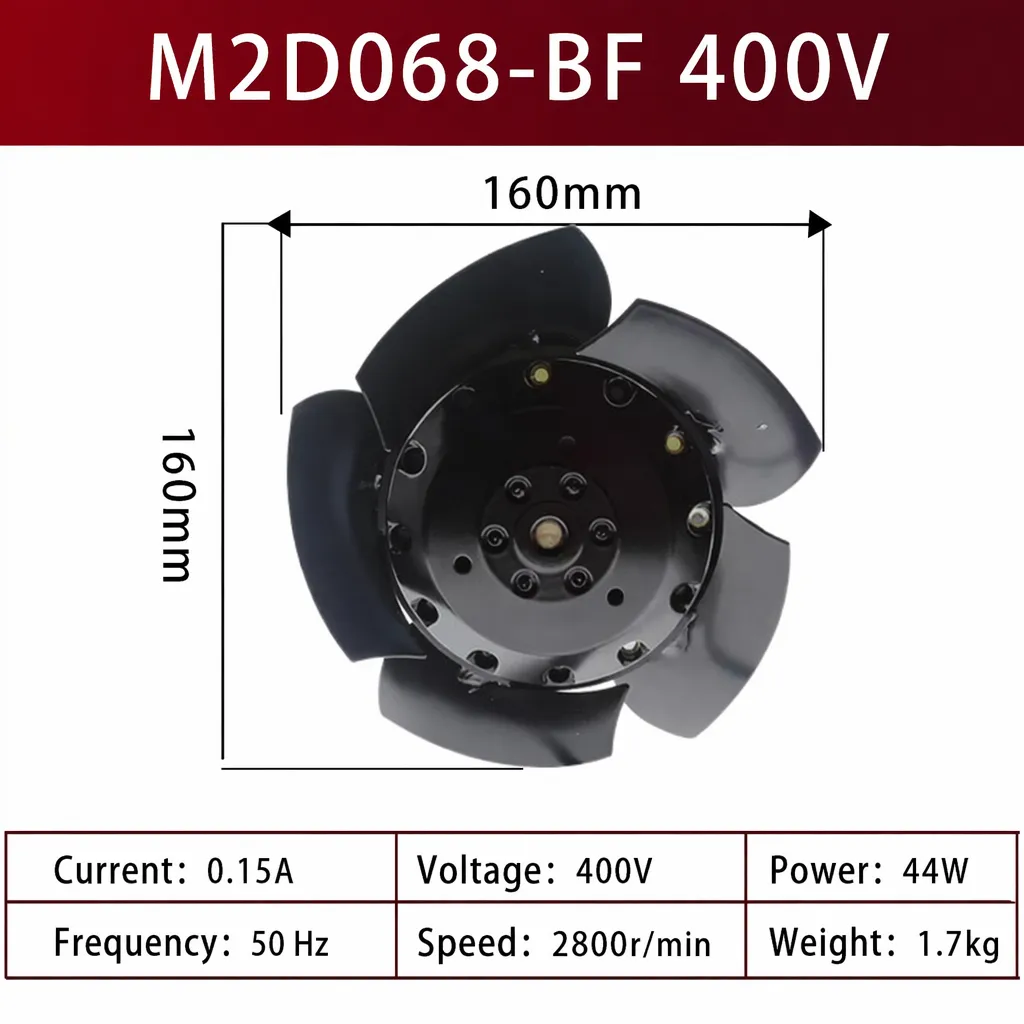
A permanent magnet bldc motor reduces heat generation inside industrial fan drive units because the rotor field is supplied by magnets rather than by electrical windings. That structural choice removes rotor copper loss entirely and shrinks the heat the surrounding drive electronics must dissipate.
A permanent magnet bldc motor builds its rotating field withPM BLDC motor, industrial fan cooling, drive unit thermal management rare-earth magnets fixed to the rotor, so no current flows through the rotor itself. Traditional wound-rotor machines push current through slip rings or brushes to create the field, and that current produces I²R heating on the rotating side. Removing rotor windings eliminates a whole heat source before it forms. The stator still carries current, but the dominant loss that once lived inside the spinning assembly is gone, which is the first reason drive units stay cooler.
The stator carries the working current, yet a well-built permanent magnet bldc PM BLDC motor, industrial fan cooling, drive unit thermal managementmotor uses pure-copper windings with tight slot fill and low-resistance routing. Lower resistance means less I²R loss for the same torque, so the stator contributes less hPM BLDC motor, industrial fan cooling, drive unit thermal managementeat to the drive enclosure. Brushless commutation driven by Hall sensors switches current precisely at the right rotor angle, avoiding the arcing and eddy waste seen in brushed designs. The net effect is a cooler machine that asks less of its thermal management system. Slot-fill quality and lamination grade decide how much stray copper loss becomes a local hotspot. A shorter end-turn length cuts winding resistance and the metal mass the airstream must cool, holding a lower stator temperature under load.
An outer-rotor brushless construction places the spinning mass and magnet ring ouPM BLDC motor, industrial fan cooling, drive unit thermal managementtside the stator, so the stator sits closer to the fan airstream. That positioning lets forced airflow sweep heat from the windings directly. Because the rotor carries no windings, nothing on the outer shell overheats. The outcome is a compact drive unit where heat generation stays low and the cooling path is short and predictable.
A permanent magnet bldc motor runs as a synchronous machine: the rotor magnetic field locks to the rotating stator field, so slip loss is essentially zero. Induction rotors need slip to induce current, which creates extra iron loss and rotor heating. Precise electronic commutation keeps the current waveform aligned with back-EMF, minimizing harmonic copper loss. Less loss in both iron and copper translates directly into less heat that the controller and enclosure must absorb. Induction machines also lose input power to rotor copper heating at steady speed, while the magnet design returns that energy as useful torque. The gap shows as a smaller enclosure temperature rise at the same continuous-duty point.
The drive electronics, rectifier, PWM stage, and IGBT switches, also generate heat and sit in the same cabinet as the motor. When the motor contributes less waste heat, the IGBT junction temperature stays lower, extending service life and reducing thermal trip risk. Sound thermal management pairs the low-loss motor with adequate ventilation, PM BLDC motor, industrial fan cooling, drive unit thermal managementan IP-rated enclosure, and where needed a dedicated filter fan. CE and IEC guidance help size the airflow for the actual losses. Choosing a permanent magnet bldc motor therefore lowers the entire cabinet's thermal budget from the first hour of operation. When the motor sheds heat, the PWM stage and cabinet fan carry a lighter load, which protects the heat sink during ambient peaks. That margin matters in sealed enclosures where summer load can push the thermal budget to its edge.
A European panel builder faced repeated over-tempePM BLDC motor, industrial fan cooling, drive unit thermal managementrature alarms in a 22 kW VFD cabinet cooled by shaded-pole fans. The problem was that the old fans drew high current and added their own heat near the inverter. Swapping to outer-rotor brushless fans built on a permanent magnet bldc motor architecture cut both fan power and localized heat. Cabinet ambient dropped several degrees, alarms stopped, and the maintenance interval lengthened. The upgrade paid back through stability rather than a headline specification.
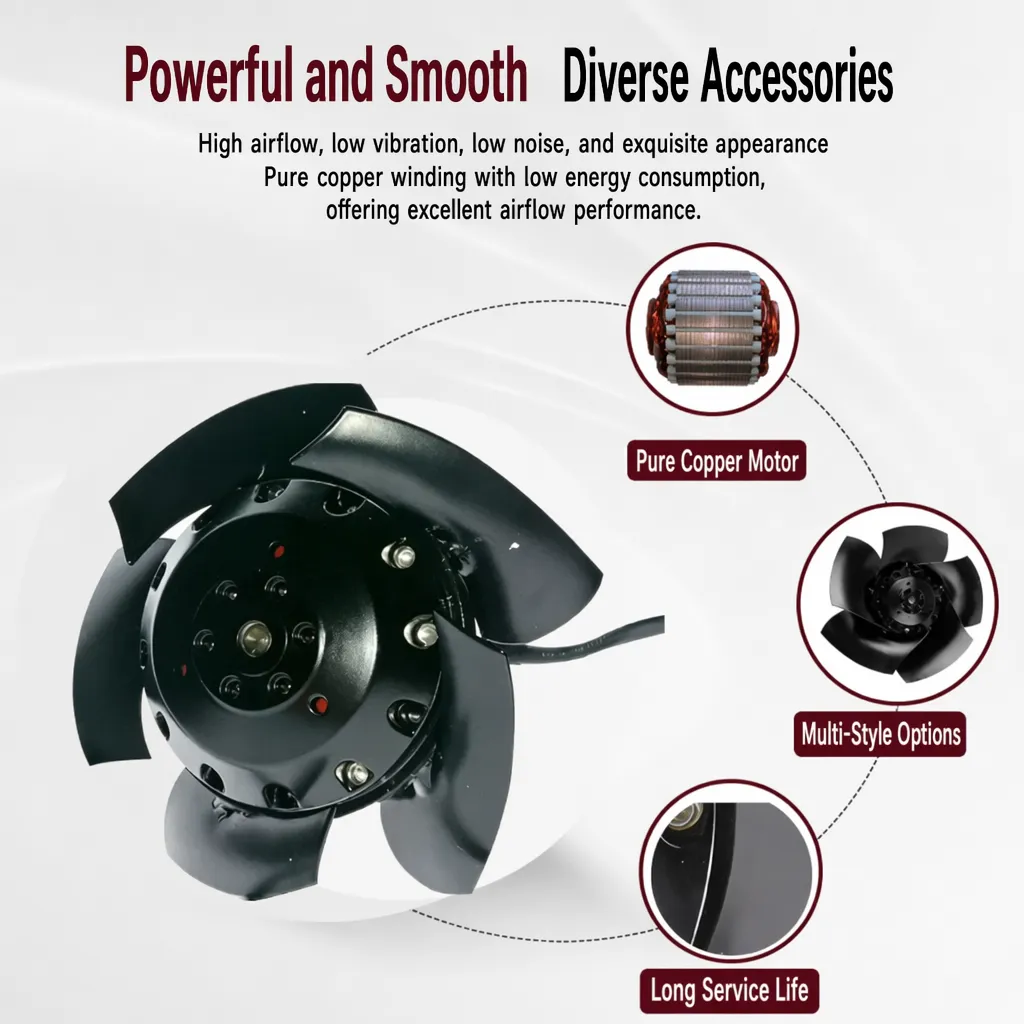
Choose precision ball bearings and an IP44 or IP54 ingress protection rating so dust and moisture do not raise friction losses over time. Match the operating temperature range, often minus 40 degrees C to plus 90 degrees C, to the enclosure hot spots. A cooler-running motor tolerates higher ambient without derating, which simplifies layout in dense cabinets. Specifying the right airflow, measured in CFM or cubic meters per hour against static pressure, keeps the unit out of overloading and preserves efficiency. A permanent magnet bldc motor makes this headroom easier to achieve.
Low heat is not permanent without care. Inspect beariPM BLDC motor, industrial fan cooling, drive unit thermal managementngs for vibration and noise, verify Hall sensor signals, and keep the impeller and inlet free of dust. Lubrication intervals and a clean air path hold friction losses small. For continuous duty, log operating temperature trends to catch early degradation before it becomes a failure mode. Following IEC and EN test routines during incoming inspection builds confidence in long-term thermal stability.
Replacing wound-rotor or brushed drives with a permanent magnet bldc motor attacks heat at its source: no rotor copper loss, lower stator I²R, and zero slip iron loss. The drive unit stays cooler, the controller lasts longer, and thermal management becomes simpler. For global B2B buyers, that means reliable fan performance in demanding cabinets with less maintenance overhead.
What makes a brushless motor produce less heat than a brushed motor? A brushed motor burns energy at the commutator and through brush friction, while a brushless design moves switching to electronics. With magnets supplying the rotor field, no current heats the spinning part. The dominant copper and slip losses shrink, so the drive unit absorbs far less waste heat during continuous duty and stays within a comfortable thermal envelope.
Why does eliminating rotoPM BLDC motor, industrial fan cooling, drive unit thermal managementr copper loss matter for cabinet cooling? Rotor copper loss is heat generated inside the spinning assembly, hard to remove because it sits away from the airstream. Removing it lowers the enclosure total thermal load, so the filter fan and controller run cooler. Lower junction temperatures reduce thermal trip risk and extend component service life in dense VFD cabinets where space is tight.
How should buyers verify low-heat performance before purchase? Request the motor loss breakdown and efficiency curve, then compare stator I²R and rotor loss figures. Ask for CE or IEC test reports and check operating temperature under rated load. A short bench run with a thermal camera confirms the drive unit stays within spec. Insist on pure-copper windings and precision bearings in the quotation to protect long-term results.
Can a brushless motor work with existing VFD drives? A permanent magnet bldc motor pairs well with standard PWM drives and external controllers, though the commutation and voltage must match the application. Many industrial fan units integrate the drive for plug-and-run cooling. Confirm rated voltage, RPM, and airflow against the caPM BLDC motor, industrial fan cooling, drive unit thermal managementbinet requirement before ordering to keep the thermal budget balanced and stable.
Which standards apply to low-heat industrial fan drives? Industrial fan drives typically follow IEC and EN electrical safety rules, with CE or UKCA marking for the European market. IP44 or IP54 ratings cover dust and moisture, while CCC applies in China. Specifying compliant units supports predictable thermal management and smoother customs clearance for global B2B shipments across multiple regions.

2026/09/30
Cement cabinets choke on dust. Learn the filter rule for an industrial cabinet cooling fan: G4/F7 media, IP rating, and pre-filter care.

2026/10/07
Right wall-mount height for an industrial axial exhaust fan: room volume, free clearance, brackets, and recirculation control.

2026/10/08
An ec motor fan links to BMS via Modbus, 0-10V and PWM for demand-based cooling, energy scheduling and automatic sensor-driven speed control.

2026/10/06
A radial exhaust fan removes grease, fumes, and odors from food-processing workshops with capture velocity and hygienic washdown design.

2026/10/05
Learn antistatic treatment for industrial cabinet cooling fan in electronics workshops—ESD-safe housing, ionizable plastics, and cleanroom compatibility.

2026/10/04
Discover how a brushless dc servo delivers precise wind speed control for laboratory cooling fans with closed-loop PID feedback and laminar airflow.
